
It has recently been revealed that a human-wolf ” encounter,” in which a beach walker was forced to take refuge in the ocean when two wolves kept advancing in menacing fashion, has been described by Parks Canada officials as benign-sounding “escorting behaviour” rather than an aborted predatory attack.
This week, I was looking online to see if there had been any further reports of wolf encounters near Tofino since the end of October, when two recent incidents made national news. I discovered that a full week later, a local First Nations newspaper revealed some interesting details not available earlier, see “Encounters climb as habituated wolves establish core territory near Ucluelet” (7 November 2025).
Here’s my question: Are Parks Canada officials hiding important details of recent encounters – or sanitizing them with scientific-sounding language – to protect wolves at the expense of keeping park visitors safe?
So far, all encounters in Pacific Rim National Park have been blamed on dogs as attractants, with officials admitting that the wolves now consider dogs as prey. In other words, dogs on the beach and on Park trails are being actively hunted by wolves, whether leashed or not.
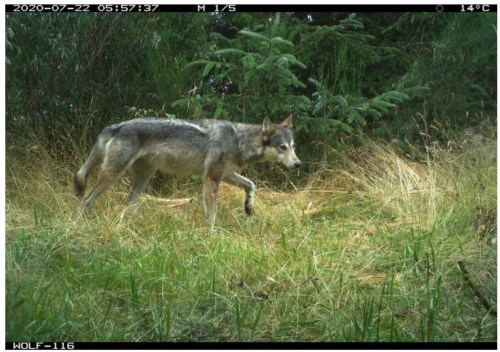
However, according to this article, Parks Canada officials suggest that in the one encounter that didn’t involve a dog, the two wolves were simply forcibly relocating the person from an area they didn’t want the person to be, and was therefore, entirely justifiyable and non-threatening behaviour on the part of the food-stressed wolf pair.
To me, that explanation sounds suspiciously like a conveniently sanitized interpretation of predatory behaviour. It also places the blame on the beach walker for being where the wolves didn’t want them to be, not on the wolves for aggressively attacking an innocent visitor to the Park.
Also according to the 7 November article, as of the end of October 2025, there had been 40 recorded human-wolf encounters (not merely sightings of wolves), compared to 18 in 2024 and seven in 2023.
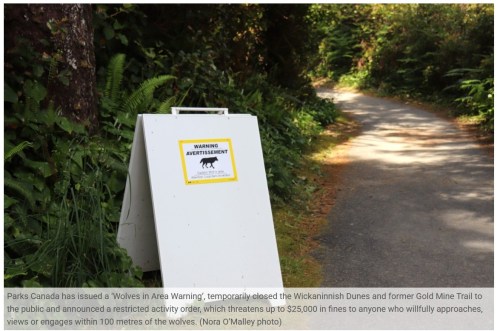
The recent encounters resulted in “closed to visitors” orders by Parks Canada to two areas within the Park on October 1, which included an area above Florencia Bay near Ucluelet and the sand dunes area behind Wickaninnish Beach, with a potential $25,000 fine for violators.
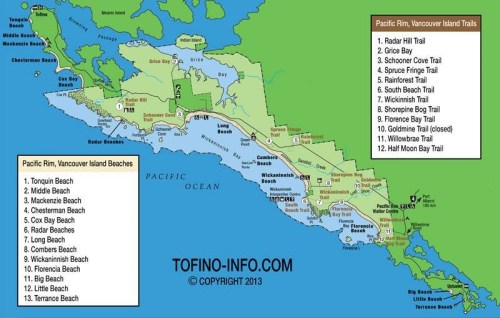
Note that for years there have been warning signs all up and down the entire peninsula – from Tofino to Ucluelet – about the potential danger of wolf encounters, including the Tonquin Trail which provides access to a small beach closest to Tofino. Not coincidentally, these areas mentioned are featured in my new wolf attack novel, DON’T RUN, because people and their dogs are known to be vulnerable to predatory wolves in these areas.
Here’s another perspective that’s worth a look. A commenter over at Small Dead Animals drew my attention to a first-hand description of what could also be described as “escorting behaviour” by wolves in Alaska by outdoor survivalist Glenn Villeneuve.
See what you think. In a 2019 interview, he told Joe Rogan (episode #1395) about a terrifying encounter with a pack of 20 wolves in the Brooks Range, during an especially cold winter in northern Alaska in January 2012. One could say the wolves just didn’t like that this man was near them, so they “escorted” (i.e. chased) him away. But what if he’d fallen while he ran back to his cabin? Or if they’d caught up to him before he got to safety? To me, his encounter sounds like a predatory attack by the wolf pack and not materially different than what happened on Wickaninnish Beach on Vancouver Island in 2025.
Here’s a short video of that part of the interview, fast forward to 13: 40 in this clip:
https://www.youtube.com/watch?v=ZhrOjQaZNco
[entire Joe Rogan episode is here]
See my wolf attack thriller on Amazon here:






 polarbearscience
You must be logged in to post a comment.