
A recently published study lead by Norwegian polar bear specialist Jon Aars found that both male and female polar bears were fatter and healthier after 1995 despite the greatest loss of sea ice of any Arctic region. However, no evidence was provided that a greater consumption of walrus and reindeer explain these results.
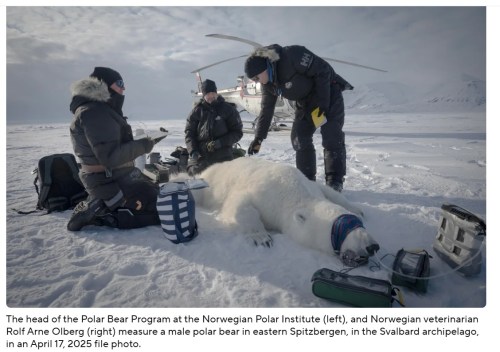
This new paper (Aars et al. 2026) updates and expands to 2019 data for a study I’ve repeatedly cited (e.g. here and here) that reported female bears in better condition between 2005-2017 than during the 1990s, despite dramatic sea ice loss in summer and winter in the 2000s (Lippold et al. 2019).
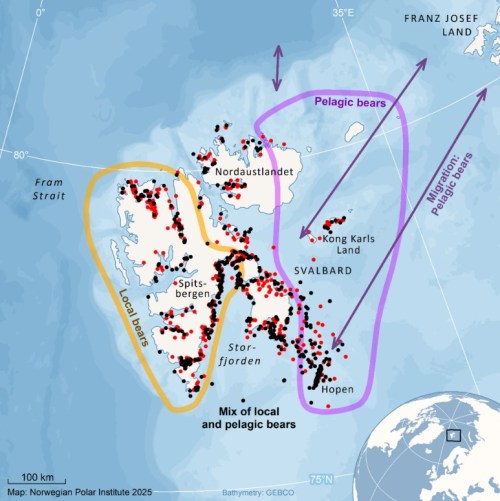
From Aars et al. 2026 (Fig. 1).
Both studies contradict predictions that sea ice loss always leads to loss of body condition, and eventually, population decline (Amstrup et al. 2007; Crockford 2017; Crockford 2019).
And as the authors of this latest study admit, field data from the Chukchi Sea also show polar bears in excellent condition despite sea ice loss, so Barents Sea bears are not the population to contradict the expectation that sea ice loss = loss of body condition.
In their words, “Our findings underline the importance not to extrapolate findings across populations,” yet this is exactly what all model predictions do because they use Western Hudson Bay and Southern Beaufort data almost exclusively (and thus ignore Chukchi Sea and Barents Sea data).
In addition, and without any evidence provided, the authors speculate the Barents Sea bears are thriving because they are now eating more walrus and reindeer than they used to do:
Experts think the new findings could be linked to the population recovering from that hunting pressure. That, combined with an increase in the number of walruses – and of reindeer – in recent decades, appears to have provided the bears with a temporary boost. [BBC, 29 January 2026]
However, there is no data provided in this paper to suggest that polar bears around Svalbard are actually consuming more walrus or reindeer. In fact, it’s much more likely that increased primary productivity (and thus greater numbers of seals and/or fatter seals) due to longer ice-free summers is the proximate cause of better body condition in both Barents Sea and Chukchi Sea bears.
References
Aars, J., Ieno, E.N., Andersen, M. et al. 2026. Body condition among Svalbard Polar bears Ursus maritimus during a period of rapid loss of sea ice. Scientific Reports 16, 2182. https://doi.org/10.1038/s41598-025-33227-9 Open access.
Amstrup, S.C., Marcot, B.G. & Douglas, D.C. 2007. Forecasting the rangewide status of polar bears at selected times in the 21st century. US Geological Survey. Reston, VA. Pdf here
Crockford, S.J. 2017. Testing the hypothesis that routine sea ice coverage of 3-5 mkm2 results in a greater than 30% decline in population size of polar bears (Ursus maritimus). PeerJ Preprints 19 January 2017. Doi: 10.7287/peerj.preprints.2737v1 Open access. https://peerj.com/preprints/2737/
Crockford, S.J. 2019. The Polar Bear Catastrophe That Never Happened. Global Warming Policy Foundation, London. Available in paperback and ebook formats.
Lippold, A., Bourgeon, S., Aars, J., et al. 2019. Temporal trends of persistent organic pollutants in Barents Sea polar bears (Ursus maritimus) in relation to changes in feeding habits and body condition. Environmental Science and Technology 53(2):984-995. https://doi.org/10.1021/acs.est.8b05416






 polarbearscience
You must be logged in to post a comment.