Monthly Archives: December 2025

Sea ice conditions continued to favour Arctic marine life in 2025

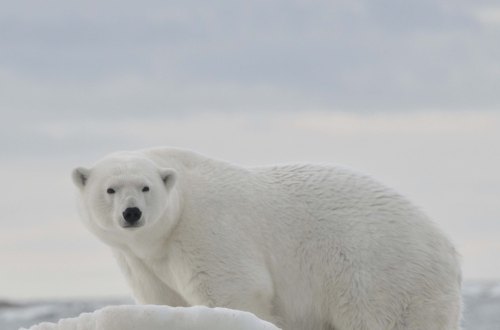
Increased primary productivity in the Arctic generated by reduced summer sea ice has continued into 2025, according to NOAA’s annual Arctic Report Card published yesterday, which means Arctic seals and whales, walrus, and polar bears will continue to flourish.
Don’t look for that take-home in the legacy media, since they will all focus on the bits of the report that feed a doom-mongering narrative.


September sea ice extent has continued to stall, rather than plummet as predicted (Table 1: eleventh lowest average September extent since 1979; 4.75 mkm2), although they don’t come out and say so. NSIDC has stopped producing monthly sea ice reports due to budget cuts in late September 2025.

From the Report Card highlights [my bold]:

  • From 2003 to 2025, phytoplankton productivity spiked by 80% in the Eurasian Arctic, 34% in the Barents Sea, and 27% in Hudson Bay.
  • Plankton productivity in 2025 was higher than the 2003-22 average in eight of nine regions assessed across the Arctic.

And from the report on primary productivity itself:

All regions, except for the Amerasian Arctic (the combined Chukchi Sea, Beaufort Sea, and Canadian Archipelago), continue to exhibit positive trends in ocean primary productivity during 2003-25, with the largest percent changes in the Eurasian Arctic (+80.2%), Barents Sea (+33.8%), and Hudson Bay (+27.1%).

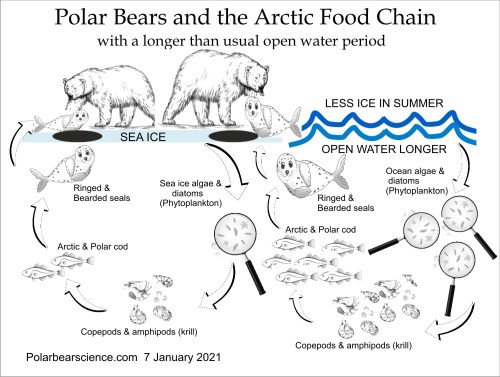
I’ve explained previously how and why this works: less summer ice = more plankton, which means more food for all marine life.
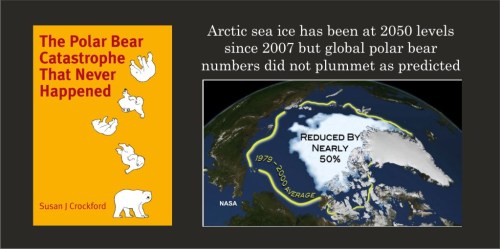
This explains why the catastrophic decline in polar bear numbers predicted in 2007 never happened.
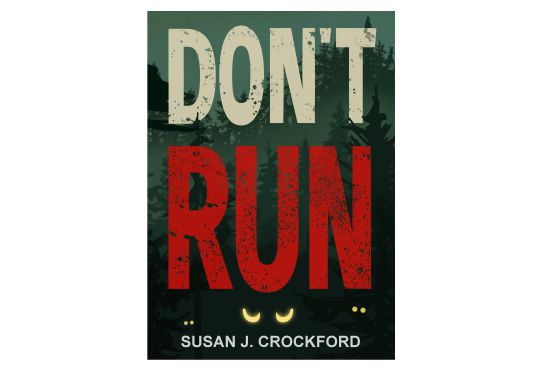
PS. If you haven’t already, check out my new wolf attack thriller, DON’T RUN. There’s probably still time to order and get a before-Christmas delivery.

Was a recent wolf encounter near Tofino an aborted predatory attack?

It has recently been revealed that a human-wolf ” encounter,” in which a beach walker was forced to take refuge in the ocean when two wolves kept advancing in menacing fashion, has been described by Parks Canada officials as benign-sounding “escorting behaviour” rather than an aborted predatory attack.


This week, I was looking online to see if there had been any further reports of wolf encounters near Tofino since the end of October, when two recent incidents made national news. I discovered that a full week later, a local First Nations newspaper revealed some interesting details not available earlier, see  “Encounters climb as habituated wolves establish core territory near Ucluelet” (7 November 2025). 

Here’s my question: Are Parks Canada officials hiding important details of recent encounters – or sanitizing them with scientific-sounding language – to protect wolves at the expense of keeping park visitors safe?

Continue reading

Polar bears and Arctic sea ice status

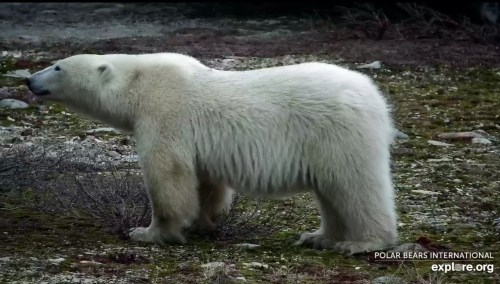
Positive news on the Arctic front as far as polar bears are concerned so far this year, with no reports of dead or dying bears, or of horrific attacks on humans that I’ve heard about. Not much to talk about but here’s what I’ve found.

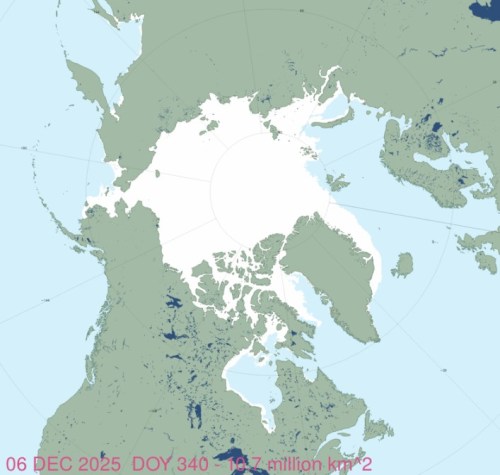
Sea ice in Hudson Bay is forming rapidly while according to NSIDC, the Arctic Basin is filled with ice. Ice has also moved well into the Bering Sea, the Barents and Kara Seas, and Davis Strait. NSIDC say they have discontinued their monthly sea ice reports due to lack of funding, although under the current federal government administration, such budget cuts were likely tied to their inability to consistently produce these reports without pushing a human-caused climate change narrative of impending catastrophe.


Continue reading

A Wolf Attack Thriller for Christmas

My latest novel is done and ready in time for Christmas, but only by the skin of my teeth!

It’s called DON’T RUN and it’s a wolf attack thriller set in the little surfing town of Tofino, British Columbia (on the west coast of Vancouver Island). 

When wolves consider humans easy prey, it makes for big trouble. This science-based novel, set in the winter of 2029, follows the exploits of RCMP wildlife safety specialist Luke Robinson, who moves to the Canadian surfing town of Tofino on the west coast of Vancouver Island. He quickly becomes embroiled in a local wolf controversy, which escalates into an epic wolf attack crisis. First dogs disappear, then people start to die. But what, exactly, can he help the town do to protect itself when wolf packs go rogue—or more to the point, will resident’s loyalty to local indigenous peoples and activist conservationists prevent them from doing what needs to be done?

The story challenges the traditional myth that wolves never attack people. I’ve been working on this for more than five years but ironically, over the last six months, news reports such as here and here, indicate wolves in the area where the story is set have been getting increasingly aggressive and predatory. Just a few months ago (based on warnings issued in October), two wolves  pursued a walker on Long Beach so aggressively that they sought refuge in the water (no mention of a dog). Another pair of wolves charged at and pursued a visitor with a dog on a leash for an extended time period. Incidents like these, although fewer in number and less threatening in nature, have been reported since at least 2017.  

What will happen in 2026 or 2027 if Parks Canada bans dogs entirely from Pacific Rim National Park? What will the hungry wolves in the Park do if they no longer have dogs to prey upon? What if even more wolves move in from the island’s interior? Questions like these inspired this new thriller.

Hope you enjoy! If you do, please go back and leave an Amazon review – it really helps other readers decide to give it a try and that promotes sales. Available in paperback and Kindle ebook formats.

On Amazon in the US here, in Canada here, UK here.

PS. As promised, winners of the 2022 fundraising contest for my Polar Bear Evolution book have their names used as characters in this new novel. Congratulations Ned Komar and John Macgowan!