Posted onFebruary 3, 2026|Comments Off on Biologists allowed David Attenborough to tell BBC viewers that Barents Sea bears were dying of starvation in his 2011 Frozen Planet episode when they knew it wasn’t true
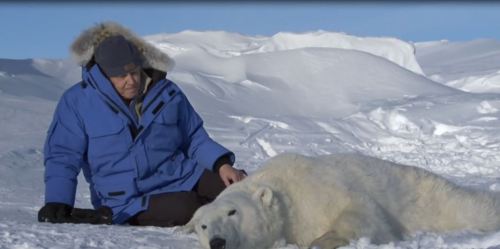
In the climate change episode of his 2011 BBC Frozen Planet series ‘On Thin Ice’, Sir David Attenborough told viewers that polar bear mothers and cubs across the Arctic were starving because climate change was melting the sea ice, even as he sat beside a fat, healthy Barents Sea female (below).
I wonder how Sir David Attenborough feels now? Has anyone bothered to tell him that Norwegian biologists have finally admitted that Barents Sea polar bears were actually fat and healthy in 2010 when they assisted in the filming of his BBC documentary? Or, did Attenborough know even then that this population of polar bears was thriving despite the large loss of sea ice – but let his viewers think otherwise?
Comments Off on Biologists allowed David Attenborough to tell BBC viewers that Barents Sea bears were dying of starvation in his 2011 Frozen Planet episode when they knew it wasn’t true
Posted onJanuary 26, 2026|Comments Off on Review of my wolf attack thriller DON’T RUN in the National Post
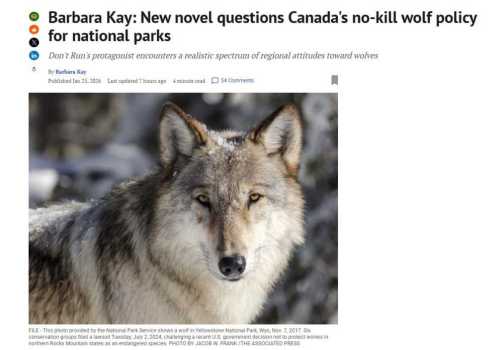
In the 24 January 2026 (Saturday) issue of the National Post, veteran journalist Barbara Kay highlights my latest novel about wolves really-gone-rogue around Tofino on Vancouver Island and the wolf conservation issues it raises.
Posted onDecember 11, 2025|Comments Off on Was a recent wolf encounter near Tofino an aborted predatory attack?
It has recently been revealed that a human-wolf ” encounter,” in which a beach walker was forced to take refuge in the ocean when two wolves kept advancing in menacing fashion, has been described by Parks Canada officials as benign-sounding “escorting behaviour” rather than an aborted predatory attack.
This week, I was looking online to see if there had been any further reports of wolf encounters near Tofino since the end of October, when two recent incidents made national news. I discovered that a full week later, a local First Nations newspaper revealed some interesting details not available earlier, see “Encounters climb as habituated wolves establish core territory near Ucluelet” (7 November 2025).
Here’s my question: Are Parks Canada officials hiding important details of recent encounters – or sanitizing them with scientific-sounding language – to protect wolves at the expense of keeping park visitors safe?
Posted onDecember 5, 2025|Comments Off on A Wolf Attack Thriller for Christmas
My latest novel is done and ready in time for Christmas, but only by the skin of my teeth!
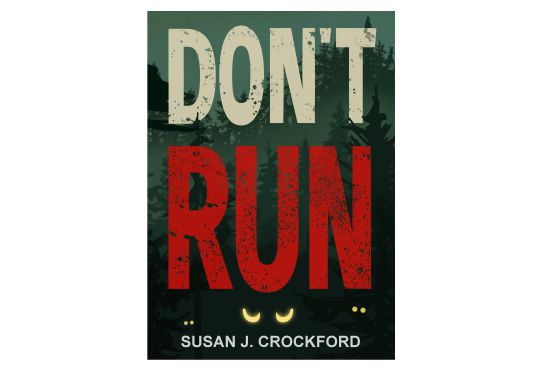
It’s called DON’T RUN and it’s a wolf attack thriller set in the little surfing town of Tofino, British Columbia (on the west coast of Vancouver Island).
When wolves consider humans easy prey, it makes for big trouble. This science-based novel, set in the winter of 2029, follows the exploits of RCMP wildlife safety specialist Luke Robinson, who moves to the Canadian surfing town of Tofino on the west coast of Vancouver Island. He quickly becomes embroiled in a local wolf controversy, which escalates into an epic wolf attack crisis. First dogs disappear, then people start to die. But what, exactly, can he help the town do to protect itself when wolf packs go rogue—or more to the point, will resident’s loyalty to local indigenous peoples and activist conservationists prevent them from doing what needs to be done?
The story challenges the traditional myth that wolves never attack people. I’ve been working on this for more than five years but ironically, over the last six months, news reports such as here and here, indicate wolves in the area where the story is set have been getting increasingly aggressive and predatory. Just a few months ago (based on warnings issued in October), two wolves pursued a walker on Long Beach so aggressively that they sought refuge in the water (no mention of a dog). Another pair of wolves charged at and pursued a visitor with a dog on a leash for an extended time period. Incidents like these, although fewer in number and less threatening in nature, have been reported since at least 2017.
What will happen in 2026 or 2027 if Parks Canada bans dogs entirely from Pacific Rim National Park? What will the hungry wolves in the Park do if they no longer have dogs to prey upon? What if even more wolves move in from the island’s interior? Questions like these inspired this new thriller.
Hope you enjoy! If you do, please go back and leave an Amazon review – it really helps other readers decide to give it a try and that promotes sales. Available in paperback and Kindle ebook formats.
On Amazon in the US here, in Canada here, UK here.
PS. As promised, winners of the 2022 fundraising contest for my Polar Bear Evolution book have their names used as characters in this new novel. Congratulations Ned Komar and John Macgowan!
Comments Off on A Wolf Attack Thriller for Christmas
Posted onFebruary 26, 2025|Comments Off on No News is Good News on Polar Bear Day: Celebrate With 35% Off Polar Bear Evolution
In honour of International Polar Bear Day coming up on Thursday February 27, I’ve discounted the price of my Polar Bear Evolution book by 40% for the next month in order to encourage evolutionary thinking about polar bears (in all markets: see links at the end of this post). UPDATE: Sale extended until June.
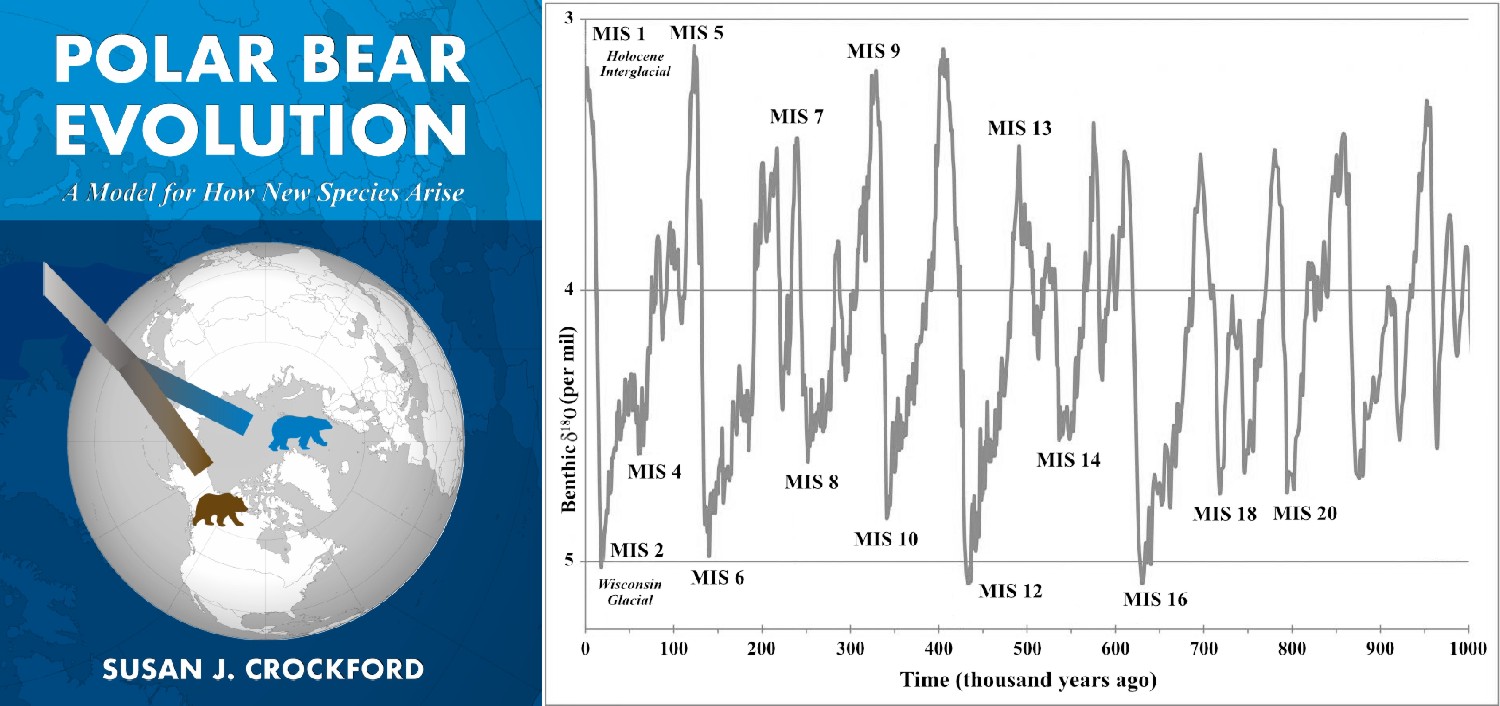
Instead of asking whether polar bears will survive a bit of warming over the next few decades, ask yourself how they survived more than 100,000 years of unimaginable changes in Arctic climate (both much warmer and colder) before now?
Posted onSeptember 5, 2024|Comments Off on 12 years of Polar Bear Science winding down as I transition to writing Biology Bites on Substack
While I’m not done with polar bears completely, it seems I’ve been so successful at informing the public and defanging the rabid activists that fewer examples of nonsense seem to pop up. And it turns out I have other things I’d like to write about.
I’ve spent my entire career as an unconventional scientist and I’m betting that many of the stories I’ve amassed along the way will be of interest to a wider audience. So, after 12 years of blogging here at PolarBearScience, I’m branching out with a new writing forum called “Biology Bites,” hosted on Substack.
Posted onFebruary 20, 2024|Comments Off on NY Times pushes an implausible story of polar bear evolution and what makes a species
Carl Zimmer over at the New York Times penned a misleading story of speciation, using the polar bear as an example. It explains polar bear evolution based on a genetic interpretation that ignores the fossil record, bear behaviour, and geological history. [h/t Kip Hanson].
In my opinion, this kind of ‘science communication’ is more misleading than enlightening because it fails to alert readers to the fact that the topic is actually more complicated and gives the impression that the author considers readers too stupid to understand a more accurate explanation.
Polar Bear Evolution does a better job for those who are really interested in the process: it doesn’t hide the complicated nature of speciation or polar bear evolution. It doesn’t pretend to present “the truth” but explains how a good scientist gets to a plausible explanation that best fits the evidence.
Posted onJanuary 18, 2024|Comments Off on Tom Nelson interview with me about the failed polar bear narrative and rapid evolution
You can watch my interview with Tom Nelson about the latest issues in polar bear conservation and highlights of my latest book, Polar Bear Evolution.
On Youtube:
Tom tells me, “It’s also up on other video sites such as Rumble and BitChute, and will soon be available on other podcast apps such as Apple Podcasts (most, but not all, of those are audio-only). It should also be on Spotify, Google Podcasts, Pocket Casts, Podvine, Overcast, Amazon Music podcasts, Audible podcasts, Castbox, RadioPublic, Twitter, etc.”
Summary: Susan Crockford, a zoologist, discusses the challenges in accurately estimating polar bear populations and the ongoing debate between Inuit communities and polar bear specialists regarding population sizes. She also shares her theory on the role of thyroid hormones in polar bear evolution and the quick adaptation of species to new environments using the example of the Russian foxes.
A list of topics covered, by time-stamp in the interview, is listed below.
Posted onNovember 8, 2023|Comments Off on Polar Bear Evolution pre-Christmas book sale: discounts on all formats!
I have reduced prices on all formats of my Polar Bear Evolution book for four weeks starting today (8 November-6 December 2023), in time for holiday gift-giving. The ebook version has the largest price reduction (60% of regular price, to US$17.40) but the other discounts are also substantial. This sale is a time limited offer: don’t miss out! Links below.
The author of Polar Bear Evolution, Susan Crockford, is a good, credentialed scientist. Her writing is clear; her thinking is also. She has a broad understanding of biology and an informed paleo perspective. Crockford condenses a very large literature on polar bear biology and evolution in this book which will help readers understand the science related to the evolution of an Arctic species. Perhaps the most important aspect of this book is its synthesis of information from the fields of wildlife biology, molecular evolution, paleontology, and climate. Her original ideas and hypotheses on thyroid hormone’s role in evolution are very important and add a credible mechanism of phenotypic change which complements the literature on molecular genetic evolution. Polar Bear Evolution is an important contribution to science and its application in evolutionary biology and wildlife biology. Matthew A. Cronin, Ph.D.
Available at the links below (others also available):
Posted onJune 26, 2023|Comments Off on No evidence polar bears survived Eemian warmth because they were not yet fully ice-dependent
Is evolution primarily fast or slow? Does it take hundreds of thousands of years or a few generations to produce a new species? Ignoring vast evidence to the contrary, most geneticists insist that evolutionary change is imperceptibly slow and one of them is using this misconception to support the human-caused climate change narrative.
For polar bears, the question is this: could brown bears (aka grizzlies) have survived for hundreds of thousands of years living in a completely different habitat–the perpetually-frozen world of Arctic sea ice–before significant biological changes took place? I contend the answer is no. Moreover, if I am correct that polar bears arose ca. 140,000 thousand years ago (140kya) during the height of an extreme glacial period, the fossil evidence concurs. Analysis of fossil remains show that by about 115-130kya at the latest (after perhaps 10k years), polar bears were primarily eating seals as their modern counterparts do and their bones had lost the distinctive features of their grizzly ancestors.
But that’s the maximum time frame: research on other animals indicate that such critical changes almost certainly took place long before that, within the first few generations of life on the sea ice. If coordinated changes had not taken place very quickly, within ecological time, brown bears would simply not have survived the harsh life on Arctic sea ice.
Watch polar bear habitat reform in the Canadian Arctic: “last 10 days” Canadian Ice Service animation (works anytime) HERE.
See Quote archive for details.








 polarbearscience
You must be logged in to post a comment.