Posted onJanuary 8, 2025|Comments Off on The US needs to stop using climate model predictions in ESA species assessments
There are a lot of things wrong with the Endangered Species Act (ESA) – including that constitutionally, the power to regulate fish and wildlife lies with the states, not the federal government – but a worrying trend has developed where outputs of predictive climate change models (based on an assumption that human-caused carbon dioxide emissions are to blame) are accepted as scientific evidence in official species assessments of conservation status (Cronin 2007a, b, c).
President-elect Donald Trump is on record as dismissing the tenets of the human-caused climate change narrative, including during a Keynote Address he gave at the Heritage Foundation’s Annual Leadership Conference in Florida in 2022 on April 21 [snippet below from X, full transcript here and lecture on Rumble here.]
"We have to defeat the climate hoaxsters once and for all."
President-elect Donald Trump: "One of the most urgent tasks… is to decisively defeat the climate hysteria hoax."
"The radical left's fearmongering about climate and our future is… destroying America's economy,… pic.twitter.com/NtSERNdho6
I suggest that if Trump is serious about supporting science and divesting the US economy of useless expense, he needs to direct his new Secretary of the Interior to delist any species for which climate change models have been used to obtain an ESA listing (including the polar bear, ringed seal, bearded seal, wolverine, and emperor penguin) and disallow any future use of climate change models in ESA assessments for potentially threatened or endangered species (including the Pacific walrus and American pika).
Alternatively, he could go all-out and rescind the ESA altogether as unconstitutional, returning the management of fish and wildlife to US States, with the knowledge that the Marine Mammal Protection Act of 1972 will adequately project polar bears and other Arctic species living within the US state of Alaska, as well as whales and seals that live in temperate US waters.
Note: A version of this essay also appears on my Substack here.
Posted onDecember 21, 2022|Comments Off on Happy Solstice – it’s all uphill from here!
On the longest night of the year, I wish you all a Merry Christmas and a New Year filled with hope and good cheer. The sun will return and the struggle for good science will continue.
Warmest wishes to all my readers and supporters around the world.
Susan
Comments Off on Happy Solstice – it’s all uphill from here!
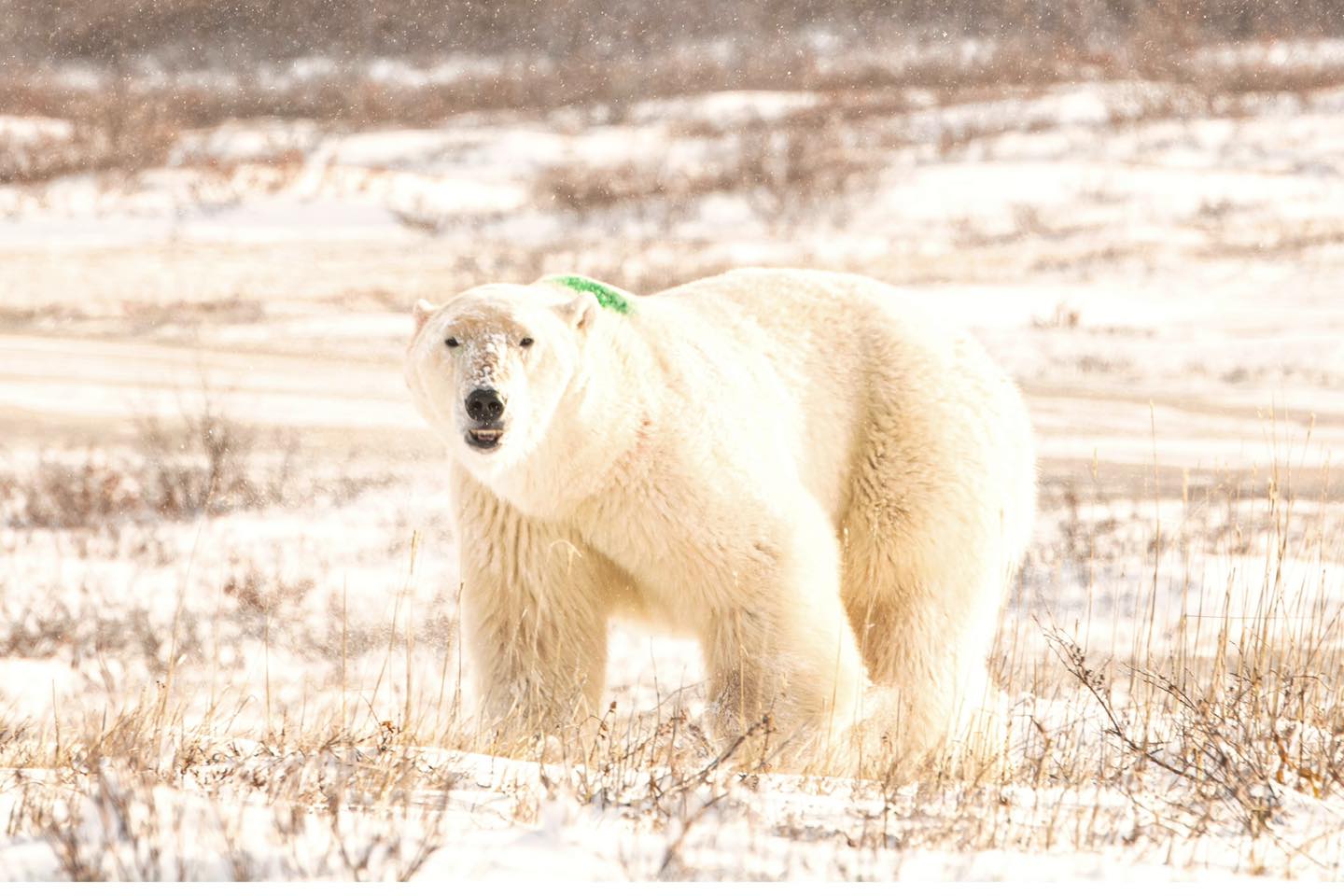
The photo above of a ‘green dot’ bear was taken 10 November 2022 by a Churchill resident. Bears released from the ‘polar bear jail’ when there is enough sea ice for them to resume hunting are marked with a green dot.
Posted onDecember 6, 2022|Comments Off on Donors’ names chosen for characters in my new novel
I have selected three people out of the list of 120 fabulous supporters who donated funds towards publication of my new polar bear evolution book, to have their names given to a character in my next science-based novel.
Two have decided to remain anonymous, so you will have to try and find their names in the thriller when it comes out.
However, the third proud winner is Ned Komar.
Congratulations to all three and thank you again, everyone, for your most generous support.
warmest regards to all, Susan.
Comments Off on Donors’ names chosen for characters in my new novel
Posted onAugust 31, 2021|Comments Off on Polar Bear Facts & Myths for young readers in Portugal and Brazil
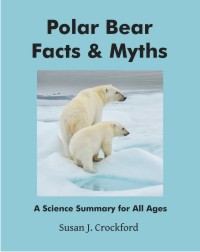
Due to the efforts of Thiago Maia and his team of assistants (Igor Vaz Maquieira and Márcio Calixto), I can now offer a Portuguese translation of my popular Polar Bear Facts & Myths science book for young readers in Brazil and Portugal.
From the initial CBC News report on Monday 26 April:
Three people are dead after a helicopter crash near Resolute Bay, Nunavut, during a trip to survey the Lancaster Sound polar bear population, the premier says.
It happened near Griffith Island and involved a Great Slave Helicopters AS350-B2.
A news release on Monday morning from Yellowknife-based Great Slave Helicopters said there were two flight crew and one wildlife biologist on board. No one survived, the company says.
Crash site of helicopter was near Griffith Island, near Resolute in the Central Canadian Arctic.
The wildlife biologist was identified on Wednesday as Igloolik resident Markus Dyck, CBC News reported yesterday:
Dyck was surveying bear populations in Lancaster Sound for the Nunavut government on the day the helicopter crashed. Two other air crew also died.
Lemelin said Dyck was outspoken in his advocacy for community-based polar bear management.
“Markus was one of those individuals that fell in love with the bears and highly respected them and dedicated his life to them,” he said.
Lemelin said Dyck told him two weeks ago that he was heading out for field work.
“He was working for Nunavut and working with incorporating traditional knowledge and scientific knowledge and examining all types of research and doing those very important sample counts that are necessary.”
The Igloolik-based scientist challenged environmental groups that said the bears were disappearing. He also championed including traditional knowledge in research, Lemelin said.
“What he was concerned with is the ability of Inuit people and Cree people to live with the polar bears to continue traditional harvesting practices and to manage polar bears sustainably and respectfully, in the long-term,” Lemelin said.
As a current member of the international Polar Bear Specialist Group, which looks at polar bear population management worldwide, Dyck remained an “outspoken” force for community-based polar bear management in the highly political world of polar bear research, Lemelin said.
Dyck, who held a master’s degree from the University of Manitoba, was certified wildlife biologist with the Wildlife Society, according to his LinkedIn profile.
Before working at the GN, he was senior instructor with the Environmental Technology Program at Nunavut Arctic College in Iqaluit.
Polar bear surveys — and the sometimes dangerous conditions that come with them — were nothing new to Dyck.
In 2014, he told Nunatsiaq News that the M’Clintock polar bear survey’s first year was plagued by fog in an area thick with heavy ice.
“Blizzards, we had fog — we had to sleep in the helicopter, on the sea ice one night, because we couldn’t fly anywhere,” Dyck said.
Mark Mallory, a seabird biologist who knew Dyck well, said working in helicopters in the High Arctic is “dangerous stuff.”
“Working in helicopters in this time of year when things are changing, and you’re starting to get moisture in the air, and the wind is picking up, and you’re out in that interchange between the land … that’s a terrible time to be working there,” Mallory said.
Posted onApril 14, 2021|Comments Off on Less than usual ice conditions off Labrador have meant very few polar bear sightings
I’ve been wondering ever since last year why reports of polar bears onshore in Labrador especially and also the north coast of Newfoundland, have been virtually non-existent. This year there has been little ice off Newfoundland except for the Northern Peninsula but relatively abundant ice off the south coast of Labrador.
Yesterday, Canadian Ranger and polar bear guard Jefferey Keefe of Black Tickle (which is on an island off the Labrador coast) said on a CBC radio interview (13 April 2021) that while in 2019 they had 72 sightings around the community over the season, last year they had 7 and so far this year they have had only 2 sets of tracks – but no actual sightings of bears. He estimated the average number of sightings per year is about 20, and that he had talked to his colleagues in Makkovik (north of Rigolet on the map below) and their experience is similar. It appears that numbers are down throughout southern Labrador, although one bear was seen in Charlottetown last week (south of Black Tickle).
Keefe said that the sea has been very rough around the island this year, effectively breaking up the young sea ice almost as soon as it forms. They have no ice in their harbour right now, which is unusual. He thinks this lack of nearshore ice is keeping the bears further out on the pack ice: the bears are still out there but just taking different routes this year. Given the current ice conditions locally, he’s not really expecting any more visits this season.
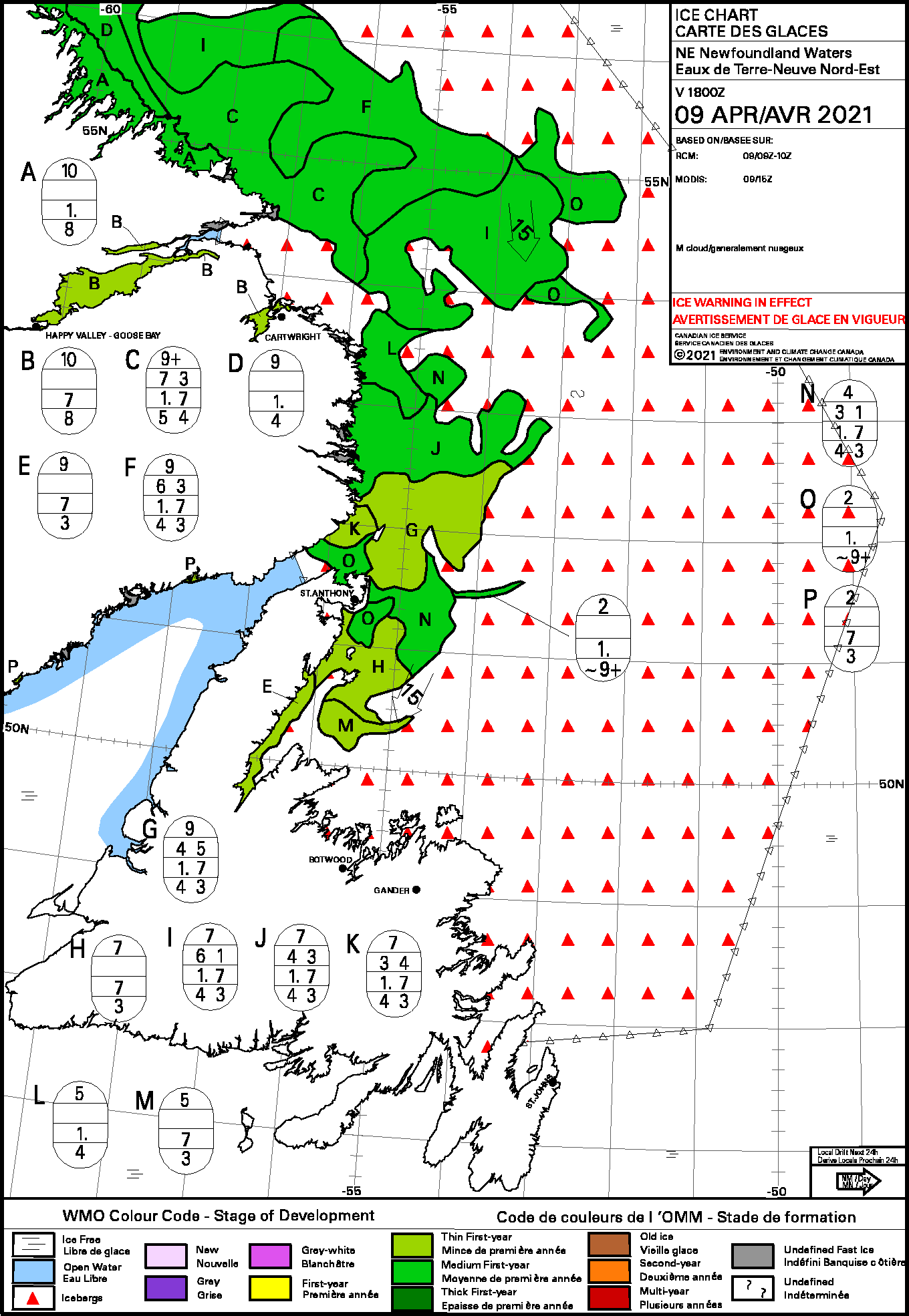
Below is a detailed ice chart of the region from this year: Black Tickle is south of Cartwright, which is marked on the chart.
In 2019, I kept track of published polar bear sightings in Labrador, not all of which were in Black Tickle. I’m pretty sure I didn’t miss any (Crockford 2020), but there was nowhere near 72 reports overall, let alone 72 just in Black Tickle. See here (mid-Feb); here (late Feb); here (mid-April); here (late May).
However, I was also pretty sure that every single sighting wasn’t making the news, which this information confirms. A total of 72 sightings in 2019 in Black Tickle alone is impressive! In Newfoundland, there were an impressive number of sightings in 2017.
The ice came early to Labrador in 2019 and continued to be be relatively heavy throughout the spring. There was lighter ice in 2020 but not as late and light as this year. From the comments of Sgt. Keefe, it seems the wind and sea conditions very close to shore have had more of an impact on potential polar bear visits in southern Labrador than the ice conditions well offshore. Although a population collapse would also explain the dramatic decline in sightings, there is no evidence I’ve heard about that Davis Strait numbers are way down, as some have predicted.
Posted onApril 12, 2021|Comments Off on Harp seal pup production poor in Gulf of St. Lawrence but it won’t impact the population
A seal biologist with Canada’s Department of Fisheries and Oceans has confirmed that harp seal pupping was almost non-existent this year in the Gulf of St. Lawrence due to poor sea ice conditions. The ice at the Front has been lighter than usual this year but probably adequate for a decent crop of baby seals.
The ice was definitely sparse in the Gulf this year. Reports in the middle of March indicated few white-coated baby harp seals were found in the Gulf this year, ruining the prospects for the specialized businesses that take tourists out to the ice by helicopter to view the adorable newborns in the wild.
However, while it is unfortunate for the local businesses, even the loss of all the harp seal pups in the Gulf this year will not seriously impact the total population. Even in a good year, at most a third of Northeastern Atlantic harp seals have their pups in the Gulf – the majority of seals give birth at the Front (DFO 2020; Stenson et al. 2015). So as long as ice there remains in decent condition over the next few weeks, most of the harps and their pups at the Front should be OK (see ice chart below for week of 5 April 2021).
As biologist Gary Stenson said in a radio interview today, the lack of harp seal pups in the Gulf this year may be due to pregnant females moving north to the Front to give birth, as they have been known to do in other low-ice years (Sergeant 1976, 1991), rather than because of massive mortalities. There have been some mortalities but not the tens of thousands some were expecting.
Headline from a National Geographic story on the harp seal pup mortalities this spring, 18 March 2021
Predictably, the Humane Society International issued a press release calling for the seal hunt to be shut down in the Gulf this year but the government has dismissed these concerns, in part because there is very little sealing done in this region anyway.
Seal biologist Mike Hammill concurred the harp seals will be fine, even if ice in the Gulf becomes rare in the future:
“It’s not looking good for them in the Gulf of St Lawrence, but we anticipate that we’ll see a shift in distribution over time,” he says. “They’ll gradually disappear from the gulf, so instead of a third of harp seal pups being born there, maybe all the pups will be born off the Labrador coast.” [The Guardian, 13 March 2021]
At last count in 2017, there were an estimated 7.6 million (range 6.55-8.82) harp seals off the east coast of Canada (DFO 2020), up from 7.4 million in 2014 (DFO 2014). That’s a huge seal population. Harp seal pups are an important spring food source for Davis Strait polar bears (Peacock et al. 2013; Rode et al. 2012). A new population estimate of Davis Strait bears has apparently been completed but we are still waiting on the report (Crockford 2020).
Oddly, with all the hand-wringing about this year’s poor ice and recent years when sea ice in the Gulf has been poor, none of the reports ever point out that there have also been recent years when the sea ice was so heavy that it interfered with shipping: in 2019, for example, and 2014, and 2015. And 2017. Short memories.
Finally, a reminder my latest novel, UPHEAVAL, is set in the Gulf of St. Lawrence (Cape Breton Island) and my first novel, EATEN, is set on the north shore of Newfoundland at this time of year. These are timely reads if you haven’t tried them and they make good gifts as well.
References
Crockford, S.J. 2020.State of the Polar Bear Report2019. Global Warming Policy Foundation Report 39, London. PDFhere.
Rode, K.D., Peacock, E., Taylor, M., Stirling, I., Born, E.W., Laidre, K.L., and Wiig, Ø. 2012. A tale of two polar bear populations: ice habitat, harvest, and body condition. Population Ecology54:3-18. http://link.springer.com/article/10.1007/s10144-011-0299-9
Sergeant, D.E. 1976. History and present status of populations of harp and hooded seals. Biological Conservation10:95-118.
Sergeant, D.E. 1991.Harp Seals, Man and Ice. Canadian Special Publication of Fisheries and Aquatic Sciences 114. Fisheries and Oceans Canada, Ottawa.
Stenson, G.B., Buren, A.D. and Koen-Alonso, M. 2015. The impact of changing climate and abundance on reproduction in an ice-dependent species, the Northwest Atlantic harp seal, Pagophilus groenlandicus. ICES Journal of Marine Science 73(2):250-262. http://icesjms.oxfordjournals.org/content/73/2/250
Comments Off on Harp seal pup production poor in Gulf of St. Lawrence but it won’t impact the population
Watch polar bear habitat reform in the Canadian Arctic: “last 10 days” Canadian Ice Service animation (works anytime) HERE.
See Quote archive for details.










 polarbearscience
You must be logged in to post a comment.