This review was originally posted June 30, 2012 at my evolution blog here
It was picked up as a guest post at Hilary Ostrov’s blog “The View from Here” July 1, 2012 under the title Of polar bears, polemics and climate warming
THE ORIGINAL REVIEW, RE-POSTED BELOW WITH MY EMPHASIS, HAS AN UPDATE ADDED JULY 26 2012, FOUND BELOW THE REFERENCE LIST
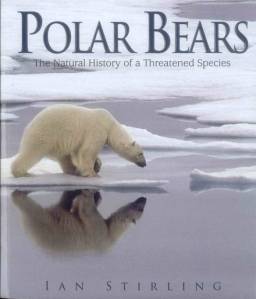
I recently came across a review of Ian Stirling’s latest book Polar Bears: The Natural History of a Threatened Species (2011, Fitzhenry & Whiteside) in the March 2012 issue of the journal Arctic, written by Arctic biologist Steven Ferguson. What is remarkable about Ferguson’s review is not what he says about the book but what he does not: lavish praise for Stirling’s polar bear stories but barely a mention of the book’s dismal predictions for the future. To be fair, all of the photographs in this book are outstanding (some are truly stunning) and the polar bear stories and life history information make for a fascinating read.
However, in reality this is not just a book about polar bears but a polemic discussion about the future of Arctic sea ice. Readers of Ferguson’s review might be surprised to find that there is an entire chapter dedicated to “climate warming” (“the game changer in polar bear conservation” according to Stirling). The climate warming chapter is as eye-catching in its own way as the rest of the book: who could miss the enormous, scary-looking graph predicting summer sea ice declining to zero within the next 90 years (described as a “NSIDC & NASA sea ice decay projection,” taken from Stroeve et al. 2007)? Or the two large photos, from different angles, of a bear that died in 1989 when its winter den collapsed? Oddly, such in-your-face photos and graphics seem not to have impressed Ferguson enough to warrant more than a few words in a list of topics covered (“models of future Arctic change”).
In contrast to Ferguson’s benign and somewhat fawning overview, my impression of the book was quite different.
continue reading





 polarbearscience
You must be logged in to post a comment.