Posted onDecember 5, 2025|Comments Off on A Wolf Attack Thriller for Christmas
My latest novel is done and ready in time for Christmas, but only by the skin of my teeth!
It’s called DON’T RUN and it’s a wolf attack thriller set in the little surfing town of Tofino, British Columbia (on the west coast of Vancouver Island).
When wolves consider humans easy prey, it makes for big trouble. This science-based novel, set in the winter of 2029, follows the exploits of RCMP wildlife safety specialist Luke Robinson, who moves to the Canadian surfing town of Tofino on the west coast of Vancouver Island. He quickly becomes embroiled in a local wolf controversy, which escalates into an epic wolf attack crisis. First dogs disappear, then people start to die. But what, exactly, can he help the town do to protect itself when wolf packs go rogue—or more to the point, will resident’s loyalty to local indigenous peoples and activist conservationists prevent them from doing what needs to be done?
The story challenges the traditional myth that wolves never attack people. I’ve been working on this for more than five years but ironically, over the last six months, news reports such as here and here, indicate wolves in the area where the story is set have been getting increasingly aggressive and predatory. Just a few months ago (based on warnings issued in October), two wolves pursued a walker on Long Beach so aggressively that they sought refuge in the water (no mention of a dog). Another pair of wolves charged at and pursued a visitor with a dog on a leash for an extended time period. Incidents like these, although fewer in number and less threatening in nature, have been reported since at least 2017.
What will happen in 2026 or 2027 if Parks Canada bans dogs entirely from Pacific Rim National Park? What will the hungry wolves in the Park do if they no longer have dogs to prey upon? What if even more wolves move in from the island’s interior? Questions like these inspired this new thriller.
Hope you enjoy! If you do, please go back and leave an Amazon review – it really helps other readers decide to give it a try and that promotes sales. Available in paperback and Kindle ebook formats.
On Amazon in the US here, in Canada here, UK here.
PS. As promised, winners of the 2022 fundraising contest for my Polar Bear Evolution book have their names used as characters in this new novel. Congratulations Ned Komar and John Macgowan!
Comments Off on A Wolf Attack Thriller for Christmas
Posted onFebruary 3, 2026|Comments Off on Biologists allowed David Attenborough to tell BBC viewers that Barents Sea bears were dying of starvation in his 2011 Frozen Planet episode when they knew it wasn’t true
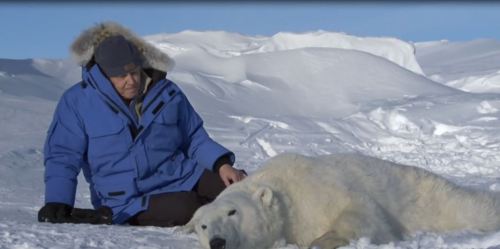
In the climate change episode of his 2011 BBC Frozen Planet series ‘On Thin Ice’, Sir David Attenborough told viewers that polar bear mothers and cubs across the Arctic were starving because climate change was melting the sea ice, even as he sat beside a fat, healthy Barents Sea female (below).
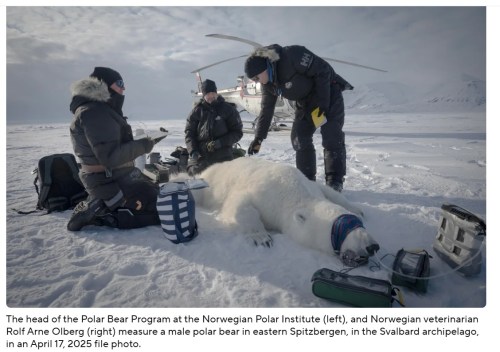
I wonder how Sir David Attenborough feels now? Has anyone bothered to tell him that Norwegian biologists have finally admitted that Barents Sea polar bears were actually fat and healthy in 2010 when they assisted in the filming of his BBC documentary? Or, did Attenborough know even then that this population of polar bears was thriving despite the large loss of sea ice – but let his viewers think otherwise?
Comments Off on Biologists allowed David Attenborough to tell BBC viewers that Barents Sea bears were dying of starvation in his 2011 Frozen Planet episode when they knew it wasn’t true
Posted onJanuary 29, 2026|Comments Off on Barents Sea polar bears thriving despite massive loss of sea ice, study confirms
A recently published study lead by Norwegian polar bear specialist Jon Aars found that both male and female polar bears were fatter and healthier after 1995 despite the greatest loss of sea ice of any Arctic region. However, no evidence was provided that a greater consumption of walrus and reindeer explain these results.
This new paper (Aars et al. 2026) updates and expands to 2019 data for a study I’ve repeatedly cited (e.g. here and here) that reported female bears in better condition between 2005-2017 than during the 1990s, despite dramatic sea ice loss in summer and winter in the 2000s (Lippold et al. 2019). Continue reading →
Comments Off on Barents Sea polar bears thriving despite massive loss of sea ice, study confirms
Posted onJanuary 26, 2026|Comments Off on Review of my wolf attack thriller DON’T RUN in the National Post
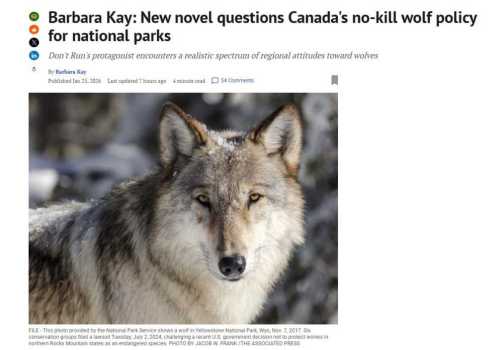
In the 24 January 2026 (Saturday) issue of the National Post, veteran journalist Barbara Kay highlights my latest novel about wolves really-gone-rogue around Tofino on Vancouver Island and the wolf conservation issues it raises.
Posted onDecember 17, 2025|Comments Off on Sea ice conditions continued to favour Arctic marine life in 2025
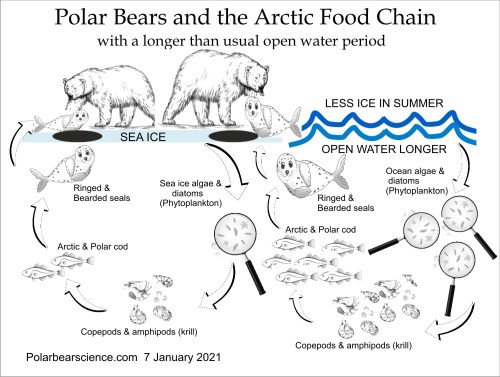
Increased primary productivity in the Arctic generated by reduced summer sea ice has continued into 2025, according to NOAA’s annual Arctic Report Card published yesterday, which means Arctic seals and whales, walrus, and polar bears will continue to flourish.
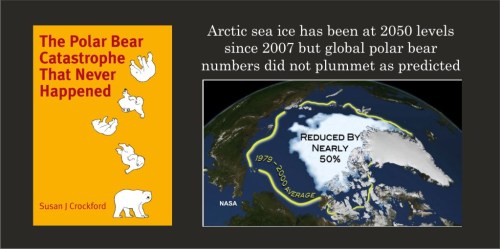
September sea ice extent has continued to stall, rather than plummet as predicted (Table 1: eleventh lowest average September extent since 1979; 4.75 mkm2), although they don’t come out and say so. NSIDC has stopped producing monthly sea ice reports due to budget cuts in late September 2025.
From the Report Card highlights [my bold]:
From 2003 to 2025, phytoplankton productivity spiked by 80% in the Eurasian Arctic, 34% in the Barents Sea, and 27% in Hudson Bay.
Plankton productivity in 2025 was higher than the 2003-22 average in eight of nine regions assessed across the Arctic.
And from the report on primary productivity itself:
All regions, except for the Amerasian Arctic (the combined Chukchi Sea, Beaufort Sea, and Canadian Archipelago), continue to exhibit positive trends in ocean primary productivity during 2003-25, with the largest percent changes in the Eurasian Arctic (+80.2%), Barents Sea (+33.8%), and Hudson Bay (+27.1%).
I’ve explained previously how and why this works: less summer ice = more plankton, which means more food for all marine life.
This explains why the catastrophic decline in polar bear numbers predicted in 2007 never happened.
PS. If you haven’t already, check out my new wolf attack thriller, DON’T RUN. There’s probably still time to order and get a before-Christmas delivery.
Comments Off on Sea ice conditions continued to favour Arctic marine life in 2025
Posted onDecember 11, 2025|Comments Off on Was a recent wolf encounter near Tofino an aborted predatory attack?
It has recently been revealed that a human-wolf ” encounter,” in which a beach walker was forced to take refuge in the ocean when two wolves kept advancing in menacing fashion, has been described by Parks Canada officials as benign-sounding “escorting behaviour” rather than an aborted predatory attack.
This week, I was looking online to see if there had been any further reports of wolf encounters near Tofino since the end of October, when two recent incidents made national news. I discovered that a full week later, a local First Nations newspaper revealed some interesting details not available earlier, see “Encounters climb as habituated wolves establish core territory near Ucluelet” (7 November 2025).
Here’s my question: Are Parks Canada officials hiding important details of recent encounters – or sanitizing them with scientific-sounding language – to protect wolves at the expense of keeping park visitors safe?
Posted onDecember 7, 2025|Comments Off on Polar bears and Arctic sea ice status
Positive news on the Arctic front as far as polar bears are concerned so far this year, with no reports of dead or dying bears, or of horrific attacks on humans that I’ve heard about. Not much to talk about but here’s what I’ve found.
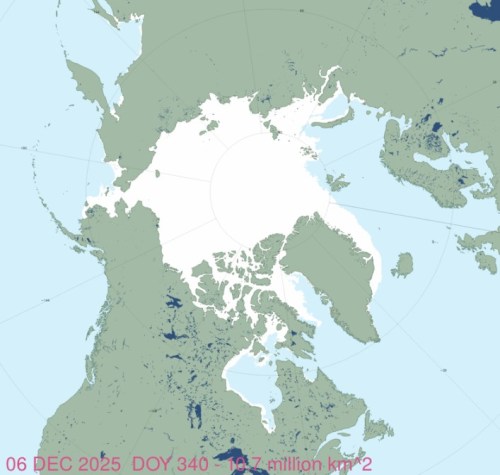
Sea ice in Hudson Bay is forming rapidly while according to NSIDC, the Arctic Basin is filled with ice. Ice has also moved well into the Bering Sea, the Barents and Kara Seas, and Davis Strait. NSIDC say they have discontinued their monthly sea ice reports due to lack of funding, although under the current federal government administration, such budget cuts were likely tied to their inability to consistently produce these reports without pushing a human-caused climate change narrative of impending catastrophe.
Posted onFebruary 26, 2025|Comments Off on No News is Good News on Polar Bear Day: Celebrate With 35% Off Polar Bear Evolution
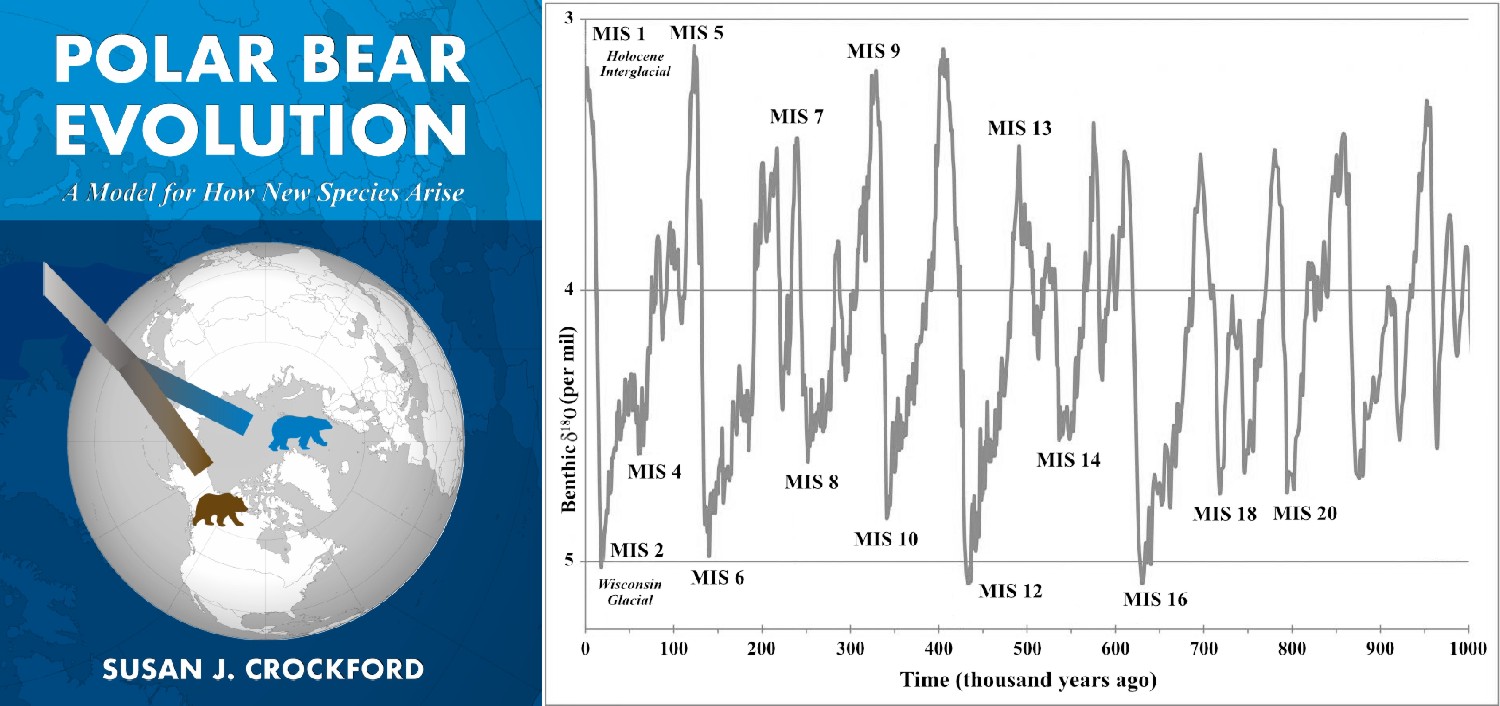
In honour of International Polar Bear Day coming up on Thursday February 27, I’ve discounted the price of my Polar Bear Evolution book by 40% for the next month in order to encourage evolutionary thinking about polar bears (in all markets: see links at the end of this post). UPDATE: Sale extended until June.
Instead of asking whether polar bears will survive a bit of warming over the next few decades, ask yourself how they survived more than 100,000 years of unimaginable changes in Arctic climate (both much warmer and colder) before now?
Posted onJanuary 8, 2025|Comments Off on The US needs to stop using climate model predictions in ESA species assessments
There are a lot of things wrong with the Endangered Species Act (ESA) – including that constitutionally, the power to regulate fish and wildlife lies with the states, not the federal government – but a worrying trend has developed where outputs of predictive climate change models (based on an assumption that human-caused carbon dioxide emissions are to blame) are accepted as scientific evidence in official species assessments of conservation status (Cronin 2007a, b, c).
President-elect Donald Trump is on record as dismissing the tenets of the human-caused climate change narrative, including during a Keynote Address he gave at the Heritage Foundation’s Annual Leadership Conference in Florida in 2022 on April 21 [snippet below from X, full transcript here and lecture on Rumble here.]
"We have to defeat the climate hoaxsters once and for all."
President-elect Donald Trump: "One of the most urgent tasks… is to decisively defeat the climate hysteria hoax."
"The radical left's fearmongering about climate and our future is… destroying America's economy,… pic.twitter.com/NtSERNdho6
I suggest that if Trump is serious about supporting science and divesting the US economy of useless expense, he needs to direct his new Secretary of the Interior to delist any species for which climate change models have been used to obtain an ESA listing (including the polar bear, ringed seal, bearded seal, wolverine, and emperor penguin) and disallow any future use of climate change models in ESA assessments for potentially threatened or endangered species (including the Pacific walrus and American pika).
Alternatively, he could go all-out and rescind the ESA altogether as unconstitutional, returning the management of fish and wildlife to US States, with the knowledge that the Marine Mammal Protection Act of 1972 will adequately project polar bears and other Arctic species living within the US state of Alaska, as well as whales and seals that live in temperate US waters.
Note: A version of this essay also appears on my Substack here.
Posted onSeptember 12, 2024|Comments Off on Churchill seemingly unworried about polar bears, fails to post problem bear reports on social media
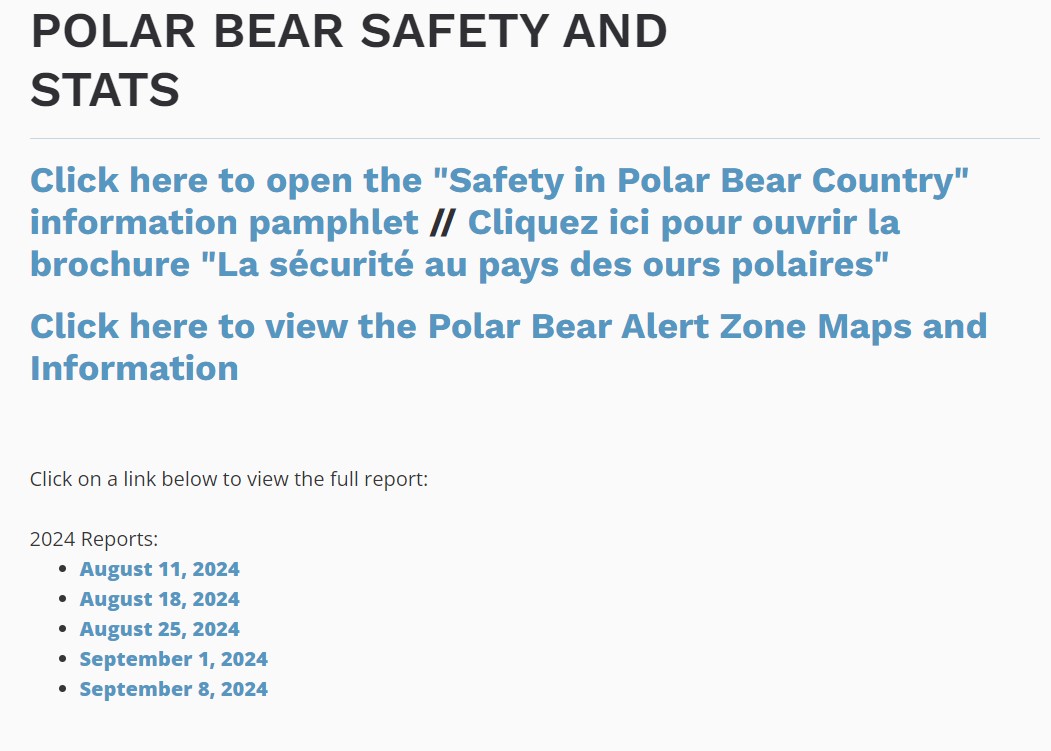
We know transparency’s gone out the window for many public officials, but still: Since early August, I’ve been checking daily for Problem Polar Bear Reports issued by the Churchill Polar Bear Alert Program managed by Manitoba Conservation. This morning (12 September), five reports were posted at once on the Town of Churchill website, dating back to first of the season for the week of August 5-11, see image below.
It’s apparent that the intent of these reports is in part public safety: to raise awareness of the potential threat of wandering polar bears around the town of Churchill because of the language that appears on virtually every report: “stay vigilant”, “be bear smart,” “be bear aware,” etc.
However, the X account for Town of Churchill seems to have been abandoned (last post 19 April 2024), which suggests the town is confident no residents or tourists would benefit from Alerts on X that polar bears are ashore:
The town’s Facebook account seems to be their only method of public communication yet even there, there have been no Polar Bear Alert reports posted this summer.
Oddly, even though it is now apparent from the just-released reports that one bear got so close to town that it had to captured and put in the ‘polar bear jail’ the week of 5-11 August — for the public’s safety — the only safety announcement the town issued that week was a ‘heat warning’ on 12 August:
I guess we are to assume that whoever is running this account – or the town council, or the mayor – believes that a day or two of hot weather (which Churchill gets regularly most years) is more dangerous to public safety than a massive predator wandering around town.
I can only conclude that keeping residents and tourists in the dark about potential threats from local polar bears is one way that Churchill is now adapting to climate change (from CBC News, 10 September 2024):
Bears Onshore and Effective Sea Ice Breakup dates
It is apparent from the wording of the Churchill reports that even by the last week of August this year, all bears were not yet off the ice, since they say only that “most bears” were on shore the week of 26 August to 1 September (see next section).
That suggests the last bears came ashore this year at least a week later than they did in 2020 (at 21 August), which at the time polar bear specialist Andrew Derocher presented as an anomaly (see tweet below). Compare to the situation last year here.
The last report I’ve seen from Derocher (via X) for 2024 on the status of his teams’ tagged females is that many of them (11/29 or 38%) were still on the ice as of 8 August (posted 11 Aug):
Derocher referring to this an “amazing” year that’s “similar” to the 1980s probably doesn’t tell the half of it, since he hasn’t posted any maps since then (as of noon, 12 September).
This effectively keeps secret the date when the last of these females bears actually came ashore, which is in any case a biased microcosm of the entire subpopulation. In other words, we can expect that if 40% of tagged female were still on bits of remnant ice at 8 August, there will have been many more bears, especially males, out there as well – which of course he never mentions.
He also never mentions that satellites under-report the amount of ice at this time of year by as much as 20% because of the effects of melt-water sitting on ice, but we’ve come to expect that.
Oddly, a recent study tried to explain the importance to survival of the recent phenomenon (since about 2015 or so) of bears staying out on melting bits of remnant ice rather than heading immediately to shore when the ice coverage over Western Hudson Bay drops below 50%. They suggested this behaviour was largely confined to male bears because they had to make up for feeding missed during the breeding season (McGeachy et al. 2024).
Females, alternatively, appear to respond to break-up in WH by coming onshore approximately 3 weeks after the mean ice concentration in WH reached 50%, … However, suitable habitat was still present elsewhere in the Bay and appeared to be used by a portion of WH prime age males. [McGeachy et al. 2024: 494, where “prime age males” are aged 5-19 years.]
However, these authors never mention the data reported by Derocher every year showing fairly significant numbers of tagged females lingering on tiny chunks of ice well into August, even though Derocher is a co-author. Funny, that.
Problem Bear Reports 2024, Weeks 1-5
Week 1, 5-11 August
Week 2, 12-18 August
Week 3, 19-25 August
Week 4, 26 August-September 1
Week 5, 2-8 September
References
McGeachy, D., Lunn, N.J., Richards, E.S. and Derocher, A.E. (2024). Sea ice influence on male polar bear survival in Hudson Bay. Arctic Science 10, 483-498. https://doi.org/10.1139/as-2023-004 Open access.
Comments Off on Churchill seemingly unworried about polar bears, fails to post problem bear reports on social media
Watch polar bear habitat reform in the Canadian Arctic: “last 10 days” Canadian Ice Service animation (works anytime) HERE.
See Quote archive for details.











 polarbearscience
You must be logged in to post a comment.