Posted onJuly 14, 2022|Comments Off on Arctic sea ice still quite abundant for early summer
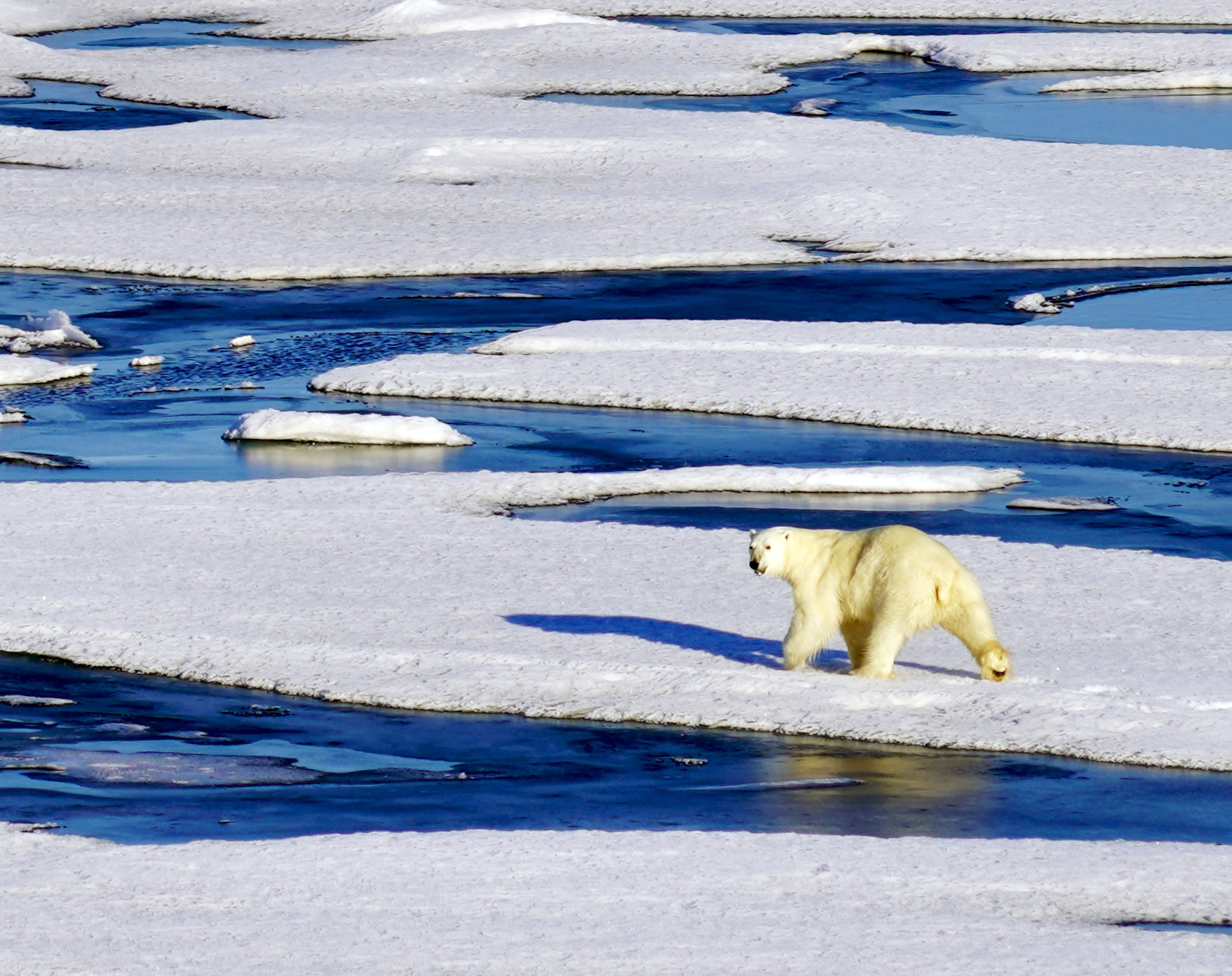
Despite rhetoric to the contrary, there is still plenty of sea ice over Arctic regions this summer, supplying feeding platforms for polar bears, ice-dependent seals, and walrus cows nursing their young calves. Forget about whether the numbers are below or above some short-term average, there is no catastrophe in the making for marine mammals in the Arctic at this time.
Remember, by early summer, young seals have left the surface of the ice and are in the water feeding; predator-savvy adults and subadults are hauled out on broken chunks of ice moulting their hair-coat. They may look like sitting ducks but polar bears have a hard time catching them because the seals are vigilant and have many escape routes available (due to all the open water). Most polar bears in Hudson Bay are still on the ice (you’ll see why below): the live cams near Churchill set up to watch polar bears are presently showing images of ravens with sea ice in the background, not bears.
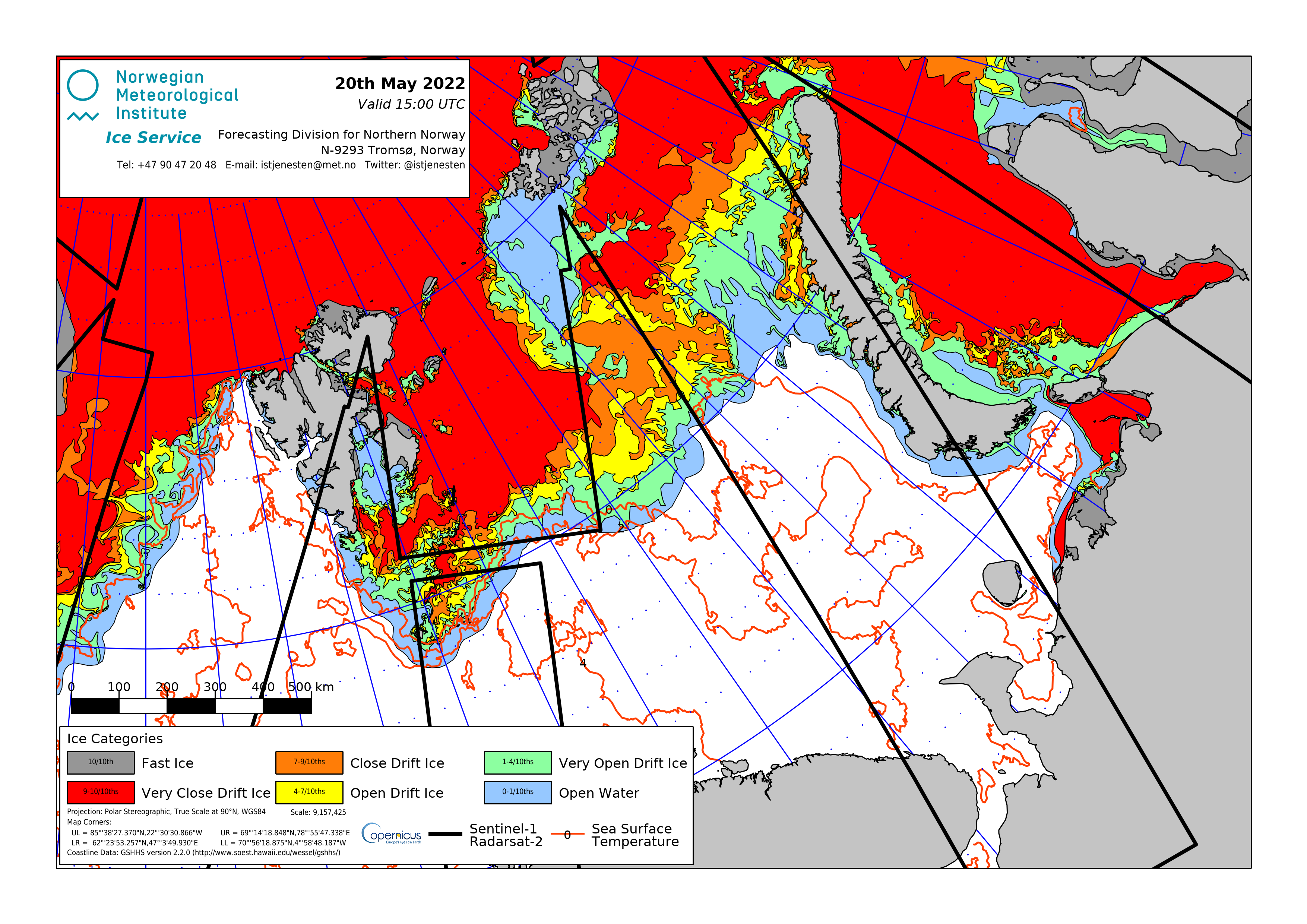
This post is predominantly sea ice charts for mid-July, what we in the science field call observational evidence, aka ‘facts’. Keep in mind that satellites used to produce these images have an especially hard time distinguishing ice topped with melt water from open water, which means much more ice useful to these marine mammals is almost certainly present than is shown in the charts (as much as 20% more in some regions).
Posted onJuly 13, 2022|Comments Off on Arctic sea ice is constantly changing which means polar bears must be flexible in their requirements
In honour of upcoming ‘Arctic Sea Ice Day’ (15 July), I revisit my 2015 essay on sea ice stability and polar bears, called The Arctic Fallacy. It challenges the flawed and out-dated ecological concept that under natural conditions, sea ice provides a stable and predictable habitat for polar bears, walrus and seals. The wide-spread adoption of this fallacy has allowed the present-day doom and gloom attitude of most Arctic specialists to develop.
[Polar Bears International have declared July 15 to be ‘Arctic Sea Ice Day’ to further its propaganda efforts to ‘save our sea ice’, which they claim is disappearing at an alarming rate due to global warming.]
Posted onJune 29, 2022|Comments Off on Claim: data exists showing polar bear body condition improves over summer on sea ice
Do polar bears increase their body condition if they stay on the sea ice over the summer? Do they continue to hunt successfully from broken ice in July and early August in areas like Hudson Bay where ice eventually melts out completely? There seems to be an assumption that they do but one polar bear specialists repeatedly claims there is data showing this is the case.
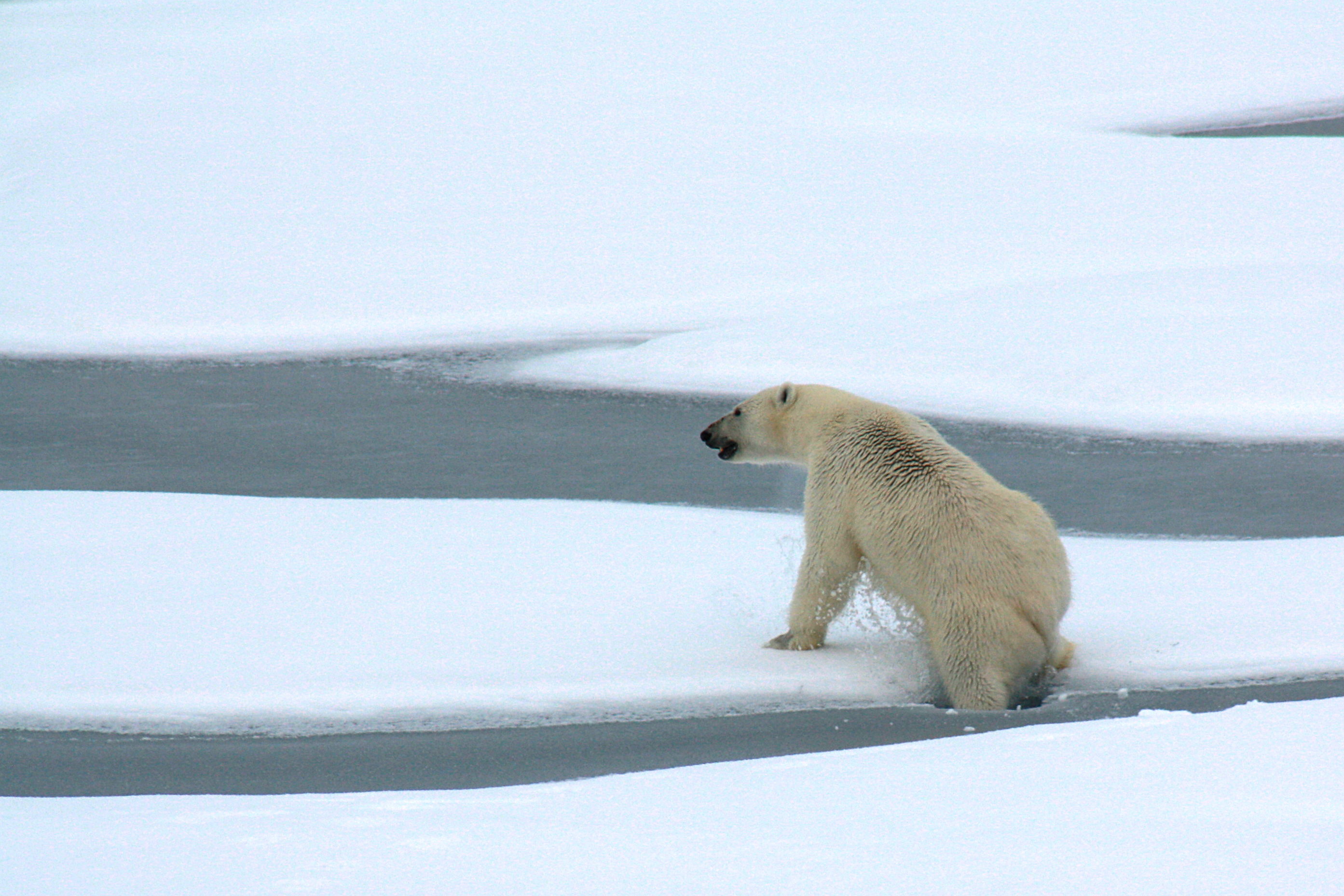
A polar bear breaks through thin Actic Ocean ice Aug. 23, 2009.
“Anyone saying sea ice at this time of year doesn’t affect polar bears is ignoring research showing their body condition continues to increase through summer if they’re out on the ice.” [Andrew Derocher 28 June 2022]
I would seriously like to know which paper or papers this data appears in but of course, he doesn’t provide that information. Instead, it’s ‘trust me, I’m the expert’.
Posted onJune 26, 2022|Comments Off on Svalbard polar bear data for spring 2022, low June ice unlikely to affect health or survival
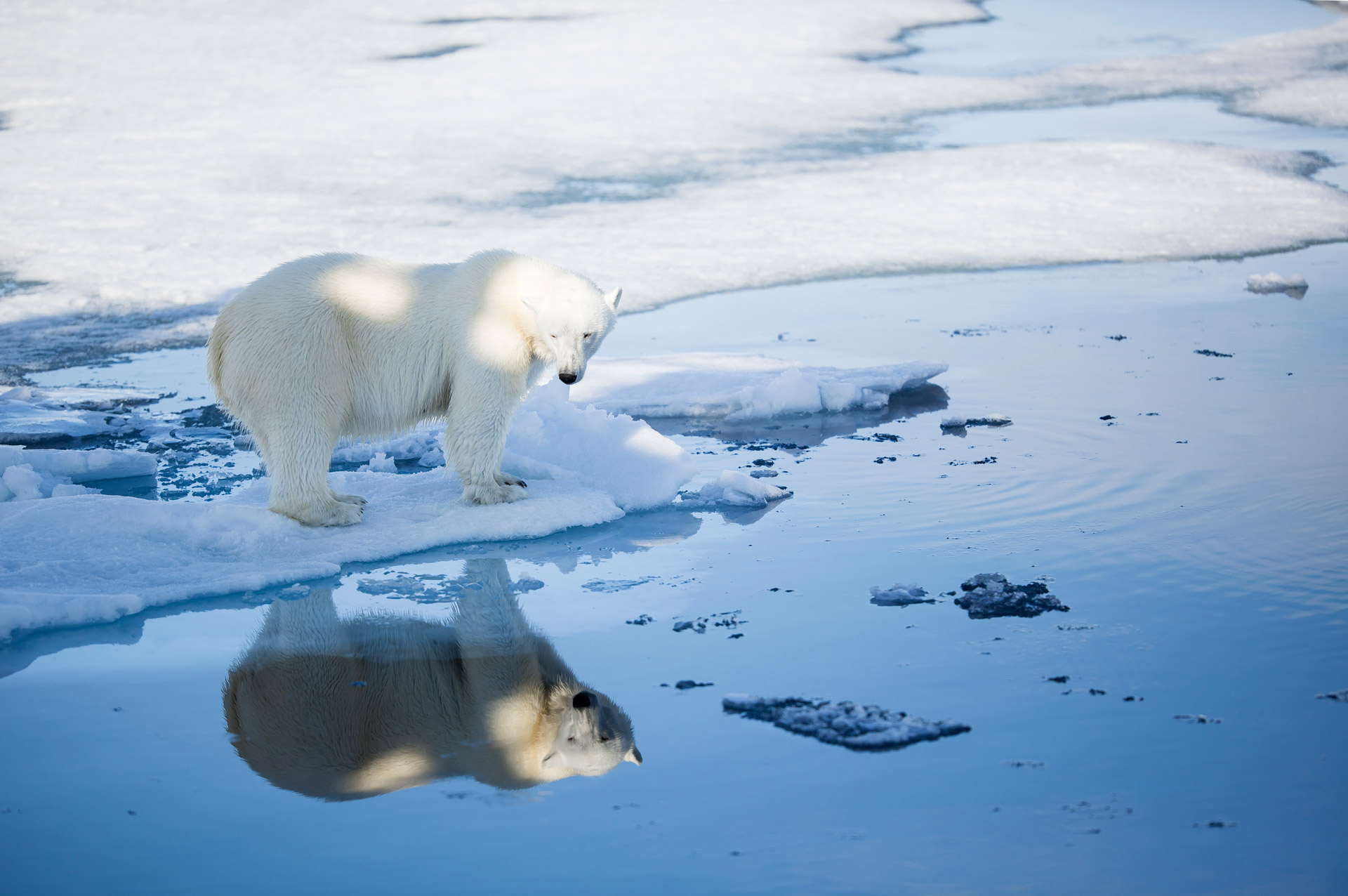
Sea ice around Svalbard, Norway has receded dramatically over the last few weeks and is now at levels similar to 2018 and 2006. But the data are in for the 2022 spring season and they show the bears are still thriving.
Posted onJune 19, 2022|Comments Off on New polar bear subpopulation update: more background facts and details from the paper
Here are the facts you need to put into context the claim that the estimated 234 polar bears recently discovered in SE Greenland have been living ‘without sea ice‘.
The unique genetic isolation of this new subpopulation makes it one of the most interesting discoveries about polar bears we’ve seen in decades, yet the media were primed by a press release loaded with dooms-day climate rhetoric to focus exclusively on the model-predicted precarious future of the species, like this gem from the lead author:
“In a sense, these bears provide a glimpse into how Greenland’s bears may fare under future climate scenarios,” Laidre said. “The sea ice conditions in Southeast Greenland today resemble what’s predicted for Northeast Greenland by late this century.”
As a consequence, the media have been trying to out-do each other with the most over-the-top climate catastrophe headlines, see here and here. The authors of paper itself and a companion piece do the same: instead of focusing on the exciting scientific implications of the genetically isolated population they discovered, they promote the preferred narrative that polar bears have a bleak future and lecture the public (yet again) about the need for limiting CO2 emissions (Laidre et al. 2022; Peacock 2022).
Posted onJune 8, 2022|Comments Off on My scientific blog posts contributed to the failed Antarctic Treaty bid to protect Emperor penguins
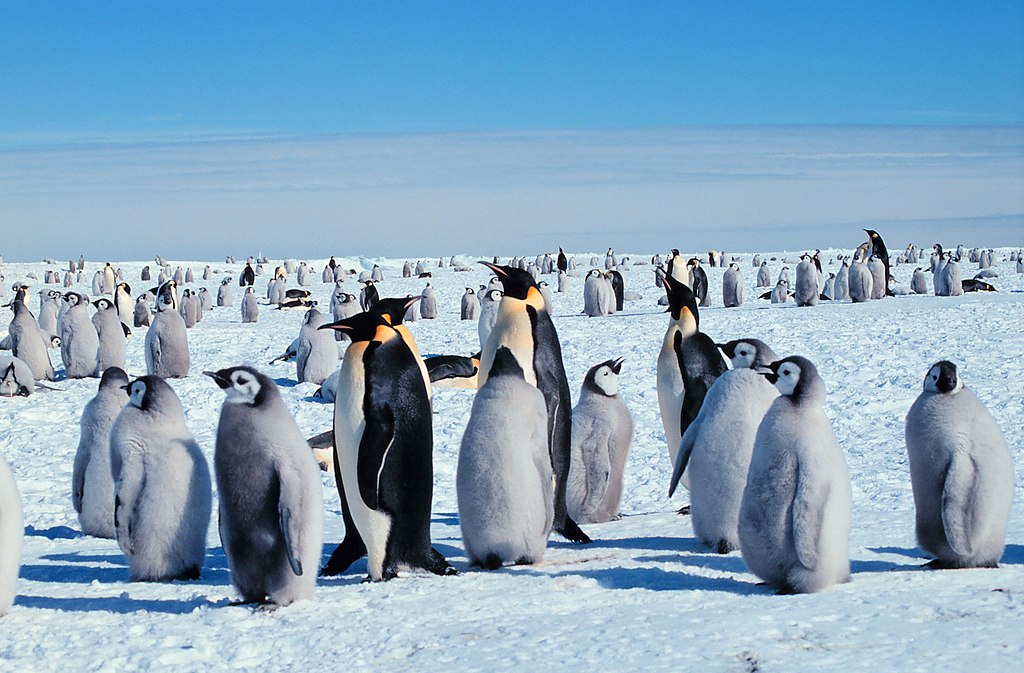
There is actual evidence that two of my fully-referenced blog posts caused some Antarctic Treaty delegates to reject a bid for special protected status for Emperor penguins. Activist heads have exploded.
Posted onJune 5, 2022|Comments Off on China ruins Antarctic Treaty attempt to enact special protection status for Emperor penguins
China has thwarted an attempt by members of the Antarctic Treaty organization to enact special protection status for the Emperor penguin, which would have generated a ‘Species Action Plan’. Apparently, such a proposal required a consensus of all parties and China wouldn’t go along.
But as we know from past actions by the IUCN Polar Bear Specialists Group against former member Mitch Taylor, such impediments are easily sidestepped when a decision requiring consensus doesn’t go your way.
Posted onMay 23, 2022|Comments Off on Barents Sea good news: researcher reveals polar bears, even females, still in excellent condition
Barents Sea polar bears had another good year in 2022 despite having lost the most sea ice of any subpopulation but the media and activists can’t help themselves insisting a dismal future is ahead.
Oddly, Norwegian polar bear researcher Jon Aars recently said the quiet part out loud: that he expects Barents Sea polar bear numbers to keep rising, which is rather at odds with the standard narrative:
“What we think is that in the future, if you get less and less sea ice and more and more bears, at some stage they will start struggling and you get fewer bears,” Dr. Jon Aars, a research biologist at Norwegian Polar Institute, told CTV News. [CTV News, 8 May 2022]
“Unexpectedly, body condition of female polar bears from the Barents Sea has increased after 2005, although sea ice has retreated by ∼50% since the late 1990s in the area, and the length of the ice-free season has increased by over 20 weeks between 1979 and 2013. These changes are also accompanied by winter sea ice retreat that is especially pronounced in the Barents Sea compared to other Arctic areas. Despite the declining sea ice in the Barents Sea, polar bears are likely not lacking food as long as sea ice is present during their peak feeding period. Polar bears feed extensively from April to June when ringed seals have pups and are particularly vulnerable to predation, whereas the predation rate during the rest of the year is likely low.” [Lippold et al. 2019:988]
This is has been upheld this year as well, with Aars saying in the video below (6 May 2022) that bears were found to be in excellent condition this spring. In contrast, the media framed this good news within the false ‘polar bear numbers are declining’ narrative, urged on, no doubt, by doom-monger Steve Amstrup.
Amstrup is the paid spokesman for activist organization Polar Bears International, who is identified in this ‘news’ report only as a ‘scientist’, as if he were unbiased, banging on about bears in Western Hudson Bay, where sea ice decline has been a fraction of what the Barents Sea has experienced.
Amstrup’s prophet-of-doom side-kick, Dr. Andrew Derocher (University of Alberta), who worked in the Svalbard area in the 1990s, was wringing his hands in public over sea ice loss in March:
It's incredibly warm in Svalbard. Challenging times for my old study area & the polar bears living there. If this continues, the melt will come early. An early spring melt is correlated with lower polar bear body condition, higher mortality rates & lower reproductive success. https://t.co/TWBcbjyppp
The disappearing ice in the Barents Sea is quite remarkable for March – this is the area within polar bear habitat with the most rapidly disappearing ice cover (>30 days of ice cover lost / decade). https://t.co/LvQ5bTEbVi
It turned out, this wasn’t an “early melt” but pack ice moving in response to wind, as it often does. A bucket-load of angst, all for nothing. Oddly enough, the polar bears figured out a way to not just survive, but thrive! Who would have thought?
References
Lippold, A., Bourgeon, S., Aars, J., Andersen, M., Polder, A., Lyche, J.L., Bytingsvik, J., Jenssen, B.M., Derocher, A.E., Welker, J.M. and Routti, H. 2019. Temporal trends of persistent organic pollutants in Barents Sea polar bears (Ursus maritimus) in relation to changes in feeding habits and body condition. Environmental Science and Technology 53(2):984-995.
Comments Off on Barents Sea good news: researcher reveals polar bears, even females, still in excellent condition
Posted onMay 18, 2022|Comments Off on UN awards Attenborough prize for his devotion to broadcasting climate breakdown nonsense
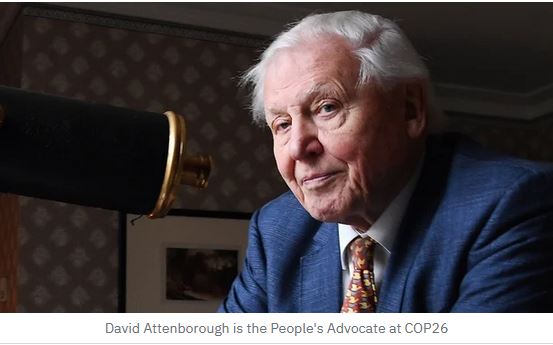
The UN Environmental Program (UNEP) last month presented Sir David Attenborough a ‘Champion of the Earth’ award for his devotion to frightening children and adults about the fake catastrophes of climate change. They didn’t put it quite like that, of course, but given their agenda promoting the scariest scenarios based on highly improbableclimate models, it’s no wonder the UN is happy with Attenborough’s performances to advance their cause.
Too bad so little of what Attenborough promotes is actually true and that he gets away with it because the message comes with pretty pictures. Except for the Russian falling walrus, of course: that film footage was so awful many people were truly horrified at what they were being shown. Death after gruesome death, all in slow motion, crafted to deliver the greatest shock possible, all falsely blamed on climate change by Attenborough.
Back in 2019, when the WWF/Netflix walrus sequence from ‘Our Planet’ was released, its purpose was to ensure the votes for unified action (i.e., ‘success’) at the upcoming UN climate meeting (COP26). Rather than “giving people hope” about taking action on climate change, that particular film footage was meant to emotionally bully politicians into action, as I explain in my latest book, Fallen Icon. Too bad it failed.
Posted onMay 12, 2022|Comments Off on Wandering polar bears are the new starving bears falsely blamed on climate change: Déjà vu
I said last year that wandering polar bears appeared to be the new ‘starving’ polar bears that were formerly the go-to victims falsely blamed on lack of ice due to climate change and here we are again. Polar bear specialists and their cheer leaders so seldom disappoint.
Watch polar bear habitat reform in the Canadian Arctic: “last 10 days” Canadian Ice Service animation (works anytime) HERE.
See Quote archive for details.












 polarbearscience
You must be logged in to post a comment.