The current health and abundance of polar bears continues to be at odds with predictions that the species is suffering serious negative impacts from reduced summer sea ice blamed on human-caused climate change.

The current health and abundance of polar bears continues to be at odds with predictions that the species is suffering serious negative impacts from reduced summer sea ice blamed on human-caused climate change.
Comments Off on State of the Polar Bear 2021: polar bears continued to thrive
Posted in Advocacy, Conservation Status, Polar bear attacks, Population, Sea ice habitat, Summary
Tagged attacks, Chukchi Sea, Davis Strait, Dyck, population size, recovery, surveys
Sea otter specialists, without shame or apology, routinely use a benchmark figure of ‘about 2,000’ for the pre-protection population size of the species at 1911 based on extremely limited evidence yet polar bear specialists refuse to accept a benchmark figure for the 1960s despite the existence of eight published estimates made by experts at the time. Sea otters came much closer to extinction than polar bears did and are not out of the woods yet, for reasons that are not entirely understood (Doroff et al. 2021).


Andrew Derocher, 22 February 2022: ‘There never was a population estimate of global abundance in the 1960s.’
Derocher’s statement and those of his colleagues, discussed at length in The Polar Bear Catastrophe That Never Happened, makes them look biased and unprofessional. There is absolutely no rational scientific justification for holding this stance.
Continue readingComments Off on Accepted sea otter population estimate at 1911 as inaccurate as rejected polar bear estimate for 1960s
Posted in Advocacy, Conservation Status, Population
Tagged accuracy, benchmark, estimate, extrapolation, polar bear, population size, sea otter
Polar bear scientists in 1965 published a consensus statement on population size, with no caveats that these were ‘wild guesses’ or not to be taken seriously. They quoted some of the same authorities that I did when I suggested a plausible baseline figure. Andrew Derocher, Steven Amstrup and others who say there has never been population estimates for the 1960 or 1970s are not defending science, they are lying to protect their ‘polar bears are all gonna die because of climate change’ narrative. No other biologists do this, even those who insist the species they study are at risk from human-caused global warming. You should ask why.

This controversy is why archives like the one I created yesterday are so important: they make it impossible to re-write history as some insist on doing:
Continue readingComments Off on Statement of polar bear population size estimates by polar bear scientists in 1965
Posted in Advocacy, Conservation Status, Population
Tagged advocacy, baseline, climate change, conservation, estimate, population size, Uspenski
The IUCN/SCC Polar Bear Specialist Group have recently modernized their website, which apparently required them to remove all meeting reports and status documents going back to 1968. Since I had downloaded all of them for my own research, I have archived them here for anyone wishing to assess the accuracy of statements made by PGSG members about what they did or said in the past, or to understand the history of the organization. I did something similar a few years ago regarding the administrative reports used in 2007 to support the decision to list polar bears as ‘threatened’ under the US Endangered Species Act (ESA), which disappeared from the US Geological Survey website: they can now be found here.

Comments Off on Archive of IUCN Polar Bear Specialist Group status and meeting reports back to 1965
Posted in Archive, Conservation Status, Population, Summary
Tagged Archive, IUCN, meeting reports, PBSG, Polar Bear Specialist Group, status reports, status tables
The so-called fact-checkers are out again trying to insist one side of a scientific debate is wrong and another is right because they happen to agree with one side. That’s advocacy, not science.

Here are some facts (check the links provided for additional references):
Continue readingComments Off on Fact checkers defend activist scientists because they agree with them not because they are right
Posted in Advocacy, Conservation Status, Population, Sea ice habitat, Summary
Tagged advocacy, facts, integrity, polar bear, population size, science, sea ice
Hudson Bay has been oddly slow to freeze this year, which has led to a predictable bit of hand-wringing from certain biologists reiterating prophesies of polar bear population collapse. However, since 2009, the last time that freeze-up was anywhere near this late was 2016. In other words, far from this years’ late freeze-up being a picture of ‘the new normal,’ conditions in 2021 are actually unusual compared to the last twelve years.

Moreover, considering that 2021 fall ice formation for the Arctic in general is well ahead of 2016 (and every year since, except 2018), it’s hard to see why human-caused global warming caused by ever-increasing CO2 emissions explains the slow freeze-up of Hudson Bay. Timing of Hudson Bay freeze-up has always been highly variable from one year to the next (Castro de la Guardia et al. 2017: Fig. 3, copied below). The average freeze-up date in the 1980s was 16 November ± 5 days, while from 2005-2015 this had shifted about a week to 24 November ± 8 days (Castro de la Guardia et al. 2017:230). This year freeze-up was later than usual but last year and the three years before that the ice froze as early as it did in the 1980s. Cue the zombie apocalypse.
UPDATE 11 December 2021: see chart below from Andrew Derocher on the position of tagged WH bears at 10 December.
Continue readingComments Off on Promoters of polar bear catastrophe in Hudson Bay gloss over recent good ice conditions
Posted in Conservation Status, Life History, science, Sea ice habitat
Tagged breakup, Derocher, freeze-up, ice-free season, PBI, polar bear, sea ice, time on shore, western hudson bay, York
Early last November, sea ice around Svalbard was the lowest it had been since 1967 and pregnant females were simply unable to den on the eastern islands of the archipelago and instead had to make their dens and give birth in the pack ice or the Franz Josef Land archipelago further east, as they have done before. However, the ice is back this fall with a vengeance: even Hopen Island in the south of region was surrounded by ice well before the end of the month but whether it will attract a few pregnant females remains to be seen.

Results of polar bear health monitoring in the spring of 2021 indicated the bears are doing just fine after last year’s low ice levels. Despite this evidence, a single bear photographed killing a reindeer in August 2020 was falsely blamed on climate change. The narrative never seems to change.
Continue readingComments Off on Higher than average Svalbard sea ice extent in November 2021 has implications for birth of cubs
Posted in Conservation Status, Evolution, Life History, Sea ice habitat
Tagged body condition, cubs, denning, fall, Hopen Island, polar bear, pregnant females, reindeer, sea ice, Svalbard
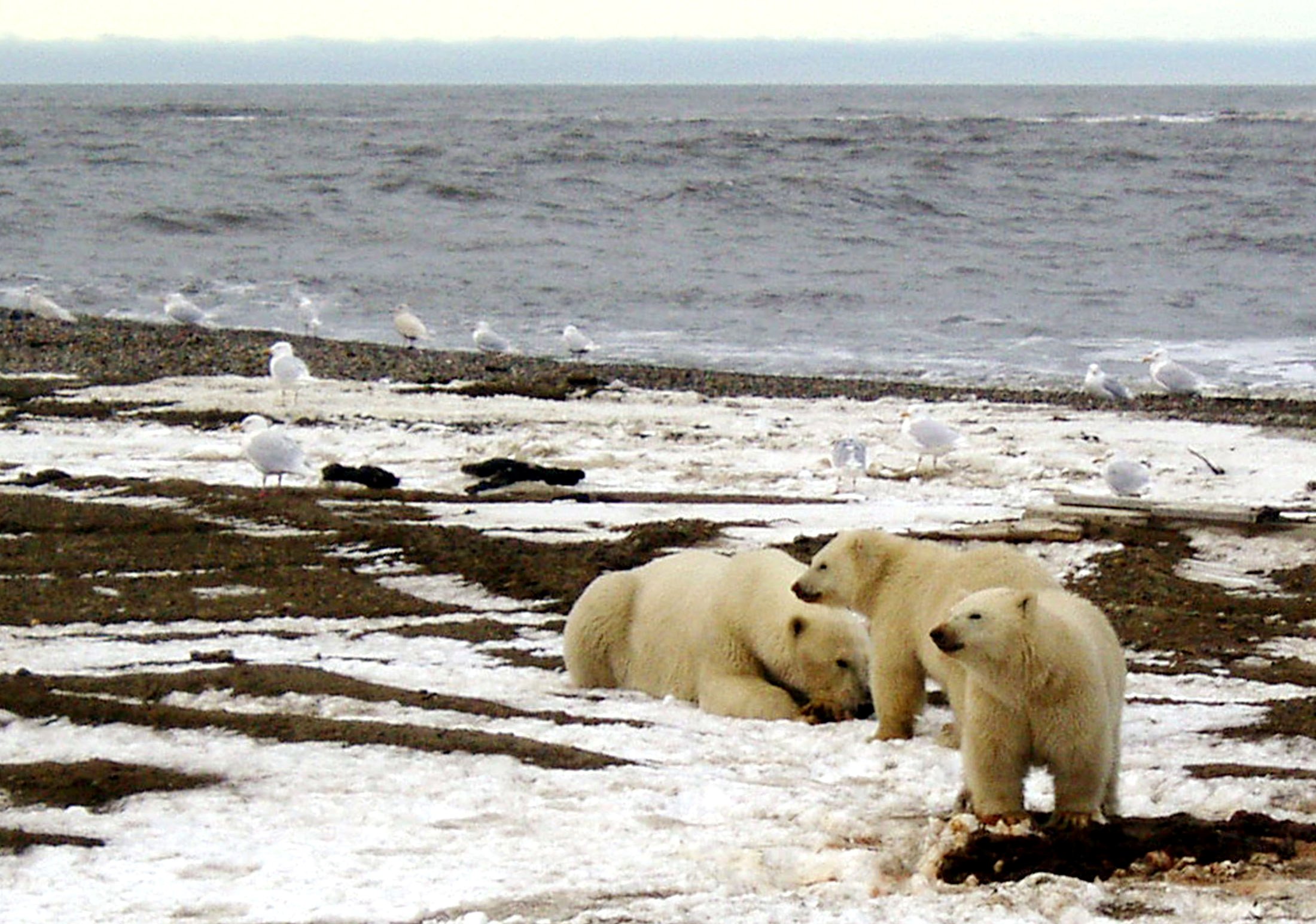
Mid-November is half-way through the Arctic fall season (October-December) and polar bear habitat is expanding slowly. Here’s a look at fall conditions compared to previous years, so you can see where bears may still be ashore and fasting (i.e. Hudson Bay and southern Foxe Basin) and where others have already resumed feeding.
Comments Off on Polar bear habit more extensive in most areas of the Arctic compared to previous years
Posted in Conservation Status, Life History, Sea ice habitat
Tagged change, comparison, facts, fall, Hudson Bay, last decade, polar bear, sea ice
Not only is it prime polar bear viewing week in Churchill, Manitoba but it’s the week of the 26th international elite COP climate change gab-fest: every media outlet on the planet is eager to promote climate catastrophe talking points.

Hence totally expected that the New York Times would print someone’s unsupported claim that the polar bears of Churchill (part of the Western Hudson Bay subpopulation) are on the verge of extirpation due to lack of sea ice and other similar nonsense. Also not surprising to find that Canadian government biologist Nick Lunn used the occasion to again offer unpublished and misleading data to a reporter. However, this time it’s good news meant to sound like an emergency: if correct, the data he shared indicate polar bears are heavier now than they were in the 1990s and early 2000s.
Continue readingComments Off on ‘Already too late’ to save Churchill polar bears claim a false NY Times climate change cliché for COP26
Posted in Conservation Status, Life History, Population, Sea ice habitat
Tagged body condition, Churchill, CoP26, misleading, New York Times, polar bear, population size, unpublished data
How many polar bears are there in the world? This was the primary question the International Union for Conservation of Nature (IUCN) had for the newly-formed Polar Bear Specialist Group (PBSG) back in 1968. Assessing the species global population size was part of the group’s mandate ahead of the 1973 international treaty to protect polar bears from wanton overhunting. For decades, this was an important objective for the scientists that made up the group.
However, about 15 years ago that goal disappeared. I contend it was abandoned because it had become incompatible with the PBSG claim that polar bears are ‘Vulnerable’ to extinction due to human-caused global warming. The group now insists that global population estimates cannot be used to determine if numbers have gone up or down: a Catch-22 that prevents public and scientific scrutiny. This is why they push back so hard when anyone suggests that global polar bear numbers have increased.

Comments Off on Global population size estimates for polar bears clash with extinction predictions
Posted in Advocacy, Conservation Status, Population
Tagged Australian Broadcasting Corporation, extinction, fact check, global population, IUCN, PBSG, polar bear, population increase, predictions





 polarbearscience
You must be logged in to post a comment.