Category Archives: science

Sir David Attenborough, the royal family, and their ties to the WWF and WEF

David Attenborough has been a close family friend to the Queen and the rest of the royal family for decades; he and the Queen are the same age and run in the same elite social circle of money, power, and influence.

Attenborough and the Queen, from The Daily Express, 31 October 2021

“The two icons of British culture were both born in London in 1926, only weeks apart. The Queen is the slightly older of the pair, born on April 21, and Sir David followed suit on May 8. Although their connection is particularly special, Sir David is also close with other members of the Royal Family, including Prince Charles, Prince Harry, and Prince William.” Woman and Home, 24 January 2022.

Continue reading

Attenborough fibbed about hundreds of dead walrus because he wanted what the WEF wants

As I point out in my new book, Fallen Icon, David Attenborough devised a three year campaign on the falsehood that hundreds of Russian walrus died falling off a cliff due to climate change because he also desired what the World Economic Forum (WEF), meeting online this week, say they want: immediate and drastic changes, supposedly to mitigate an invisible ‘climate emergency’ and other societal ills.

Some of the hundreds of dead walrus blamed on global warming. Basov 2017.

Continue reading

Promoters of polar bear catastrophe in Hudson Bay gloss over recent good ice conditions

Hudson Bay has been oddly slow to freeze this year, which has led to a predictable bit of hand-wringing from certain biologists reiterating prophesies of polar bear population collapse. However, since 2009, the last time that freeze-up was anywhere near this late was 2016. In other words, far from this years’ late freeze-up being a picture of ‘the new normal,’ conditions in 2021 are actually unusual compared to the last twelve years.

Perhaps the last bear leaving Cape Churchill for the sea ice, 4 December 2021.

Moreover, considering that 2021 fall ice formation for the Arctic in general is well ahead of 2016 (and every year since, except 2018), it’s hard to see why human-caused global warming caused by ever-increasing CO2 emissions explains the slow freeze-up of Hudson Bay. Timing of Hudson Bay freeze-up has always been highly variable from one year to the next (Castro de la Guardia et al. 2017: Fig. 3, copied below). The average freeze-up date in the 1980s was 16 November ± 5 days, while from 2005-2015 this had shifted about a week to 24 November ± 8 days (Castro de la Guardia et al. 2017:230). This year freeze-up was later than usual but last year and the three years before that the ice froze as early as it did in the 1980s. Cue the zombie apocalypse.

UPDATE 11 December 2021: see chart below from Andrew Derocher on the position of tagged WH bears at 10 December.

Continue reading

Free homeschool guide to Arctic sea ice ecology

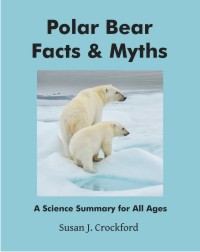
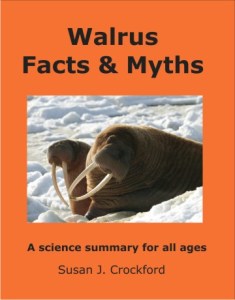
I have put together a Arctic Sea Ice Ecosystem Teaching Guide for homeschooling Arctic sea ice ecology at the middle school level (grade 5-8; ages 10-13) meant to complement my two books, Polar Bear Facts & Myths and Walrus Facts & Myths and supplement your local school board curriculum. You’ll find critical facts about the amazing creatures that inhabit the Arctic sea ice, links to trust-worthy online sites with additional information, suggested exercises, and links to fascinating videos like this one that aren’t filled with doom-mongering about the future. The printable pdf booklet is free to download here (single typo in original corrected). However, if you find it useful and can afford to do so, please consider a small donation (I suggest $6.00) at the ‘donate’ button to the right.

Polar bear research on hold in Western Hudson Bay due to COVID-19 restrictions

After spring polar bear research was cancelled in Western Hudson Bay (and pretty much everywhere else) this year because of Covid 19 concerns, it now transpires that fall research is out as well. Travel restrictions implemented by government departments and university administrations (not the health department) apparently mean fall programs to assess the health and status of polar bears in Western Hudson Bay have been put on hold.

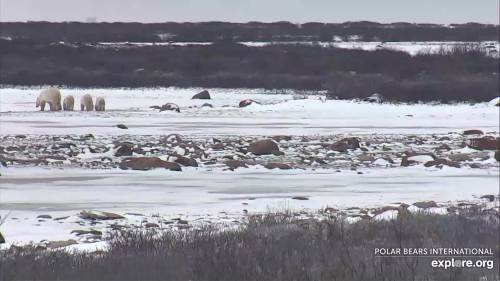
Triplet litter of polar bear cubs spotted in Wakusp National Park, Western Hudson Bay. 23 October 2020. Courtesy Explore.org.

Continue reading

Svalbard male polar bear dies after sedation for research purposes

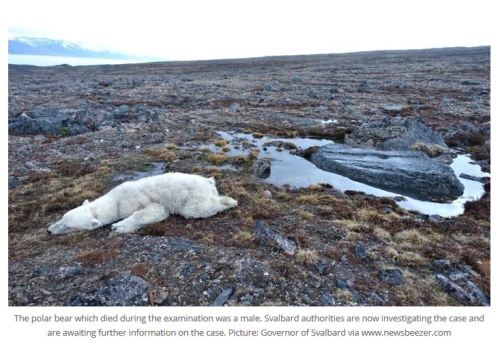
A 2 year old male polar bear died yesterday (10 September 2020) during the sedation procedure used by Svalbard researchers. Although most polar bear research is on hold this year due to Covid-19, apparently the annual fall research in Svalbard conducted by Norwegian biologists has been able to continue.

See details of this incident below, as screen caps; entire original in English at Polar Journal.   Continue reading

Why the Covid-19 epidemic is essentially over & current PCR testing protocols are pointless

This is a very good short paper on the current state of the Covid-19 epidemic by two UK respiratory disease researchers that is well worth the read, with a good coverage of the problems with models and PCR testing that is encouraging some governments to renew the panic and restrictions initiated back in March.
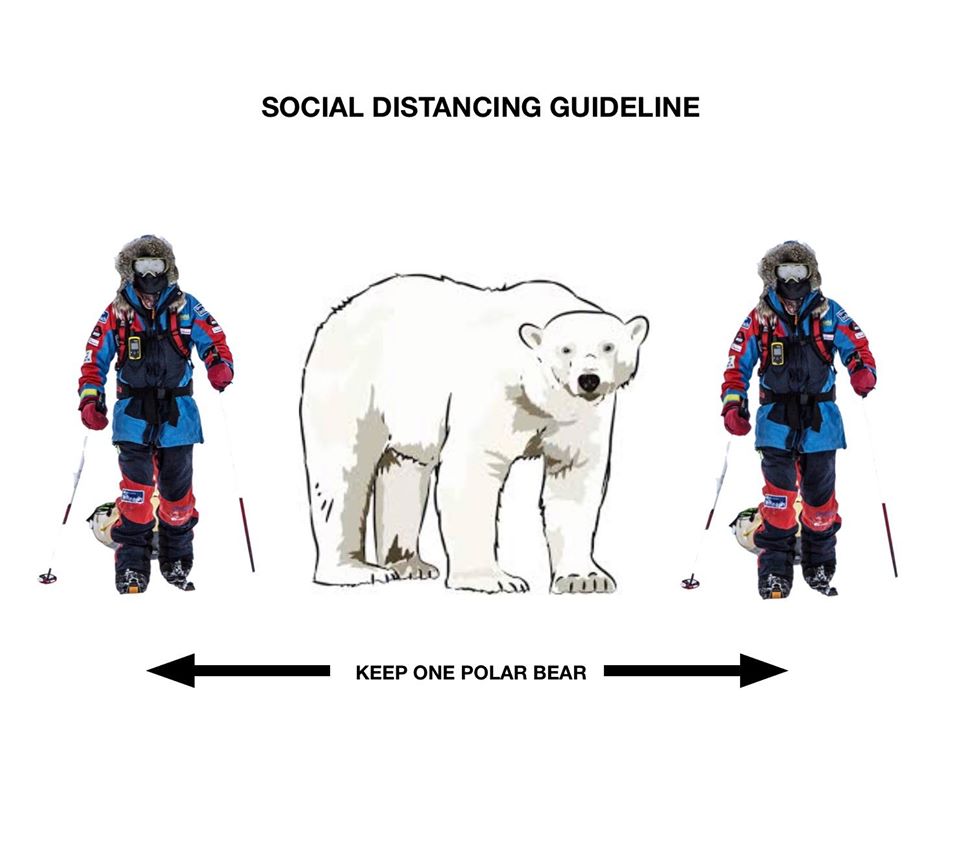
Svalbard social distancing_keep one polar bear away_icepeople 3 April 2020
Understanding Covid-19 is pertinent to this blog topic, not least because virtually all polar bear field research has been shut down for the year worldwide, with no indications restrictions will be lifted over the next few months: an entire year’s worth of data will be missing for all kinds of studies. Small Arctic communities that traditionally provided essential logistical support for these studies also tend to have a high proportion of vulnerable citizens and so remain closed to the outside world. Restrictions on travel – the border between the US and Canada remains closed to all but essential traffic – and limits on size of gatherings mean that the government response to this illness has severely impacted my public activities.
Have a look at this important referenced essay: I’ve copied the Executive Summary below.

Continue reading

Sceptical covid-19 research and sceptical polar bear science: is there a difference?

This essay about medical researchers having trouble getting their papers published because the results don’t support the official pandemic narrative has disturbing parallels with my experience trying to inject some balance into the official polar bear conservation narrative.1 Especially poignant is the mention of models built on assumptions sold as ‘facts’ that fail once data (i.e. evidence) become available – which of course is the entire point of my latest book, The Polar Bear Catastrophe That Never Happened.

Read the commentary below, copied from Lockdownsceptics.org (6 September 2020). Bold in original, link added to the story to which this is a response, and brief notes and links added as footnotes for parallels with polar bear conservation science. Continue reading

New report: Change coming to the Canadian Arctic — but it’s no looming catastrophe

A review of a newly-released (22 April 2020, on Earth Day) report commissioned by Canada’s Department of Fisheries and Oceans on the state of the Arctic seas published today in the National Post is a must read. It highlights the report’s emphasis that while the changes going on in our northern seas are indeed marked, they do not necessarily spell doom.

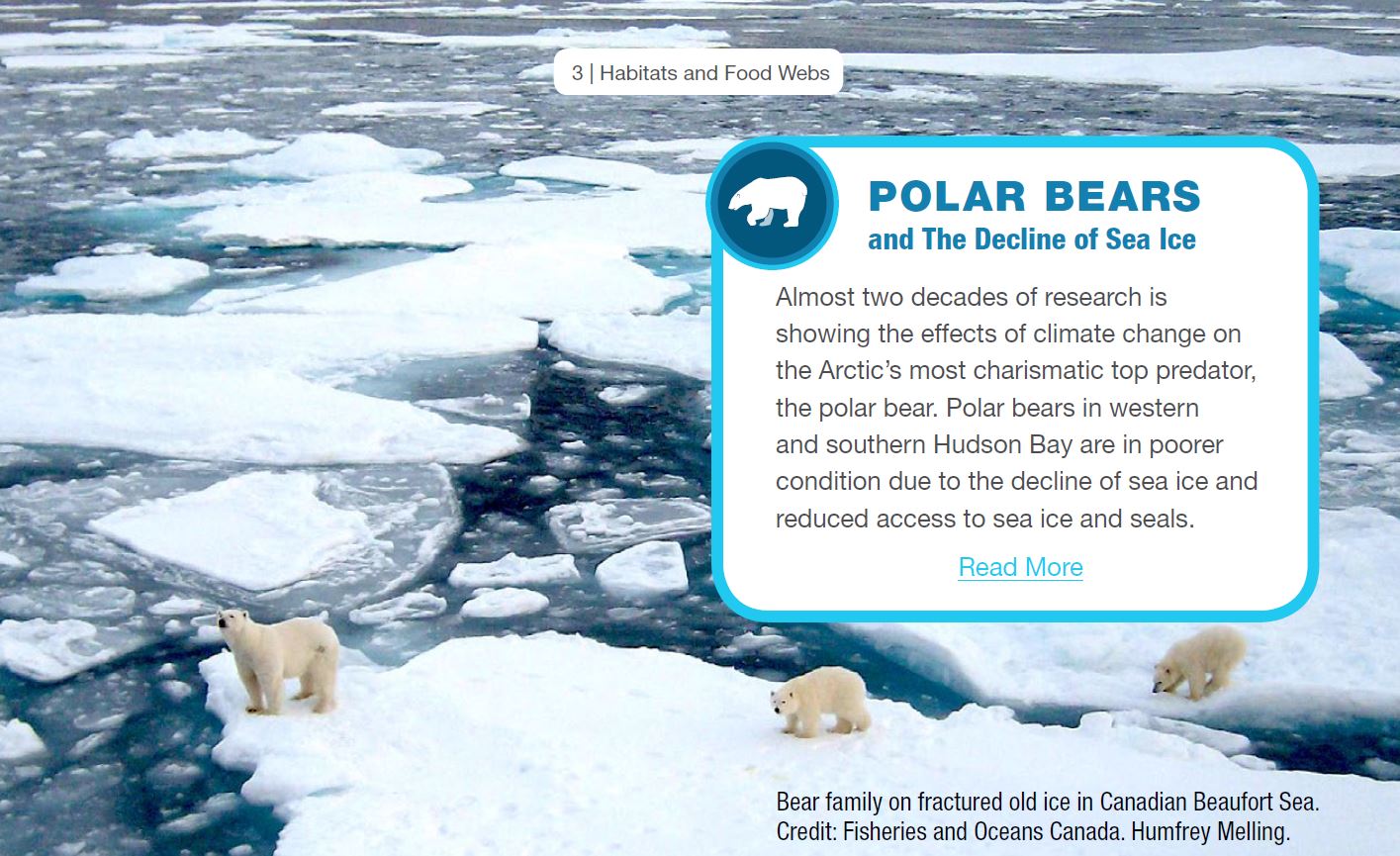
2019 DFO Arctic Report_Polar Bears from Summary document sent to media

Oddly, polar bears are primarily represented in the report by an overview account of the special case of Western Hudson Bay – an outlier among Canadian subpopulations – that puts special emphasis on the claimed decline in body condition blamed on recent sea ice changes that is not supported by any recent data (Crockford 2020).

Continue reading

Coronavirus shutdown forces research project to miss critical start of Arctic ice melt

The worldwide coronavirus lockdown has meant that the MOSAiC research project, which deliberately froze the icebreaker Polarstern into the Arctic Sea ice last fall, will miss taking scientific measurements during several critical weeks of the melt season (one of the main reasons for the project).

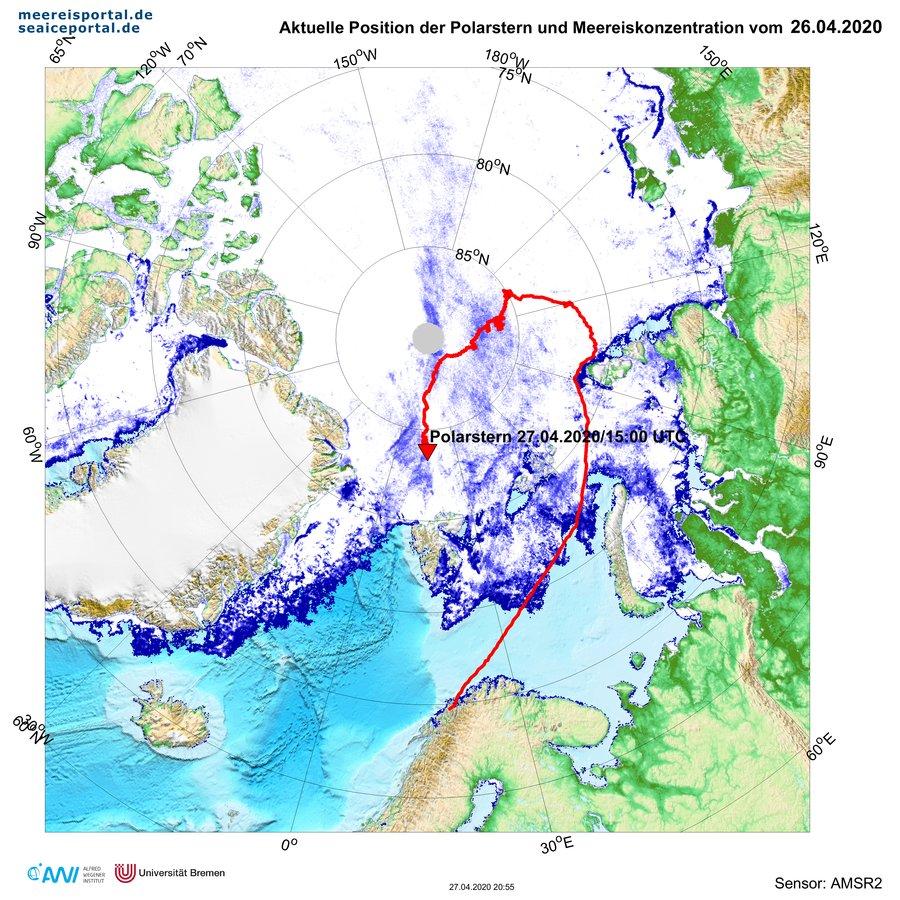
Polarstern 2020 location as of April 27 to the North of Svalbard_Graphic_courtesy of AWI

According to a report in the High North News (28 April 2020), at 27 April the Polarstern was between Svalbard and the North Pole (map above). In mid-May, the ship will break out of the ice and proceed south to waters off Svalbard (expected to take about a week) to meet up with two German icebreakers for a high-seas exchange of crew and restock provisions, the only option available after the coronovirus lockdown in Svalbard meant the original plans had to be scuttled. And while waiting for the upcoming research upheaval and breaking free of the ice, the crew of the Polarstern recently reported a visit from a polar bear wandering the ice hunting for seals.

Continue reading