Posted onApril 19, 2023|Comments Off on ‘Less ice means more conflicts with polar bears’ narrative not supported by scientific evidence
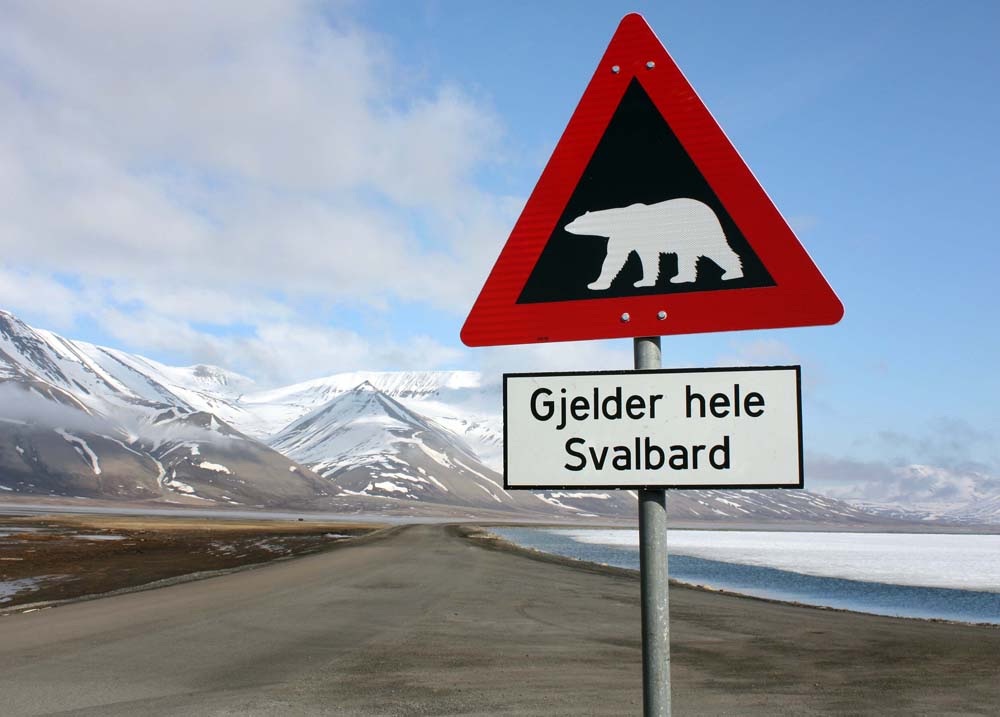
In another failed prediction, a new study on the number of polar bears killed in self-defense in Svalbard, Norway did not find the expected correlation with lack of sea ice or more tourists (Vongraven et al. 2023). Contrary to expectations, fewer bears were actually killed in self-defence as sea ice declined between 1987 and 2019.
Money Quote from the abstract:
“…ice cover had no significant impact on the odds for a [polar bear] kill.”
“Poor ice conditions for polar bears at Svalbard this year. Low ice will make tough hunting conditions this coming spring. Time to plan for more human-bear conflicts unless conditions change.” [13 Feb 2023 tweet, my bold]
Posted onApril 15, 2023|Comments Off on Russian walrus and polar bears continue to thrive US researchers tell the Washington Post
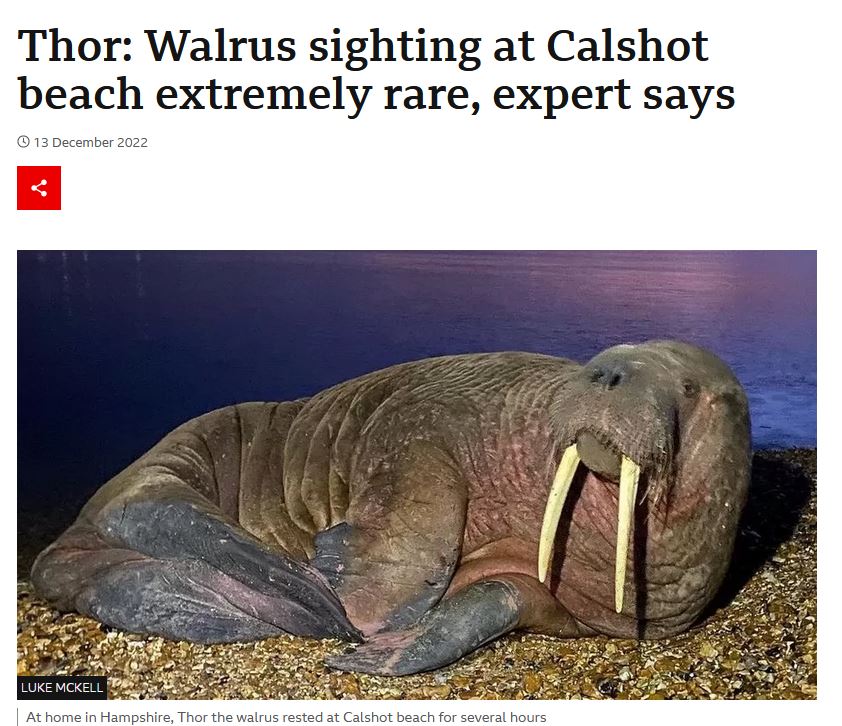
Interviews with US researchers for a piece in the Washington Post earlier today contain revelations that walrus and polar bear populations in the Russian Far East continue to thrive, despite insisting that polar bears face a dire future without human interference.
This article on collateral damage of Russia’s war with Ukraine comes with this stunning sub-headline:
The invasion [of Ukraine] is first and foremost a human tragedy, but it is also dire for wildlife, stalling scientific work on polar bears and other wildlife threatened with extinction.
The article prominently features a researcher working on Chukchi sea polar bears, which are currently thriving but still tagged with a status of “threatened” based entirely on computer models that predict a dire outcome 30 years from now. The writer also interviewed a scientist working on Pacific walrus, which likely number more than 200,000 animals and are not considered “threatened,” a point oddly not mentioned by the author or the researcher interviewed (Crockford 2023; MacCracken et al. 2017; Fischbach et al. 2022; USFWS 2017a,b).
Posted onMarch 20, 2023|Comments Off on 15 years after ESA listing as ‘threatened’ due to sea ice loss polar bears are abundant & thriving
Experts who used the American Endangered Species Act (ESA) to list polar bears as ‘threatened’ in May 2008 were mistaken: sea ice authorities got their predictions wrong about future ice extent and polar bear specialists erroneously declared that two-thirds of polar bears would disappear if summer sea ice declines continued unabated.
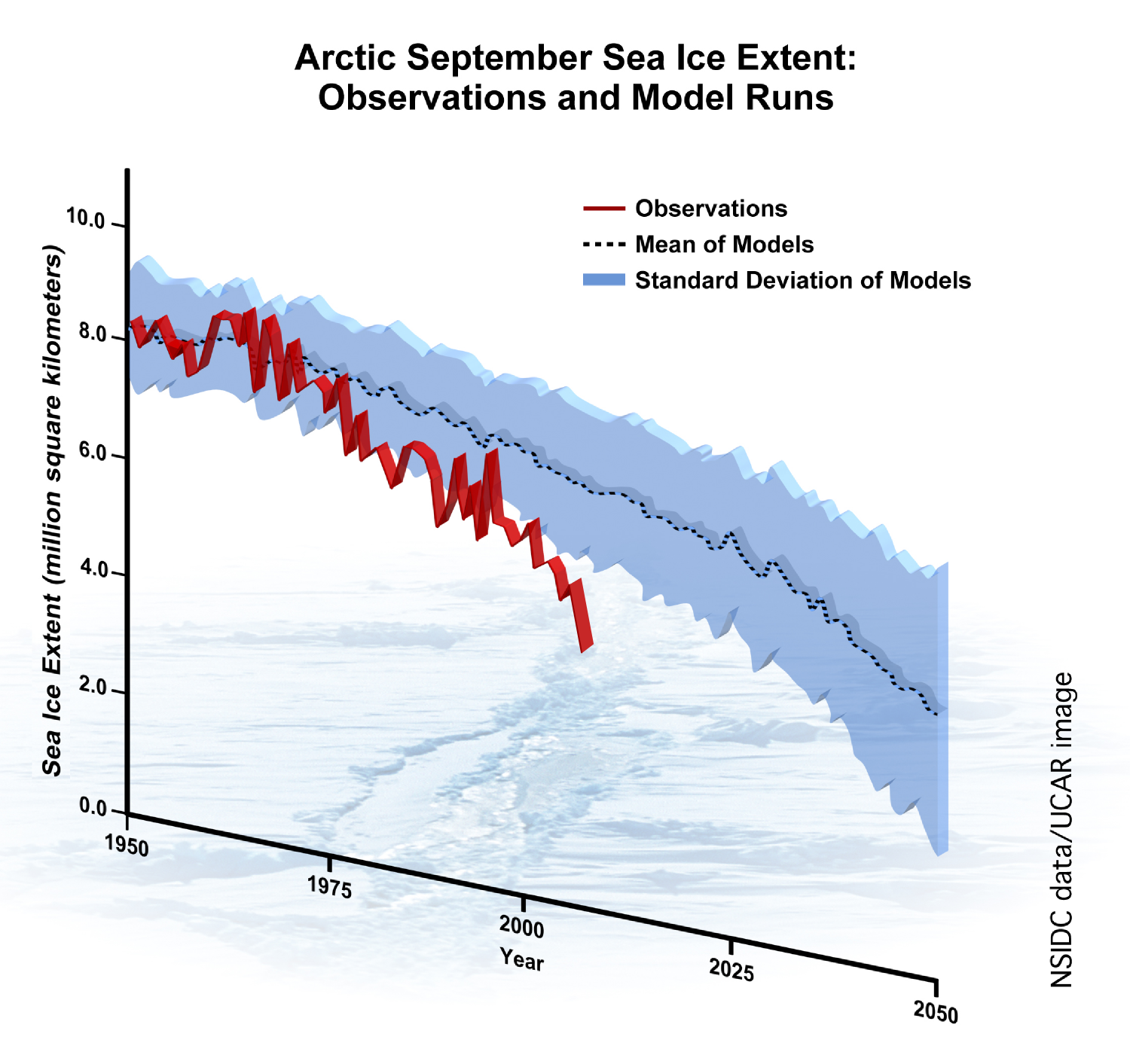
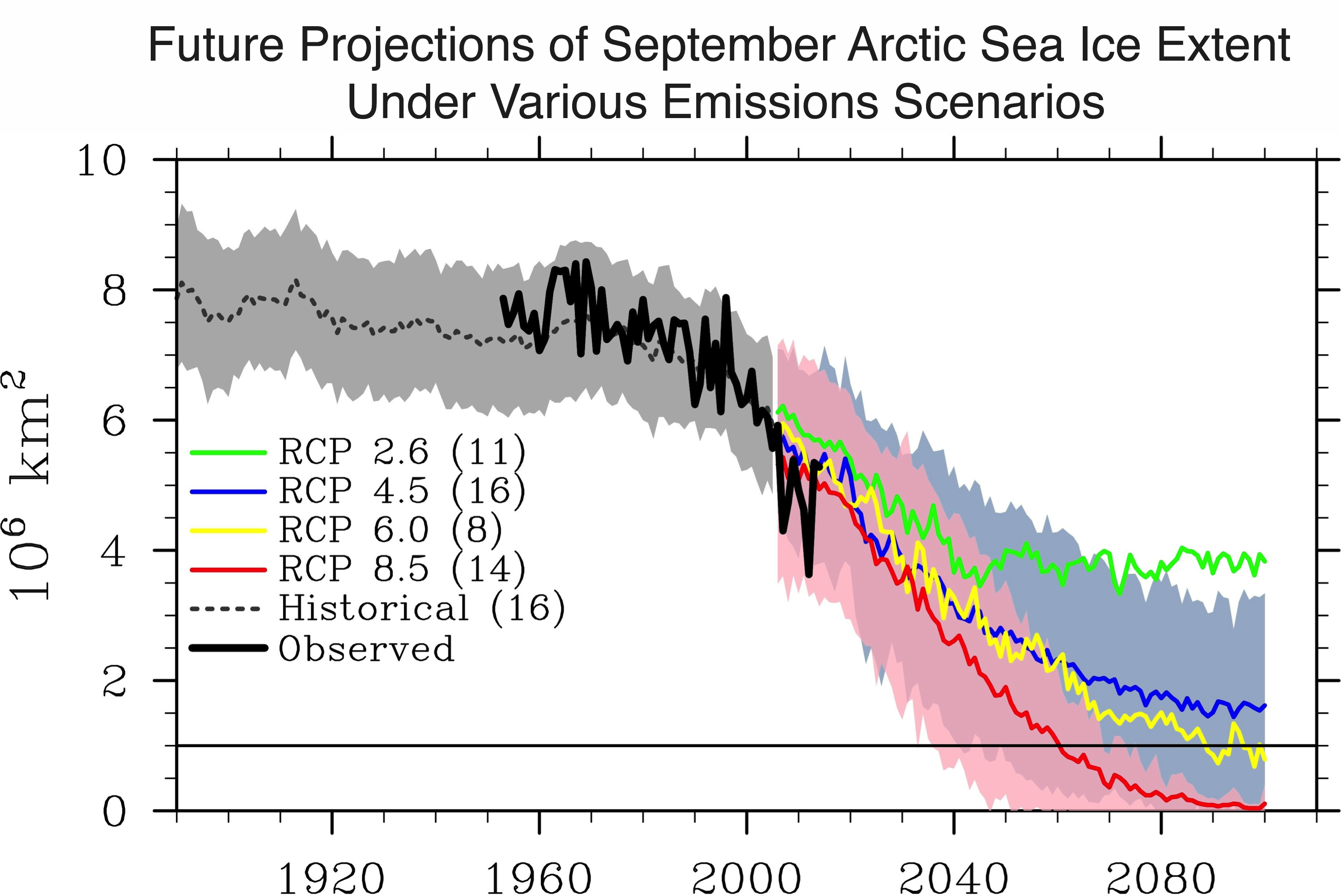
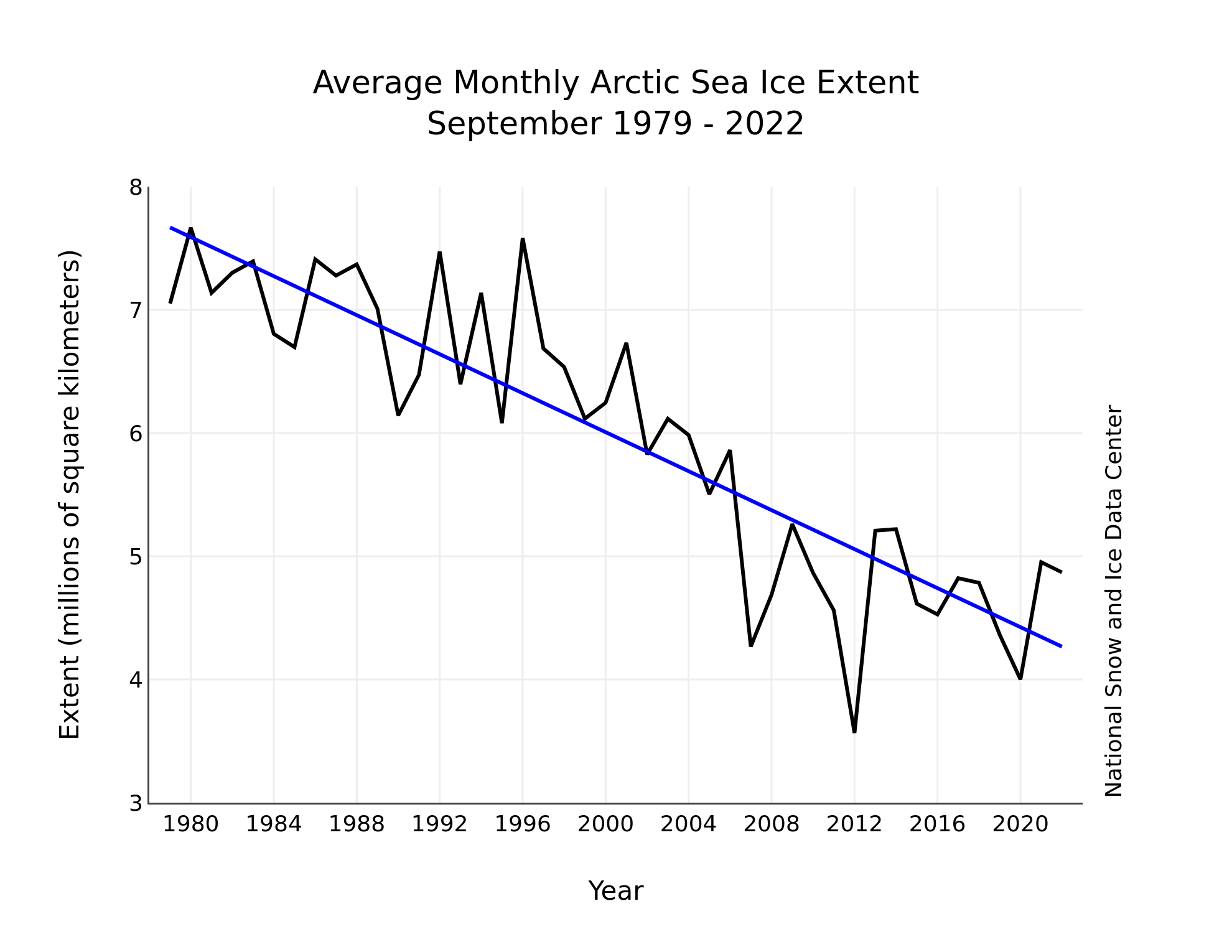
By 2007, there was even less summer sea ice than computer models of the day had predicted (Stroeve et al. 2007, see red line on graph below) and in 2012, it dropped to just above 3 mkm2.
Simplified Arctic sea ice predictions vs. observations up to 2007 by Stroeve et al. 2007 (courtesy Wikimedia). Sea ice hit an even lower extent in 2012 and all years since then have been below these predicted levels.
Updated sea ice predictions published in 2014 by the Stroeve team (see below) went to the other extreme, using totally implausible RCP 8.5 scenarios to predict a virtually ice-free Arctic (< 1 mkm2 ice extent) before 2040, which seem just as likely to be just as wrong as their 2007 attempt (Hausfather and Peters 2020; Pielke and Ritchie 2021; Stroeve et al. 2007, 2014; Swart et al. 2015).
In fact, for 12 years out of the last 15, summer ice extent has been below 5.0 mkm2 (often well below), which polar bear experts had not anticipated would happen until at least 2050 (Amstrup et al. 2006).
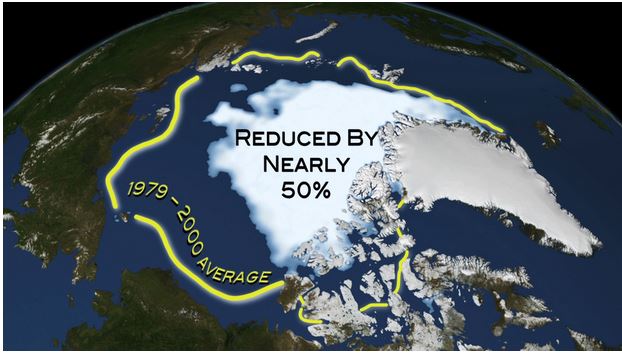
In 2012, NOAA sea ice experts summarized this sea ice loss as “reduced by nearly 50%” since 1979:
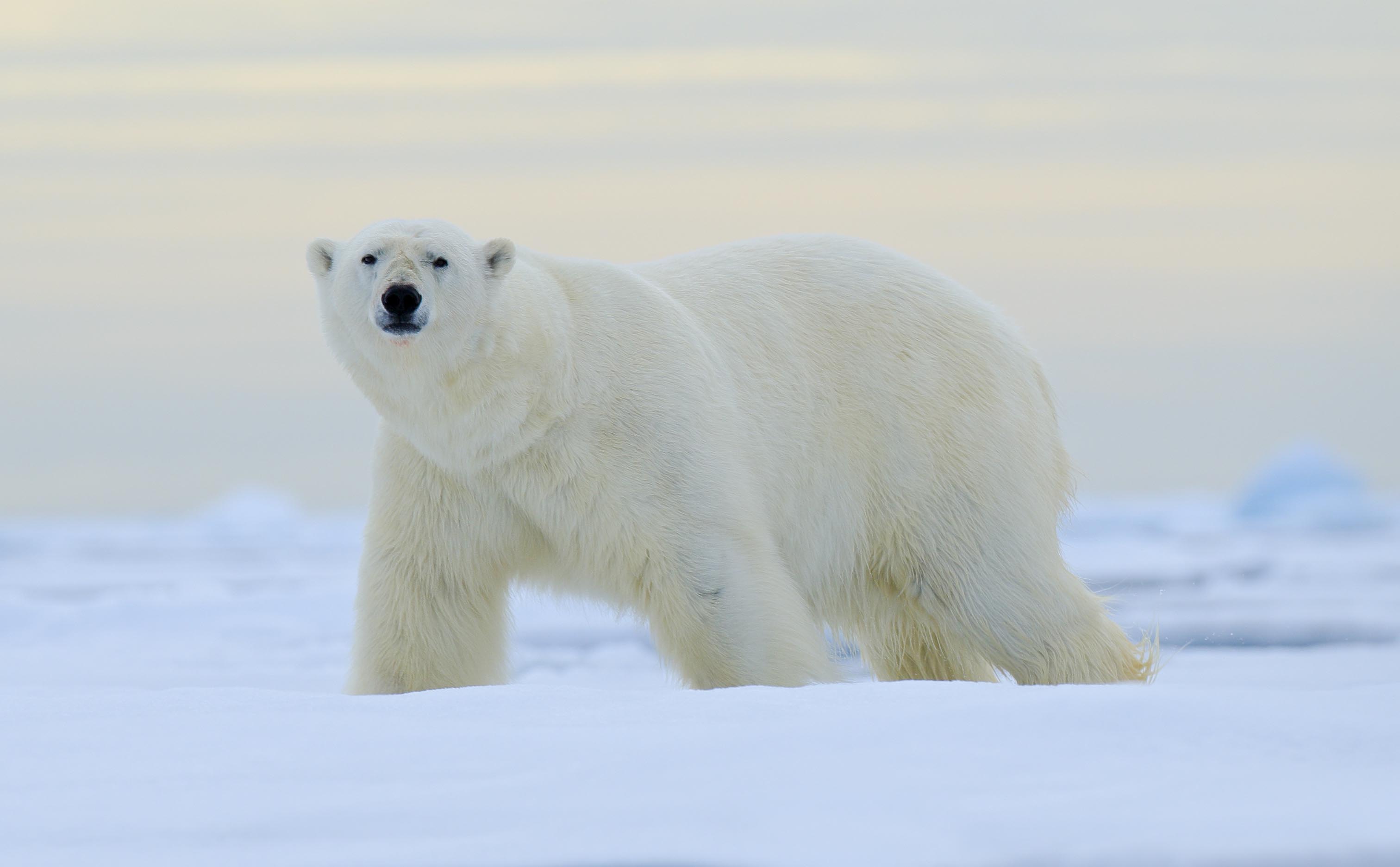
Despite this dramatic decline in sea ice, polar bears are still abundant and thriving because polar bear specialists got it wrong about the bears’ need for this habitat in summer (Crockford 2017, 2019; Crockford and Geist 2018). Polar bear turned out to be more flexible and resilient than predicted and many subpopulations are better off than before. Davis Strait and Chukchi Sea bears are doing very well: Barents Sea bears in particular are thriving despite by far the most sea ice loss of any Arctic region (e.g. Conn et al. 2021; Frey et al. 2022; Haavik 2022; Lippold et al. 2019; Peacock et al. 2013; Regehr et al. 2018; Rode et al. 2014, 2018, 2021, 2022).
Conclusion: Despite the Arctic warming four times as fast as the rest of the world with rising CO2 levels and almost 50% less summer ice than there was in 1979, polar bears are no closer to extinction than they were 15 years ago, according to the results of field studies. There is no existential emergency for polar bears or any other Arctic sea mammals due to declining summer sea ice, despite continued messages of doom from remorseless experts.
References
Amstrup, S.C., Marcot, B.G. & Douglas, D.C. 2007. Forecasting the rangewide status of polar bears at selected times in the 21st century. US Geological Survey. Reston, VA. Pdf here
Conn, P.B., Chernook, V.I., Moreland, E.E., et al. 2021. Aerial survey estimates of polar bears and their tracks in the Chukchi Sea. PLoS ONE 16(5): e0251130. https://doi.org/10.1371/journal.pone.0251130
Crockford, S.J. 2017. Testing the hypothesis that routine sea ice coverage of 3-5 mkm2 results in a greater than 30% decline in population size of polar bears (Ursus maritimus). PeerJ Preprints 19 January 2017. Doi: 10.7287/peerj.preprints.2737v1 Open access. https://peerj.com/preprints/2737/
Crockford, S.J. 2019. The Polar Bear Catastrophe That Never Happened. Global Warming Policy Foundation, London. Available in paperback and ebook formats.
Crockford, S.J. and Geist, V. 2018. Conservation Fiasco. Range Magazine, Winter 2017/2018, pg. 26-27. Pdf here.
Frey, K.E., Comiso, J.C., Cooper, L.W., et al. 2022. Arctic Ocean primary productivity: the response of marine algae to climate warming and sea ice decline. 2022 NOAA Arctic Report Card, https://doi.org/10.25923/0je1-te61
Haavik, E. 2022. ‘Svalbard’s polar bears persist as sea ice melts — but not forever. The World, 21 July.
Hausfather, Z. and Peters, G.P. 2020. Emissions – the ‘business as usual’ story is misleading [“Stop using the worst-case scenario for climate warming as the most likely outcome — more-realistic baselines make for better policy”]. Nature 577: 618-620. https://www.nature.com/articles/d41586-020-00177-3
Lippold, A., Bourgeon, S., Aars, J., et al. 2019. Temporal trends of persistent organic pollutants in Barents Sea polar bears (Ursus maritimus) in relation to changes in feeding habits and body condition. Environmental Science and Technology 53(2):984-995.
Regehr, E.V., Laidre, K.L, Akçakaya, H.R., Amstrup, S.C., Atwood, T.C., Lunn, N.J., Obbard, M., Stern, H., Thiemann, G.W., & Wiig, Ø. 2016. Conservation status of polar bears (Ursus maritimus) in relation to projected sea-ice declines. Biology Letters 12: 20160556. http://rsbl.royalsocietypublishing.org/content/12/12/20160556 Supplementary data here.
Rode, K.D., Regehr, E.V., Douglas, D., et al. 2014. Variation in the response of an Arctic top predator experiencing habitat loss: feeding and reproductive ecology of two polar bear populations. Global Change Biology 20(1):76-88. http://onlinelibrary.wiley.com/doi/10.1111/gcb.12339/abstract
Rode, K.D., Olson, J., Eggett, D., et al. 2018. Den phenology and reproductive success of polar bears in a changing climate. Journal of Mammalogy 99(1):16-26. here.
Rode, K. D., Regehr, E.V., Bromaghin, J. F., et al. 2021. Seal body condition and atmospheric circulation patterns influence polar bear body condition, recruitment, and feeding ecology in the Chukchi Sea. Global Change Biology 27:2684–2701. https://doi.org/10.1111/gcb.15572
Rode, K.D., Douglas, D.C., Atwood, T.C., et al. 2022. Observed and forecasted changes in land use by polar bears in the Beaufort and Chukchi Seas, 1985-2040. Global Ecology and Conservation 40: e02319. https://doi.org/10.1016/j.gecco.2022.e02319
Posted onFebruary 23, 2023|Comments Off on Published field study observations – not population size – prove polar bears are thriving
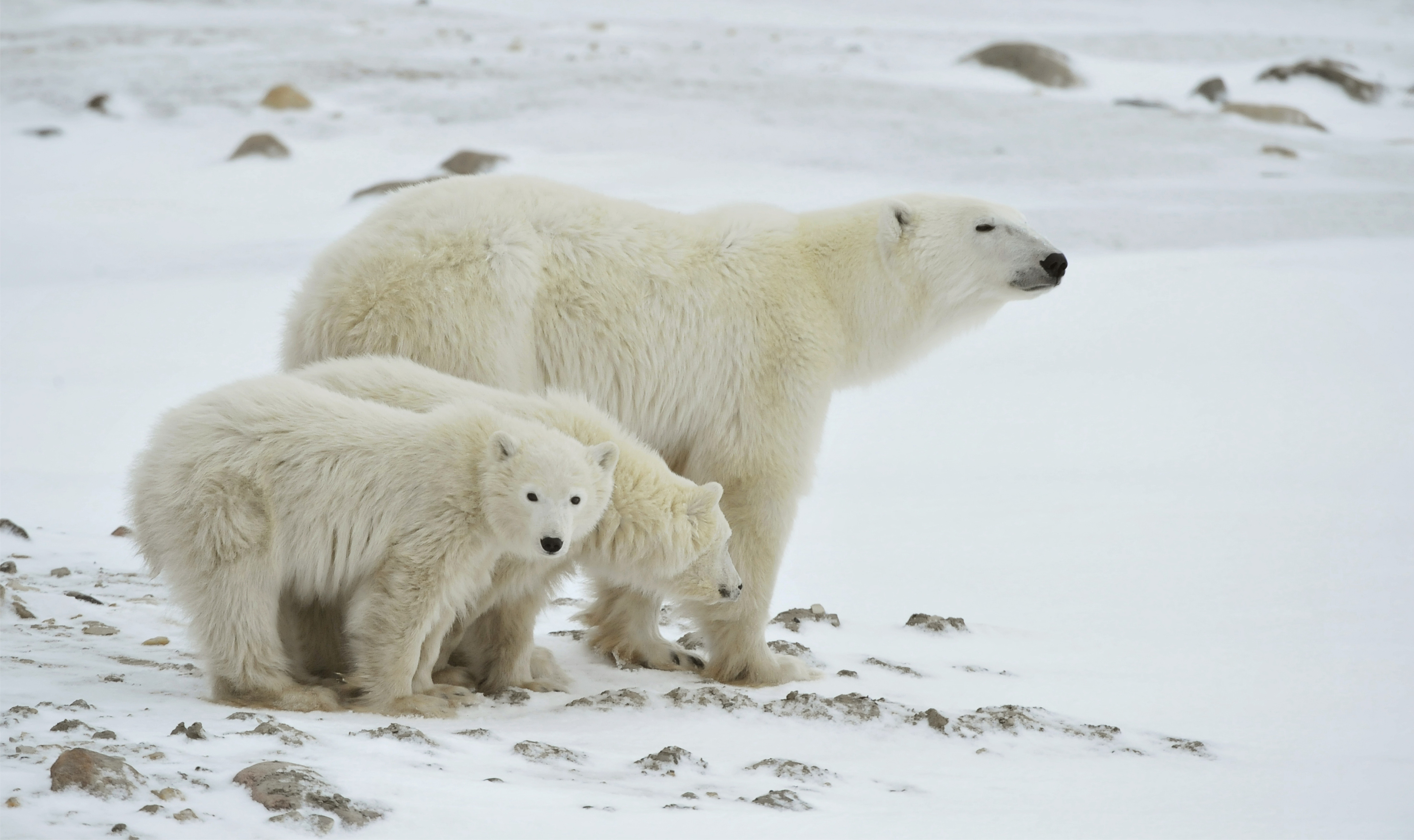
There is irrefutable evidence from Barents and Chukchi Sea subpopulations, among others, that polar bears are fat and reproducing well despite marked declines in summer sea ice over the last two decades. These indicators of physical and reproductive health, in any species, are signs of thriving populations. However, these facts negate the premise that polar bears require abundant summer sea ice to flourish, and that creates a problem for polar bear specialists who continue to make that claim (Amstrup et al. 2007; Crockford 2017, 2019).
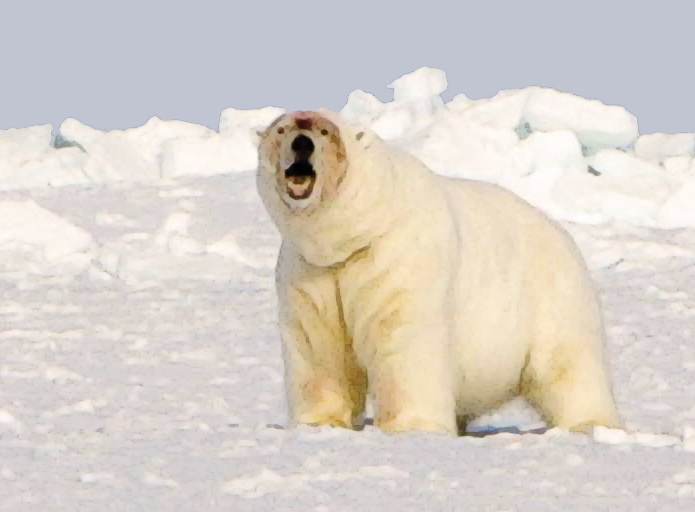
Enormously fat Chukchi Sea polar bear, USFWS.
In other words, the assessment that polar bears are currently thriving is not based solely on estimates of a slight increase in global population size but on published data gathered from field studies on the bears’ physical and reproductive health.
Oddly, biologists repeatedly turn to data from Western Hudson Bay to drive home to the public their preferred message that polar bear health and abundance are being negatively affected by recent summer sea ice declines. However, they fail to mention that robust field data from many other regions, including the Barents and Chukchi Seas, support the opposite conclusion. Moreover, wherever possible, they mumble under their breath (or leave out entirely) the fact that poor ice conditions could not be blamed for a 27% decline in polar bear numbers in Western Hudson Bay since 2016 — because their own data showed sea ice conditions had been strong!
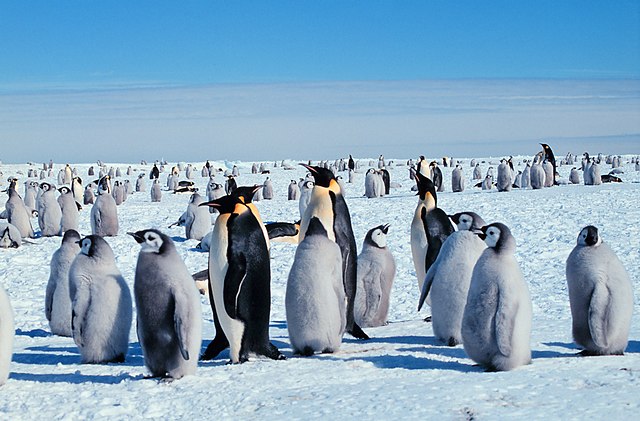
Posted onJanuary 30, 2023|Comments Off on Emperor penguin ESA listing in 2022 used Antarctic sea ice models known to be flawed
While Arctic sea ice has declined remarkably since 1979, Antarctic ice has been unexpectedly stable. Experts acknowledge that existing climate models–which assume that CO2 emissions drive global sea ice loss–had predicted Antarctic sea ice would have declined over the last several decades–and would decline even more in the future. They’ve finally admitted they were wrong.
John Turner (British Antarctic Survey) and Josifino Comiso (NASA) in a NATURE paper in 2017:
“Current climate models struggle to simulate the seasonal and regional variability seen in Antarctic sea ice.“
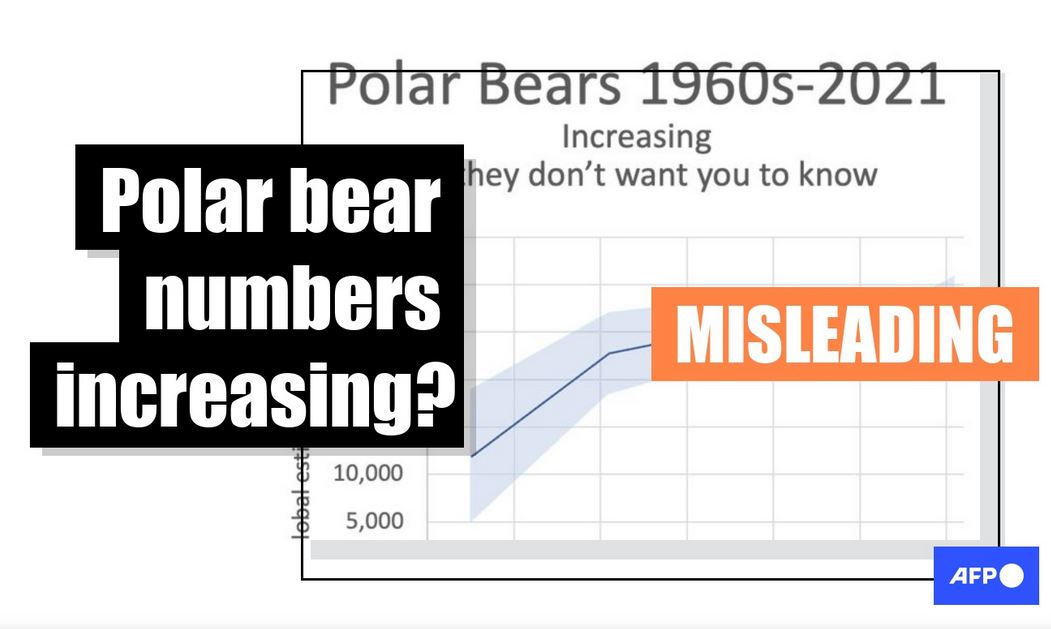
Relying on the data I referenced used to be uncontroversial. When a CNN science journalist did an investigation similar to AFP’s in 2008, he spoke to numerous scientists and they agreed “that polar bear populations have, in all likelihood, increased in the past several decades.” When polar bears in 2008 were listed as a threatened species under the Endangered Species Act, the decision noted that the population “has grown from a low of about 12,000 in the late 1960’s to a current worldwide estimate of 20,000-25,000.” The data here haven’t changed, only the media’s willingness to disregard annoying facts.
The result is that the public is denied access to accurate data and open debate about these very important topics. Ridiculous points on one side are left standing while so-called fact-checking censors inconvenient truths. If we’re to make good climate policy, voters need a full picture of the facts. Lomborg 2023, backup link
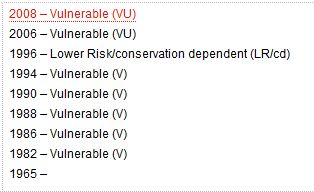
I would add this fact: in 1982, polar bears were listed by the IUCN as ‘vulnerable’ but by 1996, that had changed to ‘lower risk/conservation dependent’–now called ‘least concern‘ (see screencap below) because population numbers had rebounded after more than 20 years of international protection from over-hunting. The reversion to ‘vulnerable’ in 2006 was based entirely on predictions that population numbers would decline in the future due to see ice loss, which so far has not happened (Crockford 2017, 2019; Crockford and Geist 2018).
References
.Crockford, S.J. 2017. Testing the hypothesis that routine sea ice coverage of 3-5 mkm2 results in a greater than 30% decline in population size of polar bears (Ursus maritimus). PeerJ Preprints 19 January 2017. Doi: 10.7287/peerj.preprints.2737v1 Open access. https://peerj.com/preprints/2737/
Crockford, S.J. 2019. The Polar Bear Catastrophe That Never Happened. Global Warming Policy Foundation, London. Available in paperback and ebook formats.
Crockford, S.J. and Geist, V. 2018. Conservation Fiasco. Range Magazine, Winter 2017/2018, pg. 26-27. Pdf here.
Comments Off on Lomborg responds to polar bear abundance challenge
Posted onJanuary 18, 2023|Comments Off on No more WEF backroom deals for Sir David Attenborough?
On the first anniversary of Fallen Icon, I wonder if Sir David has made his last backroom deal? His years of relentless messaging anti-capitalistclimate doom seemed like a concerted plan to build a legacy based on something other than smooth talking: I am convinced Attenborough saw the shocking film footage of walrus falling to their deaths presented in the Netflix/WWF extravaganza Our Planet as the leverage he needed to kick-start an aggressive campaign to promote action on climate change and curb capitalism. But it all collapsed at COP26 in 2021 with his failure to make any difference at all.
Canadian zoologist Dr. Susan Crockford warns that some polar bear specialists are attempting to cast a smoke-screen over the growth of global polar bear numbers.
Posted onJanuary 4, 2023|Comments Off on Inuit in Arctic Canada now observing higher numbers of polar bears, says government report
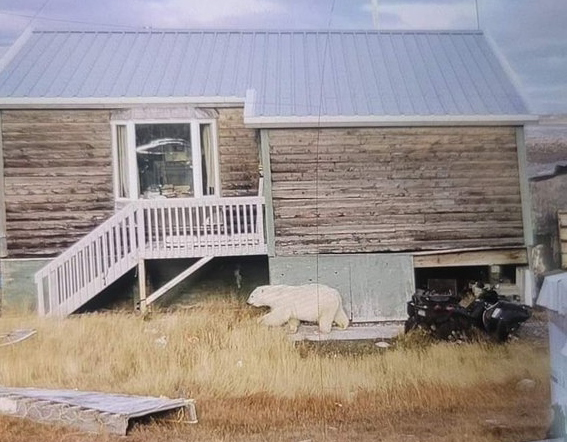
A 2021 publication by the government of Canada released last month called Species at Riskin Nunavut says the region is “now observing higher numbers of polar bears“, and that management goals are “more focused on maintaining or reducing numbers in communities and in sensitive areas (i.e. bird colonies)“. Local Inuit are said to be “concerned about the increasing number of encounters and property damages” caused by polar bears.
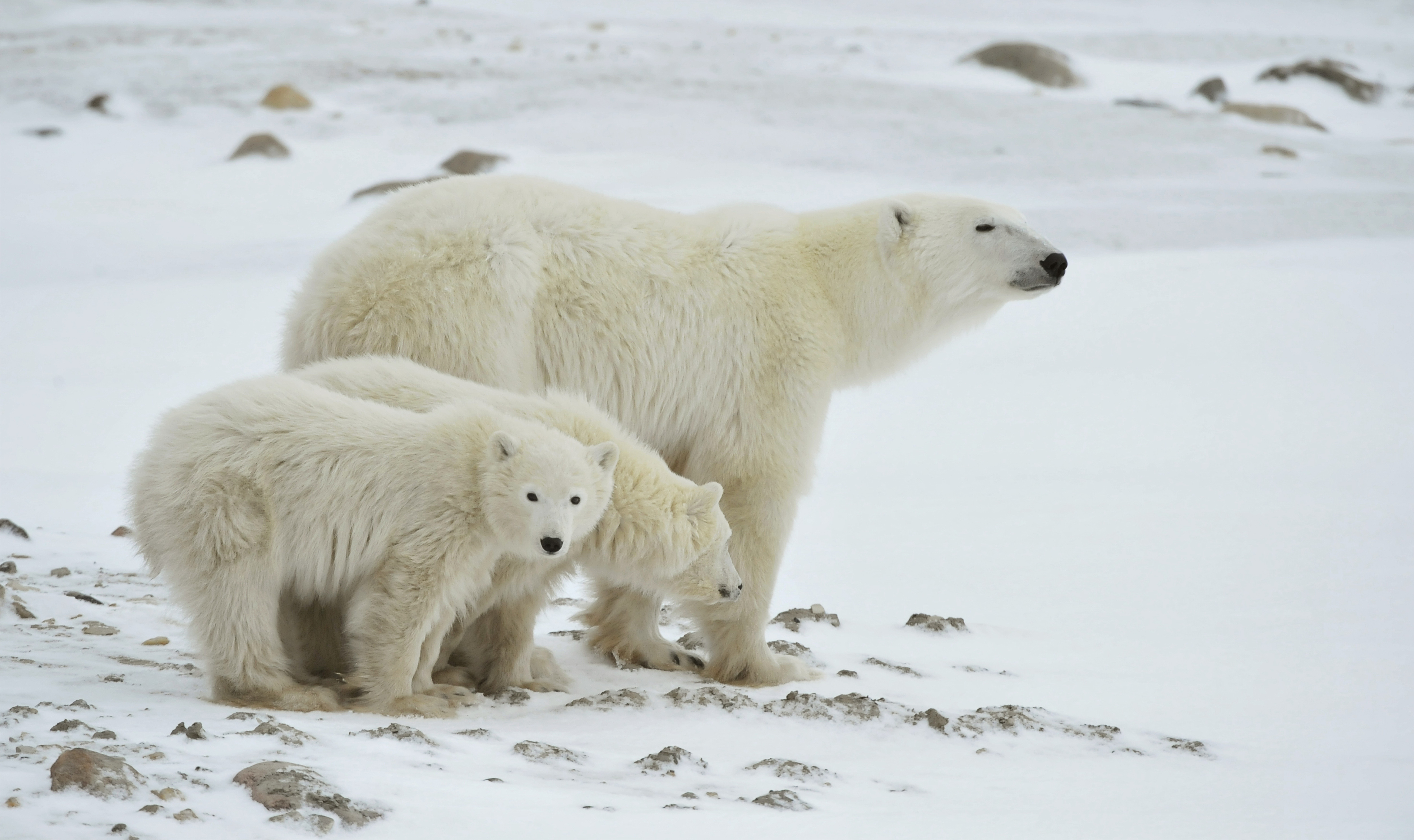
Polar bear in Arviat, Nunavut, 3 October 2022. Chris Mikijuniak photo.
Polar bears in Canada are considered a species of ‘special concern’ (COSEWIC 2018), not threatened as they are in the USA. See the map of Nunavut below.
Watch polar bear habitat reform in the Canadian Arctic: “last 10 days” Canadian Ice Service animation (works anytime) HERE.
See Quote archive for details.







 polarbearscience
You must be logged in to post a comment.