Posted onFebruary 3, 2026|Comments Off on Biologists allowed David Attenborough to tell BBC viewers that Barents Sea bears were dying of starvation in his 2011 Frozen Planet episode when they knew it wasn’t true
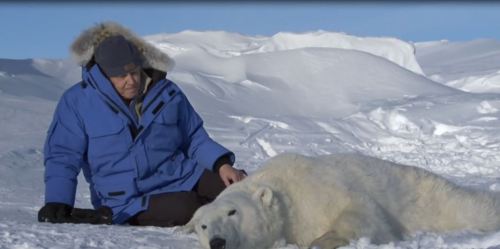
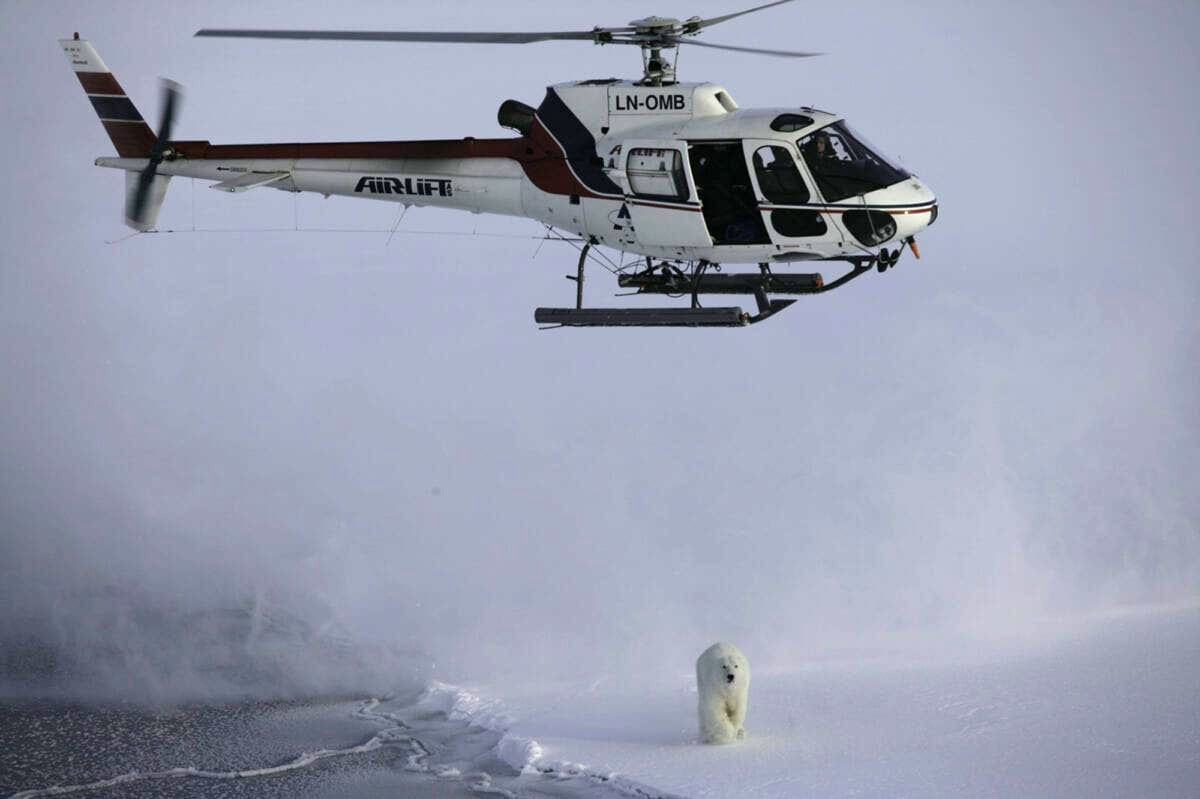
In the climate change episode of his 2011 BBC Frozen Planet series ‘On Thin Ice’, Sir David Attenborough told viewers that polar bear mothers and cubs across the Arctic were starving because climate change was melting the sea ice, even as he sat beside a fat, healthy Barents Sea female (below).
I wonder how Sir David Attenborough feels now? Has anyone bothered to tell him that Norwegian biologists have finally admitted that Barents Sea polar bears were actually fat and healthy in 2010 when they assisted in the filming of his BBC documentary? Or, did Attenborough know even then that this population of polar bears was thriving despite the large loss of sea ice – but let his viewers think otherwise?
Comments Off on Biologists allowed David Attenborough to tell BBC viewers that Barents Sea bears were dying of starvation in his 2011 Frozen Planet episode when they knew it wasn’t true
Posted onJanuary 29, 2026|Comments Off on Barents Sea polar bears thriving despite massive loss of sea ice, study confirms
A recently published study lead by Norwegian polar bear specialist Jon Aars found that both male and female polar bears were fatter and healthier after 1995 despite the greatest loss of sea ice of any Arctic region. However, no evidence was provided that a greater consumption of walrus and reindeer explain these results.
This new paper (Aars et al. 2026) updates and expands to 2019 data for a study I’ve repeatedly cited (e.g. here and here) that reported female bears in better condition between 2005-2017 than during the 1990s, despite dramatic sea ice loss in summer and winter in the 2000s (Lippold et al. 2019). Continue reading →
Comments Off on Barents Sea polar bears thriving despite massive loss of sea ice, study confirms
Posted onDecember 7, 2025|Comments Off on Polar bears and Arctic sea ice status
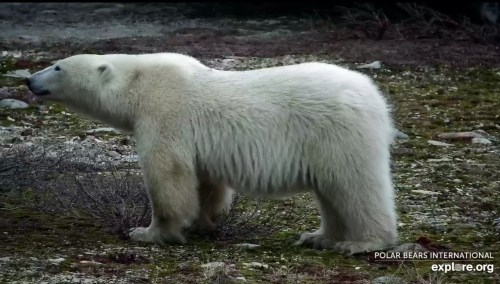
Positive news on the Arctic front as far as polar bears are concerned so far this year, with no reports of dead or dying bears, or of horrific attacks on humans that I’ve heard about. Not much to talk about but here’s what I’ve found.
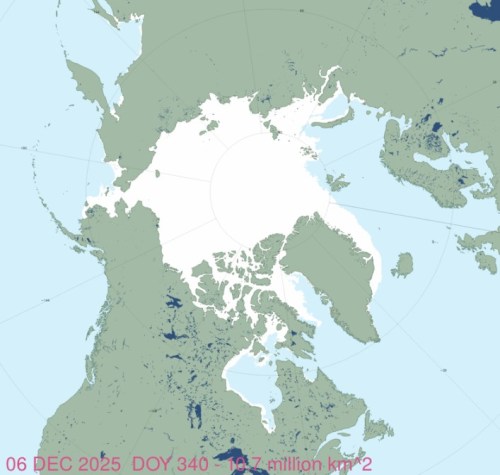
Sea ice in Hudson Bay is forming rapidly while according to NSIDC, the Arctic Basin is filled with ice. Ice has also moved well into the Bering Sea, the Barents and Kara Seas, and Davis Strait. NSIDC say they have discontinued their monthly sea ice reports due to lack of funding, although under the current federal government administration, such budget cuts were likely tied to their inability to consistently produce these reports without pushing a human-caused climate change narrative of impending catastrophe.
Posted onFebruary 26, 2025|Comments Off on No News is Good News on Polar Bear Day: Celebrate With 35% Off Polar Bear Evolution
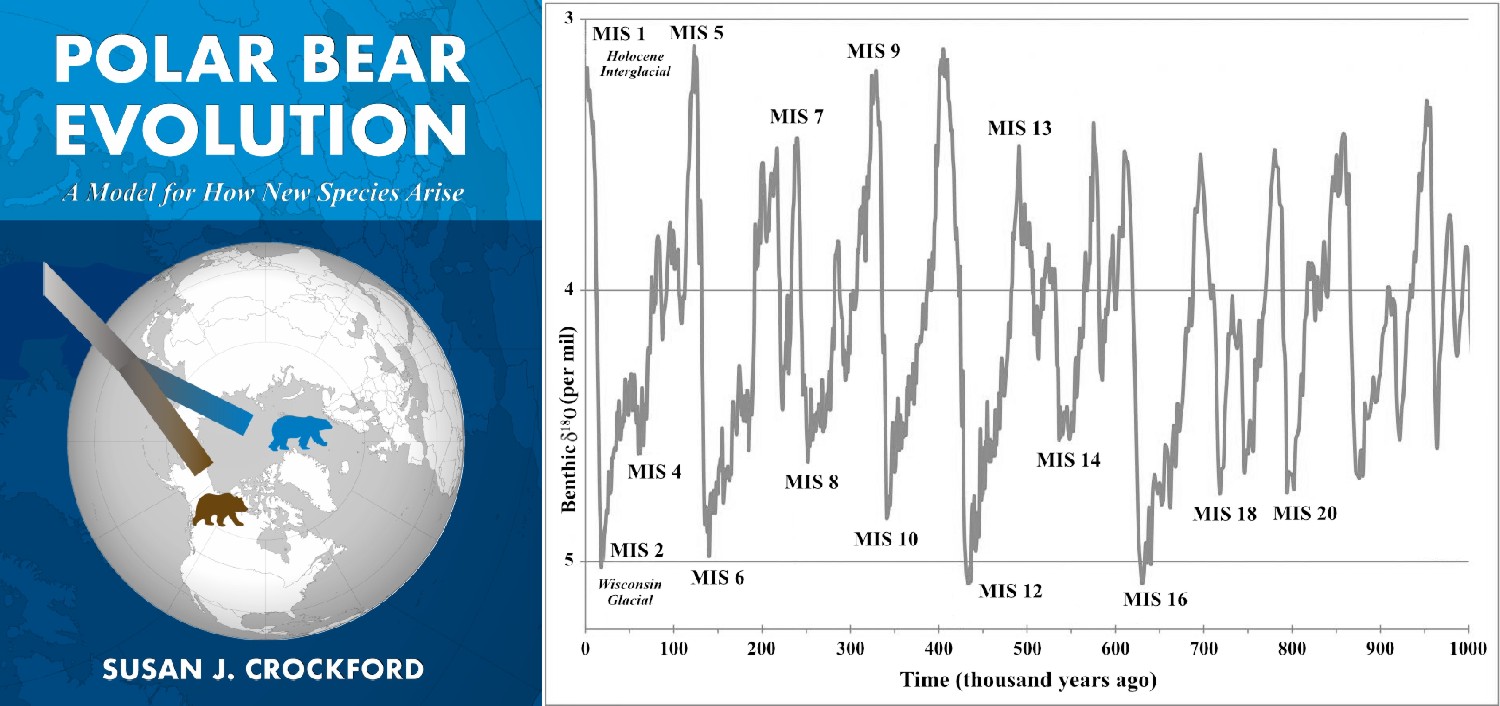
In honour of International Polar Bear Day coming up on Thursday February 27, I’ve discounted the price of my Polar Bear Evolution book by 40% for the next month in order to encourage evolutionary thinking about polar bears (in all markets: see links at the end of this post). UPDATE: Sale extended until June.
Instead of asking whether polar bears will survive a bit of warming over the next few decades, ask yourself how they survived more than 100,000 years of unimaginable changes in Arctic climate (both much warmer and colder) before now?
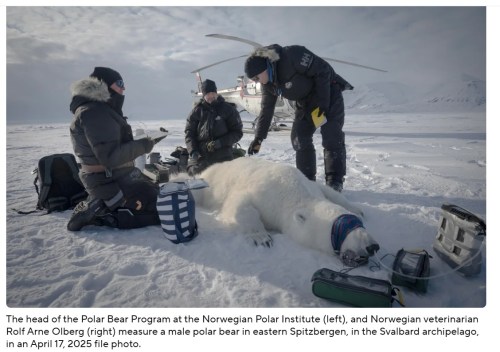
Posted onJune 4, 2024|Comments Off on New data show Svalbard polar bears are fatter than they were in 1993 despite continued low sea ice
Researchers at the Norwegian Polar Institute have finally updated their spring data, which show male polar bears in 2024 were even fatter than they were in 1993 and litter sizes of new cubs were just as high, despite continued low sea ice in the region over the summer months especially.
Posted onFebruary 13, 2024|Comments Off on When polar bears die, they die of starvation: new Nature paper is propaganda, not news
Is it a coincidence that a paper reporting the results of a no-news study on polar bears, but which predicts future starvation due to climate change, was published two weeks to the day ahead of a climate change marketing event made up by the activist organization Polar Bears International? I doubt it.
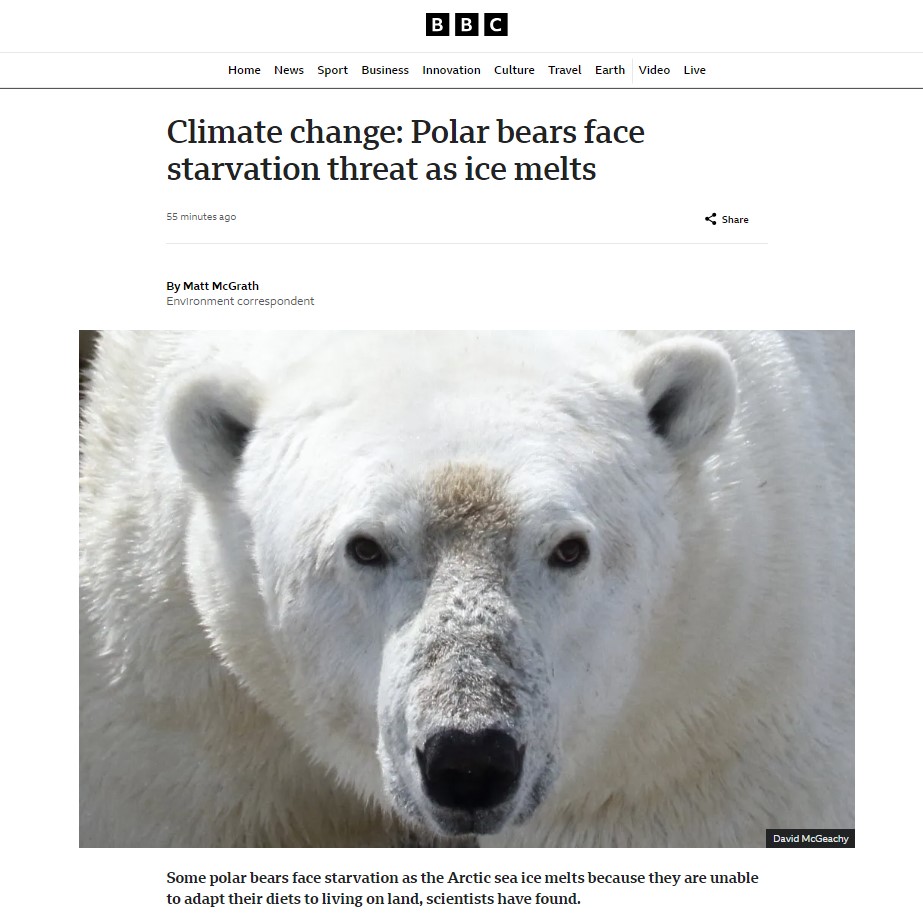
And do I think the high-profile journal Nature Communications would not only agree to publish such a useless bit of propaganda but also rig the timing to advance the climate change emergency narrative? Silly question. And the media worldwide are of course lapping it up, happy for an excuse to promote the perils of climate change, see here, here, and here using images of fat polar bears. Image above is from the BBC headline, 13 February 2024.
They believe this strategy is effective because they think the public is stupid, but they are deluding themselves. Most people are now laughing at their obvious acts of desperation.
Posted onNovember 14, 2023|Comments Off on Walrus and polar bear population size changes in the N. Atlantic over the last 20k years
This is a lesson in how to assess the potential worth of scientific papers. One of two similar Arctic evolution studies got media attention, at least in Canada — about the polar bears, of course — but in my opinion the walrus research conclusions are much better supported, less biased by climate change rhetoric, and lack the hubris present in the polar bear paper.
Both studies use similar sample sizes for the regions they had in common (North Atlantic) and used computer models to determine genetic diversity and population size changes since the LGM. However, the tone of the walrus paper was less emotionally-charged and the caveats of the work were appropriately stated. In my opinion, papers like the polar bear example contribute to eroding the public’s trust in science.
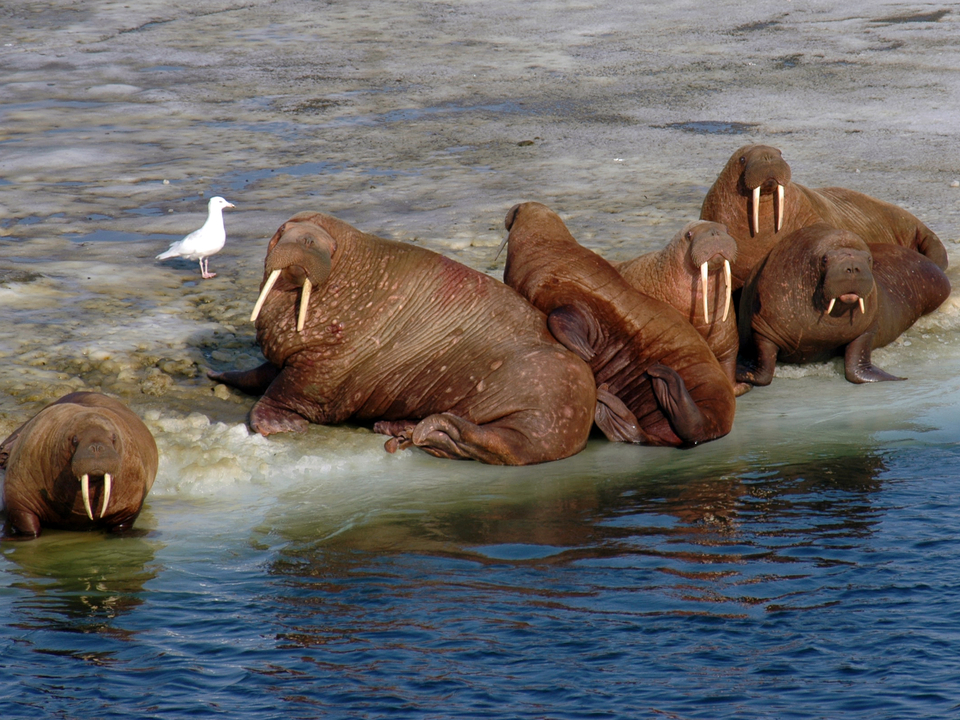
The last Ice Age peaked between about 27,000 and 19,000 years ago. At this time the Arctic was buried under kilometers of glacial ice sheets, and so marine mammals were pushed southwards to areas of ice floes and more open water. Walrus survived in some areas of the Atlantic located further to the south, and as soon as climates warmed again, the ice edge retreated and walrus populations pushed quickly northwards again. This combination of warming and climate-driven dispersal led to local walrus populations becoming more genetically differentiated. Walrus study, Lund University press release 27 September 2023
Posted onSeptember 22, 2023|Comments Off on 17 years of near-zero trend in September sea ice demolishes claim that more CO2 means less sea ice
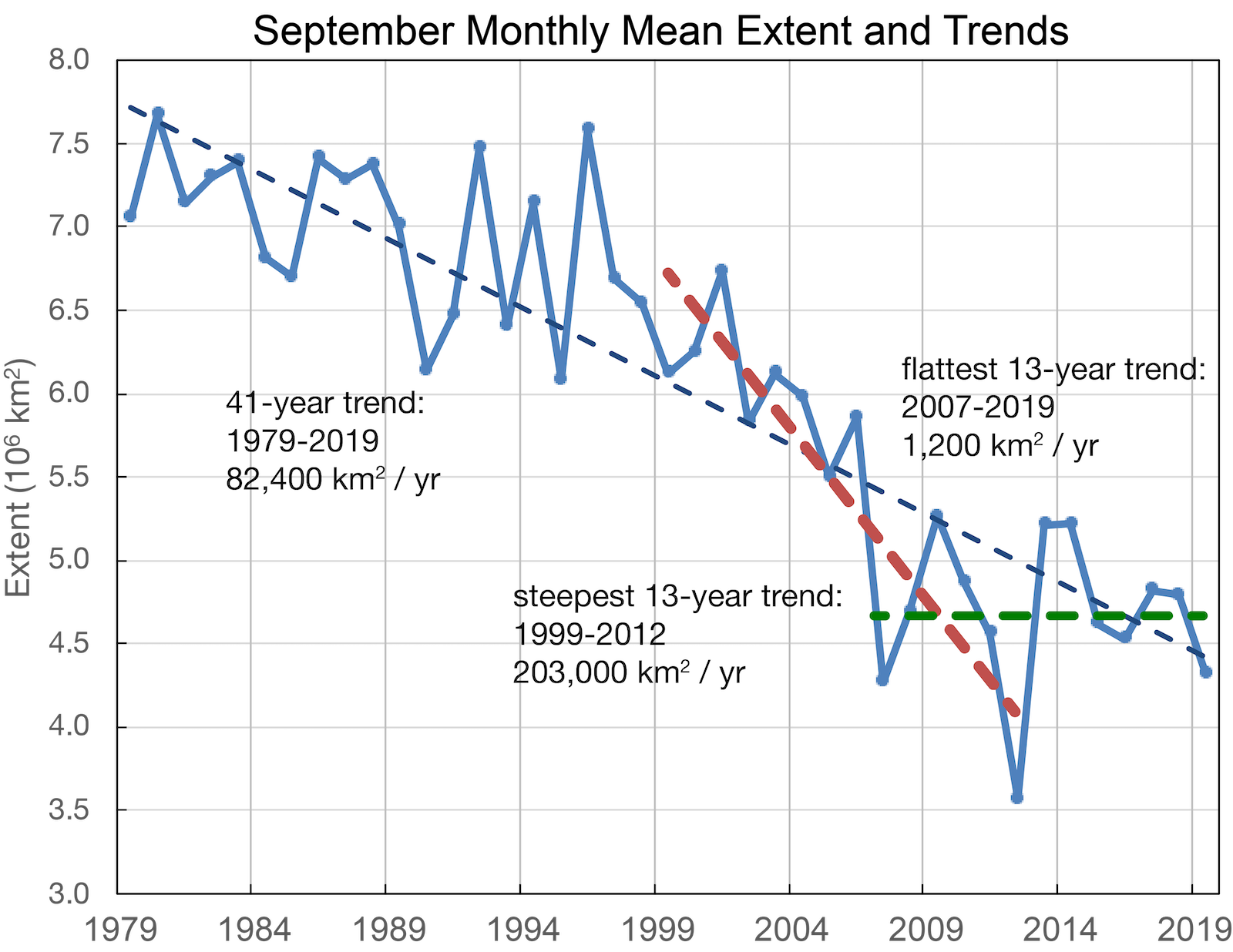
If the hottest year ever can’t precipitate ‘ice-free’ conditions in September, what’s it going to take? Arctic sea ice failed to nose-dive again this year, undoubtedly disappointing expects who have been anticipating a ‘death-spiral’ decline for ages. Arctic sea ice hit its seasonal low sometime around mid-September this year and although the precise value hasn’t been published, the average September ice coverage will likely be about 4.2 mkm2 once it gets announced in early October.
This means we have now had 17 years of a near-zero trend for September sea ice, extending the nearly-flat trend NSIDC sea ice experts acknowledged four years ago. This surely busts a huge hole in the prevailing concept that more atmospheric CO2 causes less summer sea ice. Note that CO2 levels measured in August 2023 were 419.7 parts per million (ppm), compared to 382.2 in August 2007, a rise of 37.5ppm with no corresponding decline in summer sea ice (and vs. 314.2 ppm in 1960). Measured in metric tons, CO2 emissions due to fossil fuels rose from 31.1 billion in 2007 to 37.1 billion in 2021 (last year of data), again with no corresponding decline in summer sea ice.
Posted onAugust 30, 2023|Comments Off on W. Hudson Bay polar bear numbers declined 27% in 2021 but not because of missing ice: secret paper
As will become apparent tomorrow, Western Hudson Bay polar bear numbers apparently declined 27% between 2017 and 2021 but not because of sea ice loss. This fact, gleaned from a secret government report leaked to the media, emerged just before Christmas last year and spread around the world. I commented on it here at the time.
It will also be apparent tomorrow why that government report is still unavailable. Thursdays are when the big two science magazines publish their papers, which means associated news stores promoting preferred narratives are embargoed until then. Stay tuned.
Posted onAugust 8, 2023|Comments Off on Climate activists are silent on polar bears because their doom-mongering blew up in their faces
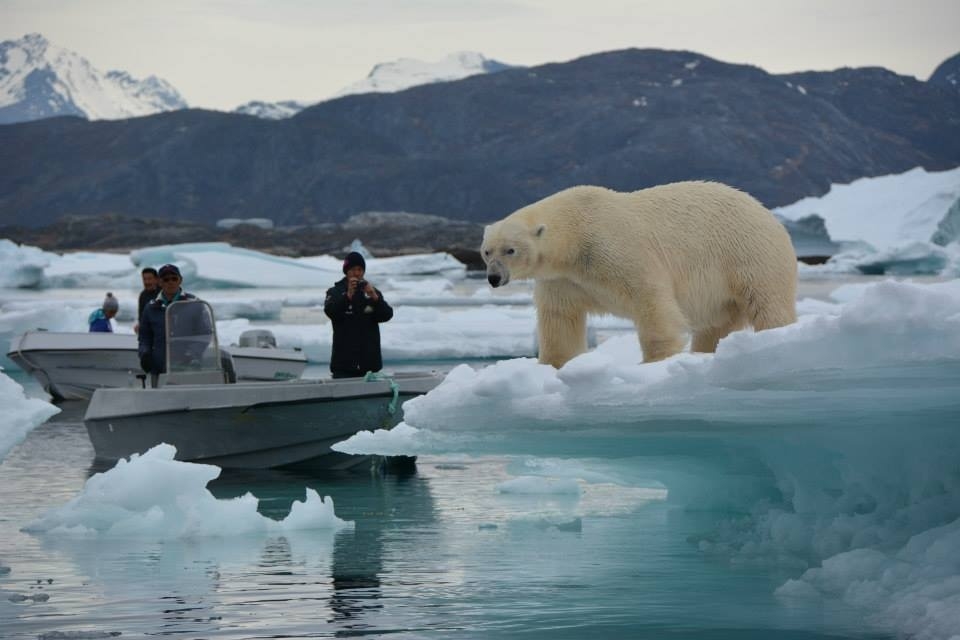
A Grist article last week pandered to activist polar bear specialists over their failed climate change agenda as it tried to minimize why the climate movement doesn’t talk about polar bears anymore. Apparently, the Arctic icon has “largely fallen out of fashion” through “overexposure” resulting in polar bear images invoking “cynicism and fatigue.” But that isn’t really true, is it?
While there is an admission that the over-hyped lies about starving bearspromoted by National Geographic in 2017 and 2018 were a factor, there is no mention in the article of the well-known, documented evidence of scientists’ own failed assumptions that polar bears require summer sea ice for survival have had any impact on public opinion (Amstrup et al. 2007; Crockford 2015, 2019, 2022, 2023; Lippold et al. 2019; Rode et al. 2021).
Thriving populations in the Chukchi Sea and elsewhere amid low summer ice levels have busted the myth that polar bears need ice year-round.
Andrew Derocher was also allowed to repeat, unchallenged, the ridiculous narrative he and his activist supporters have peddled before, that insists the polar bear had become a climate change icon by accident rather than design, a lie I addressed in detail last year. Some excerpts from that 2022 post are copied below.
Watch polar bear habitat reform in the Canadian Arctic: “last 10 days” Canadian Ice Service animation (works anytime) HERE.
See Quote archive for details.








 polarbearscience
You must be logged in to post a comment.