Posted onDecember 7, 2025|Comments Off on Polar bears and Arctic sea ice status
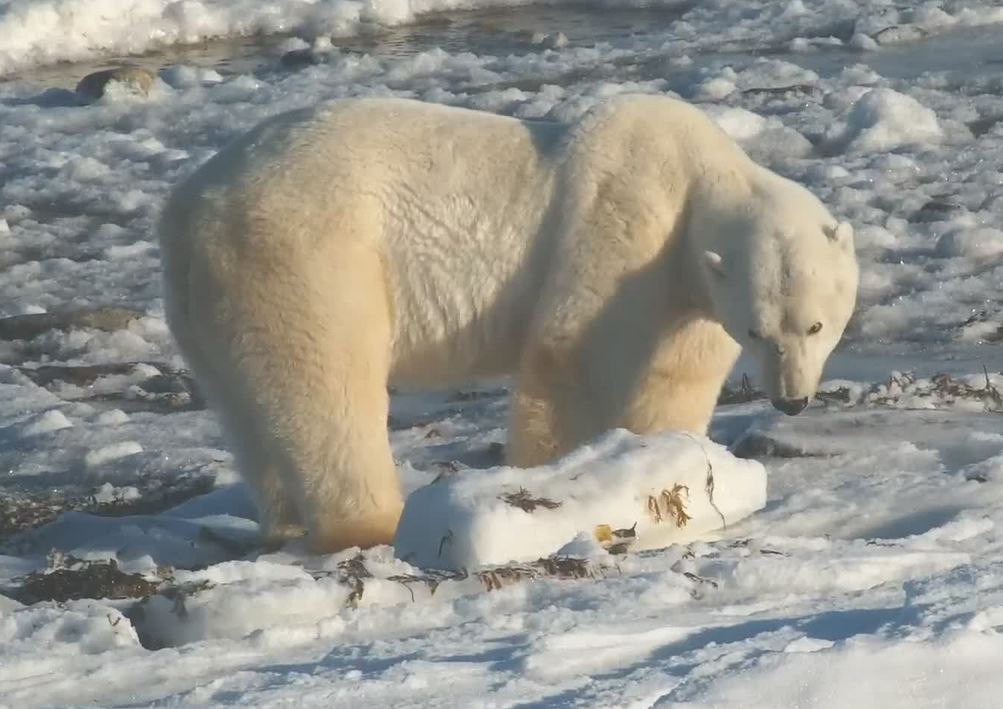
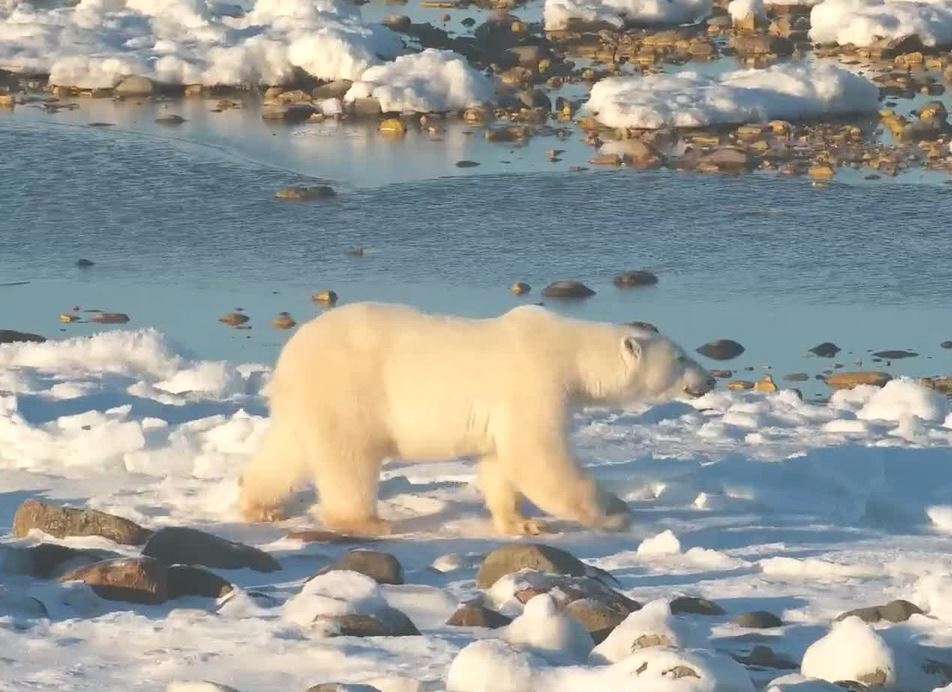
Positive news on the Arctic front as far as polar bears are concerned so far this year, with no reports of dead or dying bears, or of horrific attacks on humans that I’ve heard about. Not much to talk about but here’s what I’ve found.
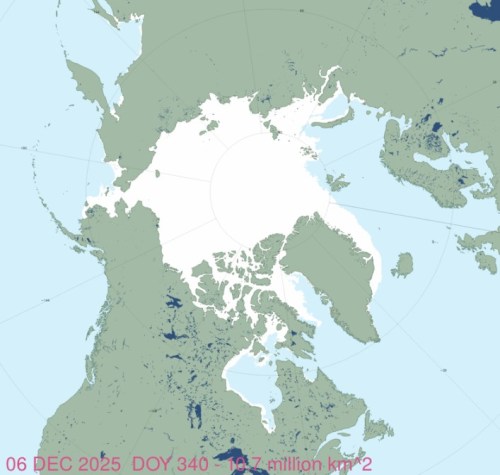
Sea ice in Hudson Bay is forming rapidly while according to NSIDC, the Arctic Basin is filled with ice. Ice has also moved well into the Bering Sea, the Barents and Kara Seas, and Davis Strait. NSIDC say they have discontinued their monthly sea ice reports due to lack of funding, although under the current federal government administration, such budget cuts were likely tied to their inability to consistently produce these reports without pushing a human-caused climate change narrative of impending catastrophe.
Posted onFebruary 26, 2025|Comments Off on No News is Good News on Polar Bear Day: Celebrate With 35% Off Polar Bear Evolution
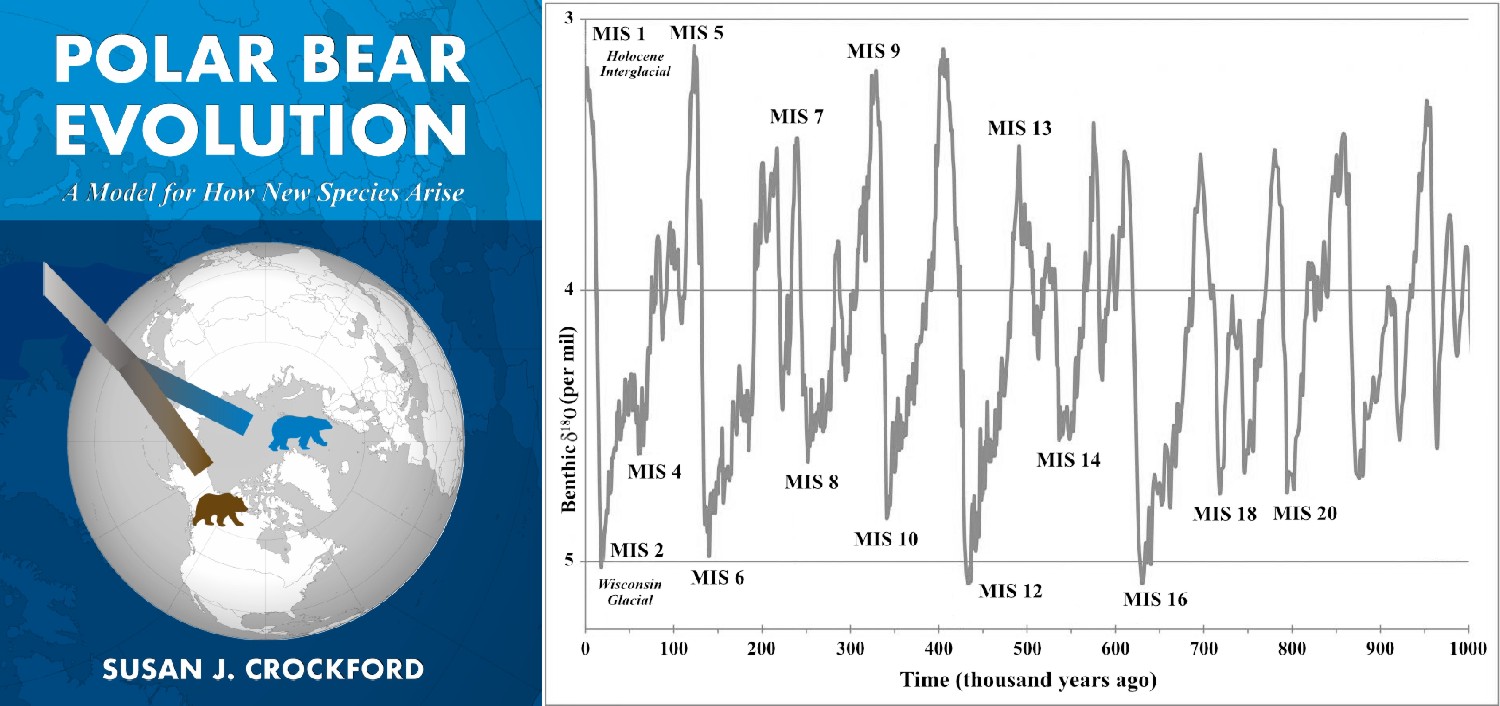
In honour of International Polar Bear Day coming up on Thursday February 27, I’ve discounted the price of my Polar Bear Evolution book by 40% for the next month in order to encourage evolutionary thinking about polar bears (in all markets: see links at the end of this post). UPDATE: Sale extended until June.
Instead of asking whether polar bears will survive a bit of warming over the next few decades, ask yourself how they survived more than 100,000 years of unimaginable changes in Arctic climate (both much warmer and colder) before now?
Posted onSeptember 12, 2024|Comments Off on Churchill seemingly unworried about polar bears, fails to post problem bear reports on social media
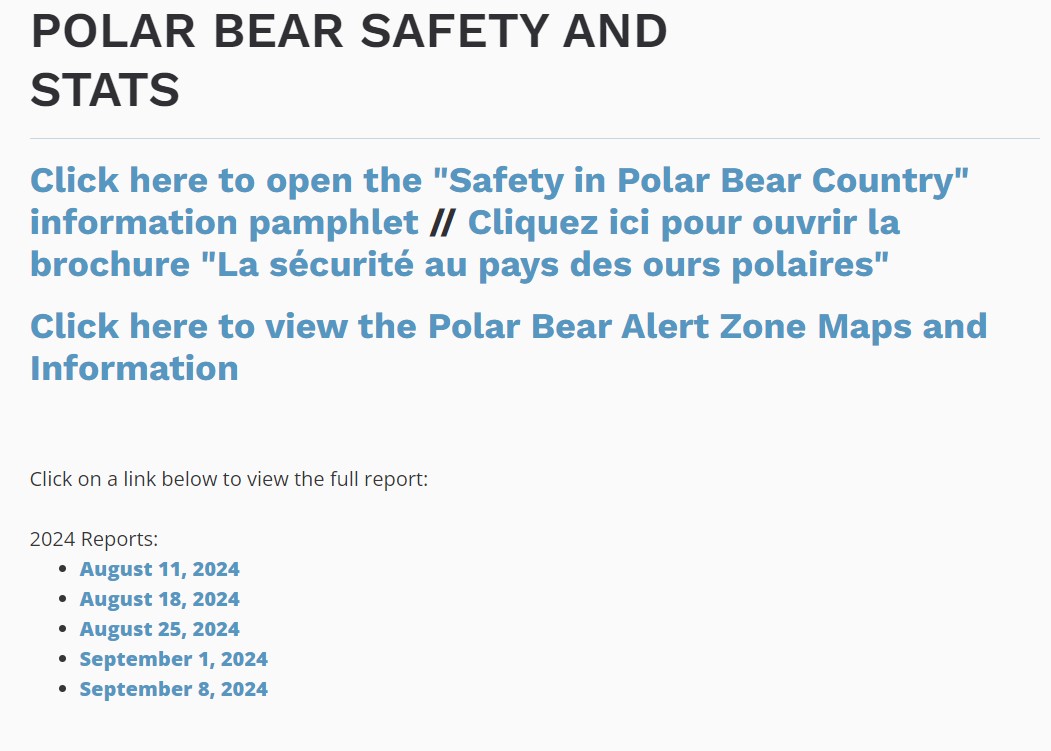
We know transparency’s gone out the window for many public officials, but still: Since early August, I’ve been checking daily for Problem Polar Bear Reports issued by the Churchill Polar Bear Alert Program managed by Manitoba Conservation. This morning (12 September), five reports were posted at once on the Town of Churchill website, dating back to first of the season for the week of August 5-11, see image below.
It’s apparent that the intent of these reports is in part public safety: to raise awareness of the potential threat of wandering polar bears around the town of Churchill because of the language that appears on virtually every report: “stay vigilant”, “be bear smart,” “be bear aware,” etc.
However, the X account for Town of Churchill seems to have been abandoned (last post 19 April 2024), which suggests the town is confident no residents or tourists would benefit from Alerts on X that polar bears are ashore:
The town’s Facebook account seems to be their only method of public communication yet even there, there have been no Polar Bear Alert reports posted this summer.
Oddly, even though it is now apparent from the just-released reports that one bear got so close to town that it had to captured and put in the ‘polar bear jail’ the week of 5-11 August — for the public’s safety — the only safety announcement the town issued that week was a ‘heat warning’ on 12 August:
I guess we are to assume that whoever is running this account – or the town council, or the mayor – believes that a day or two of hot weather (which Churchill gets regularly most years) is more dangerous to public safety than a massive predator wandering around town.
I can only conclude that keeping residents and tourists in the dark about potential threats from local polar bears is one way that Churchill is now adapting to climate change (from CBC News, 10 September 2024):
Bears Onshore and Effective Sea Ice Breakup dates
It is apparent from the wording of the Churchill reports that even by the last week of August this year, all bears were not yet off the ice, since they say only that “most bears” were on shore the week of 26 August to 1 September (see next section).
That suggests the last bears came ashore this year at least a week later than they did in 2020 (at 21 August), which at the time polar bear specialist Andrew Derocher presented as an anomaly (see tweet below). Compare to the situation last year here.
The last report I’ve seen from Derocher (via X) for 2024 on the status of his teams’ tagged females is that many of them (11/29 or 38%) were still on the ice as of 8 August (posted 11 Aug):
Derocher referring to this an “amazing” year that’s “similar” to the 1980s probably doesn’t tell the half of it, since he hasn’t posted any maps since then (as of noon, 12 September).
This effectively keeps secret the date when the last of these females bears actually came ashore, which is in any case a biased microcosm of the entire subpopulation. In other words, we can expect that if 40% of tagged female were still on bits of remnant ice at 8 August, there will have been many more bears, especially males, out there as well – which of course he never mentions.
He also never mentions that satellites under-report the amount of ice at this time of year by as much as 20% because of the effects of melt-water sitting on ice, but we’ve come to expect that.
Oddly, a recent study tried to explain the importance to survival of the recent phenomenon (since about 2015 or so) of bears staying out on melting bits of remnant ice rather than heading immediately to shore when the ice coverage over Western Hudson Bay drops below 50%. They suggested this behaviour was largely confined to male bears because they had to make up for feeding missed during the breeding season (McGeachy et al. 2024).
Females, alternatively, appear to respond to break-up in WH by coming onshore approximately 3 weeks after the mean ice concentration in WH reached 50%, … However, suitable habitat was still present elsewhere in the Bay and appeared to be used by a portion of WH prime age males. [McGeachy et al. 2024: 494, where “prime age males” are aged 5-19 years.]
However, these authors never mention the data reported by Derocher every year showing fairly significant numbers of tagged females lingering on tiny chunks of ice well into August, even though Derocher is a co-author. Funny, that.
Problem Bear Reports 2024, Weeks 1-5
Week 1, 5-11 August
Week 2, 12-18 August
Week 3, 19-25 August
Week 4, 26 August-September 1
Week 5, 2-8 September
References
McGeachy, D., Lunn, N.J., Richards, E.S. and Derocher, A.E. (2024). Sea ice influence on male polar bear survival in Hudson Bay. Arctic Science 10, 483-498. https://doi.org/10.1139/as-2023-004 Open access.
Comments Off on Churchill seemingly unworried about polar bears, fails to post problem bear reports on social media
Posted onAugust 13, 2024|Comments Off on Fatal polar bear attack in Davis Strait last week: important details being withheld
A man was killed last week (August 8) by two polar bears on a small island off the east coast of Baffin Island in Nunavut, multiple reports have confirmed — although precious few details have been provided, other than that one of the bears was killed immediately afterward. The name of the victim (an employee of a government radar site) has not been released, and no information on the condition of the bears or the circumstances of the attack have been provided. Major news outlets have had to pad their stories with details from previous attacks and other filler.
A Svalbard sow and half-grown male cub that’s as big as she is.
However, an attack by two bears sounds suspiciously like the sow and half-grown cub involved in another fatal attack in 2018 in Foxe Basin, even though adult females with cubs are one of the least common perpetrators of serious attacks on people.
Posted onAugust 1, 2024|Comments Off on Polar bear “boom” reported in East & Southwest Greenland comes with the usual problems
Reports over the last week of an unexpected abundance of polar bears onshore in East and Southwest Greenland have locals and tourists concerned. The former Prime Minister of Greenland claims the unusual number of bear sightings and problems with bears near communities (including an attack involving serious injury to a German researcher) are due to abundant sea ice offshore. This explanation is contrary to what polar bear specialists predict: i.e., that problems with bears occur when there is less ice than usual. None of the bears sighted have been described as thin or starving.
The Polar Bear Specialist Group has previously estimated that there are only about 650 bears in East Greenland, while a recent study estimated that an additional 234 bears lived in SE Greenland.
Polar bears don’t often show up in Southern or Western Greenland any more, but this year has been an exception. Only yesterday, two appeared near Nuuk, Greenland’s capital. And according to Aleqa Hammond, Greenland’s former Prime Minister, that’s just been the tip of the, well, iceberg.
“There are bears everywhere in West Greenland this year,” she told ExplorersWeb. “Quite a few have been way too close to towns in South Greenland this summer, too. Several polar bears have been shot in Qaqortoq, as the bears were literally in town.”
Another polar bear has been observed – and shot as an emergency – in Ittoqqortoormiit on Thursday morning. This is confirmed by the head of duty at the Greenland Police, Jørgen Madsen, to Sermitsiaq.
It is the second time a polar bear has been shot in emergency situations in Ittoqqortoormiit this week. On Tuesday evening around 19:30, the police received a report about a polar bear that had been shot in an emergency.
Here, the police could say that the polar bear came close to a dog crate, and then headed directly for a soccer field where children are playing.
Last week, a polar bear attacked a German researcher in East Greenland. The researcher, part of a team on Traill Island, encountered the bear on Friday morning.
Posted onApril 2, 2024|Comments Off on A good year for Svalbard polar bears due to abundant sea ice coverage
A sow and a pair of half-grown cubs recently paid a visit to the Polish Research Station in southwestern Svalbard without causing any more trouble than racing heart-rates, according to a report in The Guardian today.
Money quotefrom the leader of the expedition [my bold]:
This year the team had seen more polar bears than usual, he added. Usually there were around 20 bear sightings a year, but this year there had been close to 40 sightings since June and they expected to see more in their final three months.
“So far, we have not observed any clearly emaciated individuals. This year is probably a good year for Svalbard’s polar bears because there is a lot of sea ice here compared to recent years,” he said [The Guardian, 2 April 2024, see photo above].
Except for the lying and obfuscation that most of us have come to expect, I’ve mostly been left to reiterate that polar bears are not “canaries in the coal mine” indicators of climate change and to point out that Arctic sea ice extent and polar bear survival are not inextricably tied. For example, in some specific areas of interest, like Western Hudson Bay, there has not been a consistent decline in sea ice over the last few decades and bears are not attacking people at increased rates because they are desperately hungry. In other areas, like the Svalbard area of the western Barents Sea, sea ice has declined dramatically in recent years yet polar bears have not been attacking people more than usual.
Contradictions and failed predictions abound.
All in all, a rather boring year for the anticipated implosion of polar bear health and survival, despite my constant tracking of publicly-available information. That said, I would like to take this opportunity to thank you all again for your continued support, and especially those who have donated hard-earned cash over the last few months: your support makes it possible for me to continue my work keeping polar bear science honest. Together, we have made a difference and I know it’s worth the fight. Because if we let evidence-based science die without challenge, we lose our ability to make sense of the world.
Posted onDecember 12, 2023|Comments Off on Churchill end-of-season problem polar bear reports finally published
Today the Town of Churchill finally published the final problem bear reports of the season, which presents an opportunity to do a quick comparison to recent years.
This season lasted 24 weeks, the longest I can remember but apparently only the 5th longest on record. There were a total of 265 incidents by the end of November, more than 100 less than the most recent late-freeze-up year of 2016, which didn’t end until the first week of December (after bears had spent 22 weeks onshore). However, two recent years when freeze-up didn’t come until the end of November (2017 and 2020) had far fewer incidents (more than 100 less each compared to this year).
Posted onAugust 16, 2023|Comments Off on Conservation officers misleading the public about polar bear problems in Churchill
Canadian government-funded media outlet CBC ran a story this morning about problem polar bears in the town of Churchill, Manitoba, the self-described “Polar Bear Capital of the World” that contains some very misleading statements from Manitoba Conservation officers.
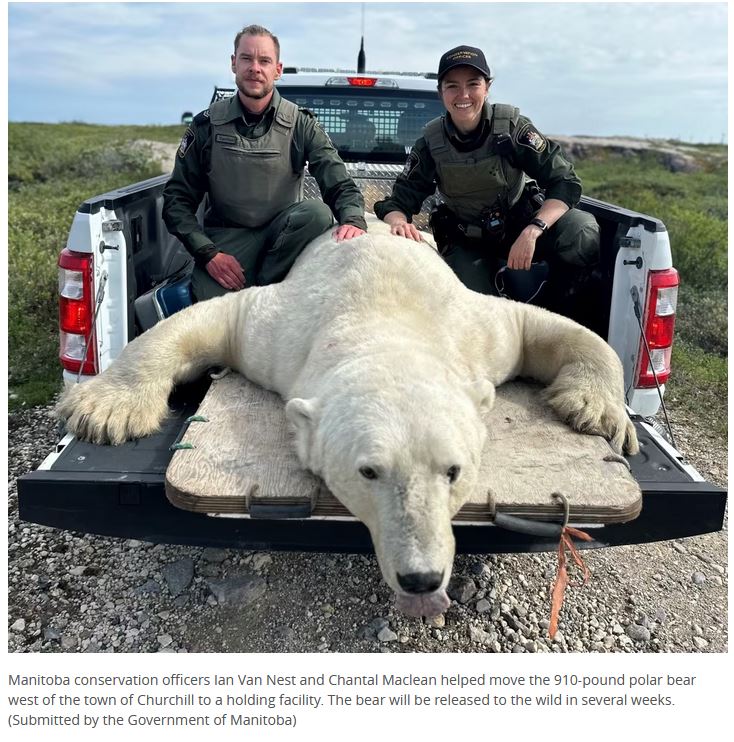
Breakup of sea ice on Hudson Bay was earlier this year than it has been in more than a decade (17 June) and some people are trying to hype the significance of this phenomenon to support a tenuous link to human-caused climate change, even though bears out on the ice this spring were reportedly in good condition and one of the problem bears captured on 8 August was also in good condition (a male weighing 910 lbs, photo above). Unfortunately, reports for similar early breakup years in the early 2000s have not been made public. However, I’ve been keeping track of these Polar Bear Alert Program Reports since 2015 and have read the available literature about their history: these records simply do not corroborate the statements in this CBC account.
Posted onJuly 30, 2023|Comments Off on Repeat of 2013 high-profile Sierra Club polar bear attack, this time with Inuit victims
Almost 10 years later to the day, another polar bear attack resulting in serious injury has taken place in the northern Labrador/Quebec region of Eastern Canada. Remember the Sierra Club lawyer snatched, tent and all, in the middle of the night on 24 July 2013, in an almost-fatal attack that was reported around the world, see here and here? This time virtually the same thing happened to two Inuuk campers on July 26, in the same general area, as reported last week by Nunavut News. This will undoubtedly renew concerns that Davis Strait Inuit have raised about their safety in the face of high population numbers of polar bears (Tomaselli et al. 2022).
Sea ice conditions were similar in both attacks. In 2013, the attacking bear appeared to be a fully adult male in good condition that had been watching the hiking party since the previous day but this year the predatory bear was described as a small “young adult” animal, suggesting it could have been a 3-4 year old female or perhaps a 2 year old male.
Watch polar bear habitat reform in the Canadian Arctic: “last 10 days” Canadian Ice Service animation (works anytime) HERE.
See Quote archive for details.








 polarbearscience
You must be logged in to post a comment.