Category Archives: science

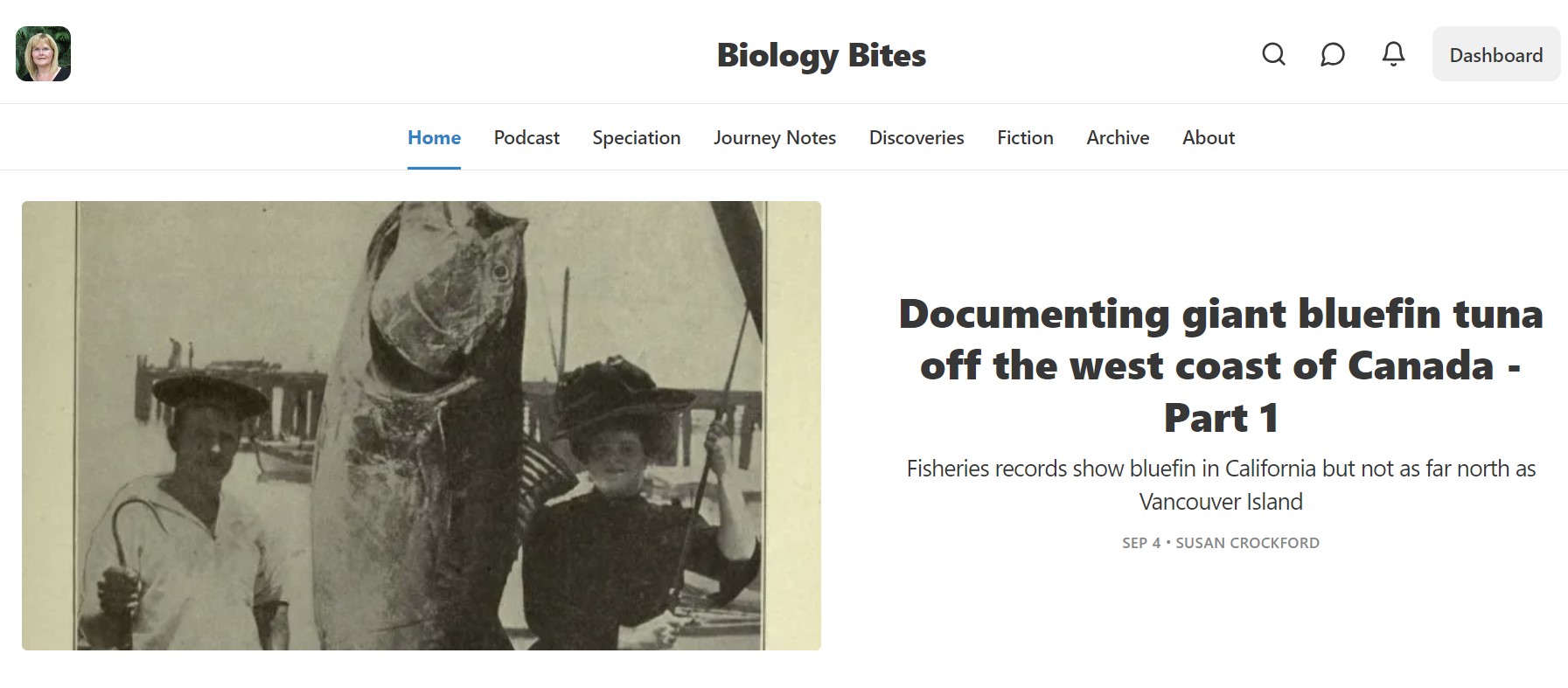
12 years of Polar Bear Science winding down as I transition to writing Biology Bites on Substack

While I’m not done with polar bears completely, it seems I’ve been so successful at informing the public and defanging the rabid activists that fewer examples of nonsense seem to pop up. And it turns out I have other things I’d like to write about.

I’ve spent my entire career as an unconventional scientist and I’m betting that many of the stories I’ve amassed along the way will be of interest to a wider audience. So, after 12 years of blogging here at PolarBearScience, I’m branching out with a new writing forum called “Biology Bites,” hosted on Substack.

Continue reading

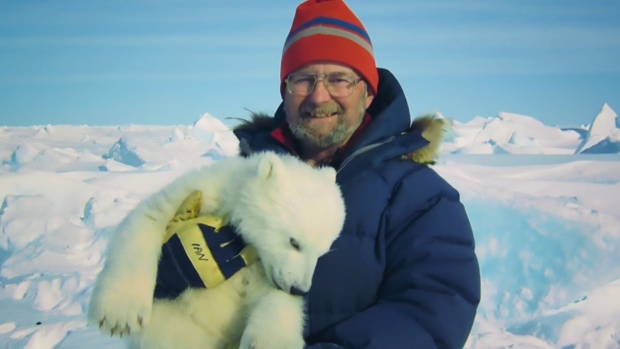
Ian Stirling, grandfather of polar bear biologists, dead at 82

Ian Stirling, who laid the foundation for our understanding of polar bear ecology and almost single-handedly made the polar bear an icon of global warming, died last week in Edmonton at the age of 82 [my mistake in the headline: he would have turned 83 this September]. Stirling was said to have played a critical and calming diplomacy role at international Polar Bear Specialist Group meetings but over the last several decades, like so many other “conservationists,” he became an outspoken activist for what he called the “climate warming” issue.

It was sad for me to have witnessed a respected and dedicated biologist turn his back on science the way he did but I am also saddened by his passing. He truly did make a huge contribution to science but could have done so much more with the time he had.

Continue reading

Hudson Bay polar bears now considered most likely to survive future sea ice loss

Over the last 10 years, Hudson Bay polar bears have morphed from being the “most at risk” across the Arctic to the “least at risk.” Who would have thought?

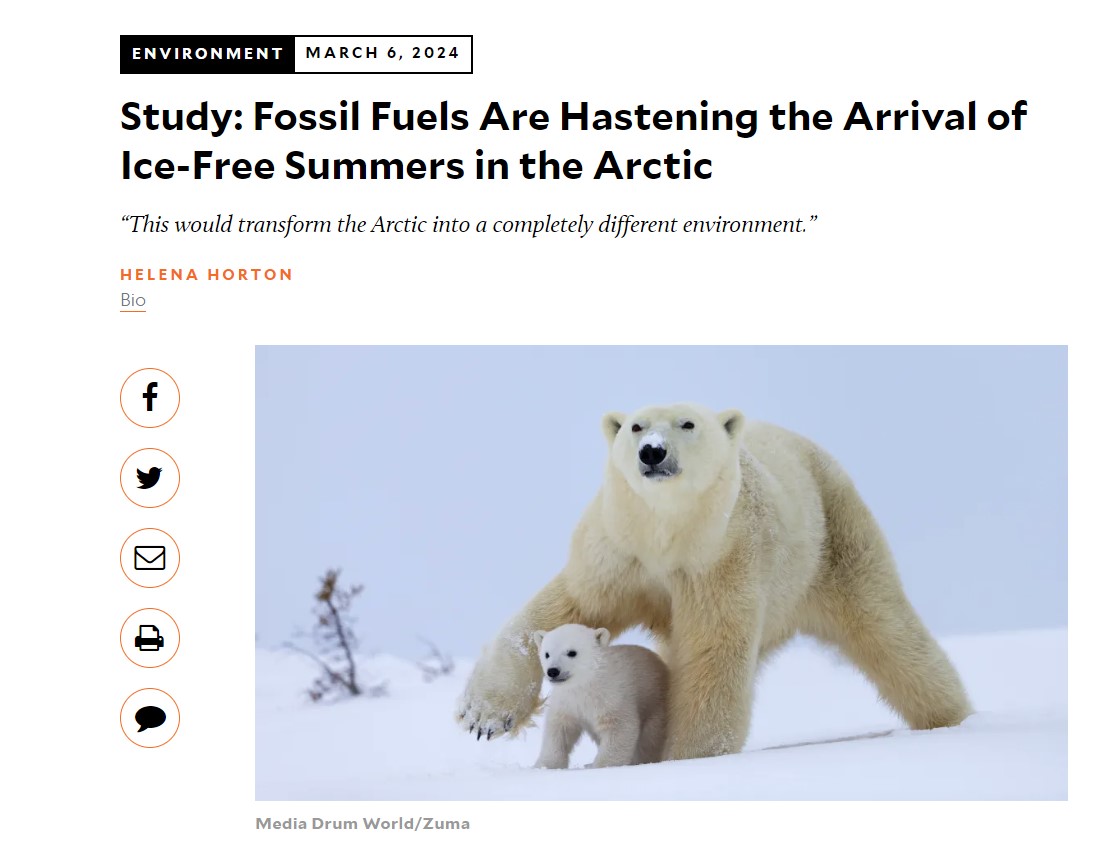
That’s probably because the experts now have to admit that polar bear numbers have not declined since 2004 and bears have been in good body condition since at least 2016. Southern Hudson Bay bears have apparently increased in number since 2016. How ironic is it that the photo above, taken in Hudson Bay — the only Arctic region where trees grow — was used to illustrate a recent Mother Jones article promoting a new prediction of future Arctic summer sea ice loss that’s said to pose a threat to polar bear survival.

Continue reading

NY Times pushes an implausible story of polar bear evolution and what makes a species

Carl Zimmer over at the New York Times penned a misleading story of speciation, using the polar bear as an example. It explains polar bear evolution based on a genetic interpretation that ignores the fossil record, bear behaviour, and geological history. [h/t Kip Hanson].

In my opinion, this kind of ‘science communication’ is more misleading than enlightening because it fails to alert readers to the fact that the topic is actually more complicated and gives the impression that the author considers readers too stupid to understand a more accurate explanation.

Polar Bear Evolution does a better job for those who are really interested in the process: it doesn’t hide the complicated nature of speciation or polar bear evolution. It doesn’t pretend to present “the truth” but explains how a good scientist gets to a plausible explanation that best fits the evidence.

Continue reading

Activists just can’t stop using emotional blackmail to sell the climate change narrative

Even though a big deal was made earlier this year about climate activists not using polar bears anymore to try and sell the climate change emergency narrative, they just can’t seem to help themselves.

So it’s not at all surprising that yet another amateur climate activist has resorted to using the emotional ploy of a photo of a polar bear on sea ice to win the 2023 Wildlife Photo of the Year People’s Choice Award sponsored by the Natural History Museum London (UK).

Said Museum director Dr Douglas Gurr of the photo taken by British amateur photographer Nima Sarikhani: “

His thought-provoking image is a stark reminder of the integral bond between an animal and its habitat and serves as a visual representation of the detrimental impacts of climate warming and habitat loss.

Continue reading

Willie Soon on fire talking to Tucker Carlson about the role of the sun in climate change

Well worth the 50 minutes or so to listen to astrophysicist Willie Soon’s interview with Tucker Carlson, on Twitter/X Episode #62. You don’t have to be signed up to Twitter/X to listen. Background information on the topics covered by Soon can be found here: https://www.ceres-science.com/post/dr-willie-soon-s-interview-by-tucker-carlson-december-2023

Polar bear researchers hiding significant increase in Southern Hudson Bay numbers

Last December, researchers vigorously promoted a possible 27% decline in Western Hudson Bay (WH) polar bear abundance but kept hidden the fact that adjacent Southern Hudson Bay (SH) numbers increased by 30% over the same period.

And surprise, surprise: the bombshell SH results call into question everything the ‘experts’ have been saying about polar bears in Hudson Bay for years.

Continue reading

Attenborough expects King Charles to continue his activism

Now that Charles is King, it seems the new euphemisms for WEF-style totalitarian climate change activism is a defence of “environmental issues,” “protecting the natural world,” and “backing conservation.”

In a pre-coronation interview with the BBC, Sir David Attenborough said on Friday he believes that Charles will continue his activism while he is King, despite the constitutional demand that a British monarch remains apolitical. Today is Attenborough’s 97th birthday and it seems fitting to say I believe him. Why wouldn’t he tell the truth?

Money quote from Attenborough: “…now everybody realises that the future of humanity is dependent upon a healthy natural world. The way ahead demands that leaders of the state should actually give their full backing and I’m quite sure that as King he will lead this country in a very important way.

In true 1984 style, it seems the ruling elite are redefining terms to fit their ideology: recasting the King’s former activism and promotion of World Economic Forum agendas as entirely a defence of the environment and conservation issues. No doubt this tactic is meant to convince the naive public that there was never any politics involved in what Charles did before and so it cannot be considered political now that Charles is King.

But those who have been paying attention know better.

It also suggests that what those wealty powerbrokers have planned for us cannot work without the King’s considerable power and influence. This may sound awfully cynical but my eyes have been opened by Attenborough’s behaviour over the falling walrus issue and the alliances he’s made with the WWF and Netflix over the last few years. You may agree when you read what has been circulating in the news over the weekend, summarized below.

Continue reading

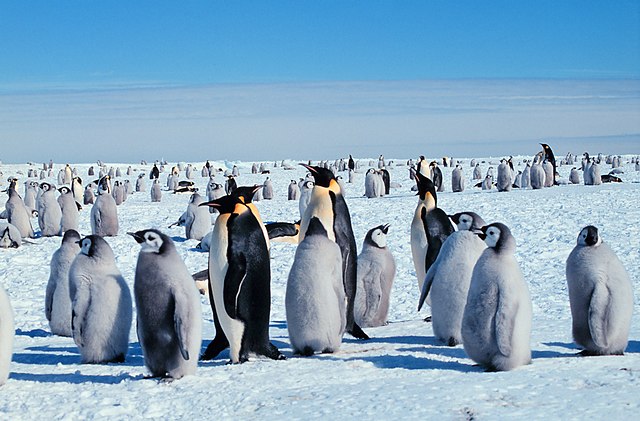
Emperor penguin ESA listing in 2022 used Antarctic sea ice models known to be flawed

While Arctic sea ice has declined remarkably since 1979, Antarctic ice has been unexpectedly stable. Experts acknowledge that existing climate models–which assume that CO2 emissions drive global sea ice loss–had predicted Antarctic sea ice would have declined over the last several decades–and would decline even more in the future. They’ve finally admitted they were wrong.

John Turner (British Antarctic Survey) and Josifino Comiso (NASA) in a NATURE paper in 2017:

Current climate models struggle to simulate the seasonal and regional variability seen in Antarctic sea ice.

Continue reading

Where were the starving W. Hudson Bay polar bears in 2020 if the population had declined by 2021?

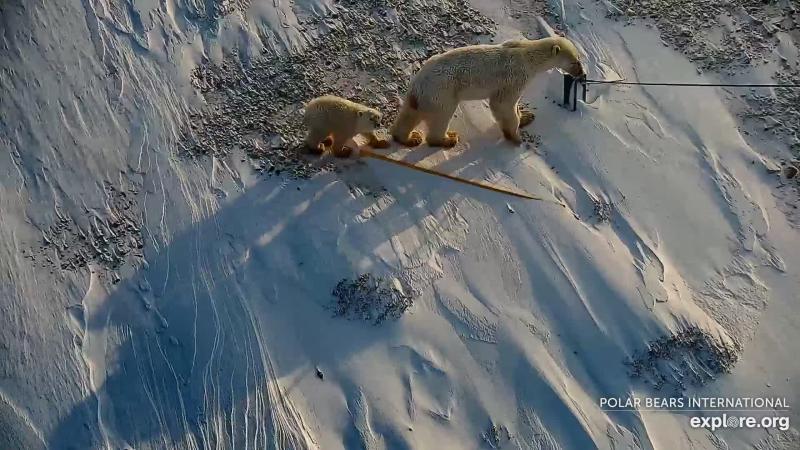
Polar bears are supposed to starve before they die, the experts said. They said only a few years ago that dead or emaciated individuals onshore were evidence that many polar bears would soon be dying of starvation out on the sea ice. So, if the Western Hudson Bay (WH) subpopulation had indeed dropped by 27% by late summer 2021 as researchers claimed, where are all the photos of starving bears in the fall of 2020, the year before the count? The photo below of a thin female and cub was taken in late fall of 2021 (the year of the count) by a stationary web cam. In other words, some bears came off the ice without an optimal amount of fat because of poor hunting conditions over the winter but they were still alive. We know that 2020 had the shortest ice-free season in at least 20 years (and no similar images were captured), so bears went into the winter of 2020/2021 in good condition. Ditto for 2017-2019. In contrast to 2021, in 2016 (the year of the previous survey that also indicated a declining population size), bears reportedly came off the ice in good condition.

All I’ve seen are photos of fat bears and fat cubs, even a triplet litter in fall 2020. The shore of WH near Churchill should have been abounding with starving bears in 2020 (and in 2015), if the experts were right about starving bears preceding a population decline. More importantly, where are the studies on food-deprived bears onshore, as were done in the 1980s when WH bears were emaciated and cub survival poor (e.g. Ramsay et al. 1988)? WH bears are being used exclusively to model an implausibly pessimistic future for polar bears across the entire Arctic (Molnar et al. 2010; 2020), which means lack of good science for WH polar bears has big consequences. Covid restrictions in two of those ten years don’t excuse lack of study on this phenomenon.

Continue reading