Posted onJune 23, 2022|Comments Off on Southern Beaufort Sea polar bear habitat at the summer solstice is above average
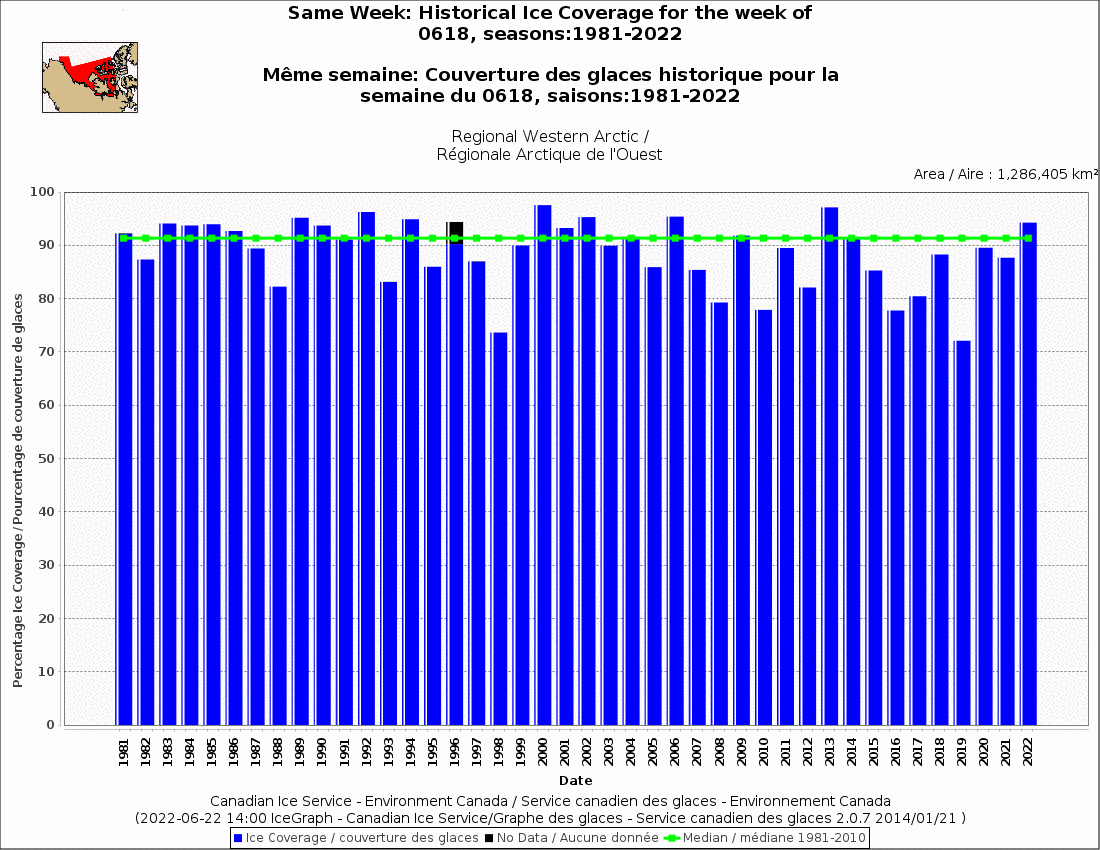
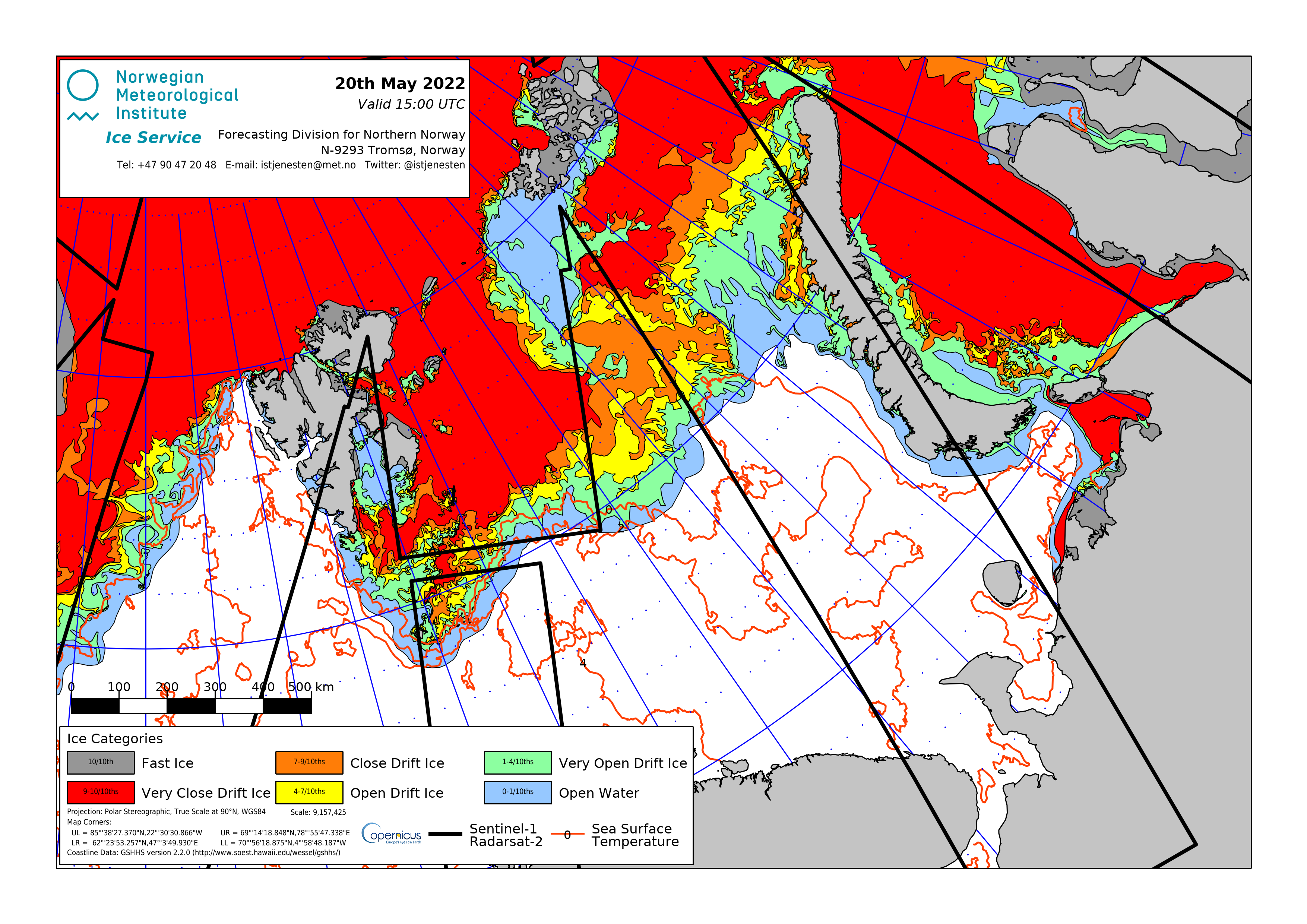
Sea ice is well above recent levels for this time of year in the Southern Beaufort and only time will tell if that’s bad news for polar bears. Seals need the open water that early summer polynyas provide in order to feed and some polar bears make use of the hunting opportunities (Stirling and Cleator 1981; Stirling et al. 1981).
It’s been a decade since there was this little open water at the beginning of summer in the western North American Arctic, especially the Southern Beaufort. It’s looking unlikely there will be extensive open water until well into July, which may result in many fewer bears on shore in early summer. Recall that in July 2019, NOAA employees counted 31 fat, healthy bears onshore along the Alaska coast.
Posted onJune 19, 2022|Comments Off on New polar bear subpopulation update: more background facts and details from the paper
Here are the facts you need to put into context the claim that the estimated 234 polar bears recently discovered in SE Greenland have been living ‘without sea ice‘.
The unique genetic isolation of this new subpopulation makes it one of the most interesting discoveries about polar bears we’ve seen in decades, yet the media were primed by a press release loaded with dooms-day climate rhetoric to focus exclusively on the model-predicted precarious future of the species, like this gem from the lead author:
“In a sense, these bears provide a glimpse into how Greenland’s bears may fare under future climate scenarios,” Laidre said. “The sea ice conditions in Southeast Greenland today resemble what’s predicted for Northeast Greenland by late this century.”
As a consequence, the media have been trying to out-do each other with the most over-the-top climate catastrophe headlines, see here and here. The authors of paper itself and a companion piece do the same: instead of focusing on the exciting scientific implications of the genetically isolated population they discovered, they promote the preferred narrative that polar bears have a bleak future and lecture the public (yet again) about the need for limiting CO2 emissions (Laidre et al. 2022; Peacock 2022).
Posted onJune 16, 2022|Comments Off on Newly-discovered SE Greenland polar bear subpopulation: another assumption proven false
Researchers have discovered that the 300 or so polar bears living in SE Greenland (below 64 degrees N) are so genetically distinct and geographically isolated that they qualify as a unique subpopulation, adding one more to the 19 subpopulations currently described by the IUCN Polar Bear Specialist Group.
NASA photo, SE Greenland glacier-front habitat with a polar bear and two cubs.
Previously, polar bear researchers simply assumed all of the bears in East Greenland were part of the same subpopulation but no field work had been conducted in the extreme southern area until 2015-2017. When they included this region, they got a big surprise: now they are spinning it as significant for polar bear conservation (Laidre et al. 2022).
Posted onJune 8, 2022|Comments Off on My scientific blog posts contributed to the failed Antarctic Treaty bid to protect Emperor penguins
There is actual evidence that two of my fully-referenced blog posts caused some Antarctic Treaty delegates to reject a bid for special protected status for Emperor penguins. Activist heads have exploded.
Posted onJune 5, 2022|Comments Off on China ruins Antarctic Treaty attempt to enact special protection status for Emperor penguins
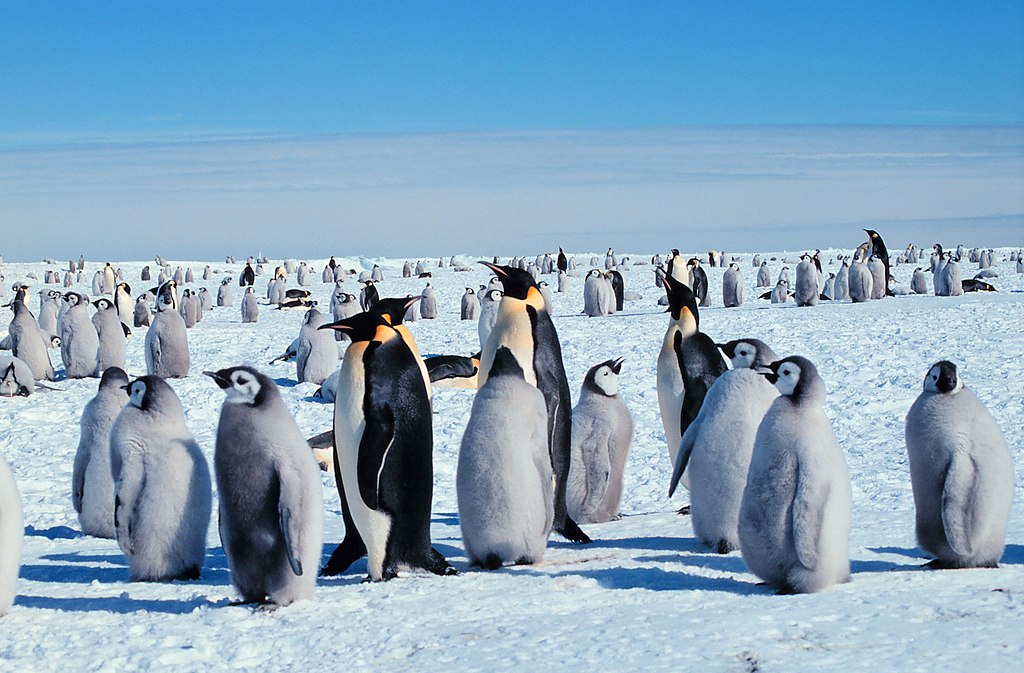
China has thwarted an attempt by members of the Antarctic Treaty organization to enact special protection status for the Emperor penguin, which would have generated a ‘Species Action Plan’. Apparently, such a proposal required a consensus of all parties and China wouldn’t go along.
But as we know from past actions by the IUCN Polar Bear Specialists Group against former member Mitch Taylor, such impediments are easily sidestepped when a decision requiring consensus doesn’t go your way.
Posted onJune 2, 2022|Comments Off on Grizzly spotted on Western Hudson Bay shore but there are no polar bears on land for it to mate with
On 28 May last week a big grizzly (probably a male) was spotted on the shore of Wapusk National Park just south of Churchill, Manitoba but unless he heads out onto the sea ice, he has no chance of finding a polar bear female to mate with. Even if he does, he is unlikely to find a polar bear female willing to mate: most polar bears mate late March to early May (Smith and Aars 2015). Brown bears (called grizzlies across most of North America) mate later in the year, from late May to July, which means finding hybrids here is highly unlikely.
A few tundra grizzlies from the Northwest Territories have been spotted moving southeast into the Hudson Bay area since 2008. There was some media-and-expert-generated excitement back in 2016 when a hunter shot what he thought might have been a grizzly/polar bear hybrid near Arviat but it turned out to be a blonde grizzly, which are not uncommon in the tundra population from which it came. A similar result came from recent genetic study: samples from two pale blonde grizzlies from the North Slope of Alaska that looked remarkably like polar bear hybrids were not only unrelated to each other but showed no evidence of being hybrids (Lan et al. 2016 Supplementary data, pg. 3).
Contrary to some predictions, grizzly/polar bear hybrids are still quite rare (Crockford 2018:23).
Posted onMay 29, 2022|Comments Off on Polar bear habitat in Canada over the last decade: spring sea ice not in a death spiral
Sea ice extent in Canada at the height of Arctic spring over the last 10 years has been more like a gentle roller coaster than a death spiral. See for yourself.
Posted onMay 23, 2022|Comments Off on Barents Sea good news: researcher reveals polar bears, even females, still in excellent condition
Barents Sea polar bears had another good year in 2022 despite having lost the most sea ice of any subpopulation but the media and activists can’t help themselves insisting a dismal future is ahead.
Oddly, Norwegian polar bear researcher Jon Aars recently said the quiet part out loud: that he expects Barents Sea polar bear numbers to keep rising, which is rather at odds with the standard narrative:
“What we think is that in the future, if you get less and less sea ice and more and more bears, at some stage they will start struggling and you get fewer bears,” Dr. Jon Aars, a research biologist at Norwegian Polar Institute, told CTV News. [CTV News, 8 May 2022]
“Unexpectedly, body condition of female polar bears from the Barents Sea has increased after 2005, although sea ice has retreated by ∼50% since the late 1990s in the area, and the length of the ice-free season has increased by over 20 weeks between 1979 and 2013. These changes are also accompanied by winter sea ice retreat that is especially pronounced in the Barents Sea compared to other Arctic areas. Despite the declining sea ice in the Barents Sea, polar bears are likely not lacking food as long as sea ice is present during their peak feeding period. Polar bears feed extensively from April to June when ringed seals have pups and are particularly vulnerable to predation, whereas the predation rate during the rest of the year is likely low.” [Lippold et al. 2019:988]
This is has been upheld this year as well, with Aars saying in the video below (6 May 2022) that bears were found to be in excellent condition this spring. In contrast, the media framed this good news within the false ‘polar bear numbers are declining’ narrative, urged on, no doubt, by doom-monger Steve Amstrup.
Amstrup is the paid spokesman for activist organization Polar Bears International, who is identified in this ‘news’ report only as a ‘scientist’, as if he were unbiased, banging on about bears in Western Hudson Bay, where sea ice decline has been a fraction of what the Barents Sea has experienced.
Amstrup’s prophet-of-doom side-kick, Dr. Andrew Derocher (University of Alberta), who worked in the Svalbard area in the 1990s, was wringing his hands in public over sea ice loss in March:
It's incredibly warm in Svalbard. Challenging times for my old study area & the polar bears living there. If this continues, the melt will come early. An early spring melt is correlated with lower polar bear body condition, higher mortality rates & lower reproductive success. https://t.co/TWBcbjyppp
The disappearing ice in the Barents Sea is quite remarkable for March – this is the area within polar bear habitat with the most rapidly disappearing ice cover (>30 days of ice cover lost / decade). https://t.co/LvQ5bTEbVi
It turned out, this wasn’t an “early melt” but pack ice moving in response to wind, as it often does. A bucket-load of angst, all for nothing. Oddly enough, the polar bears figured out a way to not just survive, but thrive! Who would have thought?
References
Lippold, A., Bourgeon, S., Aars, J., Andersen, M., Polder, A., Lyche, J.L., Bytingsvik, J., Jenssen, B.M., Derocher, A.E., Welker, J.M. and Routti, H. 2019. Temporal trends of persistent organic pollutants in Barents Sea polar bears (Ursus maritimus) in relation to changes in feeding habits and body condition. Environmental Science and Technology 53(2):984-995.
Comments Off on Barents Sea good news: researcher reveals polar bears, even females, still in excellent condition
Posted onMay 17, 2022|Comments Off on Polynyas are critical for polar bear spring feeding
Areas of open water or thin ice in spring are essential for the survival of Arctic species, as I emphasized in my recent peer-reviewed paper on polar bear ecology. Sea ice is still abundant in spring (April-June), which is the critical feeding period for polar bears: they must consume about 2/3 of the total calories they need for the entire year. Most of those calories come from newborn seals (ringed, bearded, and harp).
In southern areas, such as Hudson Bay and Davis Strait, virtually all of this feeding is completed by the end of May, making June a time of opportunistic hunting for most bears: if they find a seal, they will kill and eat it but if not, they can do without. That’s not just my opinion but the reason given by polar bear specialists themselves to explain why Southern Hudson Bay polar bear numbers had not declined in the 2000s despite a sudden increase in the ice-free season:
…even though break-up has advanced by up to 3-4 weeks in portions of Hudson Bay it still occurs no earlier than late June or early July so does not yet interfere with opportunities to feed on neonate ringed seal pups that are born in March-April in eastern Hudson Bay. Therefore, losing days or weeks of hunting opportunities during June and July deprives polar bears of the opportunity to feed on adult seals, but does not deprive them of the critical spring period when they are truly hyperphagic. [Obbard et al. 2016:29]
Posted onMay 12, 2022|Comments Off on Wandering polar bears are the new starving bears falsely blamed on climate change: Déjà vu
I said last year that wandering polar bears appeared to be the new ‘starving’ polar bears that were formerly the go-to victims falsely blamed on lack of ice due to climate change and here we are again. Polar bear specialists and their cheer leaders so seldom disappoint.
Watch polar bear habitat reform in the Canadian Arctic: “last 10 days” Canadian Ice Service animation (works anytime) HERE.
See Quote archive for details.











You must be logged in to post a comment.