At the end of March there were two polar bear incidents on the same day in Svalbard, where one bear trashed a holiday cabin. Think a door or a window can keep out a polar bear? Think again!
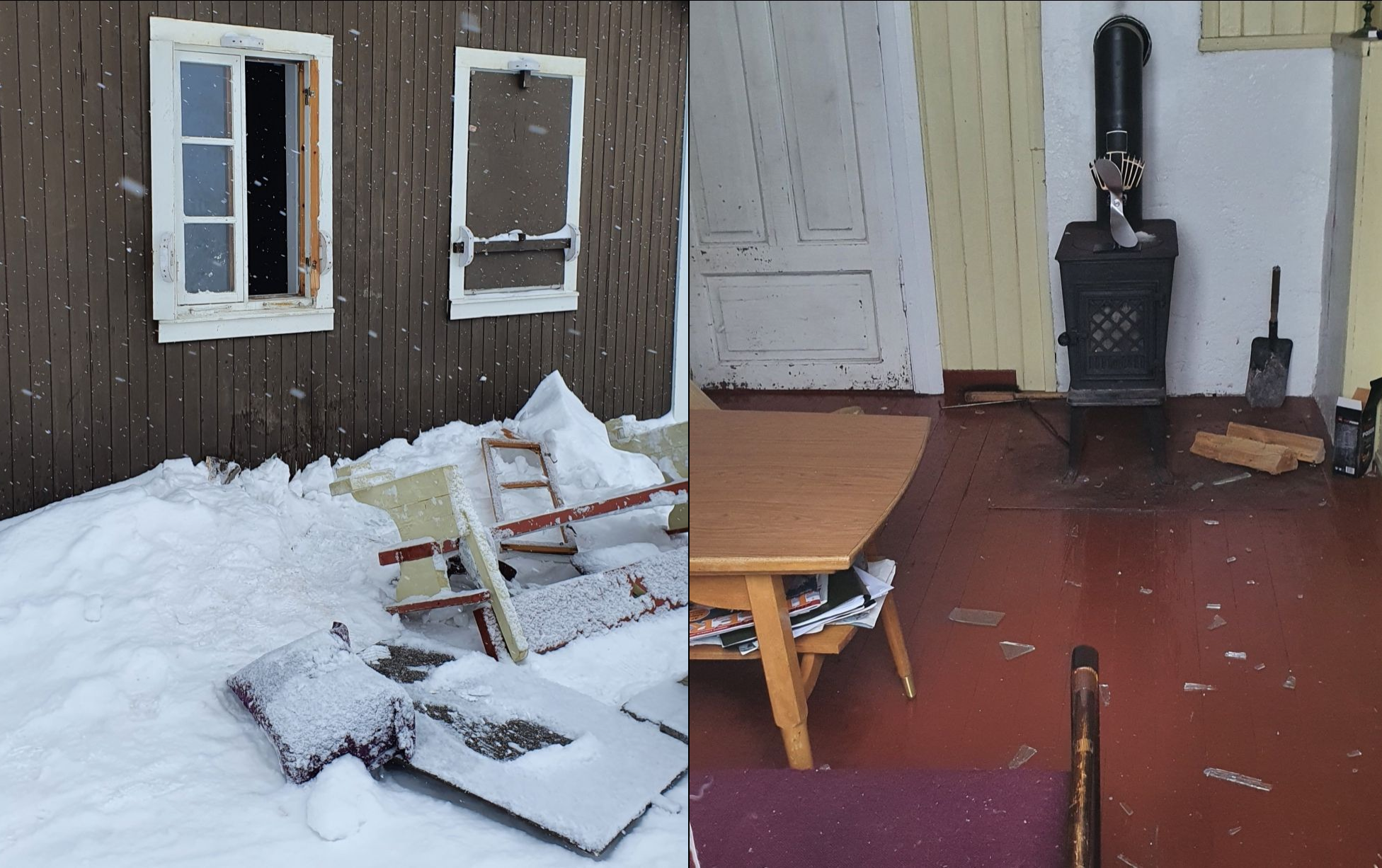

At the end of March there were two polar bear incidents on the same day in Svalbard, where one bear trashed a holiday cabin. Think a door or a window can keep out a polar bear? Think again!
Comments Off on Polar bear problems onshore in Svalbard before prime feeding season
Posted in Life History, Polar bear attacks, Scientists hit back
Tagged destruction, polar bear, problem, sighting, spring, Svalbard
“Polar bears continue to be described as ‘canaries in the coal mine’ for the effects of human-caused climate change, but the evidence shows they are far from being a highly-sensitive indicator species.” Susan Crockford, 24 February 2021
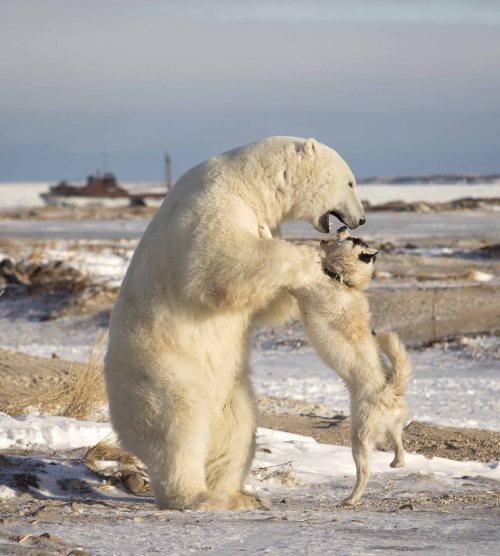
You’ll find the evidence I allude to above – backed up by references to the peer-reviewed literature – in my many publications (Crockford 2015; 2017; 2019, 2020, 2021). My open-access research paper from 2017 has been downloaded more than 6,000 times and despite this being an online forum for legitimate scientific critique, none has been offered. My comprehensive polar bear science book released just two years ago (see below) has a 4.7/5.0 star rating on Amazon, with 132 reviews so far.
For recent blog post examples of the evidence that polar bears are thriving despite profound summer sea ice loss, see this discussion about the many contradictions that exist for claims that sea ice declines have caused harm to polar bear health and survival and this review of the evidence that less summer sea ice has meant more food for polar bears.
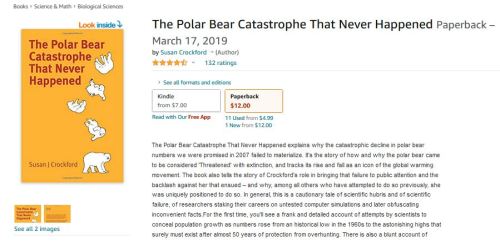
For those who haven’t seen it, I’ve copied below the preface from The Polar Bear Catastrophe That Never Happened. This book is an antidote to the emotional blackmail coming at the public from all sides by journalists, polar bear specialists, and elite influencers like David Attenborough.
Continue reading
Comments Off on Choose verifiable facts over emotional narratives on polar bear conservation
Posted in Book promotion, Conservation Status, Population, Sea ice habitat, Summary
Tagged activist scientists, computer models, facts, lonliest polar bear, polar bear, science, sea ice, status
From Tom Harris at ICSC Canada: In ‘State of the Polar Bear Report 2020’, zoologist Dr. Susan Crockford writes, “in 2020, even though summer sea ice declined to the second lowest levels since 1979, there were no reports of widespread starvation of bears, acts of cannibalism, or drowning deaths that might suggest bears were having trouble surviving the ice-free season.”
22 March 2021 [1:34]
Comments Off on Polar bears are an environmental success story: short video from ICSC Canada
Posted in Life History, Sea ice habitat
Tagged ice-free season, polar bear, primary productivity, sea ice
From Tom Harris at ICSC Canada: Polar bears are nowhere near as sensitive to declining sea ice than originally thought. In fact, their population is now three times higher than in the 1960s. 17 March 2021 [1:28]
Comments Off on Polar bears are thriving: an ICSC Canada short video
Posted in Conservation Status, Population, Summary
Tagged polar bear, population size, sea ice, thriving, video
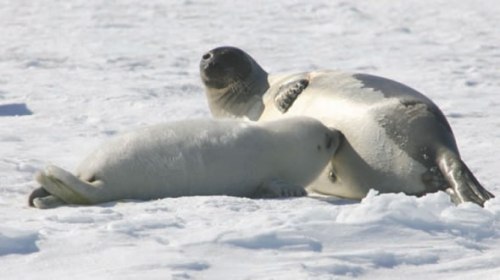
In early February this year, sea ice was much lower than usual along the Labrador coast and virtually non-existent in the Gulf of St. Lawrence, which are two important pupping habitats for North Atlantic harp seals. The picture would have been very bleak for harp seal pups and the Davis Strait polar bears that depend on them for food if ice hadn’t expanded and thickened by early March – but it did. Past experience suggests that harp seals that usually whelp in the Gulf of St. Lawrence, where ice is still well below average this year, will move to ice off Southern Labrador (‘the Front’) to have their pups.
Comments Off on Will low sea ice threaten harp seals & polar bears on Canada’s East Coast this year?
Posted in Life History, Sea ice habitat
Tagged Gulf of St. Lawrence, harp seal, Labrador, Newfoundland, polar bear, prey, pups, sea ice, whelping
A man was attacked from behind this morning by a small male polar bear on the east coast of Svalbard, Norway, where there is abundant sea ice. His companion shot the bear and the victim escaped with minor head injuries. Most bears are very hungry at this time of year because the seal pupping season has not yet begun.
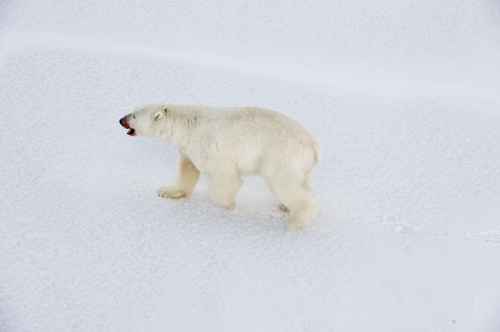
Young bears are extremely dangerous and the most likely to attack people (Crockford 2019; Wilder et al. 2017): a three year old male fatally attacked a camper in August 2020 just outside Longyearbyen, Svalbard, an incident unfairly blamed on lack of sea ice (Crockford 2021).
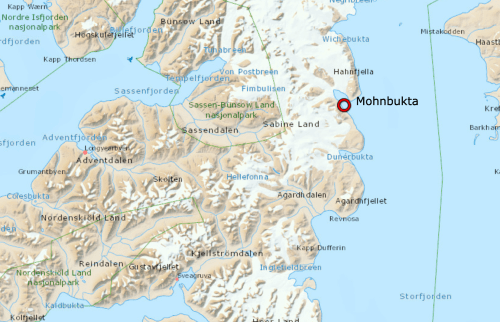
UPDATE 3 March 2021: Results of an autopsy conducted on the polar bear killed yesterday revealed it was a 6 year old male that weighed only 231 kg, which is less than usual for an adult bear later in the season but likely typical for a relatively young bear at the end of winter before seal pups are born. See quote from a Norwegian polar bear specialist below [my bold]:
Jon Aars, an institute researcher who has spent many years studying bears in Svalbard, told Svalbardposten the vast majority of bears ages six to 15 will weigh between 350 and 450 kilograms in April, when the spring hunting season is typically at its peak.
“It may have been aggressive because it was thin,” he said. “It is likely. The thinner they are, the greater the chance that they are dangerous. He is at an age where he is not frequently considered as a problem bear – it is mostly among the younger or the very old who have problems.”
Comments Off on Polar bear attack in Svalbard: victim survives, polar bear does not
Posted in Polar bear attacks, Sea ice habitat
Tagged attack, polar bear, sea ice, Svalbard, young male
A couple weeks ago I had a fabulous chat with Daniel Vitalis from Wildfed about a wide range of topics, including my work on polar bears and domestication as a process of speciation. The podcast went live this morning – have a listen here (also copied below), I think you’ll enjoy it. One hour, 36 minutes.
Comments Off on Podcast with WildFed about polar bears and domestication as speciation
Posted in Summary
Tagged academic freedom, attacks, domestication, hunting, interview, podcast, polar bear, sea ice, speciation, thyroid hormone
Last week (24 February 2021), The Guardian was promoting a study that claims polar bears now use four times more energy than expected to survive because of ‘major ice loss’ in the Arctic, as a way of suggesting that the animals are already on their way to extinction.

But like many papers of this type, this study by Anthony Pagano and Terri Williams (Pagano and Williams 2021) is yet another model describing what biologists think may be happening based on experimental data collected from individual bears, not a conclusion based on evidence collected from subpopulations with the worst amounts of ice loss.
Comments Off on More polar bear catastrophe hype: bears use four times more energy than expected
Posted in Advocacy, Conservation Status, Life History, Sea ice habitat
Tagged baffin bay, Barents Sea, Chukchi Sea, contraditions, energy, experimental evidence, habitat loss, polar bear, real world evidence, sea ice
Canadian polar bear guide Dennis Compayre has spent more than 20 years around Churchill, Manitoba, and his simple words in a 19 February CBC article promoting an upcoming CBC documentary special are clear: Western Hudson Bay (WH) polar bears are currently thriving.

Mother with triplet cubs, 31 October 2020. Dave Allcorn photo.
Compayre does not appear to be a global warming skeptic: he seems to accept the prophesy that the future is grim for these bears. However, if he hadn’t I’m certain he wouldn’t have gotten the job as guide for this Nature of Things documentary, hosted by Canada’s ultimate carbon dioxide doom-master David Suzuki. However, he is at least willing to tell the truth about what has been happening over the last four years (the time it took to film this documentary) with WH polar bears. Continue reading
Comments Off on Local guide says W Hudson Bay bears have recently ‘put on a lot of fat and are healthy’
Posted in Conservation Status, Life History, Population, Sea ice habitat
Tagged caribou, Eemian interglacial, eggs, extinction, geese, ice-free Arctic, Kingdom of the Bears, Nature of Things, polar bear, sea ice, survival, terrestrial foods
A review of my latest short novel from the UK really made me proud: if only Amazon offered a ‘geological fiction’ category, that is what I would have chosen. Tsunami meets sea ice meets polar bear…
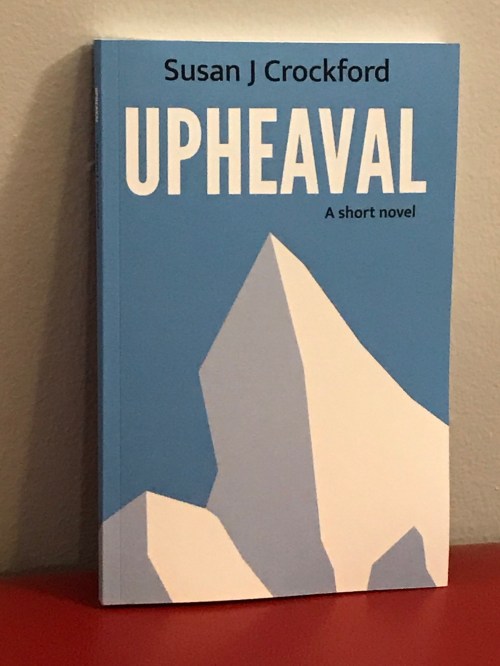
First Class Geological Fiction.
A clever, imaginative, well crafted and well written story focused on a natural phenomenon which has become all too familiar to us – especially those in the Far East – in the last 16 years. But the story contains a twist, which is perfectly possible, indeed likely to occur in the long term, which few have possibly thought of before. The book also reflects and bears witness to the author’s detailed and extensive knowledge and experience of Arctic conditions and wildlife.
The story is a sort of geological fiction, and the action takes place on Cape Breton Island, Nova Scotia – a place, by chance, already known for its spectacular geological curiosities. The book is quite short, and once into it, I found it hard to put down.
h/t B.G
Comments Off on UPHEAVAL review: ‘First class geological fiction’
Posted in Book review, Sea ice habitat
Tagged Cape Breton, geological fiction, maritimes, polar bear, sea ice, tsunami




 polarbearscience
You must be logged in to post a comment.