Posted onFebruary 3, 2026|Comments Off on Biologists allowed David Attenborough to tell BBC viewers that Barents Sea bears were dying of starvation in his 2011 Frozen Planet episode when they knew it wasn’t true
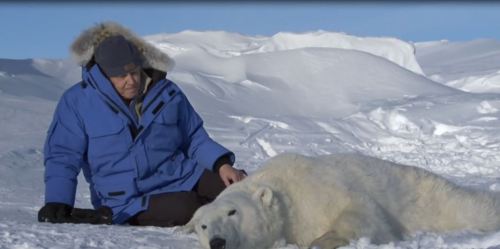
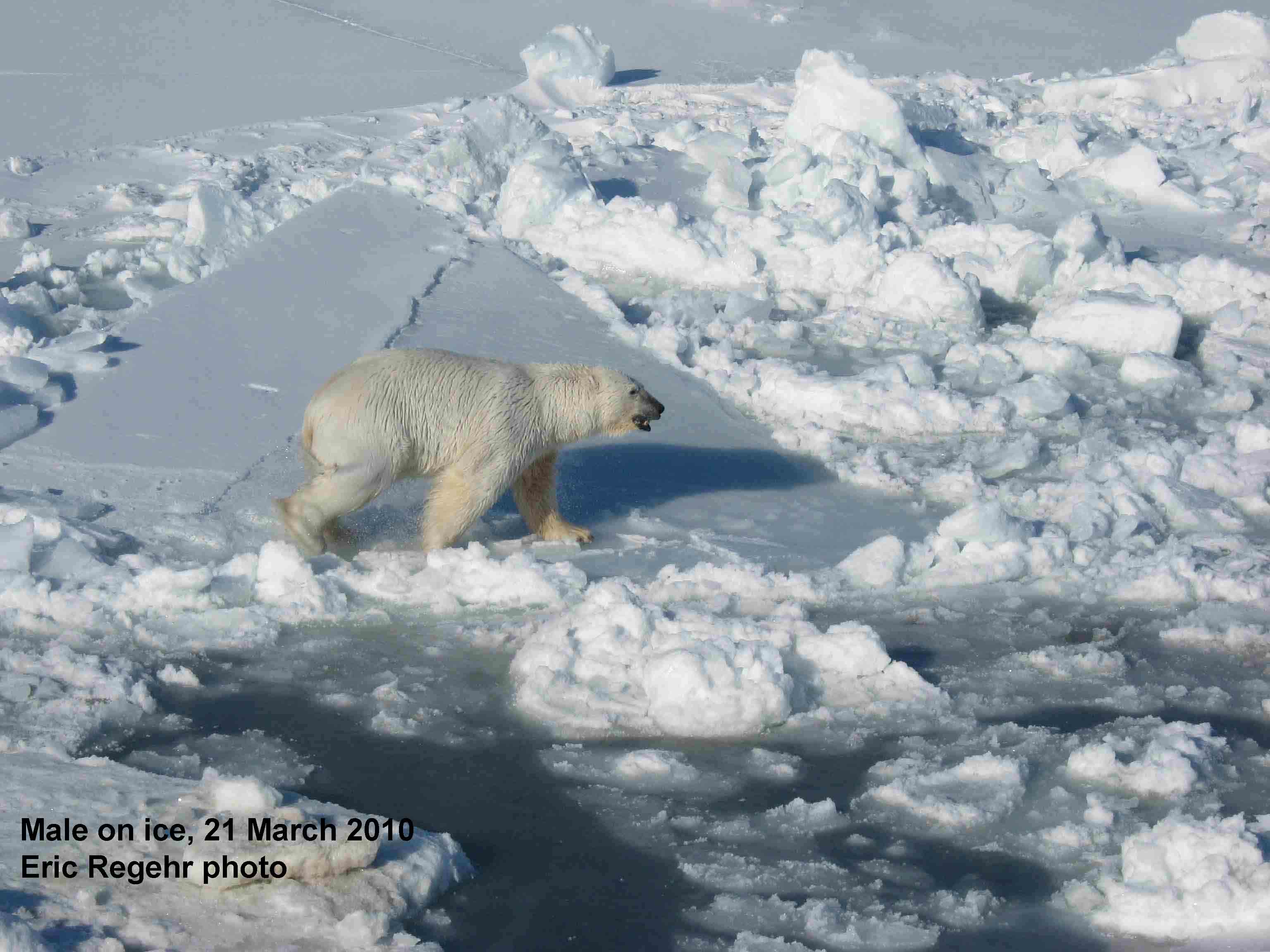
In the climate change episode of his 2011 BBC Frozen Planet series ‘On Thin Ice’, Sir David Attenborough told viewers that polar bear mothers and cubs across the Arctic were starving because climate change was melting the sea ice, even as he sat beside a fat, healthy Barents Sea female (below).
I wonder how Sir David Attenborough feels now? Has anyone bothered to tell him that Norwegian biologists have finally admitted that Barents Sea polar bears were actually fat and healthy in 2010 when they assisted in the filming of his BBC documentary? Or, did Attenborough know even then that this population of polar bears was thriving despite the large loss of sea ice – but let his viewers think otherwise?
Comments Off on Biologists allowed David Attenborough to tell BBC viewers that Barents Sea bears were dying of starvation in his 2011 Frozen Planet episode when they knew it wasn’t true
Posted onDecember 7, 2025|Comments Off on Polar bears and Arctic sea ice status
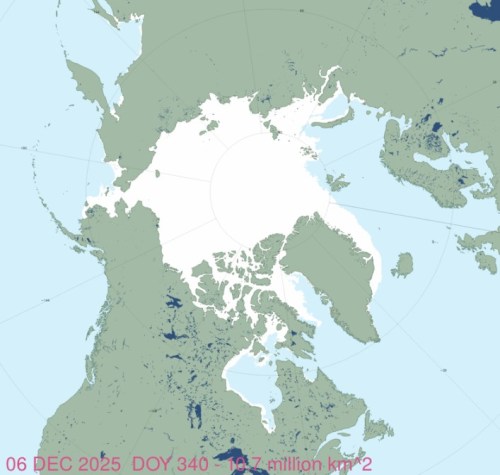
Positive news on the Arctic front as far as polar bears are concerned so far this year, with no reports of dead or dying bears, or of horrific attacks on humans that I’ve heard about. Not much to talk about but here’s what I’ve found.
Sea ice in Hudson Bay is forming rapidly while according to NSIDC, the Arctic Basin is filled with ice. Ice has also moved well into the Bering Sea, the Barents and Kara Seas, and Davis Strait. NSIDC say they have discontinued their monthly sea ice reports due to lack of funding, although under the current federal government administration, such budget cuts were likely tied to their inability to consistently produce these reports without pushing a human-caused climate change narrative of impending catastrophe.
Posted onJuly 17, 2023|Comments Off on More Barents Sea polar bear habitat at mid-July 2023 than in 2012 despite more atmospheric CO2
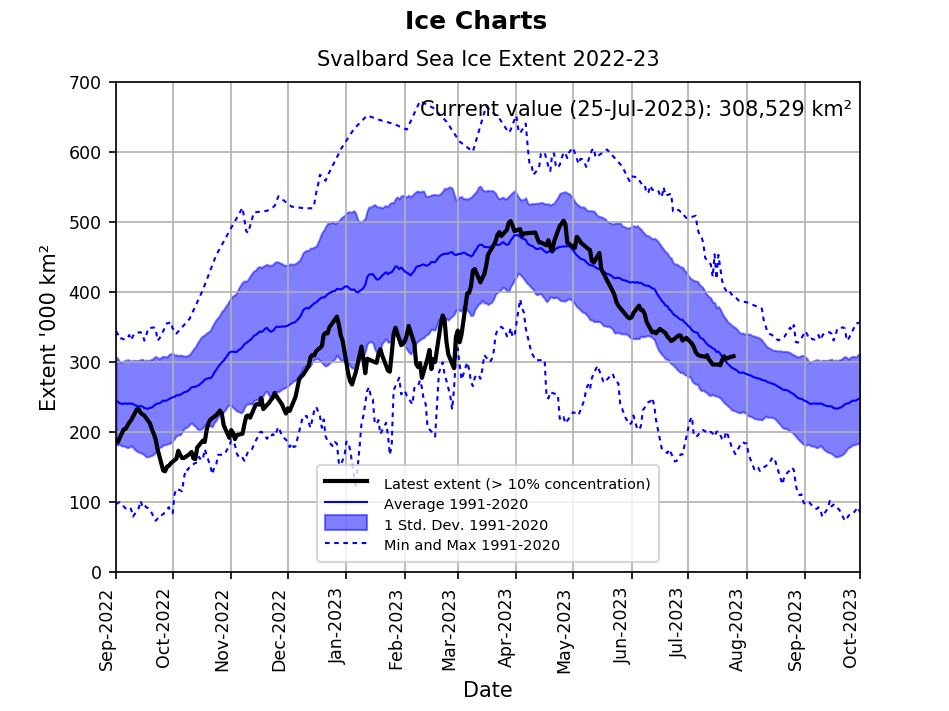
Despite more CO2 in the atmosphere (424 vs. 392, for June), there was more sea ice cover in the Barents Sea at mid-July this year than there was in 2012.
Yet contrary to predictions, which insisted that protracted poor ice conditions in summer would inevitably result in catastrophic rates of starvation and death (Amstrup et al. 2007; Crockford 2017, 2019), polar bears in the Svalbard region have so far not had any documented any harm to their health or population size. In fact, field data show bears in Svalbard are in better condition than they were in the late 1990s (Lippold et al. 2019), almost certainly due to the documented increase in primary productivity that has resulted from longer ice-free summers since 2003 (Frey et al. 2022; Crockford 2023).
Posted onApril 10, 2023|Comments Off on Winter sea ice habitat for polar bears still abundant enough to sustain a thriving species
In contrast to summer sea ice, winter ice in the Arctic was again abundant this year. The slight decline since 1979 has so far been no cause for concern to polar bears, who are thriving.
Posted onNovember 24, 2022|Comments Off on Eastern Canadian Arctic has much more sea ice than usual while Svalbard polar bears deal with less
Svalbard is still ice-free this fall, which it has been rather consistently for at least ten years but the amount of sea ice greater than ‘normal’ in the Eastern Canadian Arctic at this date is something to behold. Yet contrary to predictions, polar bears in Svalbard are thriving.
Posted onJuly 26, 2022|Comments Off on Expert admits polar bears in Svalbard are thriving despite the greatest loss of sea ice in the Arctic
In an article published last week, polar bear specialist Jon Aars is quoted as saying that Svalbard bears are “unexpectedly” thriving. However, he fails short of admitting that the bears don’t really need summer ice as long as they are well-fed in spring, which they have been for the last two decades—this year included.
Aars said the sea ice in this area is declining more than twice as fast as anywhere else in the Arctic. But the polar bears here — unexpectedly — are thriving. [E. Haavik, Svalbard’s polar bears persist as sea ice melts — but not forever, 21 July 2022; my bold]
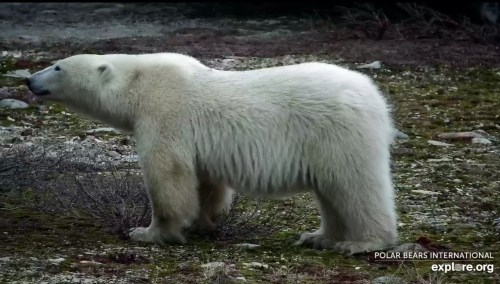
Spring 2018, Barents Sea
The suggestion by Aars that the Svalbard archipelago could one day be ice-free for the entire year is speculative hyperbole but even if that were to happen, it would only mean the permanent movement of 300 or so Svalbard bears to Franz Josef Land (still within the Barents Sea) where ice conditions are less volatile.
Posted onJune 26, 2022|Comments Off on Svalbard polar bear data for spring 2022, low June ice unlikely to affect health or survival
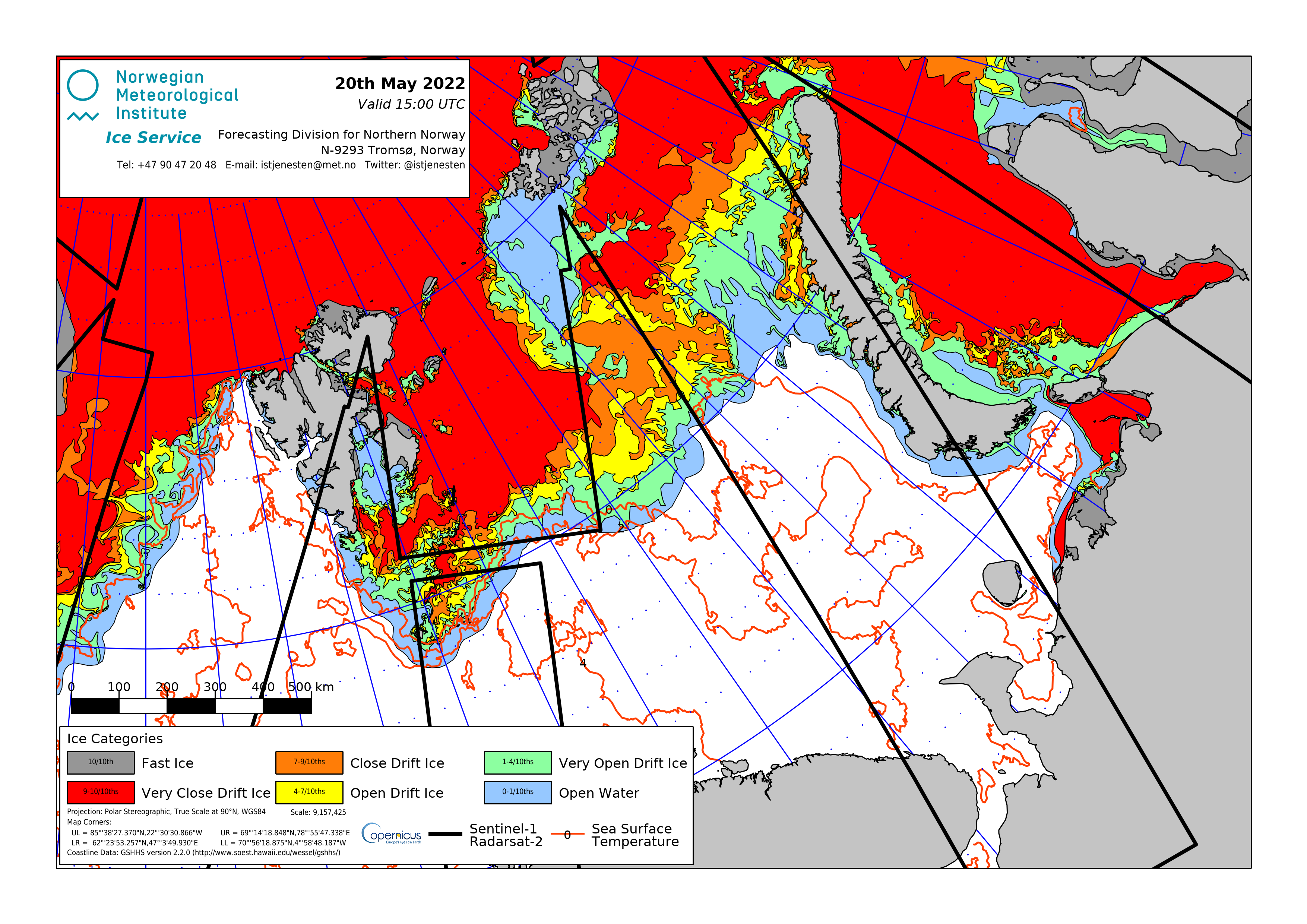
Sea ice around Svalbard, Norway has receded dramatically over the last few weeks and is now at levels similar to 2018 and 2006. But the data are in for the 2022 spring season and they show the bears are still thriving.
Posted onMay 23, 2022|Comments Off on Barents Sea good news: researcher reveals polar bears, even females, still in excellent condition
Barents Sea polar bears had another good year in 2022 despite having lost the most sea ice of any subpopulation but the media and activists can’t help themselves insisting a dismal future is ahead.
Oddly, Norwegian polar bear researcher Jon Aars recently said the quiet part out loud: that he expects Barents Sea polar bear numbers to keep rising, which is rather at odds with the standard narrative:
“What we think is that in the future, if you get less and less sea ice and more and more bears, at some stage they will start struggling and you get fewer bears,” Dr. Jon Aars, a research biologist at Norwegian Polar Institute, told CTV News. [CTV News, 8 May 2022]
“Unexpectedly, body condition of female polar bears from the Barents Sea has increased after 2005, although sea ice has retreated by ∼50% since the late 1990s in the area, and the length of the ice-free season has increased by over 20 weeks between 1979 and 2013. These changes are also accompanied by winter sea ice retreat that is especially pronounced in the Barents Sea compared to other Arctic areas. Despite the declining sea ice in the Barents Sea, polar bears are likely not lacking food as long as sea ice is present during their peak feeding period. Polar bears feed extensively from April to June when ringed seals have pups and are particularly vulnerable to predation, whereas the predation rate during the rest of the year is likely low.” [Lippold et al. 2019:988]
This is has been upheld this year as well, with Aars saying in the video below (6 May 2022) that bears were found to be in excellent condition this spring. In contrast, the media framed this good news within the false ‘polar bear numbers are declining’ narrative, urged on, no doubt, by doom-monger Steve Amstrup.
Amstrup is the paid spokesman for activist organization Polar Bears International, who is identified in this ‘news’ report only as a ‘scientist’, as if he were unbiased, banging on about bears in Western Hudson Bay, where sea ice decline has been a fraction of what the Barents Sea has experienced.
Amstrup’s prophet-of-doom side-kick, Dr. Andrew Derocher (University of Alberta), who worked in the Svalbard area in the 1990s, was wringing his hands in public over sea ice loss in March:
It's incredibly warm in Svalbard. Challenging times for my old study area & the polar bears living there. If this continues, the melt will come early. An early spring melt is correlated with lower polar bear body condition, higher mortality rates & lower reproductive success. https://t.co/TWBcbjyppp
The disappearing ice in the Barents Sea is quite remarkable for March – this is the area within polar bear habitat with the most rapidly disappearing ice cover (>30 days of ice cover lost / decade). https://t.co/LvQ5bTEbVi
It turned out, this wasn’t an “early melt” but pack ice moving in response to wind, as it often does. A bucket-load of angst, all for nothing. Oddly enough, the polar bears figured out a way to not just survive, but thrive! Who would have thought?
References
Lippold, A., Bourgeon, S., Aars, J., Andersen, M., Polder, A., Lyche, J.L., Bytingsvik, J., Jenssen, B.M., Derocher, A.E., Welker, J.M. and Routti, H. 2019. Temporal trends of persistent organic pollutants in Barents Sea polar bears (Ursus maritimus) in relation to changes in feeding habits and body condition. Environmental Science and Technology 53(2):984-995.
Comments Off on Barents Sea good news: researcher reveals polar bears, even females, still in excellent condition
Posted onApril 26, 2022|Comments Off on Whaling crews and their encounters with polar bears and sea ice in 17th century Svalbard
A new paper published today by Dagomar Degroot is a long but interesting historical account about sea ice and whaling in the 1600s around Svalbard that includes some details on interactions of whalers with polar bears (Figure 4 from the paper copied below). These were the early days of whaling in the Arctic: the wholesale slaughter of whales and polar bears didn’t happen until the 1800s.
The paper is open access, so free to download but I’ve copied the abstract and a short excerpt here.
Watch polar bear habitat reform in the Canadian Arctic: “last 10 days” Canadian Ice Service animation (works anytime) HERE.
See Quote archive for details.









 polarbearscience
You must be logged in to post a comment.