Posted onAugust 8, 2022|Comments Off on Polar bear shot after early morning attack on French tourist camping in Svalbard
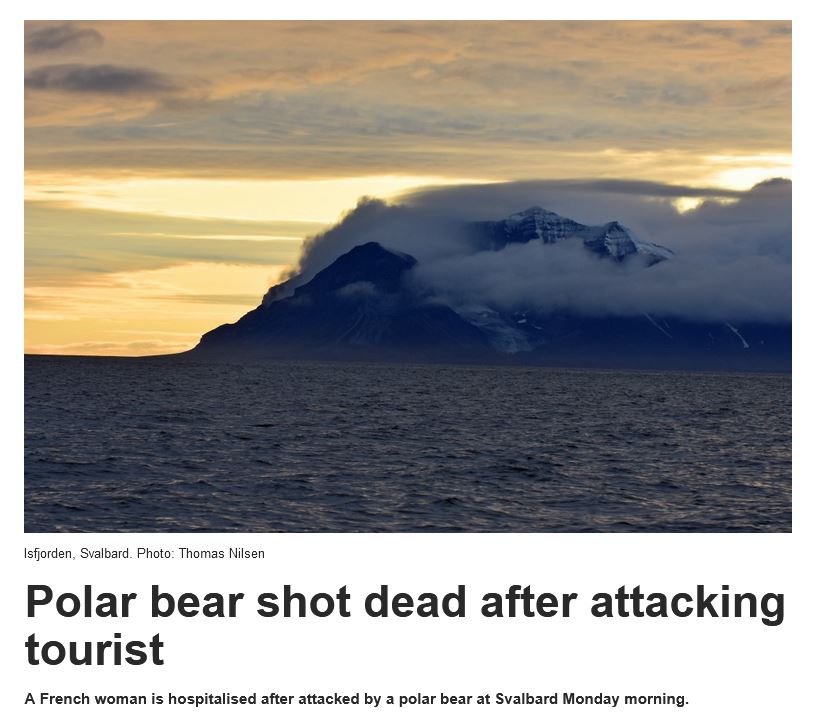
There was another polar bear attack on Svalbard this morning, similar to others in previous years. As usual, the body condition of the bear was not mentioned (whether fat or thin) and photos of it were not published. The woman survived, the bear did not.
Posted onJuly 29, 2022|Comments Off on Most Hudson Bay polar bears are still offshore, excellent ice conditions for late July
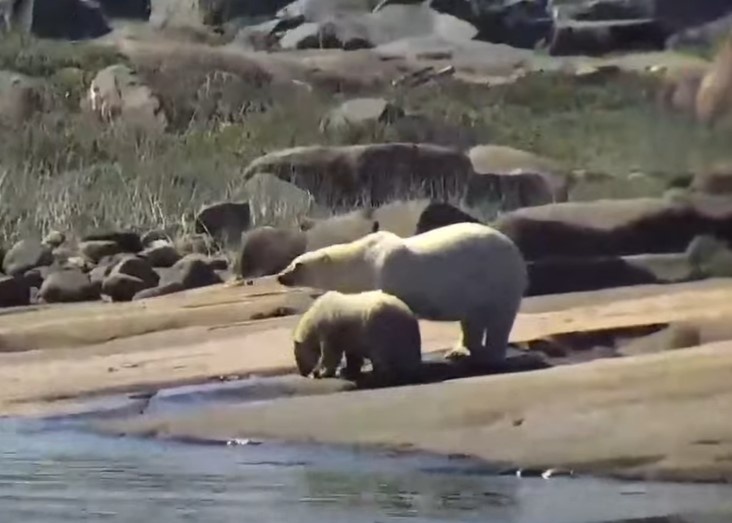
With only a few days until the end of July, most Western Hudson Bay polar bears are still on a thick band of thick first year ice that remains close to shore. The few bears that have come off the ice appear to be nice and fat, indicating they had good spring feeding conditions.
Untagged bear with cub, near Churchill River, 18 July 2022
We’ll have to wait a few more weeks to see if this year shapes up as it did in 2020, when the last of bears didn’t come ashore until the third week of August, despite there being very little visible ice. Last year, most of the bears were ashore by the end of July.
Posted onJuly 26, 2022|Comments Off on Expert admits polar bears in Svalbard are thriving despite the greatest loss of sea ice in the Arctic
In an article published last week, polar bear specialist Jon Aars is quoted as saying that Svalbard bears are “unexpectedly” thriving. However, he fails short of admitting that the bears don’t really need summer ice as long as they are well-fed in spring, which they have been for the last two decades—this year included.
Aars said the sea ice in this area is declining more than twice as fast as anywhere else in the Arctic. But the polar bears here — unexpectedly — are thriving. [E. Haavik, Svalbard’s polar bears persist as sea ice melts — but not forever, 21 July 2022; my bold]
Spring 2018, Barents Sea
The suggestion by Aars that the Svalbard archipelago could one day be ice-free for the entire year is speculative hyperbole but even if that were to happen, it would only mean the permanent movement of 300 or so Svalbard bears to Franz Josef Land (still within the Barents Sea) where ice conditions are less volatile.
Posted onJuly 21, 2022|Comments Off on New paper polar bears attracted to garbage dumps blames lack of sea ice without any evidence
A paper published yesterday discusses polar bears that get into human garbage and cause other problems due to community attractants. Most of the incidents recounted and the issues they’ve raised have been reported by the media and are ones I’ve discussed here over the last few years in detail, including here and here, as well as in my recent book (Crockford 2019).
Churchill dump 2003. Dan Guravich photo, Polar Bears International handout.
All you need to know about the motivation behind the paper comes from the authors’ acknowledgement:
This paper developed from a meeting in Churchill, Manitoba, in autumn 2019 where the issue of dump use by polar bears arose. We thank Dan Cox [a photographer for PBI] for suggesting exploration of this issue and Polar Bears International for arranging this meeting.
Posted onJuly 19, 2022|Comments Off on Some of the first polar bears onshore in Western Hudson Bay are in excellent condition
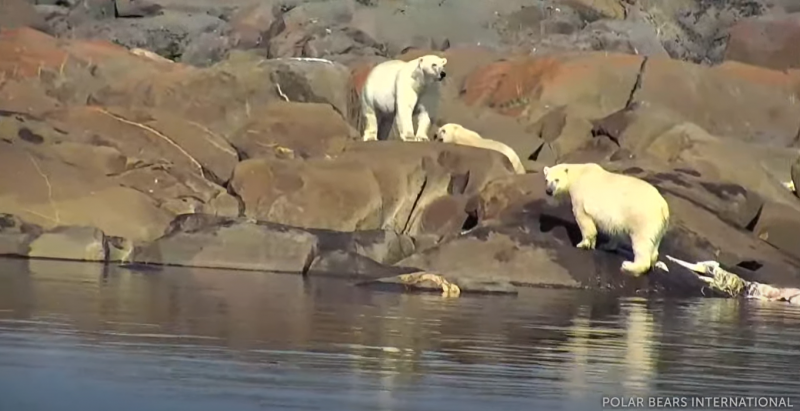
From the live cams installed on beluga tour boats running near the Churchill River, we have some good photos of a few fat polar bears onshore in Western Hudson Bay.
These bears were attracted to the remnants of a beluga carcass with nothing much left on it (lower right in the photo) and stayed around for at least a few days. The female with her cub-of-the-year was remarkably tolerant of an adult male nearby.
Posted onJuly 14, 2022|Comments Off on Arctic sea ice still quite abundant for early summer
Despite rhetoric to the contrary, there is still plenty of sea ice over Arctic regions this summer, supplying feeding platforms for polar bears, ice-dependent seals, and walrus cows nursing their young calves. Forget about whether the numbers are below or above some short-term average, there is no catastrophe in the making for marine mammals in the Arctic at this time.
Remember, by early summer, young seals have left the surface of the ice and are in the water feeding; predator-savvy adults and subadults are hauled out on broken chunks of ice moulting their hair-coat. They may look like sitting ducks but polar bears have a hard time catching them because the seals are vigilant and have many escape routes available (due to all the open water). Most polar bears in Hudson Bay are still on the ice (you’ll see why below): the live cams near Churchill set up to watch polar bears are presently showing images of ravens with sea ice in the background, not bears.
This post is predominantly sea ice charts for mid-July, what we in the science field call observational evidence, aka ‘facts’. Keep in mind that satellites used to produce these images have an especially hard time distinguishing ice topped with melt water from open water, which means much more ice useful to these marine mammals is almost certainly present than is shown in the charts (as much as 20% more in some regions).
Posted onJuly 11, 2022|Comments Off on First tagged W Hudson Bay polar bear comes ashore
On the 8th July, the first of almost two dozen tagged or collared polar bears came ashore in Western Hudson Bay (WH) under unusual sea ice conditions. How does this compare to previous years?
Image above is from last year (6 July 2021): we haven’t yet had a sighting from the live cams on the shore of Wapusk National Park near Churchill reported at Explore.org.
Posted onJuly 4, 2022|Comments Off on Polar bear evolution and recent genetic papers
Two scientific papers in June on polar bear evolution got a bit of media attention but not what the topic deserves. I’ve not written about them because I am currently working on a larger piece putting this conflicting genetic information into full context. Have patience, it’s coming.
Comments Off on Polar bear evolution and recent genetic papers
Posted onJuly 1, 2022|Comments Off on Hudson Bay polar bears still have lots of ice at July 1
Although some have come ashore in the north around Arviat, most polar bears are still on the ice. Disaster averted for another season as predictions of doom fail to meet reality.
24 June 2022, courtesy Gordy Kidlapik at Arviat (via twitter).
Sea ice on Hudson Bay is still abundant in the southwest sector, including around Churchill, and much of that is still thick first year ice (>1.2m thick, dark green on the ‘stage of development’ charts).
Posted onJune 29, 2022|Comments Off on Claim: data exists showing polar bear body condition improves over summer on sea ice
Do polar bears increase their body condition if they stay on the sea ice over the summer? Do they continue to hunt successfully from broken ice in July and early August in areas like Hudson Bay where ice eventually melts out completely? There seems to be an assumption that they do but one polar bear specialists repeatedly claims there is data showing this is the case.
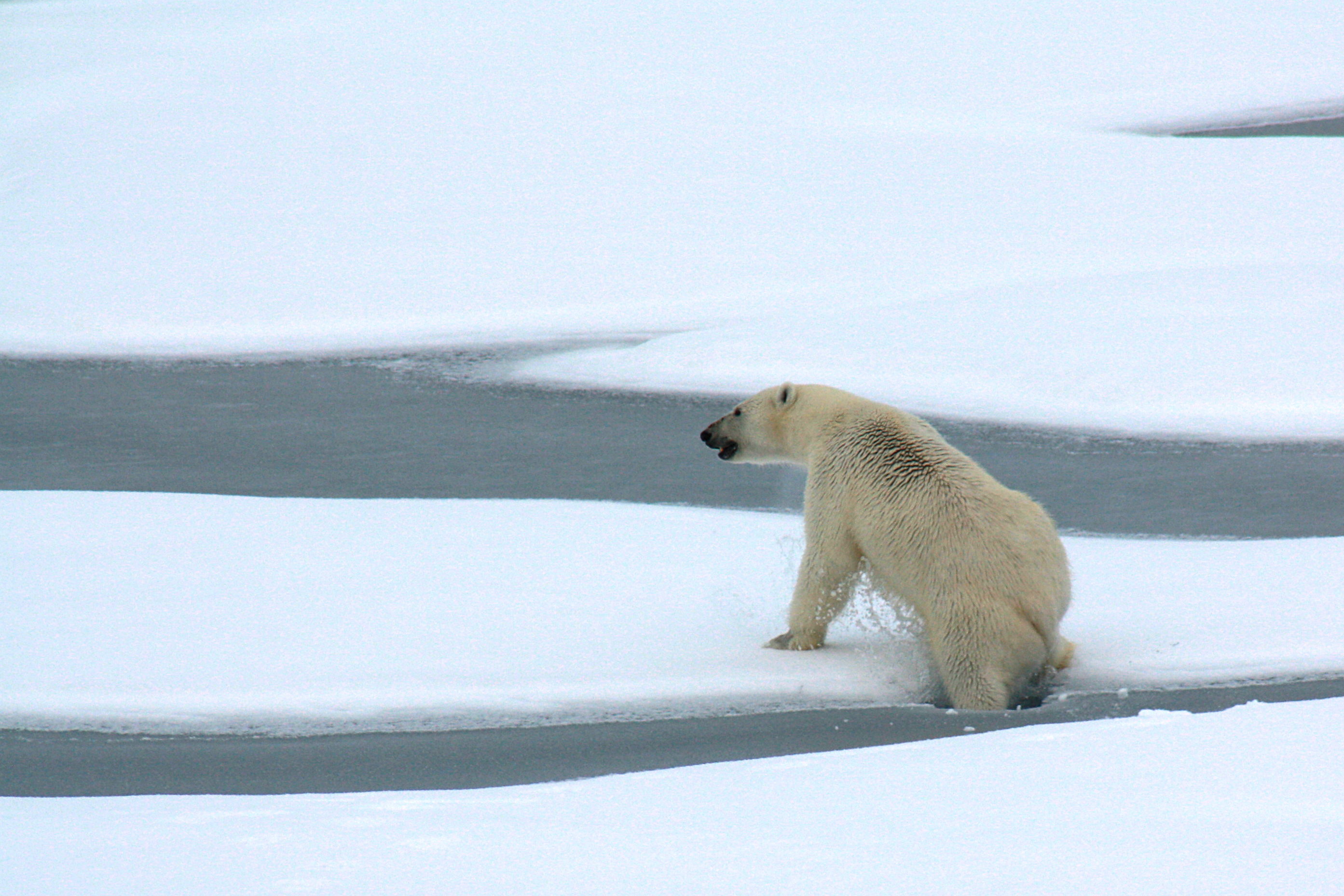
A polar bear breaks through thin Actic Ocean ice Aug. 23, 2009.
“Anyone saying sea ice at this time of year doesn’t affect polar bears is ignoring research showing their body condition continues to increase through summer if they’re out on the ice.” [Andrew Derocher 28 June 2022]
I would seriously like to know which paper or papers this data appears in but of course, he doesn’t provide that information. Instead, it’s ‘trust me, I’m the expert’.
Watch polar bear habitat reform in the Canadian Arctic: “last 10 days” Canadian Ice Service animation (works anytime) HERE.
See Quote archive for details.











 polarbearscience
You must be logged in to post a comment.