Tag Archives: polar bears

Matt Ridley’s foreword to my “10 good reasons not to worry” list – “We should be listening to Susan Crockford”

Benny Peiser over at the Global Warming Policy Foundation has just posted an essay by well-known author Matt Ridley (including “The Rational Optimist”), entitled “We should be listening to Susan Crockford” which is included as a foreword to a pdf of my earlier post, “Ten good reasons not to worry about polar bears.”

This stand-alone pdf is especially suitable for sharing with friends and policy makers.

I encourage you to have a look.

The sea ice is back and polar bears are heading out

It appears from the ice maps that most of the polar bears throughout the world that have chosen to remain on land during the late summer and fall (about July/August through October/November) can now return to the ice.

I can tell most of this tale with maps, so I will.

Continue reading

Fat polar bears chew on whale bones, chase dog

Brief interlude from Western Hudson Bay. My fascination with Arctic dogs and polar bears collides in Alaska!

BILL HESS / logbookwasilla.com

A string of remarkable photos of polar bears at the Kaktovik whale carcass dump (leftovers from subsistence whaling) on Barter Island on the north slope of Alaska and a dog having some fun, by Wasilla photographer Bill Hess, posted at this blog hereGo have a look. Note the condition of the bears, nice and fat from the look of it. Maps below to get you oriented geographically.

I had a Malamute years ago who played like this with horses…whole different game when played with polar bears!

From Anchorage Daily News feature from a few days ago. continue reading

Is there insufficient ice for polar bears to den offshore?

In an earlier post (July 26), I had some critical things to say about an article in the Edmonton Journal (July 17, 2012) by veteran Arctic science writer and photographer Ed Struzik called “Bleak future for polar bears, U of A scientists say“, which was picked up by news outlets across Canada.

The Struzik article publicized a summary academic paper written by polar bear biologists Ian Stirling and Andrew Derocher (a former Ph.D. student of Stirling) that appeared “in press” behind the paywall at the journal Global Change Biology on July 9.

The academic paper is a summary of Stirling and Derocher’s dire predictions on the future fate of polar bears as a result of melting of Arctic sea ice over the next few decades, one of the prophesied catastrophes of anthropogenic global warming. These views mirror to a large degree the chapter on “climate warming” in Ian Stirling’s book on polar bears released in 2011, which I reviewed recently here.

Let’s look at one of the statements made in the Struzik article:

In Alaska, many bears are denning on land because there is insufficient ice for them to give birth offshore.

Update added Aug. 28, 3:35 PM  below the post
Continue reading

Cooling the polar bear spin

I’ve had quite enough of the obfuscation of facts and model-based extrapolations into the future with regards to polar bears. I’m pretty sure I’m not the only one who is interested in what polar bears are doing now and, as much as can be determined, get some understanding of what the biological, geological and evolutionary history of polar bears and their habitat looks like. Spare us the emotional media hype, icon-peddling and fear-mongering about the future — we’d just like some information about the bears!

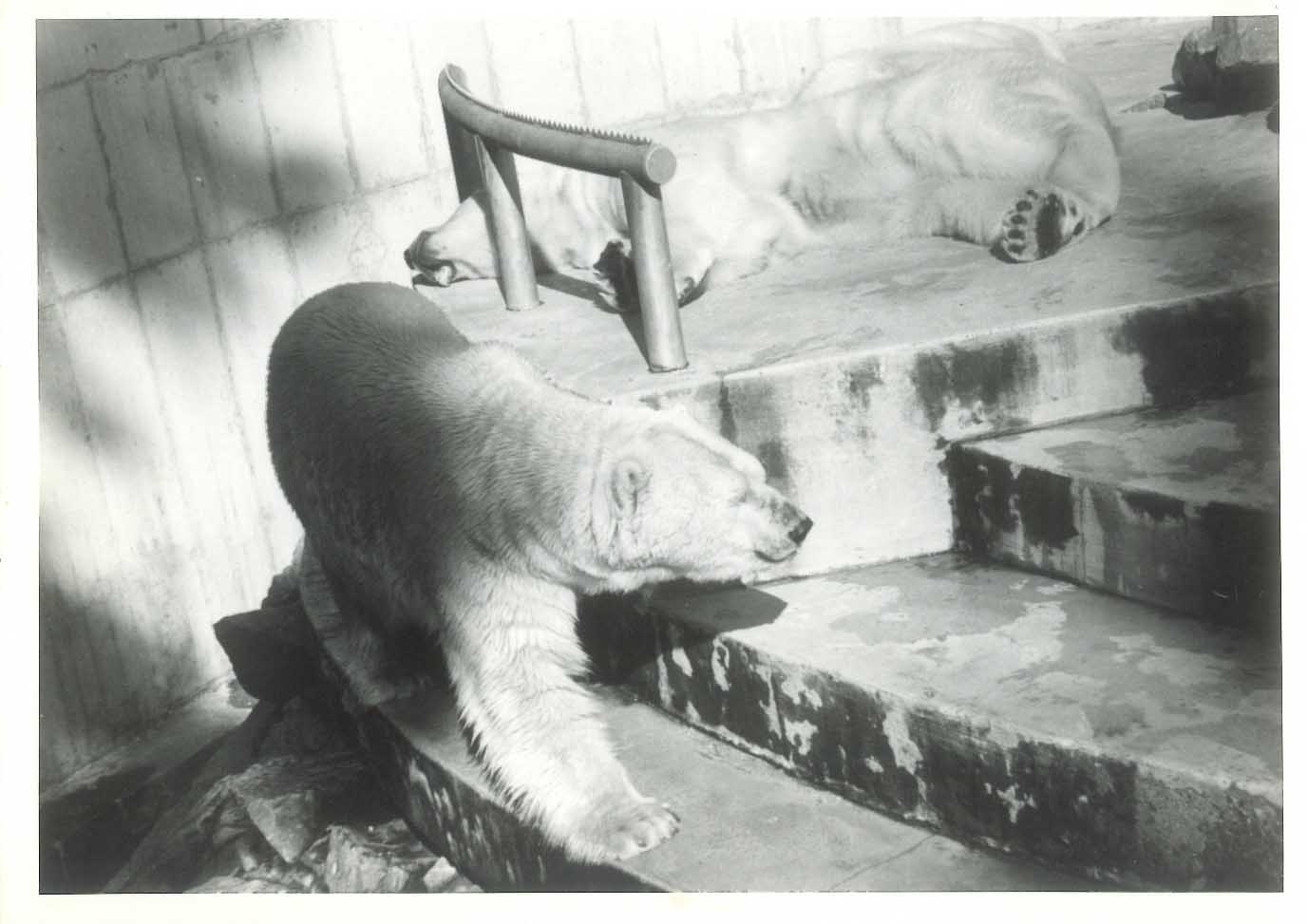
Polar bears at the Stanley Park Zoo, Vancouver, taken with my first camera in the early 1970s.

I’ve been looking at the scientific literature produced by polar bear and Arctic seal biologists for some time and I’ve found it contains some rather interesting and potentially important facts that are being left out, glossed over, or misrepresented in statements and publications generated by polar bear advocates of all kinds. It’s past time for these issues to be brought to light and publicized in one easily-accessible, up-datable forum. Hence, PolarBearScience.com — a new blog in which I discuss the science of polar bears while throwing cold water on some of the spin. Continue reading