The IUCN Polar Bear Specialist Group admits its global population estimate is simply a qualified guess with a large potential error. So perhaps it’s time to acknowledge that for the purpose of comparing polar bears to other species of concern, the upper limit for polar bear numbers worldwide could be more than 30,000?

See previous posts on this global population size issue (here and here); updated information below, including the most recent IUCN PBSG statement.
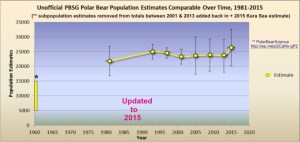
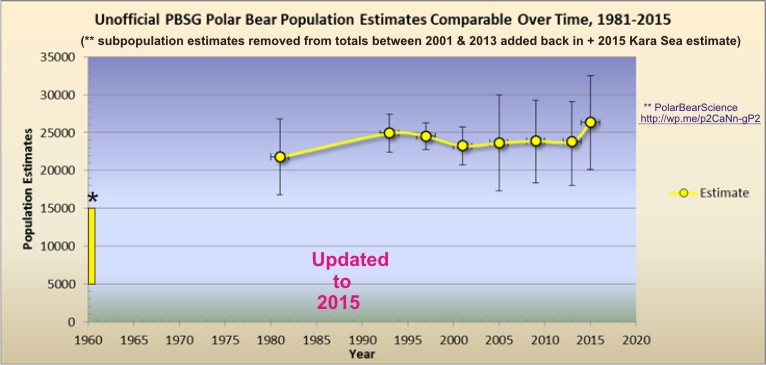
UPDATE 1 September 2015: here is an updated graph of polar bear population numbers that undo the “subtractions” of the PBSG between 2001 & 2013, giving a final global estimate of about 26,000. Click to enlarge:
UPDATE 25 November 2015: The 2015 update of the IUCN Red List for polar bears essentially concurs with my assessment about polar bear numbers. They estimate the current global population is 20,000-31,000 (average of 25,500, see below, without considering the number of bears in the Arctic Basin, so not far off my assessment) but say the trend in the population is “Unknown.”
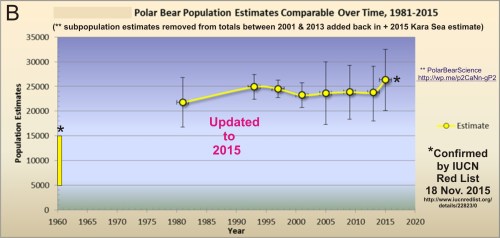
UPDATE 23 February 2017: A new population estimate update is available based on three new survey counts that add about 2,000 bears to the average total, bringing it to almost 30,000 (28,500). Details here.
Continue reading








 polarbearscience
You must be logged in to post a comment.