Tag Archives: Stirling

The slaughter of polar bears that rarely gets mentioned (ca. 1890-1930)

Chock this post up as another example of mind-blowing information you sometimes find while looking for something else.

In their dendrochronology paper on trees associated with polar bear dens in western Hudson Bay, Scott and Stirling (2002:157) reference an MA thesis in Geography by James Honderich (1991), in regards to a discussion of denning frequency during the period 1850-1899, “when polar bear hides were more or less traded consistently.”

It turns out the James Honderich’s thesis is actually a summary of polar bear harvests in Canada from about 4,000 years ago to 1935. The number of polar bears taken by Arctic explorers (1594 to mid-1900s), Hudson’s Bay Company fur traders (from 1670 to 1935) and Arctic whalers (1820s-1935) were calculated from a variety of historical sources. This post is a summary of the results for the period 1800-1935. It is likely you have never seen this astonishing information before and the implications for polar bear biology are substantial. Continue reading

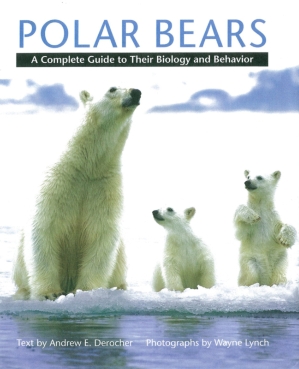
Another polar bear advocate writes a book: Derocher and Lynch 2012

Polar Bears: A Complete Guide to their Biology and Behavior (2012) Text by Andrew E. Derocher, Photographs by Wayne Lynch, in association with Polar Bears International. Johns Hopkins University Press 264 pp. 153 color photos, 4 maps. 978-1-4214-0305-2    $39.95 hardcover

Here is the promotional description of this book:

“Derocher and Lynch have spent decades following polar bears, and this book offers the most comprehensive and readable review of their biology, ecology, behavior, and conservation.” From the JHUPress catalogue

This statement suggested to me that I would find Andrew Derocher’s new book upbeat and primarily concerned with explaining the biology, behavior and life history of polar bears, as the title suggests. I’d buy a book like that, I thought.

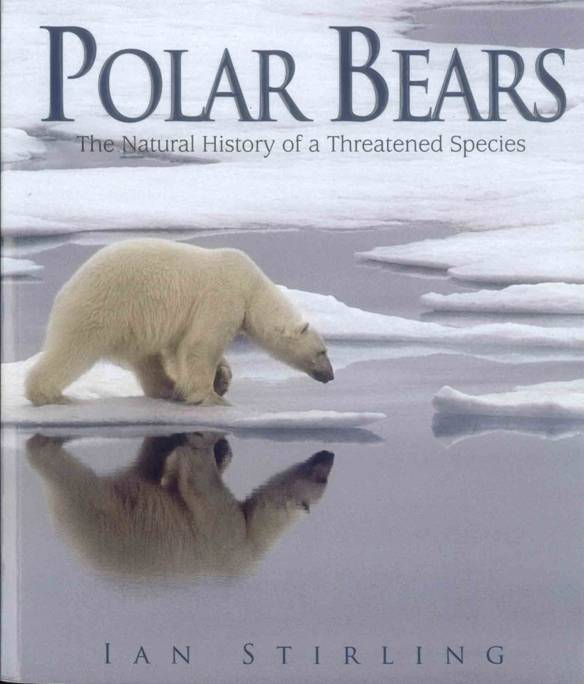
I was also eager to see how Derocher’s effort compared with Ian Stirling’s book that came out last year (2011), which I reviewed in July. The title of Stirling’s book – Polar Bears: The Natural History of a Threatened Species – did at least hint at the advocacy found within.

Would Derocher’s book be substantially different, despite his strident advocacy on display just last month in the press “Bleak future for polar bears, U of A scientists say” and in his most recent co-authored scientific paper (Stirling and Derocher 2012, now in print), that I discussed briefly in my first post? Continue reading

Is there insufficient ice for polar bears to den offshore?

In an earlier post (July 26), I had some critical things to say about an article in the Edmonton Journal (July 17, 2012) by veteran Arctic science writer and photographer Ed Struzik called “Bleak future for polar bears, U of A scientists say“, which was picked up by news outlets across Canada.

The Struzik article publicized a summary academic paper written by polar bear biologists Ian Stirling and Andrew Derocher (a former Ph.D. student of Stirling) that appeared “in press” behind the paywall at the journal Global Change Biology on July 9.

The academic paper is a summary of Stirling and Derocher’s dire predictions on the future fate of polar bears as a result of melting of Arctic sea ice over the next few decades, one of the prophesied catastrophes of anthropogenic global warming. These views mirror to a large degree the chapter on “climate warming” in Ian Stirling’s book on polar bears released in 2011, which I reviewed recently here.

Let’s look at one of the statements made in the Struzik article:

In Alaska, many bears are denning on land because there is insufficient ice for them to give birth offshore.

Update added Aug. 28, 3:35 PM  below the post
Continue reading

Cooling the polar bear spin

I’ve had quite enough of the obfuscation of facts and model-based extrapolations into the future with regards to polar bears. I’m pretty sure I’m not the only one who is interested in what polar bears are doing now and, as much as can be determined, get some understanding of what the biological, geological and evolutionary history of polar bears and their habitat looks like. Spare us the emotional media hype, icon-peddling and fear-mongering about the future — we’d just like some information about the bears!

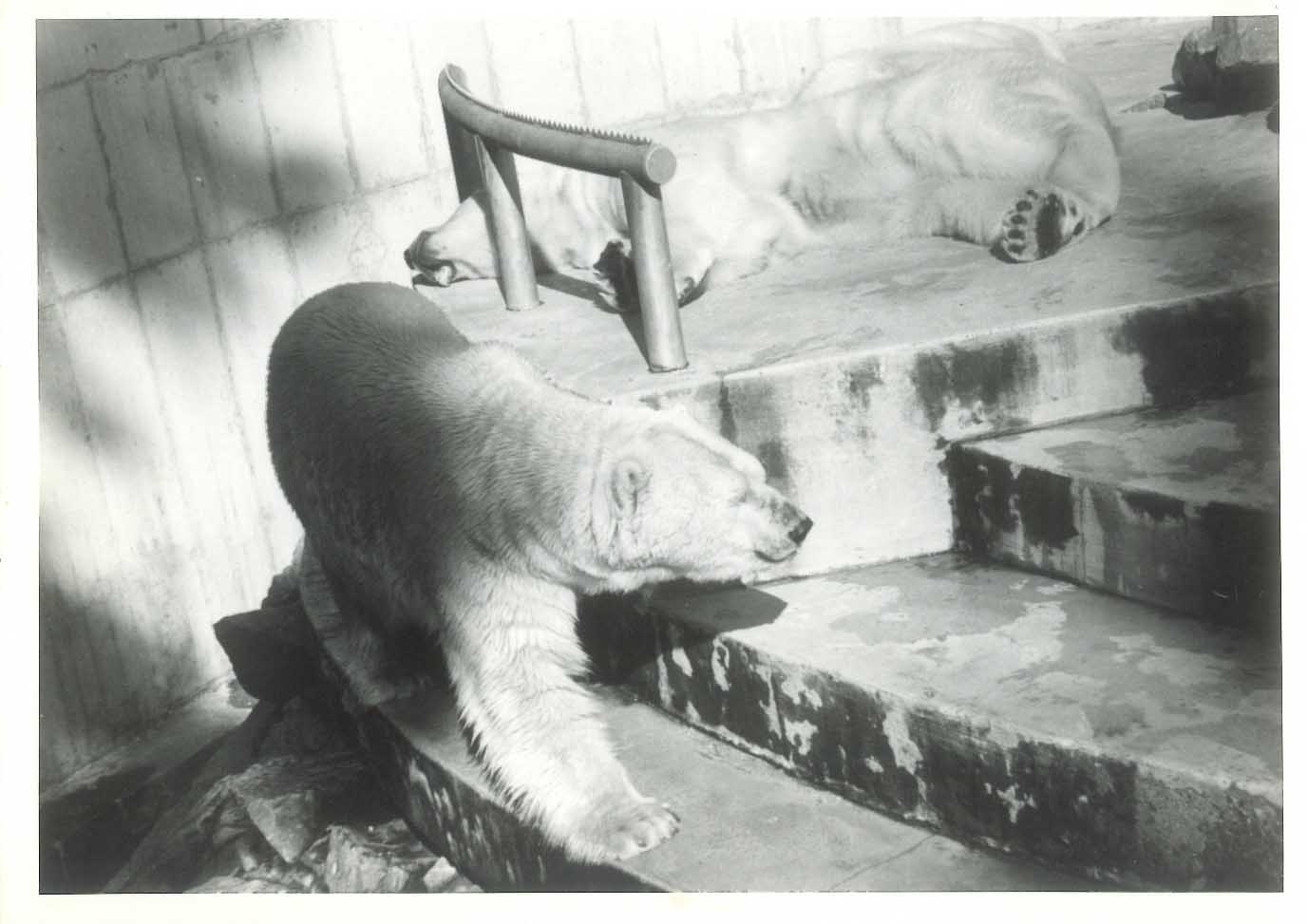
Polar bears at the Stanley Park Zoo, Vancouver, taken with my first camera in the early 1970s.

I’ve been looking at the scientific literature produced by polar bear and Arctic seal biologists for some time and I’ve found it contains some rather interesting and potentially important facts that are being left out, glossed over, or misrepresented in statements and publications generated by polar bear advocates of all kinds. It’s past time for these issues to be brought to light and publicized in one easily-accessible, up-datable forum. Hence, PolarBearScience.com — a new blog in which I discuss the science of polar bears while throwing cold water on some of the spin. Continue reading

Ian Stirling’s new polar bear book: a review

This review was originally posted June 30, 2012 at my evolution blog here

It was picked up as a guest post at Hilary Ostrov’s blog “The View from Here” July 1, 2012 under the title Of polar bears, polemics and climate warming

THE ORIGINAL REVIEW, RE-POSTED BELOW WITH MY EMPHASIS, HAS AN UPDATE ADDED JULY 26 2012, FOUND BELOW THE REFERENCE LIST
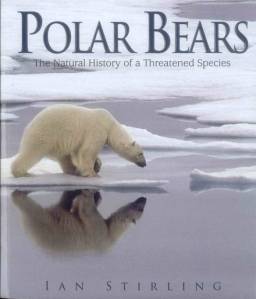
I recently came across a review of Ian Stirling’s latest book Polar Bears: The Natural History of a Threatened Species (2011, Fitzhenry & Whiteside) in the March 2012 issue of the journal Arctic, written by Arctic biologist Steven Ferguson. What is remarkable about Ferguson’s review is not what he says about the book but what he does not: lavish praise for Stirling’s polar bear stories but barely a mention of the book’s dismal predictions for the future. To be fair, all of the photographs in this book are outstanding (some are truly stunning) and the polar bear stories and life history information make for a fascinating read.

However, in reality this is not just a book about polar bears but a polemic discussion about the future of Arctic sea ice. Readers of Ferguson’s review might be surprised to find that there is an entire chapter dedicated to “climate warming” (“the game changer in polar bear conservation” according to Stirling). The climate warming chapter is as eye-catching in its own way as the rest of the book: who could miss the enormous, scary-looking graph predicting summer sea ice declining to zero within the next 90 years (described as a “NSIDC & NASA sea ice decay projection,” taken from Stroeve et al. 2007)? Or the two large photos, from different angles, of a bear that died in 1989 when its winter den collapsed? Oddly, such in-your-face photos and graphics seem not to have impressed Ferguson enough to warrant more than a few words in a list of topics covered (“models of future Arctic change”).

In contrast to Ferguson’s benign and somewhat fawning overview, my impression of the book was quite different.
continue reading