Category Archives: Advocacy

“10k dead penguin chicks” more animal tragedy porn used to advance global warming agenda

Like the 2017 video of the National Geographic starving polar bear, the 2022 deaths of emperor penguin deaths promoted last week is emotional blackmail. Both are examples of preposterous fear-mongering pushed by activist scientists and the media for political purposes. Don’t fall for it.

Despite the hype last week over the newly published paper by Peter Fretwell and colleagues, there is no plausible ecological rationale for proposing that that a single season’s reproductive failure in four small colonies of emperor penguin (Aptenodytes fosteri), due to La Nina conditions — phenomena unrelated to carbon dioxide emissions — are signs of a future “quasi-extinction” of the species, as proposed in the BAS video here. None of the estimated 282,150 breeding pairs of adult emperors were lost in 2022 off the Antarctic Peninsula and chicks born in several dozen other emperor colonies around the Antarctic continent survived, which means this was a tiny bump in the road rather than a catastrophe for the species.

Continue reading

Activists try to reboot Pacific walrus as climate change icons just as numbers reach a new high

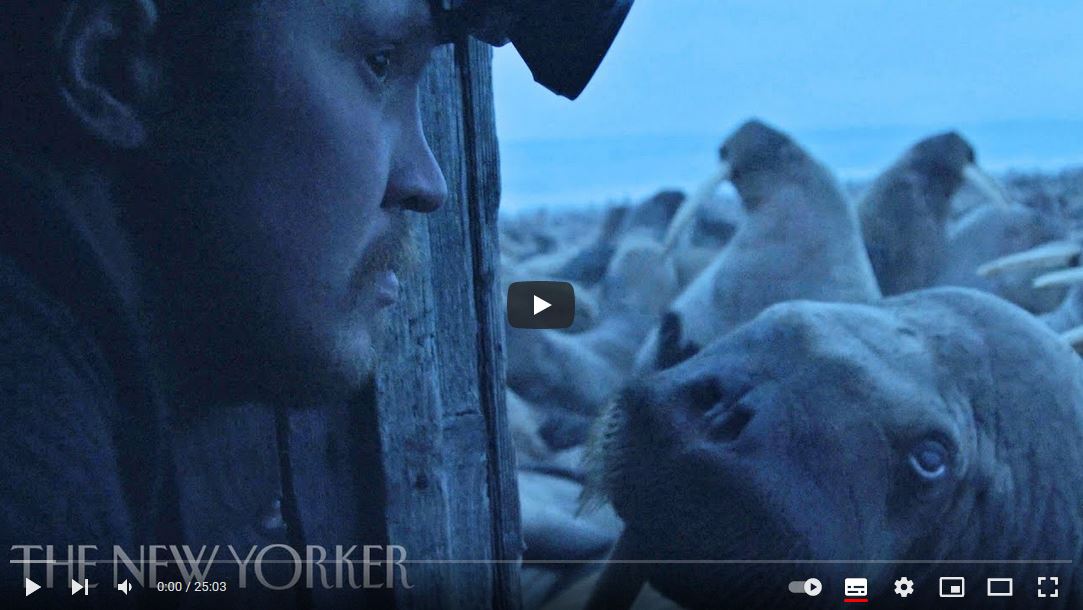
Activists have again resorted to using documentary film to promote Pacific walrus haulout deaths as contrived “proof” of gruesome climate change impacts even as evidence emerges that walrus numbers are higher than at any other time since the late 1970s. Oops! Busted by facts yet again!

Continue reading

Conservation officers misleading the public about polar bear problems in Churchill

Canadian government-funded media outlet CBC ran a story this morning about problem polar bears in the town of Churchill, Manitoba, the self-described “Polar Bear Capital of the World” that contains some very misleading statements from Manitoba Conservation officers.

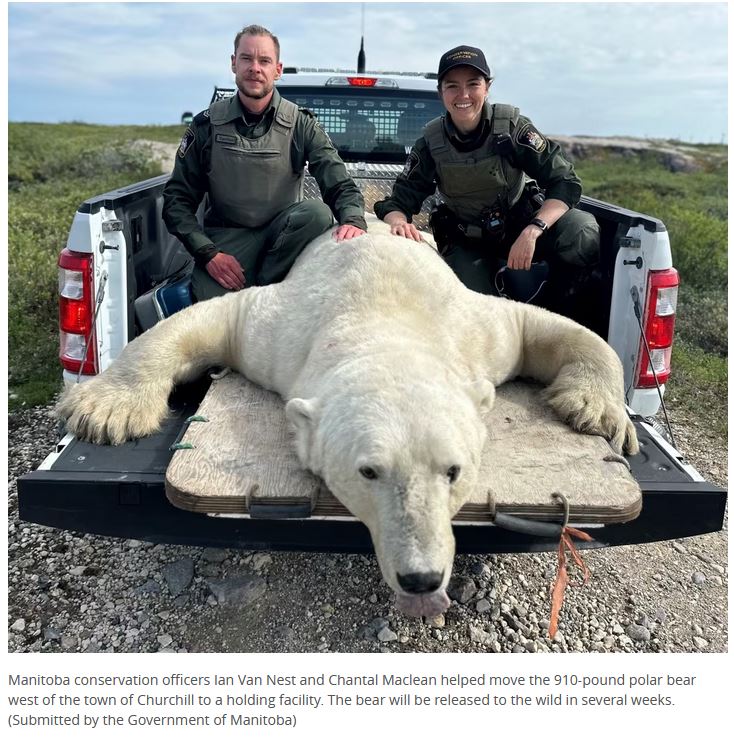
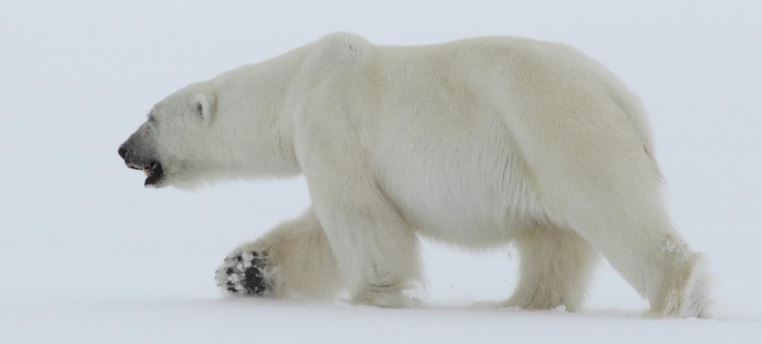
Breakup of sea ice on Hudson Bay was earlier this year than it has been in more than a decade (17 June) and some people are trying to hype the significance of this phenomenon to support a tenuous link to human-caused climate change, even though bears out on the ice this spring were reportedly in good condition and one of the problem bears captured on 8 August was also in good condition (a male weighing 910 lbs, photo above). Unfortunately, reports for similar early breakup years in the early 2000s have not been made public. However, I’ve been keeping track of these Polar Bear Alert Program Reports since 2015 and have read the available literature about their history: these records simply do not corroborate the statements in this CBC account.

Continue reading

Climate activists are silent on polar bears because their doom-mongering blew up in their faces

A Grist article last week pandered to activist polar bear specialists over their failed climate change agenda as it tried to minimize why the climate movement doesn’t talk about polar bears anymore. Apparently, the Arctic icon has “largely fallen out of fashion” through “overexposure” resulting in polar bear images invoking “cynicism and fatigue.” But that isn’t really true, is it?

While there is an admission that the over-hyped lies about starving bears promoted by National Geographic in 2017 and 2018 were a factor, there is no mention in the article of the well-known, documented evidence of scientists’ own failed assumptions that polar bears require summer sea ice for survival have had any impact on public opinion (Amstrup et al. 2007; Crockford 2015, 2019, 2022, 2023; Lippold et al. 2019; Rode et al. 2021).

Thriving populations in the Chukchi Sea and elsewhere amid low summer ice levels have busted the myth that polar bears need ice year-round.

Andrew Derocher was also allowed to repeat, unchallenged, the ridiculous narrative he and his activist supporters have peddled before, that insists the polar bear had become a climate change icon by accident rather than design, a lie I addressed in detail last year. Some excerpts from that 2022 post are copied below.

Continue reading

Repeat of 2013 high-profile Sierra Club polar bear attack, this time with Inuit victims

Almost 10 years later to the day, another polar bear attack resulting in serious injury has taken place in the northern Labrador/Quebec region of Eastern Canada. Remember the Sierra Club lawyer snatched, tent and all, in the middle of the night on 24 July 2013, in an almost-fatal attack that was reported around the world, see here and here? This time virtually the same thing happened to two Inuuk campers on July 26, in the same general area, as reported last week by Nunavut News. This will undoubtedly renew concerns that Davis Strait Inuit have raised about their safety in the face of high population numbers of polar bears (Tomaselli et al. 2022).

Sea ice conditions were similar in both attacks. In 2013, the attacking bear appeared to be a fully adult male in good condition that had been watching the hiking party since the previous day but this year the predatory bear was described as a small “young adult” animal, suggesting it could have been a 3-4 year old female or perhaps a 2 year old male.

Continue reading

Hudson Bay sea ice loss has not accelerated since 2014: in fact, summer ice cover has improved

This is an early breakup year for Hudson Bay but sea ice loss has not been accelerating. While some Western Hudson Bay bears have been on land for weeks, others are still out on melting remnants of sea ice, much of it invisible to satellites. This is only the third year since 2014 that the bay has had less than usual amounts of ice, which means most years since then have had normal or nearly normal ice coverage, similar to the 1980s. Hardly the ever-worsening catastrophe of sea ice loss story being spun in the media for Western Hudson Bay polar bears.

From the tracking map above, out of the 38 visible tags or collars on bears at 11 July 2023, 16 bears (42%) were on land and 22 (58%) were still out on the sea ice. That’s virtually identical to the 40/60 percent split last week when there was even more ice.

Continue reading

Claims of interspecies hanky-panky have unfairly sullied polar bear & Neanderthal reputations

One big question I asked before writing my book on polar bear evolution was this: did interbreeding with grizzlies, aka brown bears, profoundly impact polar bear history, as geneticists insist? Or is something else going on?

Polar bear hybrid, 3/4 grizzly (offspring of a hybrid female backcrossed to a grizzly male), Ulukhaktok, Victoria Island, Canada, 2010.

Virtually all genetic studies done in recent years, which I review in my book, conclude that hybridization with grizzlies has happened to various degrees over the course of polar bear history (e.g. Cahill et al. 2013, 2018; Cronin et al. 1991; Edwards et al. 2011; Hailer 2015; Kumar et al. 2017; Miller et al. 2012). Two of the most recent studies claim the most complicated hybrid ancestry for polar bears yet, invoking tales of “extensive” past hybridization events between the two species (Lan et al. 2022; Wang et al. 2022).

But does their interpretation of the genetic data represent reality or does it simply fit the authors’ preferred but false narrative that climate change is to blame for recent hybridization events and therefore likely to happen more often in a warmer world? And if, as I argue in my book, grizzly hybridization isn’t needed to explain polar bear evolutionary history, what does that say about similar claims that there has been a significant amount of Neanderthal interbreeding with humans in our past? Put another way, are geneticists everywhere going overboard with claims of interspecies hanky-panky?

Continue reading

How is widespread use of helicopters to study polar bears defensible in a warming world?

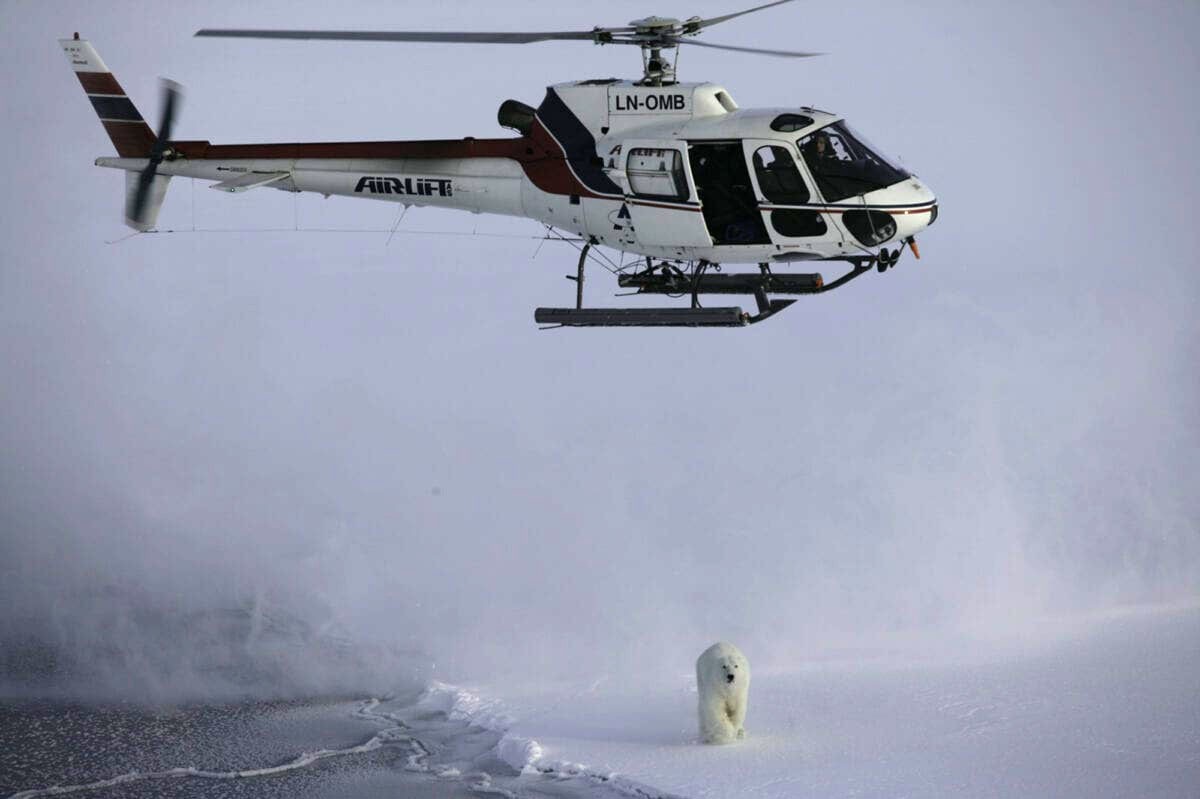
If all of us should be doing “everything possible” to stop climate change, why is it still OK–15 years after polar bears were declared threatened with extinction because of predicted climate change effects–for researchers across the Arctic to use helicopters to study polar bears? Aircraft that consume massive amounts of aviation fuel and engine oils, otherwise known as ‘fossil fuels.’

Money quote: “…the lifeblood of most polar bear research is jet fuel needed by helicopters.” (Derocher 2012:107).

From Hudson Bay and the High Arctic in Canada, the Beaufort Sea off Alaska, to Svalbard in Norway (above, from 2015), polar bear research is impossible without helicopters powered by fossil fuels. This has been true since the 1980s (e.g. Ramsy and Stirling 1988). And this doesn’t even take into account the fossil fuel-powered fixed wing aircraft needed in some locations, commercial airline flights that transport personnel and equipment to distant locations, or the Tundra buggies used in Churchill (Western Hudson Bay) to get up close to bears and educate indoctrinate the tourists.

Continue reading

Attenborough expects King Charles to continue his activism

Now that Charles is King, it seems the new euphemisms for WEF-style totalitarian climate change activism is a defence of “environmental issues,” “protecting the natural world,” and “backing conservation.”

In a pre-coronation interview with the BBC, Sir David Attenborough said on Friday he believes that Charles will continue his activism while he is King, despite the constitutional demand that a British monarch remains apolitical. Today is Attenborough’s 97th birthday and it seems fitting to say I believe him. Why wouldn’t he tell the truth?

Money quote from Attenborough: “…now everybody realises that the future of humanity is dependent upon a healthy natural world. The way ahead demands that leaders of the state should actually give their full backing and I’m quite sure that as King he will lead this country in a very important way.

In true 1984 style, it seems the ruling elite are redefining terms to fit their ideology: recasting the King’s former activism and promotion of World Economic Forum agendas as entirely a defence of the environment and conservation issues. No doubt this tactic is meant to convince the naive public that there was never any politics involved in what Charles did before and so it cannot be considered political now that Charles is King.

But those who have been paying attention know better.

It also suggests that what those wealty powerbrokers have planned for us cannot work without the King’s considerable power and influence. This may sound awfully cynical but my eyes have been opened by Attenborough’s behaviour over the falling walrus issue and the alliances he’s made with the WWF and Netflix over the last few years. You may agree when you read what has been circulating in the news over the weekend, summarized below.

Continue reading

‘Less ice means more conflicts with polar bears’ narrative not supported by scientific evidence

In another failed prediction, a new study on the number of polar bears killed in self-defense in Svalbard, Norway did not find the expected correlation with lack of sea ice or more tourists (Vongraven et al. 2023). Contrary to expectations, fewer bears were actually killed in self-defence as sea ice declined between 1987 and 2019.

Money Quote from the abstract:

   “…ice cover had no significant impact on the odds for a [polar bear] kill.”

It seems the warning from polar bear specialist Andrew Derocher a few months ago was just plain wrong:

“Poor ice conditions for polar bears at Svalbard this year. Low ice will make tough hunting conditions this coming spring. Time to plan for more human-bear conflicts unless conditions change.” [13 Feb 2023 tweet, my bold]

Continue reading