In fact, the summer sea ice trend has been pretty much flat since 2007, with ice covering about 42% less area than it had done in 1979, yet polar bears in many regions are doing better now than they were in 2005, especially in Davis Strait, the Barents and Chukchi Seas and the Canadian Arctic Archipelago.
Posted onSeptember 3, 2022|Comments Off on Fact check: Polar bears breaking through thin ice is not evidence of climate change, it’s a drone chase
This morning, self-professed ‘climate campaigner’ Mike Hudema posted a short video of two polar bears seemingly struggling to survive as they repeatedly break through newly-formed ice, with the message “Polar bears are up against a huge problem. They are losing their habitat. As the Arctic becomes increasingly warm & sea ice disappears its harder to find a mate & food.”
This was clearly designed to elicit an emotional response from viewers but it’s every bit as manipulative and false as the video of the emaciated polar bear shamelessly promoted by National Geographic as ‘what climate change looks like’, which I describe in detail in my new book, Fallen Icon(Crockford 2022a).
Posted onSeptember 1, 2022|Comments Off on Polar bears became global warming icons because biologists promoted a narrative of doom since 1999: it didn’t happen ‘by accident’
“The polar bear became an ‘accidental icon’ of climate change“, claims a recent CBC Radio interview with ardent global warming promoter and polar bear catastrophist Andrew Derocher. Derocher’s insistence that the polar bear became a climate change icon “by accident” is historical revisionism. While such a statement may be attractive now that polar bears are not dying in droves as he and his colleagues predicted in 2007, that doesn’t make it true.
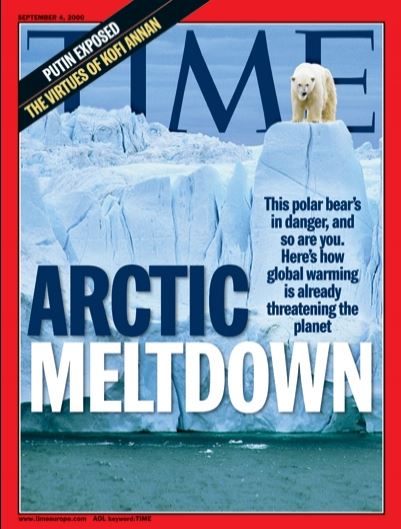
In the summer of 1999, polar bear biologist Ian Stirling helped produce a short doomsday film spectacular for the biggest news outlet in Canada at the time, in which he hyped his ‘climate warming’ fears about Hudson Bay polar bears, yet we are expected to believe Derocher that on September 4, 2000, Time Magazine put polar bears on its “Arctic Meltdown” cover because they ‘just happened’ to hear about an academic paper Stirling had written the year before.
Posted onAugust 25, 2022|Comments Off on Inuit are concerned about public safety as Davis Strait polar bears numbers increase
An assessment of the health of Davis Strait polar bears by 35 Inuit polar bear experts was made public two weeks ago. Overall, these experts agree that virtually all polar bears they see are healthy and that the population has been growing over the past few decades, so much so that “public safety has become an increasing concern”. Mainstream media have ignored this report, as far as I have seen.
As we await the latest scientific population estimate of Davis Strait polar bears, completed in 2021 but still not publicly available (only a preliminary gov’t report and a summary graphic from the final report have been released, see Dyck et al. 2019, 2021) this new document (Tomaselli et al. 2022) provides the essential information we need. Polar bears are doing well with no notable changes in cub numbers or survival in the last few decades, abundance is up and reflects a real increase in numbers. There are so many polar bears that communities and individuals feel the need to take extra precautions in protecting themselves from bears.
Oh, and ringed seal numbers are way down: that could be a critical bit of information we won’t get from the polar bear academics.
Posted onJuly 26, 2022|Comments Off on Expert admits polar bears in Svalbard are thriving despite the greatest loss of sea ice in the Arctic
In an article published last week, polar bear specialist Jon Aars is quoted as saying that Svalbard bears are “unexpectedly” thriving. However, he fails short of admitting that the bears don’t really need summer ice as long as they are well-fed in spring, which they have been for the last two decades—this year included.
Aars said the sea ice in this area is declining more than twice as fast as anywhere else in the Arctic. But the polar bears here — unexpectedly — are thriving. [E. Haavik, Svalbard’s polar bears persist as sea ice melts — but not forever, 21 July 2022; my bold]
Spring 2018, Barents Sea
The suggestion by Aars that the Svalbard archipelago could one day be ice-free for the entire year is speculative hyperbole but even if that were to happen, it would only mean the permanent movement of 300 or so Svalbard bears to Franz Josef Land (still within the Barents Sea) where ice conditions are less volatile.
Posted onJuly 21, 2022|Comments Off on New paper polar bears attracted to garbage dumps blames lack of sea ice without any evidence
A paper published yesterday discusses polar bears that get into human garbage and cause other problems due to community attractants. Most of the incidents recounted and the issues they’ve raised have been reported by the media and are ones I’ve discussed here over the last few years in detail, including here and here, as well as in my recent book (Crockford 2019).
Churchill dump 2003. Dan Guravich photo, Polar Bears International handout.
All you need to know about the motivation behind the paper comes from the authors’ acknowledgement:
This paper developed from a meeting in Churchill, Manitoba, in autumn 2019 where the issue of dump use by polar bears arose. We thank Dan Cox [a photographer for PBI] for suggesting exploration of this issue and Polar Bears International for arranging this meeting.
Posted onJune 26, 2022|Comments Off on Svalbard polar bear data for spring 2022, low June ice unlikely to affect health or survival
Sea ice around Svalbard, Norway has receded dramatically over the last few weeks and is now at levels similar to 2018 and 2006. But the data are in for the 2022 spring season and they show the bears are still thriving.
Posted onJune 8, 2022|Comments Off on My scientific blog posts contributed to the failed Antarctic Treaty bid to protect Emperor penguins
There is actual evidence that two of my fully-referenced blog posts caused some Antarctic Treaty delegates to reject a bid for special protected status for Emperor penguins. Activist heads have exploded.
Posted onJune 5, 2022|Comments Off on China ruins Antarctic Treaty attempt to enact special protection status for Emperor penguins
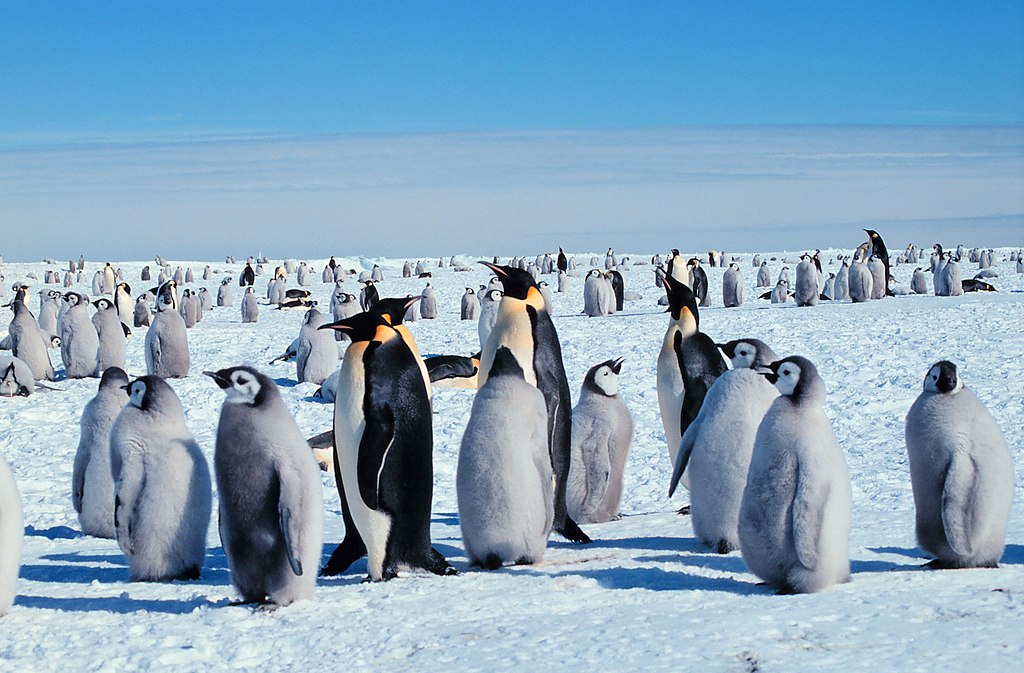
China has thwarted an attempt by members of the Antarctic Treaty organization to enact special protection status for the Emperor penguin, which would have generated a ‘Species Action Plan’. Apparently, such a proposal required a consensus of all parties and China wouldn’t go along.
But as we know from past actions by the IUCN Polar Bear Specialists Group against former member Mitch Taylor, such impediments are easily sidestepped when a decision requiring consensus doesn’t go your way.
Posted onMay 1, 2022|Comments Off on Fat polar bear killed on the south shore of the Gulf of St. Lawrence on the Gaspé Peninsula
A fat polar bear was killed early this morning (Sunday 1 May 2022) near a small town on the north shore of the Gaspé Peninsula, the portion of Quebec that New Brunswick in the Gulf of St. Lawrence after being tracked by wildlife conservation officers since yesterday. Two other sightings were reported in the Gulf earlier in April on the opposite shore, which could possibly have been the same bear.
These recent polar bear sightings in the Gulf of St. Lawrence likely reflect a population that’s at its peak size or still increasing. The photo above shows the bear was in excellent condition after feeding heavily on harp seal pups. Unfortunately, from where it ended up, it likely wouldn’t have made it back to the receding pack ice off Labrador in time to return to Davis Strait for the summer.
Excerpt below from the CBC story (‘Polar bear spotted on Gaspé peninsula killed by wildlife officers‘; 30 April 2022), but first you’ll need the map of the area. Charts for sea ice conditions at the time follow.
Watch polar bear habitat reform in the Canadian Arctic: “last 10 days” Canadian Ice Service animation (works anytime) HERE.
See Quote archive for details.












 polarbearscience
You must be logged in to post a comment.