Category Archives: Life History

Ice-entrapped dolphins in Newfoundland lucky not to have been eaten by polar bears

A small pod of white-beaked dolphins entrapped on Friday (10 March) by a sudden surge of ice along the northern Newfoundland coast were lucky to have been rescued by humans before polar bears could get to them. We know the bears are around, drawn south by the millions of harp seals giving birth to their pups in the area. In April 2014, something similar happened to white-beaked dolphins in Svalbard and they became a welcome meal for at least six polar bears (Aars et al. 2015).
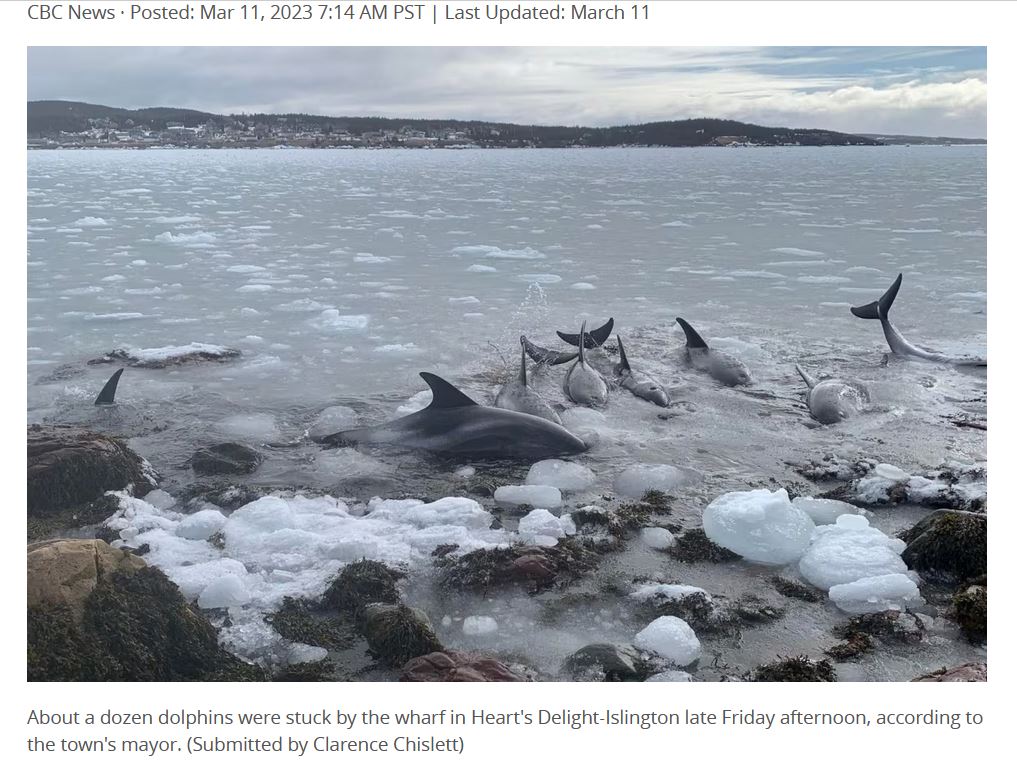
UPDATE 20 March 2023: Another pod of white-beaked dolphins has perished from the ice over the weekend. More than 30 dolphins were trapped near the town of Carbonear, which is on Conception Bay (the next big bay southeast from Trinity Bay), according to CBC News. Given the ice conditions, this is almost certainly a different pod to the one reported on two weeks ago.

Dolphins getting stuck in sea ice is a fairly regular occurrence, said Ledwell. [Wayne Ledwell of Whale Release and Strandings]

“It’s been happening here forever,” he said, adding it’s not just a problem for dolphins. “It kills blue whale and humpback whales and whatever gets into it.”

Continue reading
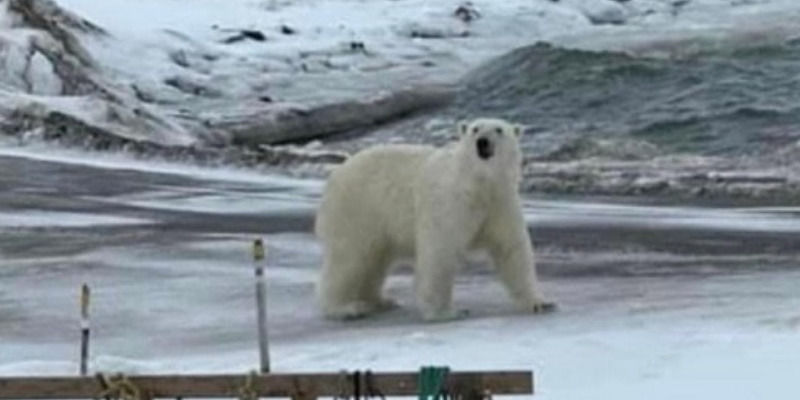
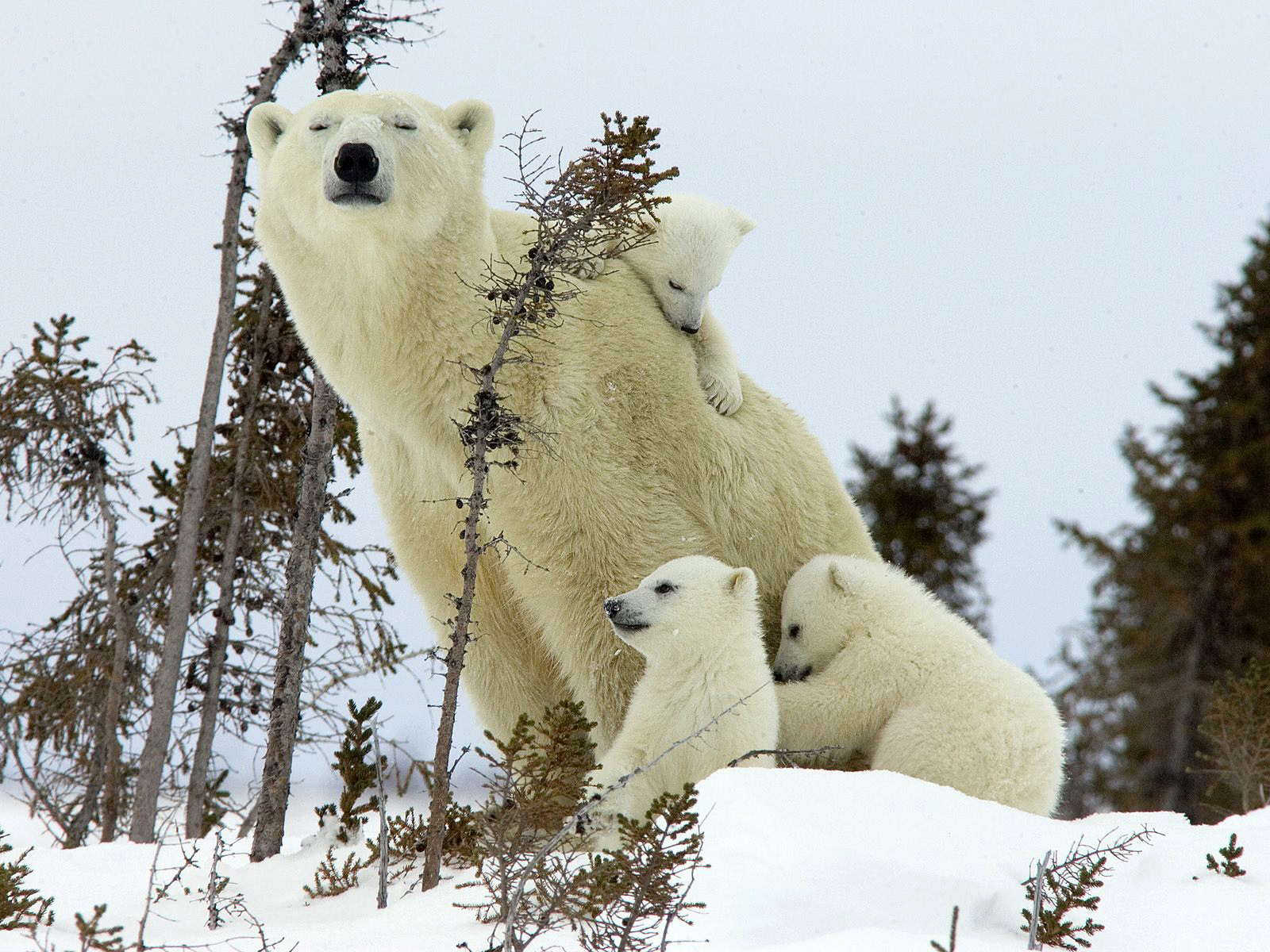
Polar bear sightings and sea ice conditions in Newfoundland & Labrador 2023 vs. 2017

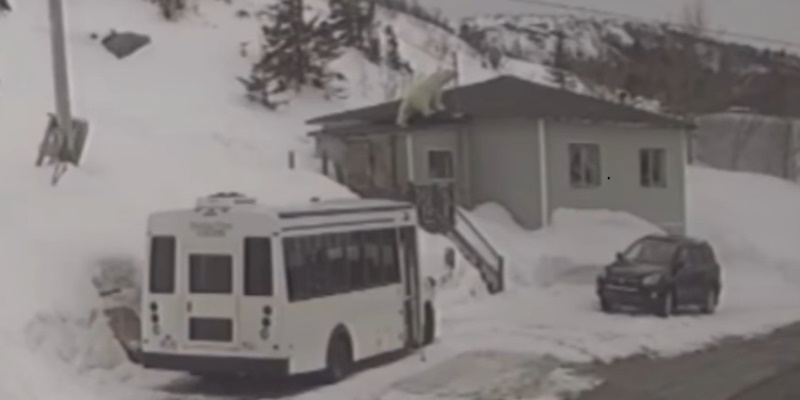
Conservation officials issued an alert to residents of coastal communities to be aware of polar bears coming ashore over the last week in northern Newfoundland and southern Labrador, after a woman photographed a bear outside her home on Tuesday morning (7 March 2023). Since no bears in this subpopulation are tracked with satellite radio collars, we have no idea if there are a few dozen bears — or a few hundred of them — hunting on the ice and available to come ashore when the opportunity arises.

Recall that in April 2017, after more than a dozen bears had been spotted onshore in the region since early March, polar bear specialist Andrew Derocher told CBC Radio that this was bad news for the bears.

Continue reading

Early-birthing polar bear female with new cubs out on the ice already in Western Hudson Bay

At least a month earlier than in more northerly areas of the Arctic, the first known female with new cubs-of-the-year has been reported on the sea ice hunting for seals in Western Hudson Bay. Remember this when the cries of “early” breakup of sea ice on Hudson Bay come in the summer: these WH bears routinely get a head start on spring feeding that other bears don’t get.

Continue reading

Here comes the pack ice for the Canadian East Coast

Davis Strait pack ice is now descending on the Labrador coast. Only slightly later than usual but it looks like there’s plenty of it.

This is the ice that brings polar bears to Newfoundland and southern Labrador (photo above from April 2022). Be careful what you ask for…

Continue reading

Recent paper on W. Hudson Bay polar bears includes new official sea ice freeze-up data

Even though it’s in graph form only, we finally have an update on sea ice freeze-up dates for Western Hudson Bay for 2016-2020 (but not breakup dates).

This graphed data published by Miller et al. 2022 extends by five years that published in 2017 by Castro de la Guardia and colleagues, which contained graphed data for breakup and freeze-up dates from 1979-2015 (with exact dates for 2005-2008 only).

It confirms a statement I made last month, that between 2016 and 2021 “there has been only one ‘late’ freeze-up year (2016)–but five very early ones.” Of course, 2021 was not included in this new dataset, so that would be “four very early ones” up to 2020.

Continue reading

Polar bears of SE Greenland get shorefast ice necessary to hunt seals: not so unique after all

The 234 or so polar bears inhabiting the SE tip of Greenland, said to be genetically and ecologically unique because they are “surviving without ice“, have been experiencing sea ice formation along the shoreline this month just like other bears across the Arctic. Recall that shorefast ice formation attracts seals in the fall, which polar bears hunt successfully, and the following spring (April/May) provide a platform for ringed seals to give birth to their pups, which polar bears eat with gay abandon.

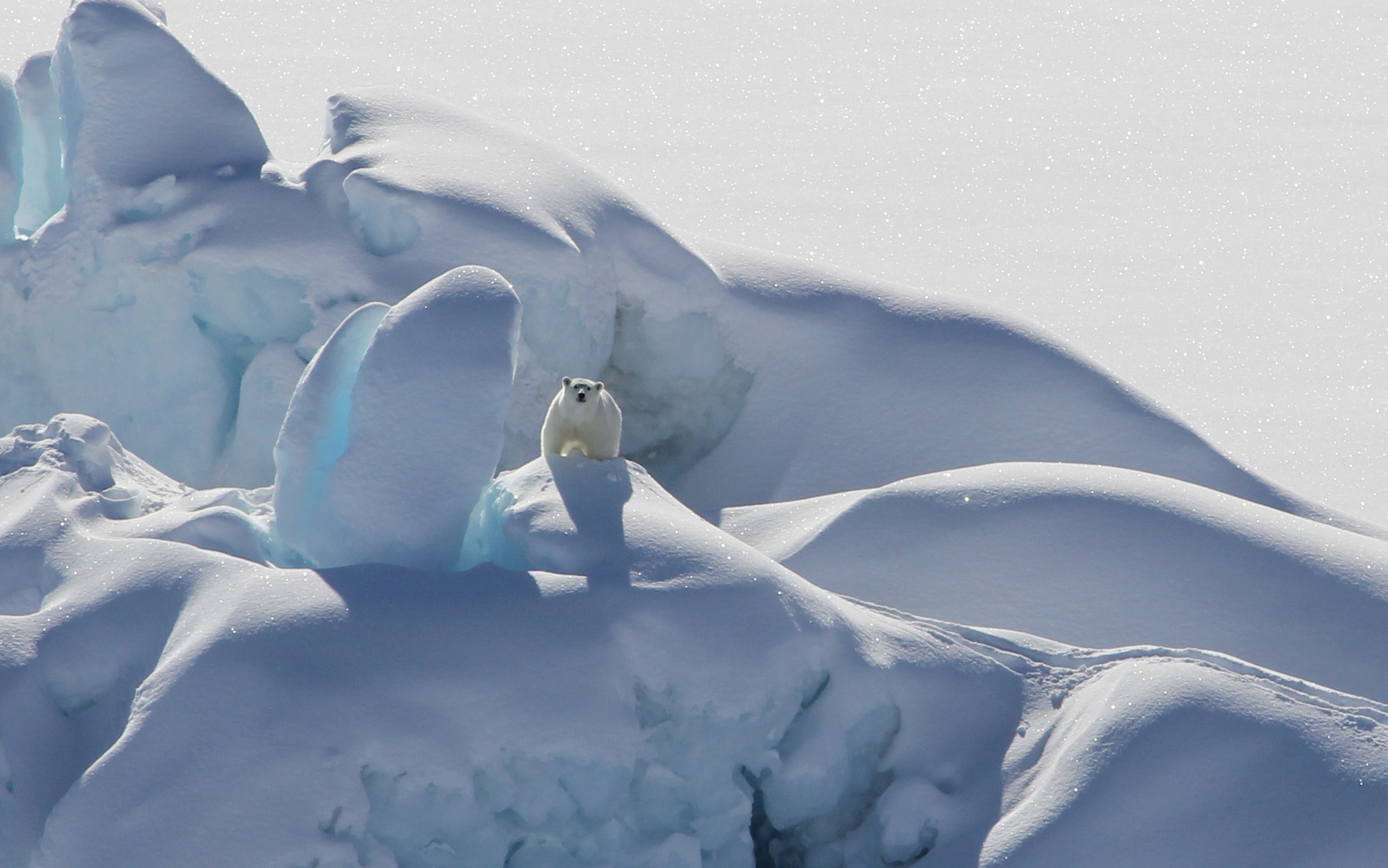
The photo above was taken by Kristin Laidre in March 2016: a bear this fat at the end of winter (i.e. before ringed seals are born in the spring) is living in productive habitat.

Continue reading

Polar bear habitat update: Winter conditions well on their way across the Arctic except in Svalbard

December is late fall in the Arctic: winter conditions are gearing up but are not in full swing everywhere. Sea ice is developing quickly over Hudson Bay and moving slowly towards the Bering Sea but the Svalbard archipelago is still devoid of pack ice.

Such conditions north of Norway have existed most years since 2005: it’s certainly not a new development for Svalbard to be free of surrounding pack ice in December (although there was lots of ice in 2019 and 2021 by late November). This means traditional denning areas on the eastern islands again cannot be used by pregnant polar bear females, because they must be ensconced in their dens by at least late November or so.

Some seem to think this is a calamity: that such ‘loss of habitat’ is a huge concern for the survival of the subpopulation, if not the entire species. However, the same conditions existed in 2011 and did not result in a dramatic decline in the population as measured in 2015 (Aars et al. 2017) because the bears knew how to respond. They have apparently moved north to make maternity dens on the sea ice or east to the Franz Josef Land archipelago in Russia (Aars 2015). These areas are still within the Barents Sea subpopulation boundaries and researchers have known for two decades that bears have moved around within it (Andersen et al. 2012; Derocher 2005; Maurizen et al. 2002).

Continue reading

Polar bear specialist calls Hudson Bay freeze-up ‘late’ yet bears were moving offshore 2 weeks ago

Predictably, polar bear specialist Andrew Derocher has finally posted a tracking map of the Western Hudson Bay bears his team has fitted with collars and eartags–two weeks after bears were released from Churchill’s polar bear jail, which is the local signal that there is enough sea ice for bears to leave shore. As I reported two weeks ago, release of jailed bears happened this year on 10 November. And as I predicted in that post, by waiting so long after that event to post his map, Derocher can make it seem to his naive followers on Twitter that the bears are just starting to leave now (the last map he posted was on 11 November, when none of his bears had moved). He reinforces this by calling WH freeze-up “late”, when by all objective measures (including local informants reporting bears on the ice) it was as early as it had been in the 1980s (Castro de la Guardia et al. 2017).

Recall that fall is the second-most important feeding season for polar bears, due to the fact that seals are strongly attracted to newly-forming sea ice. It’s their chance to regain some or all of the weight lost over the summer, before the long winter fast begins (while bears indeed hunt when they can, they are not often successful during the depths of the Arctic winter: most bears are at their lowest weight by March).

Continue reading

Eastern Canadian Arctic has much more sea ice than usual while Svalbard polar bears deal with less

Svalbard is still ice-free this fall, which it has been rather consistently for at least ten years but the amount of sea ice greater than ‘normal’ in the Eastern Canadian Arctic at this date is something to behold. Yet contrary to predictions, polar bears in Svalbard are thriving.

Continue reading

Hudson Bay sea ice freeze-up in 2022 like the 1980s for the 5th time since 2015

This is the fifth year out of the last seven that enough sea ice has formed along the west coast of Hudson Bay by mid-November for bears to be able to head out to the ice, just as it did in the 1980s.

‘Green dot’ problem bear released from Churchill holding facility on 10 November 2022. Dorota Walkoski photo.

One of the independent polar bear guides on the ground near Churchill had this to say about the bears and freeze-up conditions this year:

“Bears started leaving on November 10; conservation emptied the jail on the 10th as well.”

‘The jail’ is the Churchill Polar Bear Alert Program’s ‘holding facility’. While the Alert program folks have not released a report for this week (gee, I wonder why?), nearby tourist outfit Great White Bear Tours not only confirmed the bears were released from jail but posted a picture of a ‘green dot bear’: the mark put on problem bears released from the holding facility to keep track of them. Bears are not released before there is ample ice along shore for them to move out. Great White Bear Tours have been tracking bears moving offshore.

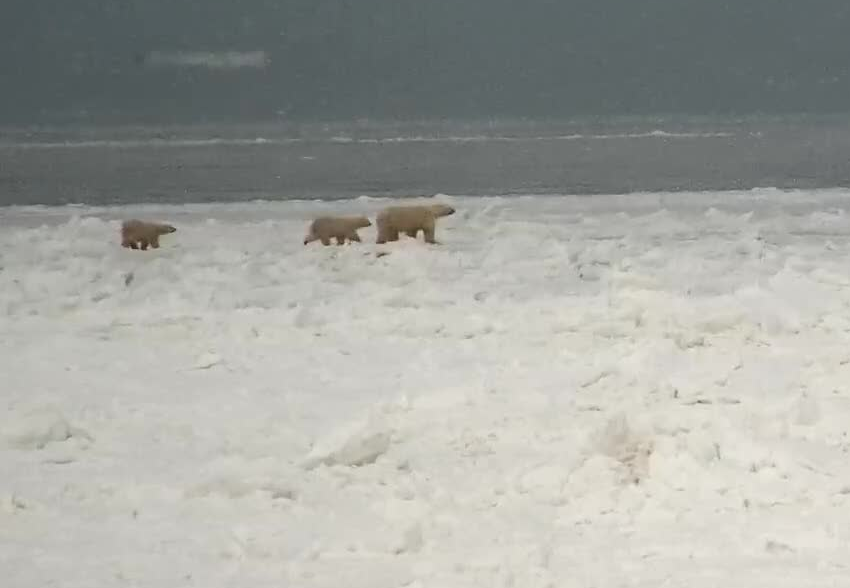
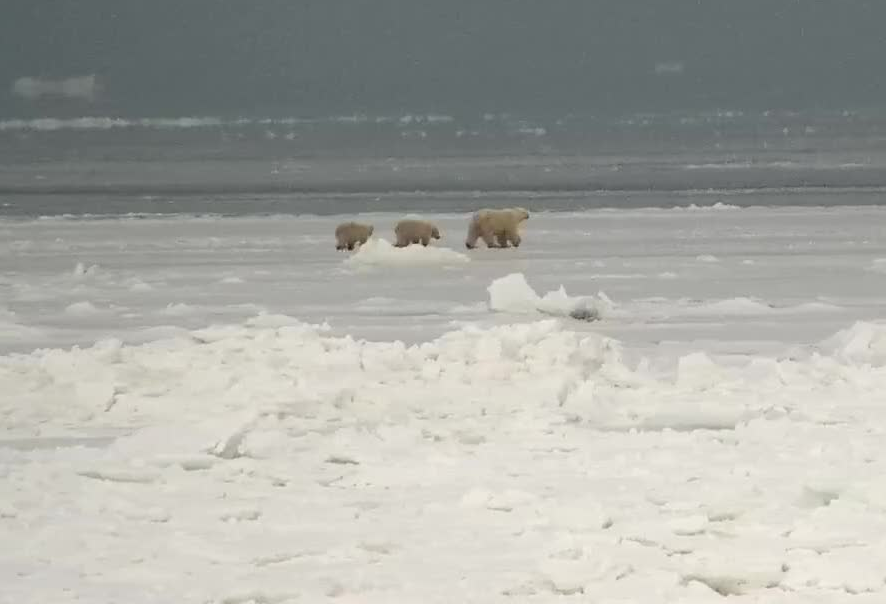
This information suggests the average date for bears leaving shore will likely turn out to be 12-14 November, again earlier than the average for the 1980s (16 Nov +/- 5 days) (Castro de la Guardia et al. 2017). That makes five out of the last seven years (2017, 2018, 2019, 2020, 2022) since 2015 that bears have left about the same time as they did in the 1980s.

While there are still be a few bears on the shore of Wapusk National Park that seem to be in no hurry to leave, a few stragglers doesn’t mean there isn’t ice available for hunting.

Continue reading