Category Archives: Polar bear attacks

Inuit in Arctic Canada now observing higher numbers of polar bears, says government report

A 2021 publication by the government of Canada released last month called Species at Risk in Nunavut says the region is “now observing higher numbers of polar bears“, and that management goals are “more focused on maintaining or reducing numbers in communities and in sensitive areas (i.e. bird colonies)“. Local Inuit are said to be “concerned about the increasing number of encounters and property damages” caused by polar bears.
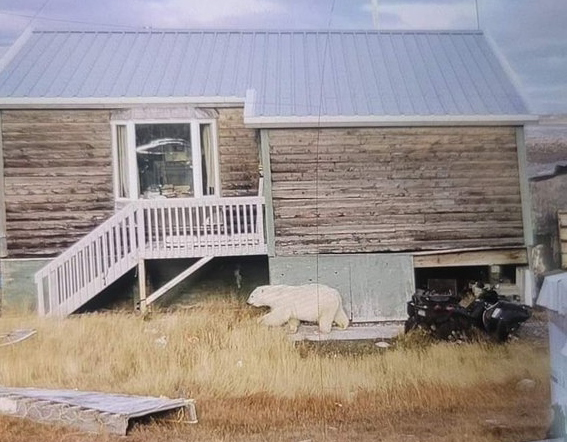
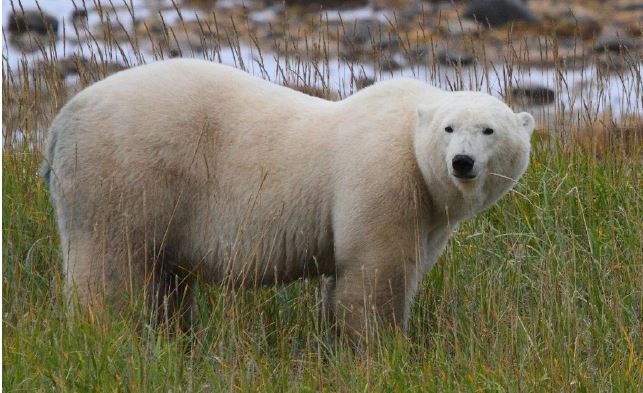
Polar bear in Arviat, Nunavut, 3 October 2022. Chris Mikijuniak photo.

Polar bears in Canada are considered a species of ‘special concern’ (COSEWIC 2018), not threatened as they are in the USA. See the map of Nunavut below.

Continue reading
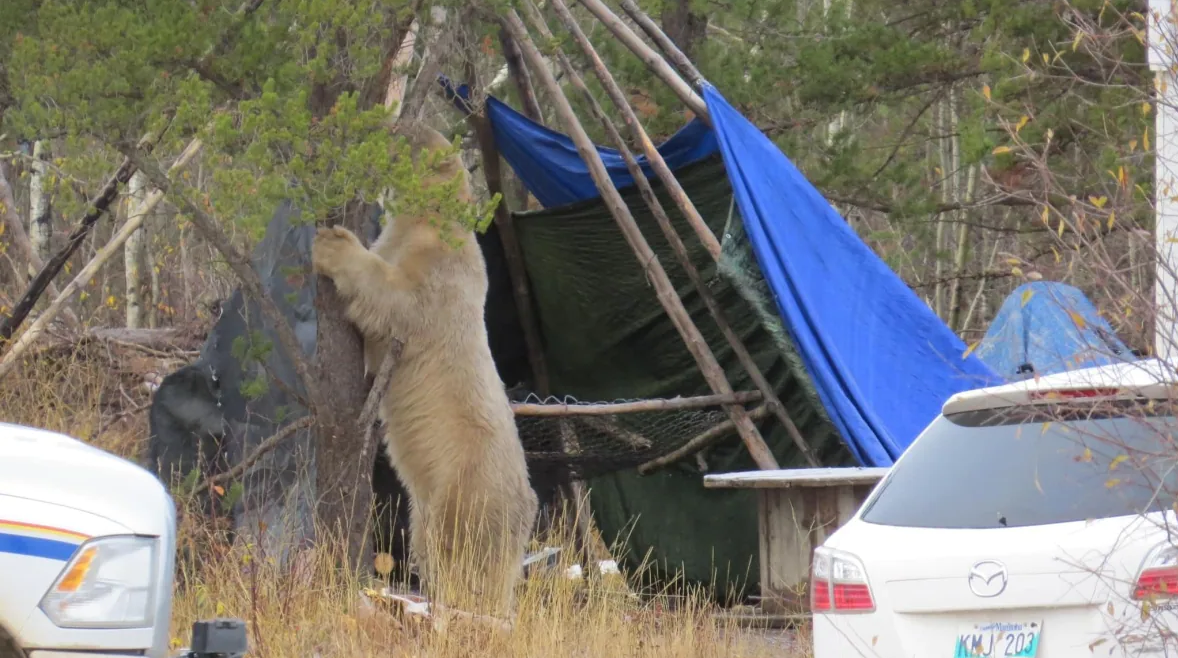
Polar bear in good condition visits small Cree community 130km from coast of W. Hudson Bay

The remote and isolated Shamattawa First Nation in Manitoba was threatened last weekend by a large male polar bear in good condition prowling around but the bear was eventually captured near the dump and released near the coast without incident. No one blamed this wandering bear on climate change.

Another bear visited the community in August 2010, also without incident. See map for location and news report excerpts below.

Continue reading

Good news update out of W Hudson Bay: fat polar bears are behaving themselves

Despite continued dire predictions of catastrophy, polar bears in Western Hudson Bay are behaving like the well-fed predators on holiday they are: bears are causing few problems in Churchill and poking around Arviat, seemingly out of curiousity rather than actively stalking prey.

Bears are chased out of Western Hudson Bay communities due to an abundance of caution but so far, no frightening encounters have been reported that I’ve heard about. That’s true elsewhere as well: an uneventful summer for polar bear attacks is good news indeed.

Continue reading

Video: Fat polar bears on the shore of Hudson Bay near Churchill, one catches a goose

This little snack won’t make much difference to the bear’s survival but rare film footage of an already-fat bear (estimated at 1,000lbs) catching and eating a Canada goose on Friday last week (26 August 2022) just outside of Churchill on the western shore of Hudson Bay is not a bear motivated by starvation to eat something other than seals.

Newsreel of the goose hunt is below; photo of another fat bear, also near Churchill, taken the day before (25 August 2022) is shown above, see more from that day here.

Continue reading

Inuit are concerned about public safety as Davis Strait polar bears numbers increase

An assessment of the health of Davis Strait polar bears by 35 Inuit polar bear experts was made public two weeks ago. Overall, these experts agree that virtually all polar bears they see are healthy and that the population has been growing over the past few decades, so much so that “public safety has become an increasing concern”. Mainstream media have ignored this report, as far as I have seen.

As we await the latest scientific population estimate of Davis Strait polar bears, completed in 2021 but still not publicly available (only a preliminary gov’t report and a summary graphic from the final report have been released, see Dyck et al. 2019, 2021) this new document (Tomaselli et al. 2022) provides the essential information we need. Polar bears are doing well with no notable changes in cub numbers or survival in the last few decades, abundance is up and reflects a real increase in numbers. There are so many polar bears that communities and individuals feel the need to take extra precautions in protecting themselves from bears.

Oh, and ringed seal numbers are way down: that could be a critical bit of information we won’t get from the polar bear academics.

Continue reading

‘Alone’ and ‘Alone Frozen’ survivor reality show participants were never at risk of a polar bear attack

Spoiler Alert! Participants of the History Channel’s Season 9 ‘Alone’ and its spinoff, ‘Alone: Frozen’ reality shows were never at risk of a polar bear attack despite the marketing hype claiming they were, because coastal Labrador is only ‘polar bear territory’ when pack ice is present offshore, which it wasn’t when the shows were filmed. Shocking, I know!

I happened upon the trailer for the ‘Alone’ series while watching TV one night and the “set in the hunting territory of the mighty polar bear” claim caught my attention. So I watched a few episodes and did some followup. Before the series even ended, there were ads for the spinoff series, ‘Alone: Frozen’, which had even more polar bear hype. Here’s what I discovered–call it a Frivolous Friday post if you like, but I felt it had to be said.

UPDATE Friday 23 September 2022:

The ‘Alone: Frozen’ series concluded last night without a single sighting of a polar bear or even its footprint near the area. In fact, mention of the possibility of a polar bear attack by the participants ceased after the first few episodes, although the ‘narrator’ continued this fiction as part of the storyline. I rest my case.

Continue reading

Churchill problem polar bear reports for early 2022 have no mention of fat bears or excess sea ice

The first few reports on problem polar bear activity in Churchill are in, posted early this week (two together), starting the last week of July (25-31).

Shore of Wapusk National Park just south of Churchill, 5 August 2022, the back end of a fat bear.

Funny how these reports in recent years (these included) don’t mention the condition of bears the way they used to as recently as 2017 (or the state of the sea ice). I guess it’s so they can’t be used as evidence against the prevailing mantra that western Hudson Bay polar bears that spend the summer onshore are starving because of the lack of ice due to human-caused global warming!

Continue reading

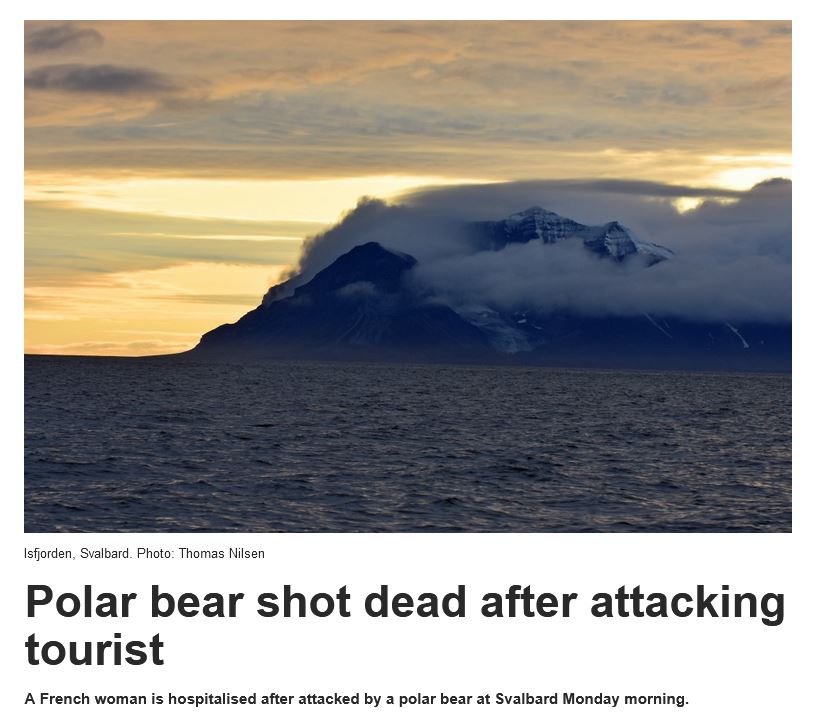
Polar bear shot after early morning attack on French tourist camping in Svalbard

There was another polar bear attack on Svalbard this morning, similar to others in previous years. As usual, the body condition of the bear was not mentioned (whether fat or thin) and photos of it were not published. The woman survived, the bear did not.

Continue reading

New paper polar bears attracted to garbage dumps blames lack of sea ice without any evidence

A paper published yesterday discusses polar bears that get into human garbage and cause other problems due to community attractants. Most of the incidents recounted and the issues they’ve raised have been reported by the media and are ones I’ve discussed here over the last few years in detail, including here and here, as well as in my recent book (Crockford 2019).

Churchill dump 2003. Dan Guravich photo, Polar Bears International handout.

All you need to know about the motivation behind the paper comes from the authors’ acknowledgement:

This paper developed from a meeting in Churchill, Manitoba, in autumn 2019 where the issue of dump use by polar bears arose. We thank Dan Cox [a photographer for PBI] for suggesting exploration of this issue and Polar Bears International for arranging this meeting.

So, six months or so after my book came out in March 2019, in which these issues were discussed in detail, polar bear experts decided it was time to write a paper on the topic. The open access paper, by Tom Smith and colleagues (Smith et al. 2022), is accompanied by an online essay published the same day by the lead author and picked up at least one cheer-leading media outlet via Reuters. See what you think.

Continue reading

Wandering polar bears are the new starving bears falsely blamed on climate change: Déjà vu

I said last year that wandering polar bears appeared to be the new ‘starving’ polar bears that were formerly the go-to victims falsely blamed on lack of ice due to climate change and here we are again. Polar bear specialists and their cheer leaders so seldom disappoint.

Although not one of the Canadian news outlets that reported on the fat polar bear that was shot after unexpectedly showing up on the Gaspé peninsula two weeks ago blamed this incident on global warming, a few days later The Guardian in the UK stepped up.

Of course it did. My own report of the incident is here, from 1 May 2022, in case you missed it (with sea ice charts, as always).

Continue reading