Category Archives: science

Polar bear specialist calls Hudson Bay freeze-up ‘late’ yet bears were moving offshore 2 weeks ago

Predictably, polar bear specialist Andrew Derocher has finally posted a tracking map of the Western Hudson Bay bears his team has fitted with collars and eartags–two weeks after bears were released from Churchill’s polar bear jail, which is the local signal that there is enough sea ice for bears to leave shore. As I reported two weeks ago, release of jailed bears happened this year on 10 November. And as I predicted in that post, by waiting so long after that event to post his map, Derocher can make it seem to his naive followers on Twitter that the bears are just starting to leave now (the last map he posted was on 11 November, when none of his bears had moved). He reinforces this by calling WH freeze-up “late”, when by all objective measures (including local informants reporting bears on the ice) it was as early as it had been in the 1980s (Castro de la Guardia et al. 2017).
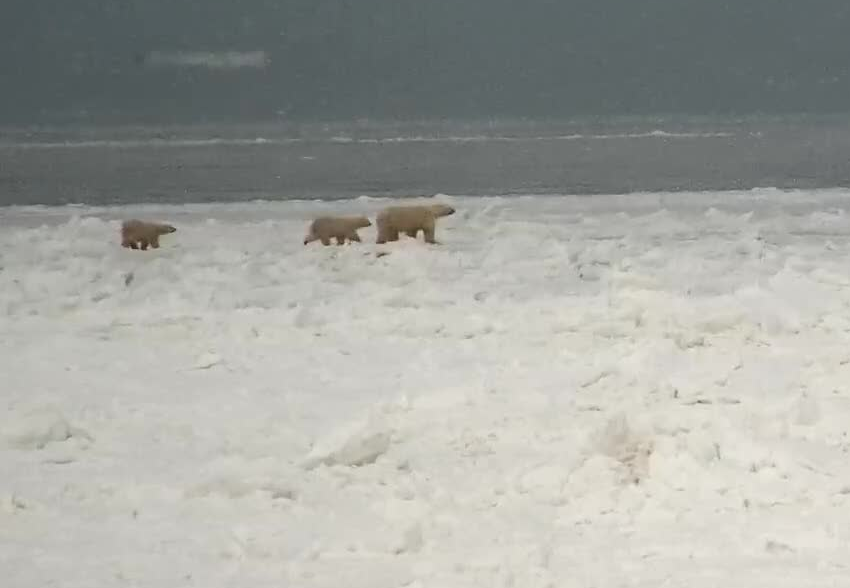
Recall that fall is the second-most important feeding season for polar bears, due to the fact that seals are strongly attracted to newly-forming sea ice. It’s their chance to regain some or all of the weight lost over the summer, before the long winter fast begins (while bears indeed hunt when they can, they are not often successful during the depths of the Arctic winter: most bears are at their lowest weight by March).

Continue reading
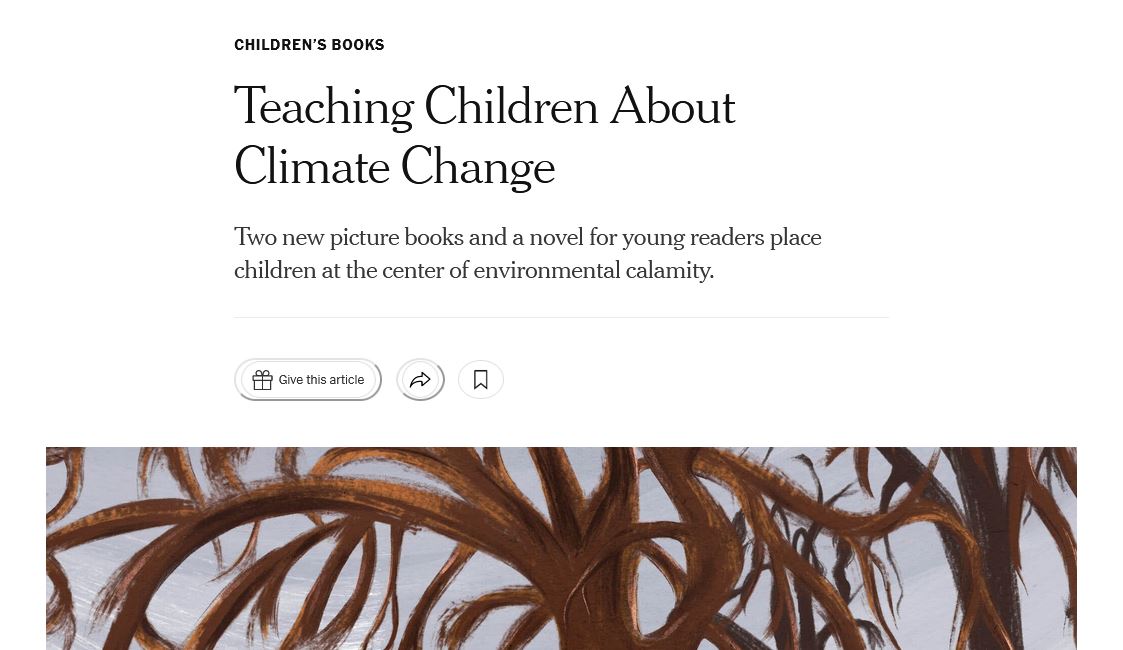
Allow children to learn about the Arctic without terrifying them with fantasies of climate catastrophe

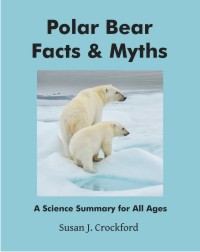
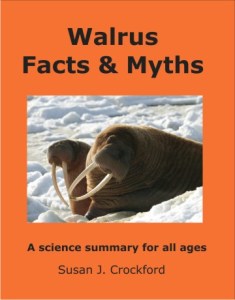
This is a reminder that I have written three Arctic animal picture books, a polar bear ecology reference book, an Arctic ecology teaching guide (free) & a polar bear attack thriller suitable for teens, all of which let kids be kids.

In contrast to a book reviewer at the New York Times (30 October 2020), see image above:

Two new picture books and a novel for young readers place children at the center of climate calamity. Fittingly, they are stories of homes under threat; home, after all, is the thing climate change stalks, be it a house, a community or a livable planet. Each book offers its own lessons on how to cope with life under the monster we’ve created. The novel even shows how kids can help slay it.

No child needs this. Children need to be allowed to learn without being used as pawns in an adult political battle. Activist authors suggesting that climate change is a predator waiting to ‘stalk’ children’s homes and communities through floods and wildfires is reprehensible, not only because it isn’t true. Kids don’t need a ‘mini-primer on climate change’. Adults should fight their own battles and leave the kids alone. List of my books and links below and in the sidebar.

Continue reading

Polar bear no closer to extinction than it was 18 years ago as Arctic sea ice resists ‘tipping point’

All predictions of disaster aside, in fact the polar bear is no closer to extinction than it was in 2005 as Arctic sea ice again steadfastly resists slipping past a catastrophic ‘tipping point’ — or the ‘death spiral’, as some chicken-littles continue to call it.

In fact, the summer sea ice trend has been pretty much flat since 2007, with ice covering about 42% less area than it had done in 1979, yet polar bears in many regions are doing better now than they were in 2005, especially in Davis Strait, the Barents and Chukchi Seas and the Canadian Arctic Archipelago.

Continue reading

Where were you in ’72? On this day 50 years ago I began my Zoology degree

A CBC News report last week on the 1972 historic Canada/USSR hockey series made me think about where I was in early September that year: starting my degree in Zoology at the University of British Columbia in Vancouver.

The Stanley Park Zoo in Vancouver housed a polar bear exhibit consisting of four, formerly ‘orphaned’ cubs from Churchill. The zoo was located near the West Vancouver bus exchange that I went through every day on my way home from university. I visited the zoo often just to watch the bears.
Continue reading

Watch me talk polar bears with Tom Nelson

Recorded 12 August 2022, here’s the full podcast (his ‘#5’), some short snippets of this can be found on Tom’s Twitter feed and a list of his podcasts is here (you may notice I’ve let my curls come out to play!).

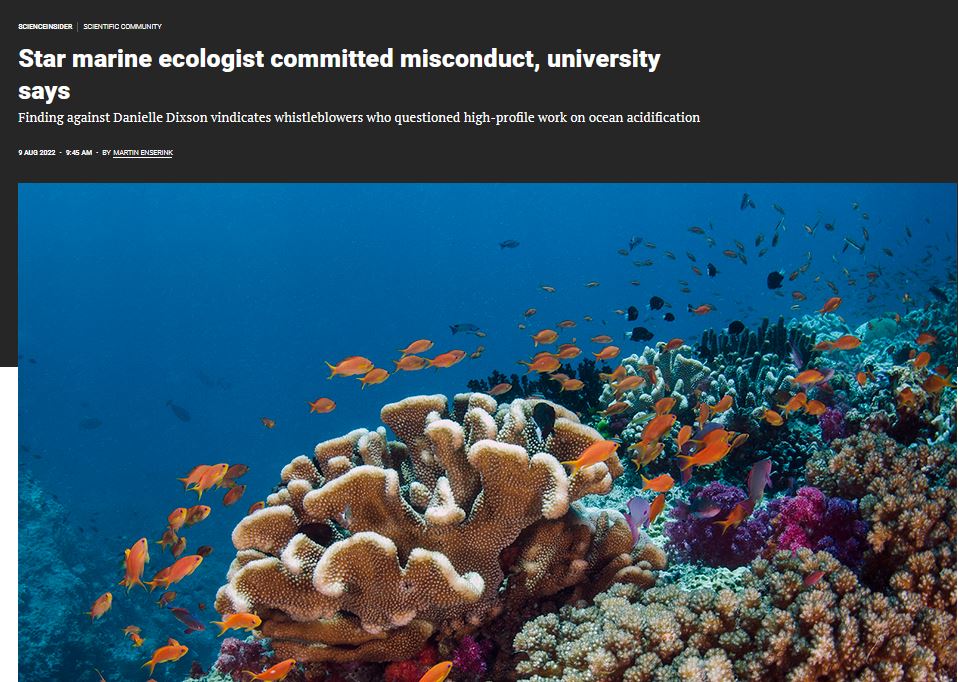
Research misconduct in fish ecology and what it means for those who dare to challenge experts

This has nothing to do with polar bears but everything to do with the scientific shenanigans that blight virtually all the fields that purport to support the human-caused climate change rhetoric, including polar bear research. The parallels of this example (published in Science Magazine yesterday) with my experience challenging the polar bear cabal is obvious, as it is with Dr. Peter Ridd’s battles with colleagues over the state of Great Barrier Reef corals, recently shown to be in spectacularly good condition.

Dr. Roger Pielke Jr., who’s had more than his fair share of trouble challenging climate change rhetoric, tweeted about this development yesterday but today he’s published a comprehensive essay explaining the whole sordid story, called ‘Fish and Foul: Three lessons from a massive research misconduct case in marine science‘. It’s well worth a read all the way through but I’ve provided a few excerpts below.

Continue reading

My scientific blog posts contributed to the failed Antarctic Treaty bid to protect Emperor penguins

There is actual evidence that two of my fully-referenced blog posts caused some Antarctic Treaty delegates to reject a bid for special protected status for Emperor penguins. Activist heads have exploded.

Continue reading

Ancient polar bear remains explained by sea ice and polynyas: my peer-reviewed paper

My open-access, peer-reviewed paper on the ecology of ancient polar bears in relation to sea ice has just been published in Open Quaternary. It’s called ‘Polar Bear Fossil and Archaeological Records from the Pleistocene and Holocene in Relation to Sea Ice Extent and Open Water Polynyas’.

A unique compilation of more than 104 polar bear skeletal records from the Holocene and late Pleistocene shows that most ancient remains are associated with existing or ancient open water polynyas or the expansion of sea ice during past cold periods. This big-picture analysis indicates that as they do today, polar bears were most commonly found near polynyas throughout their known historical past because of their need for ice-edge habitats.

Read my longer summary below and download the paper here. This is a much-updated and expanded analysis based on an informal study I did in 2012.

Continue reading

Open response to a polar bear researcher who objected to me ‘attacking’ their colleagues

Last week, I got an email from a polar bear scientist I have interacted with a few times. Not one of the big names but aside from that, I’ll leave their identity private. The email was polite and I tried to respond in kind. I have copied it here because others may have had similar concerns.

Continue reading

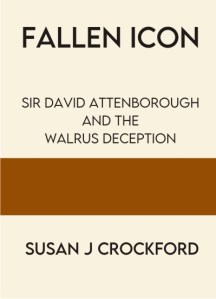
Big difference between National Geo’s starving polar bear and Attenborough’s falling walrus

In Fallen Icon, I included a chapter about that infamous National Geographic video that falsely claimed an emaciated polar bear was starving because of climate change. Although I really thought at first that Attenborough’s falling walrus fiasco was the same over-zealous promotion of animal tragedy porn we were all used to seeing from activists, digging deep showed how wrong I was.

It was important to document these phenomena, in print, for the historical record. But on top of that, I bring the science and the hidden facts to light in Fallen Ichttps://atomic-temporary-38650637.wpcomstaging.com/2022/01/18/fallen-icon-sir-david-attenborough-and-the-walrus-deception-is-now-available/on and reveal the difference between the two campaigns.

See if you agree. And please do take the time to leave a review on Amazon for the benefit of future readers.

Fallen Icon: Sir David Attenborough and the Walrus Deception