
Courtesy Icepeople (Svalbard, 3 April 2020), no reminder to carry a gun. Forget safety in numbers: leave room for the bear to attack you both.

Courtesy Icepeople (Svalbard, 3 April 2020), no reminder to carry a gun. Forget safety in numbers: leave room for the bear to attack you both.
Comments Off on Social distancing in the Arctic: keep one polar bear length apart while outdoors
Posted in Polar bear attacks, Uncategorized
Tagged coronavirus, polar bear, quarantine, safety, social distancing, Svalbard
In Svalbard, Norway, it is routine practice to chase polar bears away from settlements with snow machines and helicopters, then tranquilize and relocate them if necessary but in late January this approach led to the death of a young male bear.
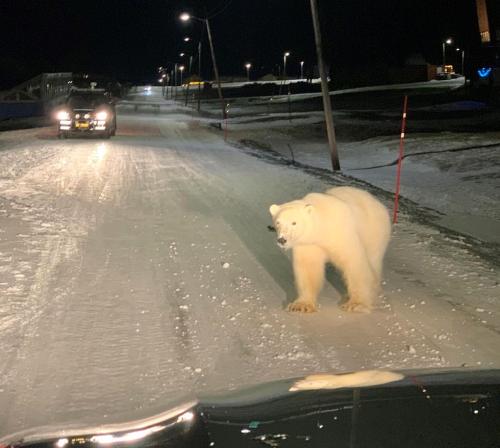
Necropsy results released 26 March 2020 revealed that the two year old bear, who had wandered into and around Longyearbyen multiple times in late January, was captured after a prolonged helicopter chase but died enroute as it was flown north to Nordaustlandet (see map below) from circulatory failure due to administering anesthesia after the prolonged stress of being chased.
Video here of the bear being chased out of Longyearbyen by helicopter (photo above is of the New Year’s bear). Longyearbyen has had more problems than usual with polar bears this winter due to the unusually extensive sea ice off the west coast of Svalbard. Polar bears are particularly dangerous in winter and with the abundance of bears in recent years many Arctic communities are at risk with each having to find their own solutions.
In the wee hours of New Years Day 2020 a fat Svalbard polar bear was shot because of persistent visits to downtown Longyearbyen and the public was outraged. A few weeks later a bear attacked a dogsled loaded with tourists. The death of the young bear in late January in the course of removing it (rather than shooting it) is a reminder that tranquilizing a polar bear, especially after a prolonged chase, can be as lethal as shooting it.
Comments Off on Svalbard finds tranquilizing & removing problem polar bears comes with risks to bears
Posted in Polar bear attacks, Sea ice habitat
Tagged Arctic, attack, attacks, polar bears, problem, safety, sea ice, self-defense, tranquilizer drugs
The most positive thing that US National Snow and Ice Data Center sea ice experts could say about this year’s winter sea ice maximum was that it wasn’t a record breaker. But it provides ample polar bear habitat when the bears need it most: just before the critical spring feeding season.
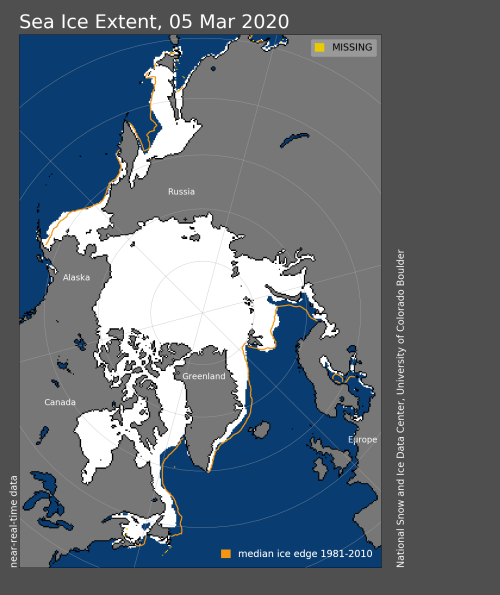
In fact, they said: “The 2020 maximum sea ice extent is the eleventh lowest in the 42-year satellite record, but the highest since 2013.” All that winter ice is essential polar bear habitat just before the critical spring feeding season (Crockford 2019, 2020) and it’s one of the reasons that polar bears are thriving.
Comments Off on Winter sea ice maximum extent on March 5 was the highest since 2013
Posted in Life History, Sea ice habitat
Tagged habitat, NSIDC, polar bear, sea ice, spring feeding, video, winter
The Sun ran a photo-essay yesterday (22 March 2020, below) taken by a UK photographer who went to Wapusk National Park just south of Churchill, Manitoba in order to get much-coveted images of polar bear mothers and cubs newly emerged from winter maternity dens. The photos were said to have been taken “early last week” (16-17 March?).
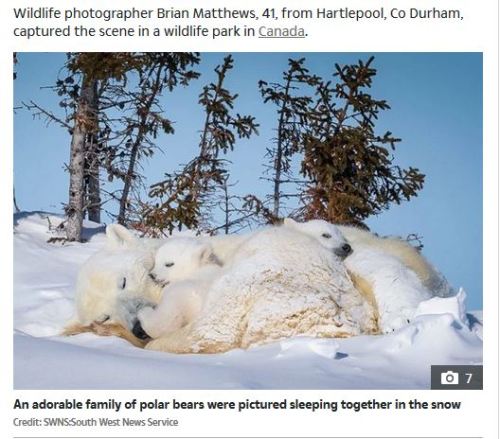
The trees in the photos are a give-away to the location: no other subpopulation regions except Western and Southern Hudson Bay are below the treeline. Scrubby little spruces but ‘trees’ nonetheless. Mothers in more northern regions won’t come out with their cubs until April.
The question is: what was this photographer thinking to travel to a remote Arctic location in the middle of a global pandemic?
UPDATE 24 March 2020 820am PT. I have just heard from photographer Brian Mathews and he had this to say about his trip to Wapusk National Park:
“Context and facts are key as ever. I left the U.K. before any of the measures where in place. I’ve just got back after being in Canada for nearly a month. When I returned to Churchill I self isolated then returned to the U.K. the coverage I got is good for the bears and the positive uplifting feedback I’ve had about the joy they brought into people lives had be brilliant.”
I noted in my response to him that I realize the tour company in Canada bears some responsibility for continuing to operate under the circumstances.
Comments Off on Amid viral pandemic UK photographer captures images of Canadian polar bear cubs
Posted in Life History
Tagged Chinese virus, Churchill, coronavirus, cubs, dens, photography, polar bear, Wapusk National Park
On Tuesday 17 March 2020, several polar bears were reported in and around the community of St. Anthony on the Northern Peninsula of Newfoundland, adding another threat on top of coronavirus concerns in the province. The photo below is from a 2018 Newfoundland sighting from the same region: none are available for the current report.
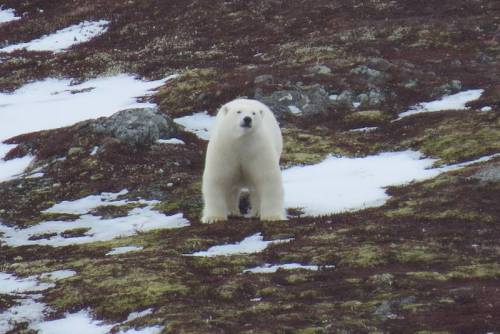
There have been no reports of trouble but locals will have to stay vigilant to remain safe, which since 2008 has been a common concern from late winter to early spring. In 2012 in this area, a bear was shot after it destroyed homes and attacked livestock; another bear was shot the next week in the same area. And in 2016 and 2017, a bear had to be shot to protect residents. Bears at this time of year are in hunting mode, which is why my polar bear attack thriller novel, EATEN, is set in March.
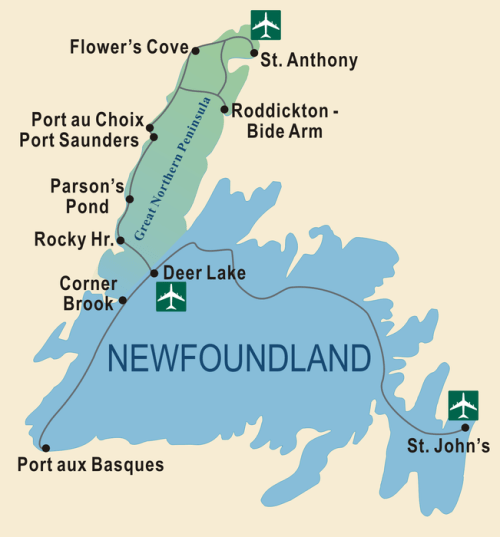
Current sea ice conditions below.
UPDATE 22 March 2020: “Just after 1 p.m. on March 21, the RCMP St. Anthony advised they blocked off Goose Cove Road, St. Anthony, as a polar bear has been sighted in the area. Wildlife is en route to assess the situation. In the interest of public safety residents are asked to stay away from this area.” From Saltwire here. Another report on the same sighting here.
Comments Off on Polar bears prowling Newfoundland come on top of coronavirus fears
Posted in Life History, Polar bear attacks, Sea ice habitat
Tagged attacks, coronavirus, feeding, harp seal, hunting, Newfoundland, polar bear, sea ice, sightings
From Donna LaFramboise this morning, who has collated some of the best going, this is my favourite:

See the rest here.
Continue reading
Comments Off on Awesome coronovirus memes and correcting false facts
Posted in Population, Uncategorized
Tagged coronavirus, covid-19, false facts, humour, influenza, memes, more polar bears than people, polar bear, Spanish flu, Svalbard
On this first anniversary of the publication of The Polar Bear Catastrophe That Never Happened, it’s a day of celebration for me. The book has informed thousands about how and why the scary stories about the imminent demise of polar bears due to human-caused global warming failed so miserably. It is a story of the triumph of facts over assumptions and a perfect example of why scientific observations trump model predictions. It is also a study of science at its worst: how a close-knit community of scientists groomed by a few senior researchers was able to cast out an insider who refused to tow the line on their climate change agenda – and mobilized mobs to attack outsiders who questioned their authority.
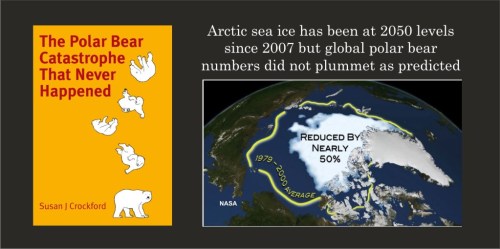
If you haven’t read it, now may be the perfect time. Many of you will be forced or encouraged to stay at home because of Covid-19 concerns, so here is one way to put the time to good use. Ebooks are perfect for this situation. If you don’t like Amazon, Smashwords has an ebook version here.
Smashwords also has an ebook version of my novel, EATEN. This polar bear attack thriller is a timely read for a number of reasons but primarily because it’s the story of an animal epidemic with horrific consequences quite different from the one we are facing at the moment.
My polar bear science book for kids, Polar Bear Facts and Myths in ebook form might be the perfect diversion for kids at home who need interesting educational material.
You’ll find links to all of my books, in all countries and all outlets, at my personal website here.
Stay safe.
Comments Off on First anniversary for The Polar Bear Catastrophe That Never Happened
Posted in Advocacy, Conservation Status, Life History, Polar bear attacks, Population, Summary
Tagged catastrophe, ebooks, epidemic, extinction, models, polar bear, population, predictions, science, sea ice, thriller, winter
An article by CBC News today (3 March 2020) is a surprisingly well-balance report on a recently published paper by Kristin Laidre and colleagues on their work on Baffin Bay polar bears that I discussed last month. It presents the Inuit perspective that polar bears are currently abundant in the area and the population stable despite less summer sea ice and some documented declines in body weight and at least one scientist conceded this is indeed true.
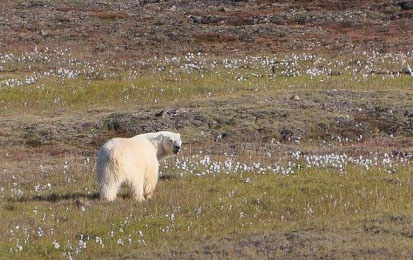
Fat polar bear, summer 2012 near Thule, NW Greenland (Baffin Bay subpopulation). Robin Davies photo.
However, the CBC writer still left out the most critical caveat included in the paper about the study: that factors other than changes in sea ice could have affected the body condition and litter size data that the authors documented but they didn’t look at anything except sea ice. This automatically means the conclusions are scientifically inconclusive.
See some quotes below from the CBC article and the caveat from the paper. Continue reading
Comments Off on Baffin Bay polar bears are abundant and the population is stable, study scientist admits
Posted in Conservation Status, Population, Sea ice habitat
Tagged abundant, baffin bay, body condition, causation, caveat, correlation, polar bear, population size, sea ice, stable
Sea ice around Svalbard, Norway at the end of February 2020 is way above average, as the graph below shows – with more polar bear habitat now than there has been in two decades.
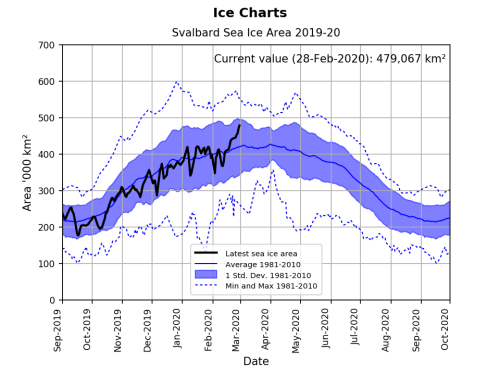
Some comparison charts below show that the graph above includes some very high ice years in the 1980s (reaching that dotted line above the mean) for which only global charts are available.
However, contrary to suggestions that more Svalbard ice is better for polar bears, there is no evidence that low extent of sea ice habitat in winter or summer over the last two decades harmed polar bear health, reproductive performance, or abundance. In fact, polar bear numbers in 2015 were 42% higher than they were in 2004 (although not a significant increase, statistically speaking) and most bears were found to be in excellent condition.
This suggests a return to more extensive ice to the Svalbard region in winter will have little impact on the health of the entire Barents Sea subpopulation, although it might change where pregnant females are able to make their maternity dens if ice forms early enough in the fall. In other words, the population should continue to grow as it has been doing since the bears were protected by international treaty in 1973.
UPDATE 3 March 2020: According to 28 February tweet by the Norwegian Ice Service, which I just saw today, “the last time there was this much sea ice around Svalbard on this day of the year [28 February] was 2004“. Somehow, I missed 2004 when I was looking through the archive, so I have modified the text below accordingly; see the 2004 chart below and here.
Comments Off on Svalbard Norway now has more polar bear habitat than it did two decades ago
Posted in Life History, Population, Sea ice habitat
Tagged Barents Sea, body condition, cub survival, denning, facts, Franz Josef Land, polar bear, science, sea ice, Svalbard
International Polar Bear Day is a good day to ask: Are polar bear researchers hiding good news? Extended lags in publishing polar bear counts and a failure to publish data on female polar bear body weights and cub survival in Western Hudson Bay for more than 25 years make it look like polar bear researchers are delaying and suppressing good news.
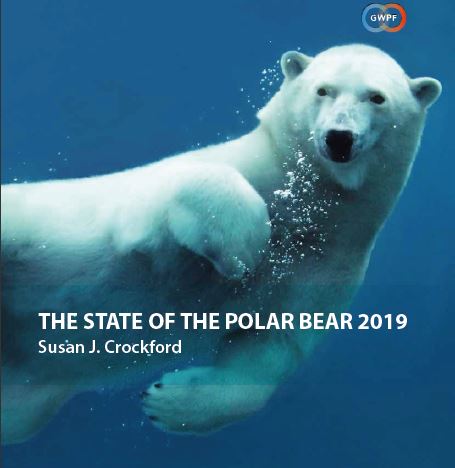
In particular, the failure to report the data on cub survival and weights of female bears suggests that these health measures have not declined over the last two decades as claimed. If these figures are indeed the strongest evidence that sea ice loss due to climate change is harming Western Hudson Bay polar bears, why on earth have they not been made public? And why won’t a single journalist ask to see that data?
Continue reading
Comments Off on State of the Polar Bear Report 2019: Are polar bear researchers hiding good news?
Posted in Conservation Status, Population, Sea ice habitat
Tagged cub survival, deadly encounters, good news, International Polar Bear Day, invasions, polar bear, population counts, population size, report, sea ice, weights, western hudson bay





 polarbearscience
You must be logged in to post a comment.