Posted onFebruary 26, 2025|Comments Off on No News is Good News on Polar Bear Day: Celebrate With 35% Off Polar Bear Evolution
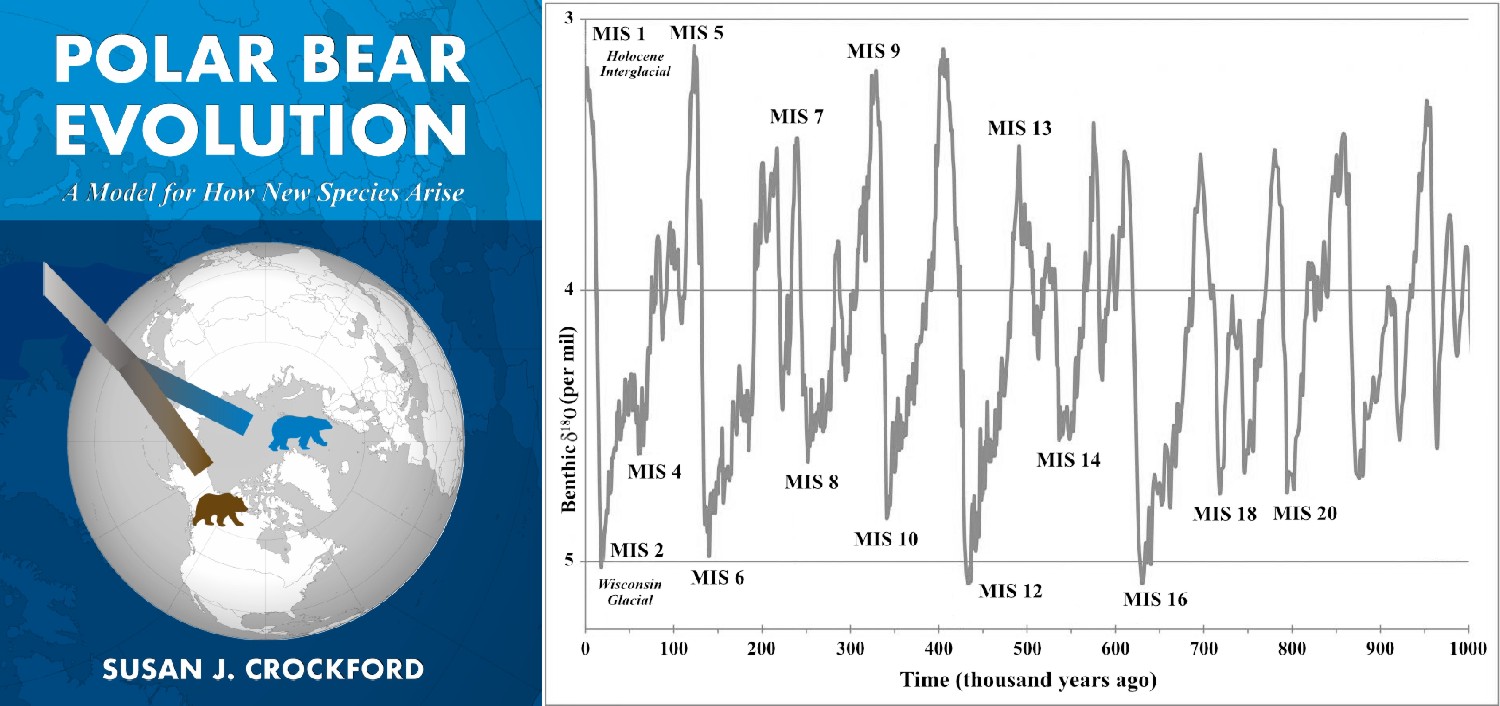
In honour of International Polar Bear Day coming up on Thursday February 27, I’ve discounted the price of my Polar Bear Evolution book by 40% for the next month in order to encourage evolutionary thinking about polar bears (in all markets: see links at the end of this post). UPDATE: Sale extended until June.
Instead of asking whether polar bears will survive a bit of warming over the next few decades, ask yourself how they survived more than 100,000 years of unimaginable changes in Arctic climate (both much warmer and colder) before now?
Posted onFebruary 13, 2024|Comments Off on When polar bears die, they die of starvation: new Nature paper is propaganda, not news
Is it a coincidence that a paper reporting the results of a no-news study on polar bears, but which predicts future starvation due to climate change, was published two weeks to the day ahead of a climate change marketing event made up by the activist organization Polar Bears International? I doubt it.
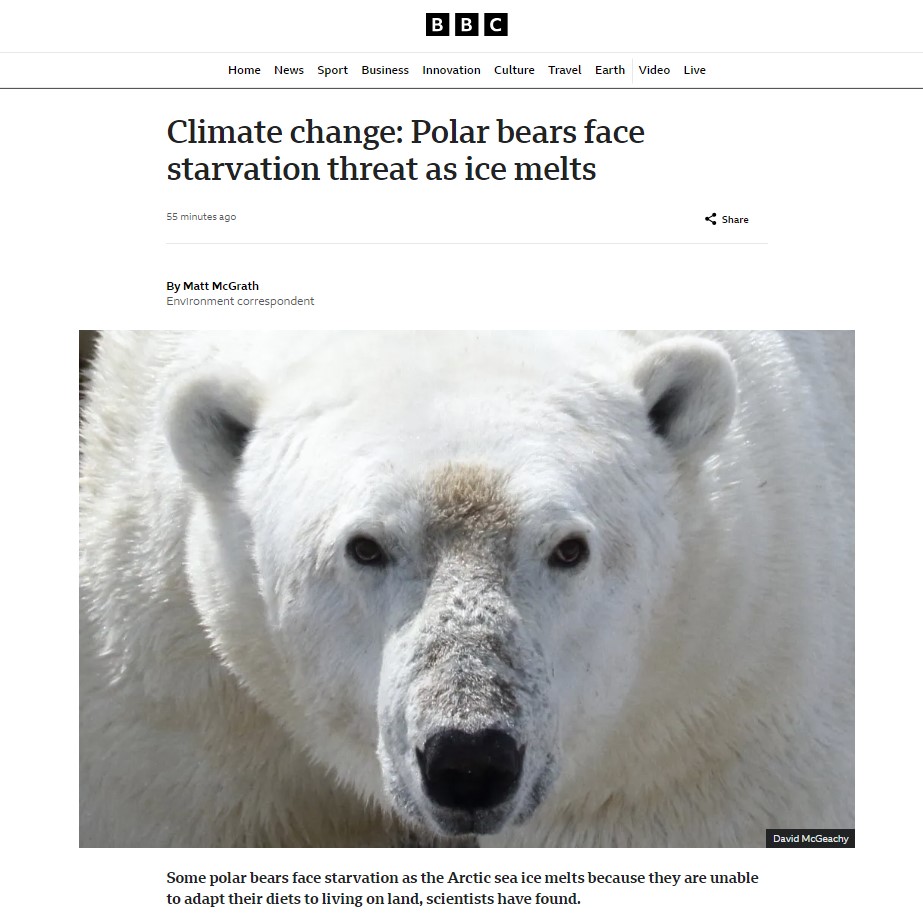
And do I think the high-profile journal Nature Communications would not only agree to publish such a useless bit of propaganda but also rig the timing to advance the climate change emergency narrative? Silly question. And the media worldwide are of course lapping it up, happy for an excuse to promote the perils of climate change, see here, here, and here using images of fat polar bears. Image above is from the BBC headline, 13 February 2024.
They believe this strategy is effective because they think the public is stupid, but they are deluding themselves. Most people are now laughing at their obvious acts of desperation.
Posted onFebruary 8, 2024|Comments Off on Activists just can’t stop using emotional blackmail to sell the climate change narrative
Even though a big deal was made earlier this year about climate activists not using polar bears anymore to try and sell the climate change emergency narrative, they just can’t seem to help themselves.
So it’s not at all surprising that yet another amateur climate activist has resorted to using the emotional ploy of a photo of a polar bear on sea ice to win the 2023 Wildlife Photo of the Year People’s Choice Award sponsored by the Natural History Museum London (UK).
His thought-provoking image is a stark reminder of the integral bond between an animal and its habitat and serves as a visual representation of the detrimental impacts of climate warming and habitat loss.“
Posted onNovember 8, 2023|Comments Off on Polar Bear Evolution pre-Christmas book sale: discounts on all formats!
I have reduced prices on all formats of my Polar Bear Evolution book for four weeks starting today (8 November-6 December 2023), in time for holiday gift-giving. The ebook version has the largest price reduction (60% of regular price, to US$17.40) but the other discounts are also substantial. This sale is a time limited offer: don’t miss out! Links below.
The author of Polar Bear Evolution, Susan Crockford, is a good, credentialed scientist. Her writing is clear; her thinking is also. She has a broad understanding of biology and an informed paleo perspective. Crockford condenses a very large literature on polar bear biology and evolution in this book which will help readers understand the science related to the evolution of an Arctic species. Perhaps the most important aspect of this book is its synthesis of information from the fields of wildlife biology, molecular evolution, paleontology, and climate. Her original ideas and hypotheses on thyroid hormone’s role in evolution are very important and add a credible mechanism of phenotypic change which complements the literature on molecular genetic evolution. Polar Bear Evolution is an important contribution to science and its application in evolutionary biology and wildlife biology. Matthew A. Cronin, Ph.D.
Available at the links below (others also available):
Posted onSeptember 25, 2023|Comments Off on Evolution Earth documentary comments on polar bear survival & adaptation: let’s see how they do
Just a heads-up that this week, PBS in North America will broadcast the “polar” episode of a new documentary called “Evolution Earth.” In my area, it’s scheduled for Wednesday, September 27 at 10:00 PM. It remains to be seen whether this is really about evolution or (given those involved in its production) simply more climate change propaganda similar to that promoted by Attenborough, but I intend to watch and report back.
About the Show: “Evolution Earth embarks on a global expedition to reveal the animals keeping pace with a planet changing at superspeed. Heading out across the globe to distant wilds and modern urban environments, five episodes track how animals are moving, using ingenuity to adapt their behavior, and even evolving in unexpected ways.
…We follow heart-warming tales of resilience that redefine our understanding of evolution, and hint at how nature can show us a path towards a sustainable future for Planet Earth. The series is narrated by Dr. Shane Campbell-Staton, who guides us through each episode in an intimate narrative style, drawing on his background as an evolutionary biologist.”
Episode 4 | Ice “At the planet’s frozen extremes, shifts in animal movement and behavior reveal vital information about our future world. Examine polar bears in the Arctic, penguins in Antarctica and other animals surviving in icy worlds.“
UPDATE 27 September 2023: Well, as I expected, this show was full of Attenborough-style nonsense about starving polar bears waiting for sea ice to form along Western Hudson Bay, the bears presented as “canaries in a coal mine” indicators of climate change, with an activist scientist saying she’s “pissed” about climate change. They used charts of the very distinctive pattern of sea ice formation that took place in November 2020 to illustrate how freeze-up was “later and later each year” even though 2020 was one of the earliest freeze-ups on record (bears were successfully hunting from shorefast ice as early as 30 October). A waste of 15 minutes: I couldn’t bear to watch what they did with the penguins.
Posted onAugust 16, 2023|Comments Off on Conservation officers misleading the public about polar bear problems in Churchill
Canadian government-funded media outlet CBC ran a story this morning about problem polar bears in the town of Churchill, Manitoba, the self-described “Polar Bear Capital of the World” that contains some very misleading statements from Manitoba Conservation officers.
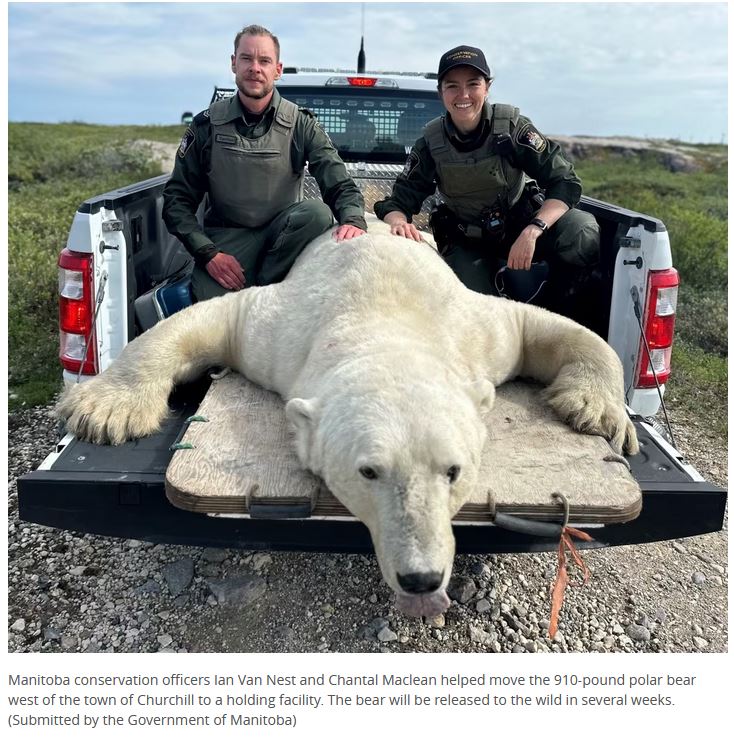
Breakup of sea ice on Hudson Bay was earlier this year than it has been in more than a decade (17 June) and some people are trying to hype the significance of this phenomenon to support a tenuous link to human-caused climate change, even though bears out on the ice this spring were reportedly in good condition and one of the problem bears captured on 8 August was also in good condition (a male weighing 910 lbs, photo above). Unfortunately, reports for similar early breakup years in the early 2000s have not been made public. However, I’ve been keeping track of these Polar Bear Alert Program Reports since 2015 and have read the available literature about their history: these records simply do not corroborate the statements in this CBC account.
Posted onAugust 8, 2023|Comments Off on Climate activists are silent on polar bears because their doom-mongering blew up in their faces
A Grist article last week pandered to activist polar bear specialists over their failed climate change agenda as it tried to minimize why the climate movement doesn’t talk about polar bears anymore. Apparently, the Arctic icon has “largely fallen out of fashion” through “overexposure” resulting in polar bear images invoking “cynicism and fatigue.” But that isn’t really true, is it?
While there is an admission that the over-hyped lies about starving bearspromoted by National Geographic in 2017 and 2018 were a factor, there is no mention in the article of the well-known, documented evidence of scientists’ own failed assumptions that polar bears require summer sea ice for survival have had any impact on public opinion (Amstrup et al. 2007; Crockford 2015, 2019, 2022, 2023; Lippold et al. 2019; Rode et al. 2021).
Thriving populations in the Chukchi Sea and elsewhere amid low summer ice levels have busted the myth that polar bears need ice year-round.
Andrew Derocher was also allowed to repeat, unchallenged, the ridiculous narrative he and his activist supporters have peddled before, that insists the polar bear had become a climate change icon by accident rather than design, a lie I addressed in detail last year. Some excerpts from that 2022 post are copied below.
Posted onJuly 17, 2023|Comments Off on More Barents Sea polar bear habitat at mid-July 2023 than in 2012 despite more atmospheric CO2
Despite more CO2 in the atmosphere (424 vs. 392, for June), there was more sea ice cover in the Barents Sea at mid-July this year than there was in 2012.
Yet contrary to predictions, which insisted that protracted poor ice conditions in summer would inevitably result in catastrophic rates of starvation and death (Amstrup et al. 2007; Crockford 2017, 2019), polar bears in the Svalbard region have so far not had any documented any harm to their health or population size. In fact, field data show bears in Svalbard are in better condition than they were in the late 1990s (Lippold et al. 2019), almost certainly due to the documented increase in primary productivity that has resulted from longer ice-free summers since 2003 (Frey et al. 2022; Crockford 2023).
Posted onJuly 9, 2023|Comments Off on Natural flexibility explains W Hudson Bay polar bear movements at breakup better than climate change
Hudson Bay in early July this year is a mosaic of more-than-average and less-than-average sea ice coverage but apparently, only the less-than-average ice areas constitute the “early breakup” caused by climate change, and only “deniers” would say otherwise.
I say some folks are cherry picking the ice conditions that support a story line they prefer, forgetting that polar bears know better than they do when to come in off the ice.
Watch polar bear habitat reform in the Canadian Arctic: “last 10 days” Canadian Ice Service animation (works anytime) HERE.
See Quote archive for details.









 polarbearscience
You must be logged in to post a comment.