Tag Archives: climate change

Thriving numbers – & two great books – are ample reason to rejoice on Polar Bear Day

Ten years of summer sea ice levels expected to kill 2/3 of the world’s polar bears by 2050 instead saw polar bear numbers grow. And this year, there are also two fabulous books about polar bears and their outstanding success story to celebrate on International Polar Bear Day (Monday 27 February 2017).

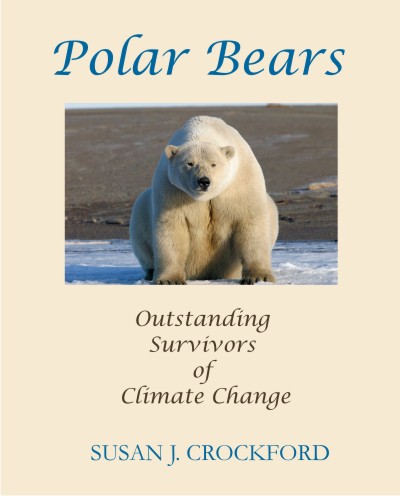
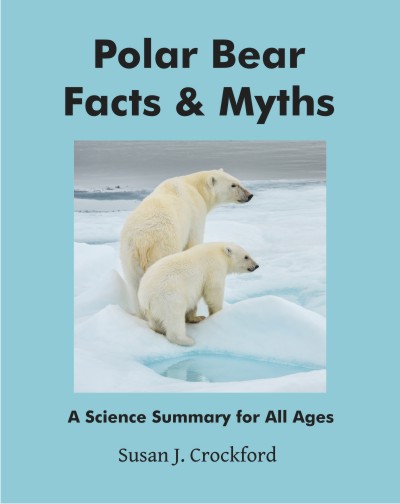
os-and-fm-cover-drafts-14-dec-2016

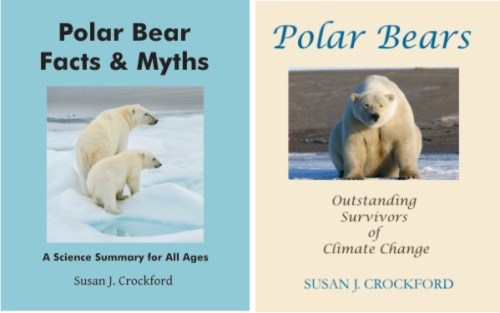
One is suitable for kids (Polar Bear Facts & Myths) and another for adults and teens who want the details (Polar Bears: Outstanding Survivors of Climate Change) – see the right sidebar to buy on Amazon or my author website for details on all additional formats. A couple of excerpts from them are below.

So forget turning down your thermostat in a pointless gesture to “reduce your carbon emissions and help polar bears” — as Polar Bears International advocates for Polar Bear Day. Instead, treat yourself or a friend and order a book with a rational approach to species survival.

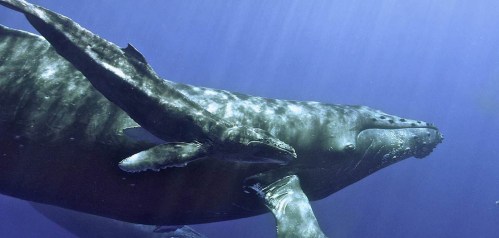
Speaking of species survival, think about the inconsistency in how some species are treated according to the US Endangered Species Act (ESA). Humpback whale numbers recovered after decades of protection; in 2016, after the state of Alaska filed a petition to delist, most populations were officially removed from the ESA list of ‘threatened’ species.

humpback-whale-and-calf-012016-noaa

Humpback whale and calf, NOAA image.

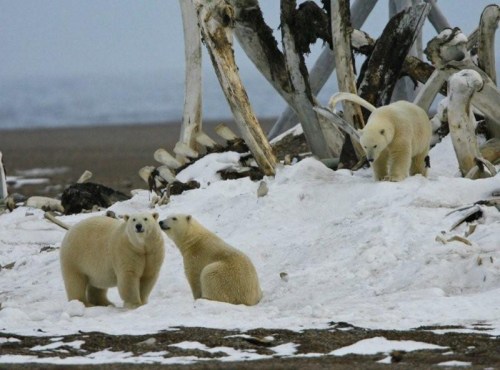
In contrast, by 2015, polar bear numbers had also recovered despite years of low sea ice loss not predicted until 2050, yet remain officially ‘threatened’ with extinction.

polar_bear_family_at_bone_pile-kaktovik-20-april-2016

Fat bear family at Kaktovik, Alaska (Southern Beaufort), April 2016. USGS photo.

US National Marine Fisheries Service defended the delisting of humpback whales against activists who insisted human-caused global warming threatened the species, but the US Fish and Wildlife Service defends flawed polar bear prophesies.

My books lay out the polar bear success story: in simple form for younger readers and in detail for others. See the excerpts below.

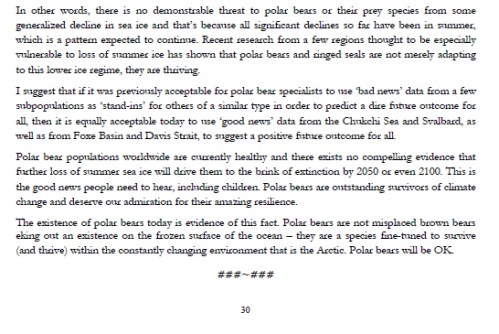
crockford-pb-outstanding-survivors-2017_end-of-pg-30

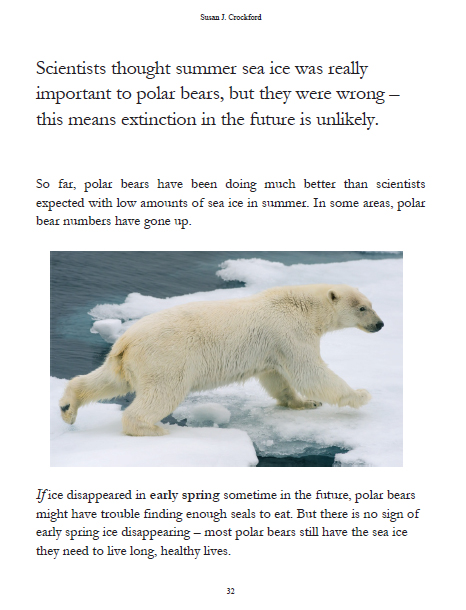
Polar bears have not been driven to the brink of extinction by global warming. In fact, they are thriving (see my final conclusions on pg. 30 of Polar Bears: Outstanding Survivors of Climate Change, above and pg. 32 of Polar Bear Facts & Myths below.

crockford-pb-facts-and-myths-2017-pg-32

If you’d like to support my efforts to bring this to everyone’s attention, please consider buying a copy or two of my books. If you’ve already done so, keep in mind that your local library might be glad to have copies donated. They also make great gifts.

Save

Save

Fake news on polar bear survival predictions is political posturing

I call this fake news because it’s not news – media headlines around the world today (New York Times, Washington Post, DailyMail) are trumpeting the release of a final version of a draft report released with similar fanfare more than a year ago, announced today by the US Fish & Wildlife Service in the official US government publication, Federal Register.

biggest-threat-to-polar-bears-is-global-warming-nyt-headline_9-jan-2017

Without action on climate change, say goodbye to polar bears” is exactly the kind of sensationalized nonsense I address in my new detailed science book, Polar Bears: Outstanding Survivors of Climate Change (announced here, discussed here).
Continue reading

Communicating polar bear science requires a rational approach

My most requested public lecture, Polar Bears: Outstanding Survivors of Climate Change, has been hugely popular with audiences in my Canadian home town of Victoria, British Columbia, and my newly-released book with the same title (based on that lecture) promises to be similarly successful. Here are some thoughts on both.
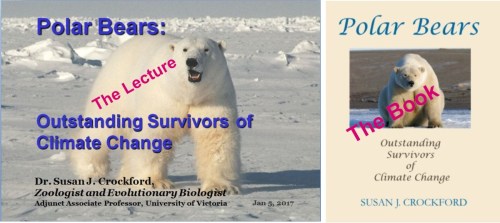
crockford_outstanding-survivors_lecture-vs-book-jan-2017

Recently (5 January 5, 2017), I gave another free lecture about polar bears to a local non-profit organization through my university’s Speakers Bureau. I’ve been doing this since 2009, although the shear volume of requests has been much higher this past year than previously. As before, my lecture was warmly received and audience members asked questions indicating they had been listening with an open mind. A colleague I spoke to expressed surprise at that outcome, given where I live.

Keep in mind that Victoria is home to litigation-prone IPCC climate scientist turned BC provincial Green Party politician Andrew Weaver (in whose riding I happen to reside) as well as one of the many targets of fake Nobel Laureate Michael Mann and his over-sensitive ego, veteran climate scientist Tim Ball (who defends the defamation lawsuit filed against him by Mann at trial in Vancouver, B.C. 20 February 2017,  an event which defender of free speech and fellow defendant against Mann’s litigious wrath, Mark Steyn,  has said he’ll be attending). And yes, in a sort of home-town science brawl, Weaver also sued Tim Ball, but that case has not yet gone to court. Victoria is also the constituency of our lone federal Green Party Member of Parliament, Elizabeth May. Canadian journalist Donna Laframboise once described Victoria as “one of the most left-leaning corners of the country.

So it is into this virtual lion’s den of anthropogenic global warming champions that I venture, several times a month, to enlighten adults, teachers, and students who have been left with the impression that there are only a few hundred starving polar bears left in the world.1

The secret to the kind of reception I receive – even in my town – is to present the relevant facts without emotional overtones and let audiences make up their own minds about what they think of the situation.

This latest lecture was not only well received but several audience members bought copies of my kid-friendly Polar Bear Facts and Myths that I had for sale (reviewed here by Kip Hansen).  One member came up afterwards to say he’d been dreading what he’d anticipated would be another polar-bears-are-doomed diatribe but was very pleased at my even-handed, scientific approach.

That’s why I decided to fashion my first fully referenced polar bear science book – and take it’s title – from my most successful public lecture. Audience responses over the years indicated to me that a simple summary would be an appealing approach. Questions from audience members over the years suggested which topics might need a more detailed explanation in the book. The lesson I learned from my lecturing experience was that my book needed a focused style, plenty of color images, and an affordable price.

Consider the table of contents for the new book, where each chapter covers only a few pages:

1. Polar bear & sea ice basics
2. Feasting/fasting life of polar bears
3. Evolution & climate change
4. Conservation & protection
5. Failure of the polar bear predictions
6. Biggest threat to polar bears
7. Summary
8. Conclusions

I expect I’ll get some negative fake reviews posted on Amazon for Polar Bears: Outstanding Survivors of Climate Change from the self-appointed moral-high-ground troll network (as they did for Polar Bear Facts and Myths). That’s to be expected for a topic like this. Honest criticism from readers might also be generated, of course, and that’s something all writers can expect, and should welcome.

That said, the best way to counter biased or unconstructive reviews is with honest, heartfelt reviews from readers who have actually read the book. If any of you that have ordered a copy of this book but would like to see a pdf review document in order to post an immediate review, use the contact me form at “Comments/Tips.”

Both Polar Bears: Outstanding Survivors of Climate Change and Polar Bear Facts and Myths are now available in paperback and various ebook formats, including epub and pdf. The little spin-off for preschoolers (Polar Bears Have Big Feet) – because why shouldn’t the little kids have a fear-mongering-free polar bear book with great pictures too? – is available in paperback only.

Footnote

  1. Without exception, every teacher of every school class I have spoken to in Victoria in the past year has been absolutely astonished to learn that the official global population estimate for polar bears is now 22,000-31,000, the highest estimate in 50 years. Virtually all expressed their appreciation for pointing out that simple fact. Hence, Polar Bear Facts and Myths is aimed at those misinformed children, while Polar Bears: Outstanding Survivors of Climate Change is aimed at their teachers, parents, and other influential relatives.

Announcing the release of Polar Bears: Outstanding Survivors of Climate Change

It’s here! The book that explains, in just enough detail, why polar bears are thriving despite the gloomy prognostications of the data collectors and future survivor modelers.

os_small

Here is all the science you need to know to understand contemporary polar bear issues of sea ice loss and species extinction. It contains the most up-to-date information available in an easy to digest format, with references to back it up. Continue reading

Polar bear habitat update and attempts to spoil the good news for kids

The trolls are out in force at Amazon, posting negative reviews of my new book, Polar Bear Facts & Myths – they just hate it when credible scientists won’t promote a message of doom. It seems folks of this ilk truly want children to have nightmares about drowning, starving polar bears; they encourage kids to frantically turn out lights in a vain attempt to “Save The Sea Ice” while unbeknownst to them, the polar bears and seals prosper.

I expect those same fear-mongers will really hate my next book, due to be released early next week, because it presents the evidence in a way all readers will understand with the references to back it up. Polar bears and ringed seals are thriving despite recent losses of summer sea ice and there is seemingly a huge body of activists and scientists who don’t want people to know that simple fact.

Coming soon    Polar Bears: Outstanding Survivors of Climate Change

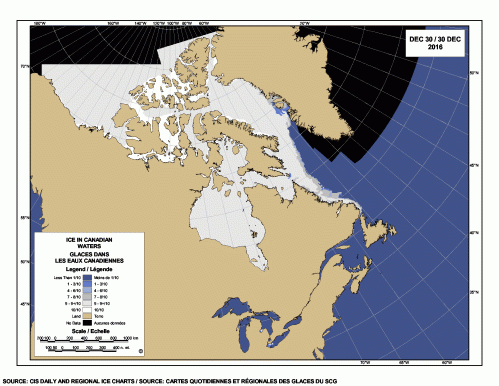
Back to polar bear habitat news, here is the sea ice map for 30 December 2016: Hudson Bay iced-over and lots of ice moving down southern Davis Strait:

Sea ice extent Canada 2016 Dec30_CIS.gif

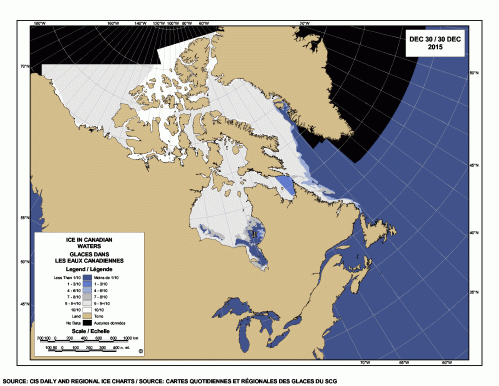
Compare to last year at this time, when polar bears did not die off in droves anywhere in Canada (or we would have heard about it) – remember that 2/3 of the word’s polar bears live in Canada:

canadian-arctic-dec-30-2015_cis

Polar Bear Facts & Myths now available and may arrive in time for Christmas

The first science book suitable for kids that tells the whole truth about polar bears and climate change is now for sale at Amazon.

fm_small

This beautiful, full color summary (44 pages, 8 x 10 inches) explains in simple terms why polar bears are thriving despite the recent loss of Arctic sea ice. It’s written in a question and answer format, in language that readers of all ages can understand (age 7 and up). The book takes a sensible, big-picture approach that many readers will appreciate and is based on the most up-to-date information available.

This is the perfect gift for some of the polar bear lovers on your gift list and if you act quickly (order here), your book may arrive before the 25th. At this time, only the paperback is available but some ebook versions should be out shortly. 

For purchasers for which a pre-Christmas delivery isn’t going to work (publication will be later in Europe; shipping is faster to eastern Canada and the US than to the west), I have provided a gift card you can download to print off and give in lieu of the physical book (kind of a placeholder until it arrives).

UPDATE: 18 Dec. 2016 Now listed at Amazon Canada and Amazon UK

Download gift card PDF HERE for Polar Bear Facts & Myths

Download gift card PDF HERE for Polar Bears: Outstanding Survivors of Climate Change  (coming soon, see below).

[Download Christmas gift cards, one per page, for both books here]

Check my book website for updates.

For adults & high school students (coming soon Now available)

os_small

This color, fully-referenced polar bear science book is aimed at adults and high school students. Polar Bears: Outstanding Survivors of Climate Change is fashioned after the popular lecture with the same title I have given since 2009, which has been enthusiastically received by audiences with diverse backgrounds.

My book website now has full details of these new non-fiction books (along with a revised author biography) and will be updated regularly regarding formats and venues as they become available. Details for EATEN on that site has moved to its own fiction page.

Coming soon: the polar bear science books you’ve been requesting

It’s just past the first anniversary of the publication of my science-based novel, EATEN, so satisfied readers may be pleased to learn that I have a pair of polar bear science books set to be released.

Finally – books for adults and children that present the facts about polar bears without spin and fear-mongering about model-predicted futures: reference books that include the most up-to-date information that show polar bears have the innate ability to adapt quickly to changes in sea ice.

Barring major revisions, the covers will look like this:

os-and-fm-cover-drafts-14-dec-2016

One is a fully-referenced book for adults and high school kids called Polar Bears: Outstanding Survivors of Climate Change.

The other is a fabulous companion or stand-alone summary volume (ages 7 and up), called Polar Bear Facts and Myths: A Science Summary for all Ages..

Both books are full-color and relatively short. With luck, they should be available next week, so stay tuned for details. Each will sell for well under US$20 (exact prices unknown).

Continue reading

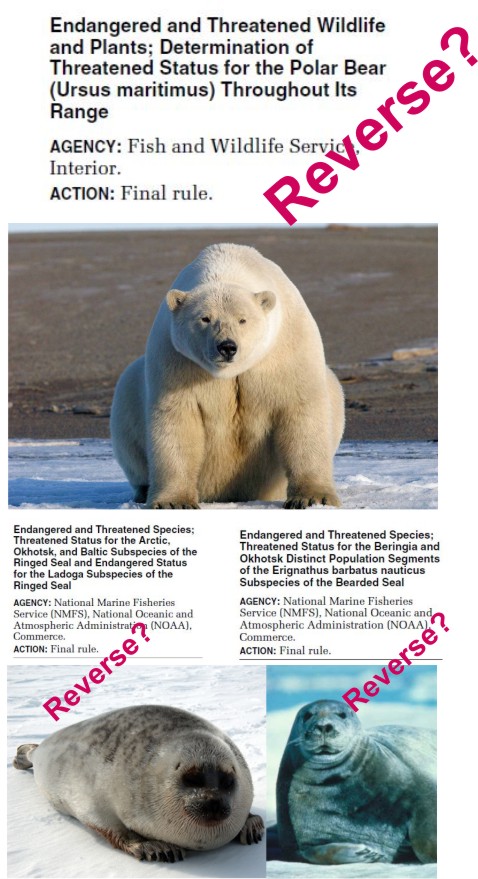
Will Trump reverse ESA decisions listing polar bears & Arctic seals as threatened?

The New York Times reported this morning: “Donald Trump Is Elected President in Stunning Repudiation of the Establishment.”

I’ve never been very interested in politics but this result has me wondering. Could the new president reverse the Endangered Species Act (ESA) decisions listing polar bears and other species as ‘threatened’ with extinction due to future threats from global warming?

future-of-arctic-species-status-under-trump-presidency-9-nov-2016
Continue reading

Kaktovik, AK has a polar bear problem but not because bears are desperate for food

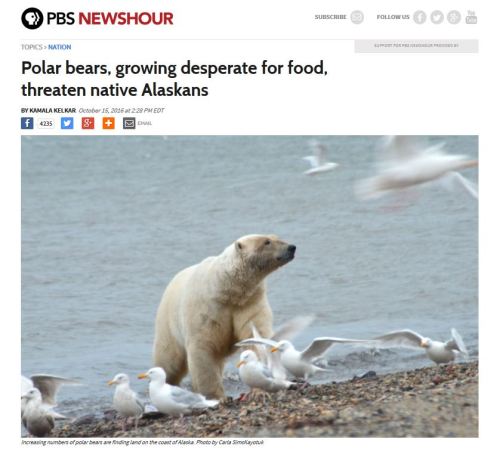
PBS has published a bizarre poor-starving-polar-bears story that uses pictures of fat, healthy bears to illustrate the supposed desperation of malnourished bears of the Southern Beaufort Sea that is blamed on declining sea ice.

pbs-newshour-headline_15-october-2016

The photo of the fat bear above, taken by the Kaktovik resident quoted in the 15 October 2016 PBS story, Polar bears, growing desperate for food, threaten native Alaskans, accompanies this statement:

“While images of malnourished polar bears have become a national symbol of the effects of climate change, they are a front line reality for Native Alaskans, who face them on their own property and do not want them to get hurt.”

Except this is not a story about starving bears but too many fat bears hanging around one particular community looking for other kinds of food – after being lured in by the enticing smell of rotting whale meat left onshore by the residents.

If photos of starving Beaufort bears existed that PBS could have used to illustrate this story, I’m certain those photos would have been used. But virtually all of the pictures I’ve seen of Kaktovik bears are the epitome of health – fat and sassy – but none that could be described as starving.

polar_bear-US FWS_young bear Alaska maybe Kaktovik no date.jpg

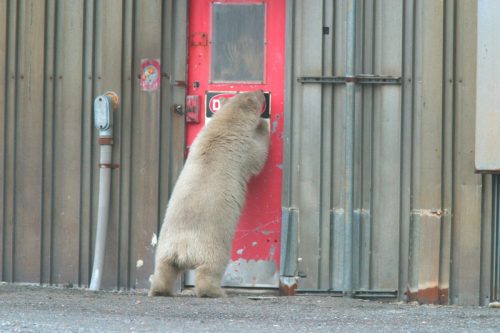
It turns out that while native Kaktovik residents have profited from tourists and journalist who have shown up in droves to view the large numbers of bears attracted to the bone piles left after butchering summer-caught bowhead whales, the bears have also put the community at risk of personal attack and loss of stored food. Who would have thought?

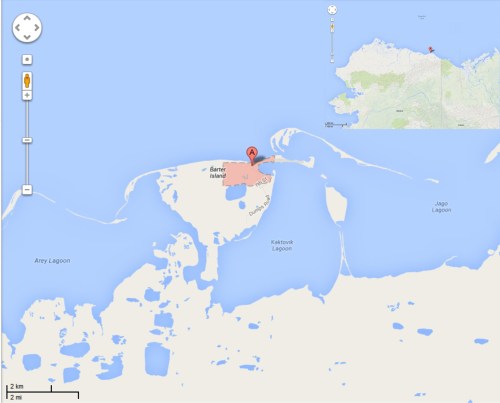
Residents of Kaktovik (see map below) have unwittingly enticed these polar bears ashore and now must deal with the consequences. As the residents of Churchill discovered decades ago, having polar bears close to your community comes with benefits, problems – and danger.

kaktovik-composite

There is no doubt that Kaktovik has a polar bear problem but it cannot plausibly be blamed on anthropogenic global warming, retreating sea ice, or starving bears – an irresistible attractant close to the community is the cause and solutions must be found to keep residents safe and their food secure. The PBS article discusses a few of those solutions. Some quotes and background below.

Continue reading

Climate change not forcing polar bears to hunt humans but lack of baby seals might

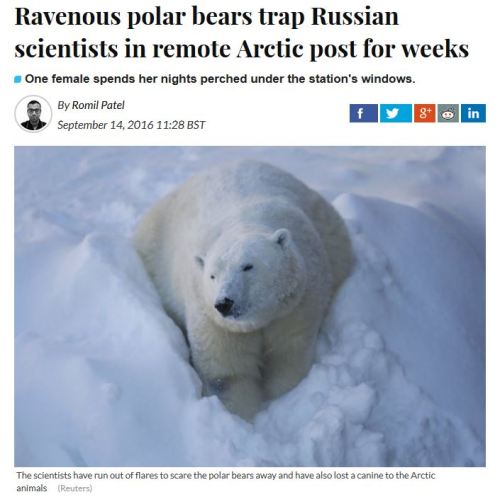
At least a dozen polar bears that besieged a remote Russian weather station on an island in the Kara Sea during the first two weeks of September prompted a few media pundits to suggest that loss of summer sea ice due to global warming may be forcing polar bears to hunt humans for food. Headlines like the one below, from the IB Times, fueled such notions:

russian-scientists-trapped-by-polar-bears-14-sept-2016_ib-times

Eye-catching though such headlines might be, this is more sensationalism than reality.  These particular bears have been onshore since early July this year (about the time some Western Hudson Bay bears come ashore) and sea ice conditions have been similar this time of year since 2007. In other words, despite what some writers are claiming, sea ice conditions this year are nothing new.

A few bears usually visit this station each summer when the sea ice leaves – but this year there were more than a dozen bears rather than a few. My opinion as a scientist is that more bearsmore bears that are increasingly unafraid of people – are likely the cause of the sudden increase in numbers of bears being a problem at this location. Note that of the 14 bears, four were cubs, which is a good crop of youngsters.

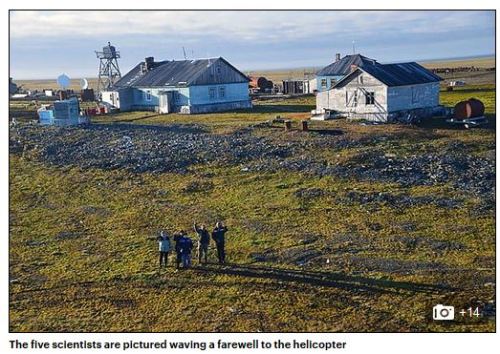
In addition, hunting polar bears is banned in Russia and this incident shows to what lengths people must go to avoid killing them – the population must be booming and may be higher yet than the last population count (in 2013) of about 3,200 bears. More bears means more competition for food, which means more assertive bears get the goods. None of these bears were described as thin or starving – see more photos, like the one below, from the Russian weather station (Daily Mail, 18 September 2016).

russian-weather-station-troynoy-island_mailonline-18-sept-2016

While polar bears are always on the look-out for food (and thus always a potential threat to humans), they are most apt to be truly dangerous in winter (when they are at their lowest body weight)  and in spring if seals are in short supply.

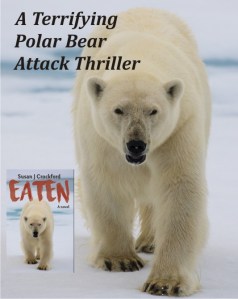
That’s why my new polar bear attack thriller EATEN is set in early spring, in a year when seals happen to be scarce. Imagine the damage those Russian polar bears could have done if they’d been truly desperate for food – a mere door or window would not have stopped them.

Imagine if dozens of truly ravenous polar bears stalk and ambush people across a great frozen landscape, taking them by complete surprise because no one considers a bear attack in spring to be a real possibility. What if dozens of people have been killed and eaten by hungry polar bears and there is no end in sight? That is the premise of EATEN – a science-based novel set in Newfoundland that will scare your pants off.

This is a great read for fall, when polar bear encounter stories abound. Hopefully the reports this year won’t include the kind of serious mauling that happened in 2003.

sept-reading-promo_eaten
Continue reading