Tag Archives: sea ice

Polar bears became global warming icons because biologists promoted a narrative of doom since 1999: it didn’t happen ‘by accident’

The polar bear became an ‘accidental icon’ of climate change“, claims a recent CBC Radio interview with ardent global warming promoter and polar bear catastrophist Andrew Derocher. Derocher’s insistence that the polar bear became a climate change icon “by accident” is historical revisionism. While such a statement may be attractive now that polar bears are not dying in droves as he and his colleagues predicted in 2007, that doesn’t make it true.
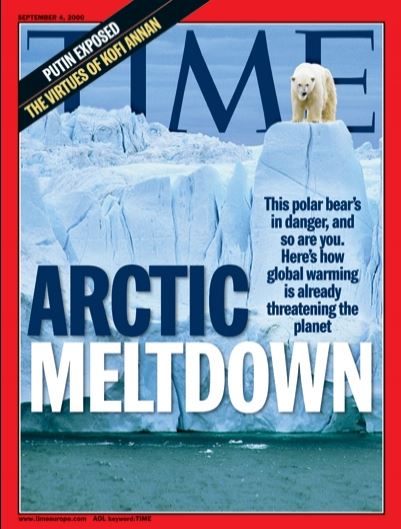
In the summer of 1999, polar bear biologist Ian Stirling helped produce a short doomsday film spectacular for the biggest news outlet in Canada at the time, in which he hyped his ‘climate warming’ fears about Hudson Bay polar bears, yet we are expected to believe Derocher that on September 4, 2000, Time Magazine put polar bears on its “Arctic Meltdown” cover because they ‘just happened’ to hear about an academic paper Stirling had written the year before.

Continue reading
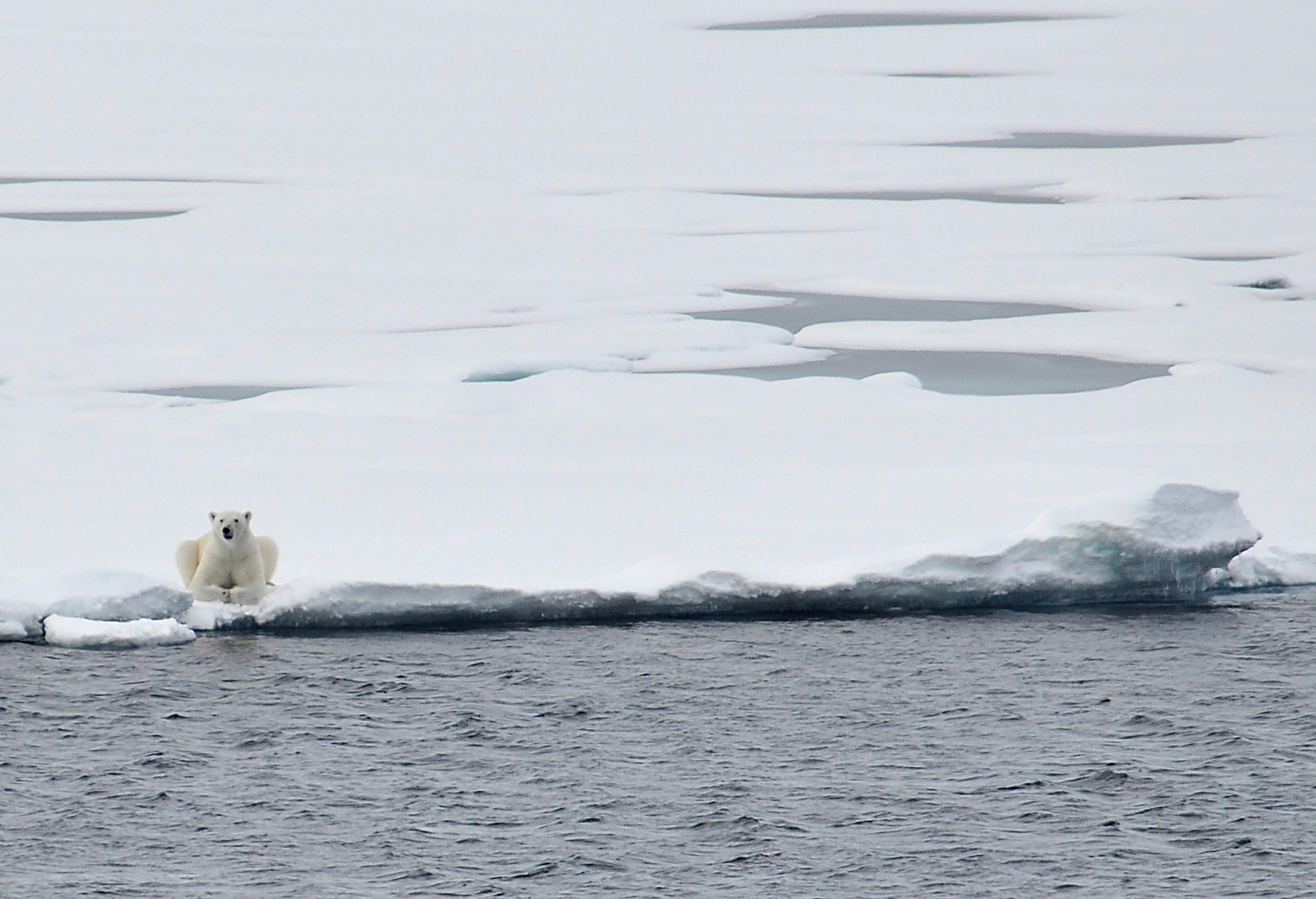
Last WH polar bears ashore even later than 2009 as Hudson Bay finally becomes ice-free

According to Andrew Derocher this morning, the last of his teams’ tagged polar bears have come ashore in Western Hudson Bay, in the last week of August. That makes two years out of the last three when the tagged WH bears came ashore as late, or later than, they had done in 2009 (a very cold year when they were onshore by about 20/21 August), something Derocher failed to mention during a CBC Radio interview also published today.

Don’t forget: this is the subpopulation that polar bear specialists use to model the future of all bears, everywhere in the Arctic but only use stale data from the 2000s because including more recent information would give a much more optimistic picture.

Meanwhile, no further reports from Churchill about problem bears: the last one issued was for the first week in August. Time will tell at freeze-up whether this will be yet another very good year for Western Hudson Bay bears.

Continue reading

Grizzly on the shore of W. Hudson Bay and two tagged polar bears still on sea ice at 17 August

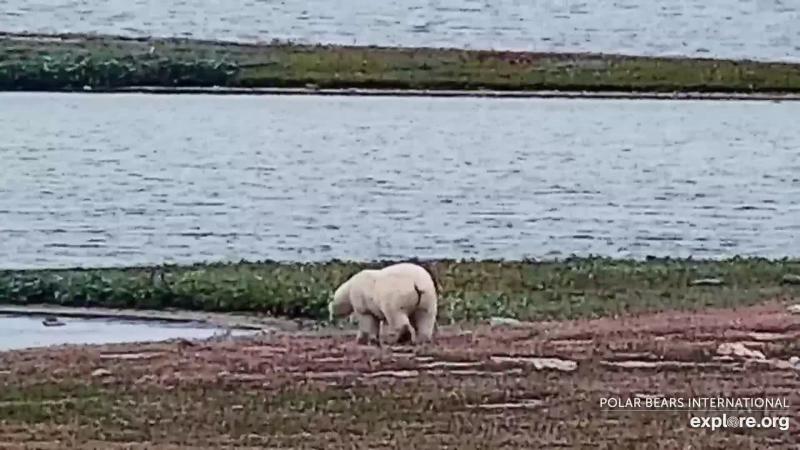
A tundra grizzly was again caught on the live cam set up for polar bears last week (15 August) but was too late for interspecies hankypanky, even as some polar bears lingered on invisible offshore sea ice.

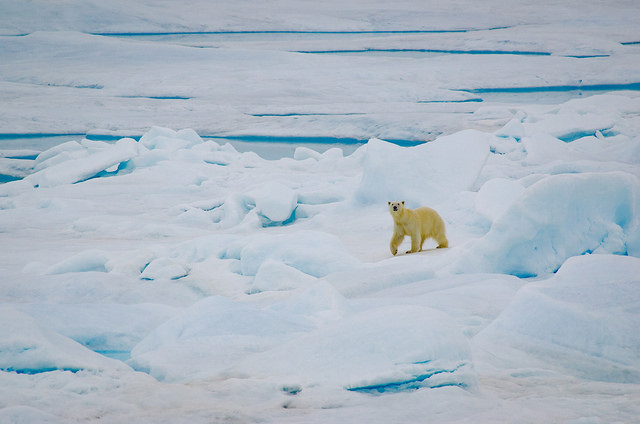
A polar bear rests on the ice Aug. 23, 2009, after following the Coast Guard Cutter Healy for nearly an hour in the Beaufort Sea.

Polar bear specialist Andrew Derocher reported that two of his 23 tagged polar bears were still on the sea ice, a phenomenon that’s been happening since at least 2015 at breakup. Instead of heading to shore when the sea ice concentration dwindles below 50% coverage, some bears are choosing to lounge around on decaying bits of ice, sometimes into late July or well into August, until they must finally swim ashore. There is no evidence that the bears continue to successfully hunt seals under these conditions but no evidence either that their choice to stay on the ice rather than move to land at this time of year has had any negative impact on their health or survival.

Continue reading

Churchill problem polar bear reports for early 2022 have no mention of fat bears or excess sea ice

The first few reports on problem polar bear activity in Churchill are in, posted early this week (two together), starting the last week of July (25-31).

Shore of Wapusk National Park just south of Churchill, 5 August 2022, the back end of a fat bear.

Funny how these reports in recent years (these included) don’t mention the condition of bears the way they used to as recently as 2017 (or the state of the sea ice). I guess it’s so they can’t be used as evidence against the prevailing mantra that western Hudson Bay polar bears that spend the summer onshore are starving because of the lack of ice due to human-caused global warming!

Continue reading

Hudson Bay sea ice update: many polar bears are still on low concentration ice offshore

Almost half of all tagged Western Hudson polar bears are still out on the ice of Hudson Bay, even though much of it is broken up in pieces: as of yesterday, 10 out of 22 bears were still offshore.

Mother and cub near Churchill last year, 30 October 2021.

This is shaping up to be a great year for Hudson Bay bears!

It also appears none of the bears onshore are causing problems in Churchill, as the Polar Bear Alert Program weekly reports for Churchill have not yet begun. Last year the first report was issued for the first week of July, while in 2020 the first report didn’t come out until the end of August.

Continue reading

Most Hudson Bay polar bears are still offshore, excellent ice conditions for late July

With only a few days until the end of July, most Western Hudson Bay polar bears are still on a thick band of thick first year ice that remains close to shore. The few bears that have come off the ice appear to be nice and fat, indicating they had good spring feeding conditions.

Untagged bear with cub, near Churchill River, 18 July 2022

We’ll have to wait a few more weeks to see if this year shapes up as it did in 2020, when the last of bears didn’t come ashore until the third week of August, despite there being very little visible ice. Last year, most of the bears were ashore by the end of July.

Continue reading

Expert admits polar bears in Svalbard are thriving despite the greatest loss of sea ice in the Arctic

In an article published last week, polar bear specialist Jon Aars is quoted as saying that Svalbard bears are “unexpectedly” thriving. However, he fails short of admitting that the bears don’t really need summer ice as long as they are well-fed in spring, which they have been for the last two decadesthis year included.

Aars said the sea ice in this area is declining more than twice as fast as anywhere else in the Arctic. But the polar bears here — unexpectedly — are thriving. [E. Haavik, Svalbard’s polar bears persist as sea ice melts — but not forever, 21 July 2022; my bold]

Spring 2018, Barents Sea

The suggestion by Aars that the Svalbard archipelago could one day be ice-free for the entire year is speculative hyperbole but even if that were to happen, it would only mean the permanent movement of 300 or so Svalbard bears to Franz Josef Land (still within the Barents Sea) where ice conditions are less volatile.

Continue reading

Thick sea ice in the Western Arctic is not good habitat for polar bears, seals, or walrus

A few weeks into the Arctic summer (July-September), sea ice in the Beaufort and Chukchi Seas is dominated by thick, multi-year ice.

At this time of year, multi-year ice is an important refuge habitat for many polar bears when seasonal ice melts out. However, it provides few opportunities for hunting seals. In fact, it is nearly as devoid of food as is the shore during the melt season. Consequently, most polar bears eat little over the summer whether they are on land or on sea ice due to the scarcity of seals.

Continue reading

New paper polar bears attracted to garbage dumps blames lack of sea ice without any evidence

A paper published yesterday discusses polar bears that get into human garbage and cause other problems due to community attractants. Most of the incidents recounted and the issues they’ve raised have been reported by the media and are ones I’ve discussed here over the last few years in detail, including here and here, as well as in my recent book (Crockford 2019).

Churchill dump 2003. Dan Guravich photo, Polar Bears International handout.

All you need to know about the motivation behind the paper comes from the authors’ acknowledgement:

This paper developed from a meeting in Churchill, Manitoba, in autumn 2019 where the issue of dump use by polar bears arose. We thank Dan Cox [a photographer for PBI] for suggesting exploration of this issue and Polar Bears International for arranging this meeting.

So, six months or so after my book came out in March 2019, in which these issues were discussed in detail, polar bear experts decided it was time to write a paper on the topic. The open access paper, by Tom Smith and colleagues (Smith et al. 2022), is accompanied by an online essay published the same day by the lead author and picked up at least one cheer-leading media outlet via Reuters. See what you think.

Continue reading

Some of the first polar bears onshore in Western Hudson Bay are in excellent condition

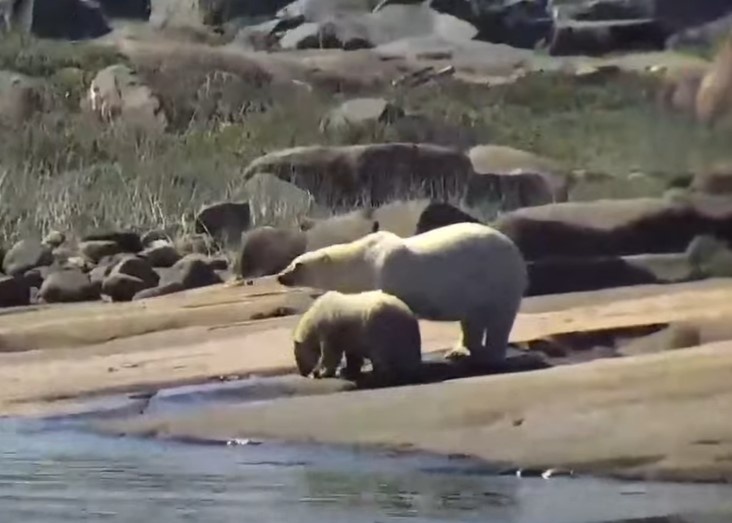
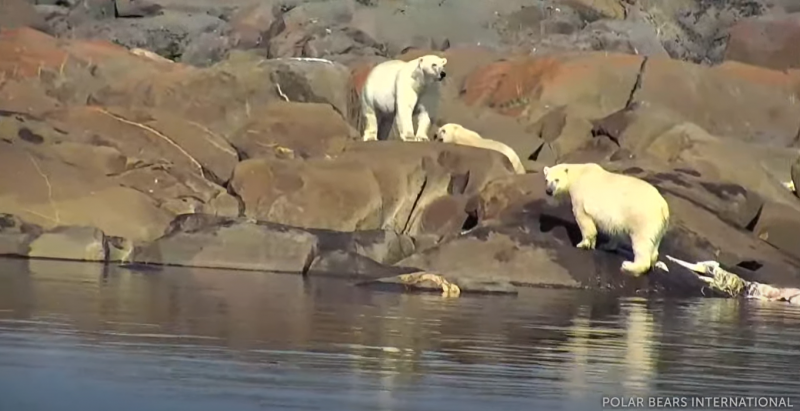
From the live cams installed on beluga tour boats running near the Churchill River, we have some good photos of a few fat polar bears onshore in Western Hudson Bay.

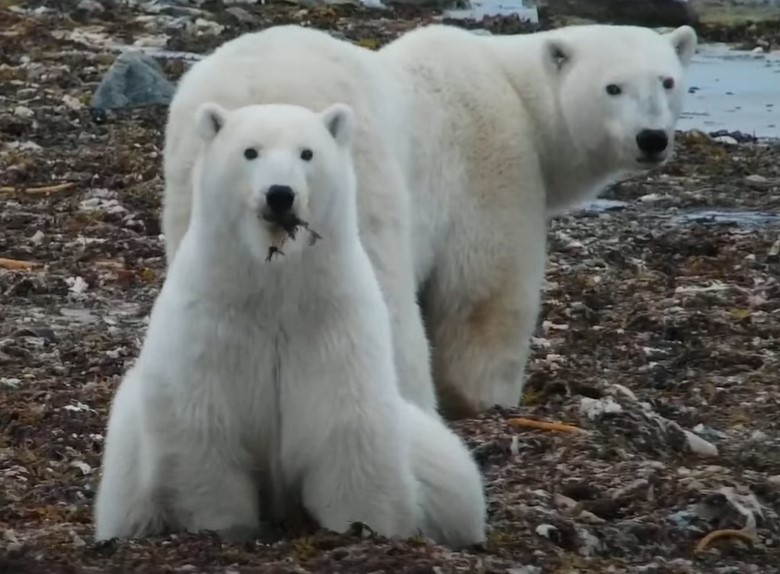
These bears were attracted to the remnants of a beluga carcass with nothing much left on it (lower right in the photo) and stayed around for at least a few days. The female with her cub-of-the-year was remarkably tolerant of an adult male nearby.

Continue reading