Category Archives: Advocacy

Two technical critiques of the Harvey et al. polar bear Bioscience attack paper

Not much time for blogging, but two technical critiques  of the Harvey et al. paper have recently been posted, which you might like to read at your leisure. I will update this post when I can if more critiques appear plus I’ve provided a list of previous posts (my and others) on this issue.

Polar Bears, Inadequate data and Statistical Lipstick (18 Decemeber 2018, RomanM writing at ClimateAudit)
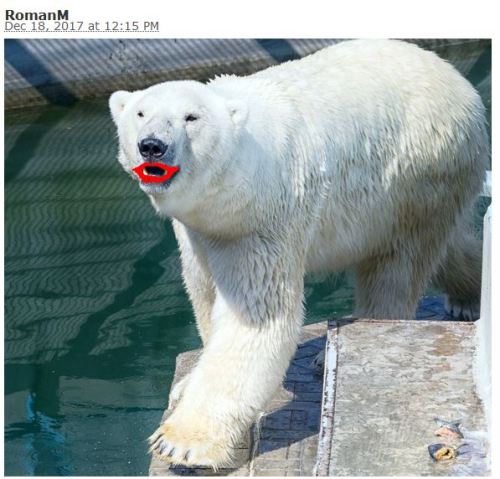
McIntyre guest blog on Harvey paper photo led_RomanM 18 Dec 2017

Polar bear attack paper invalidated by non-independent analysis” (Cross posted 14 December 2017 at ClimateScepticism from the blog of Shub Nuggarath, 12 December 2017).

UPDATE 19 December 2017: Richard Tol has posted a draft of his critique, which was itself updated 20 December “Lipstick on a bear” in which he concludes:

“In sum, Harvey et al. (2017) play a statistical game of smoke and mirrors. They validate their data, collected by an unclear process, by comparing it to data of unknown provenance. They artificially inflate the dimensionality of their data only to reduce that dimensionality using a principal component analysis. They pretend their results are two dimensional where there is only one dimension. They suggest that there are many nuanced positions where there are only a few stark ones – at least, in their data. On a topic as complex as this, there are of course many nuanced positions; the jitter applied conceals the poor quality of Harvey’s data. They show that these is disagreement on the vulnerability of polar bears to climate change, but offer no new evidence who is right or wrong – apart from a fallacious argument from authority, with a “majority view” taken from an unrepresentative sample. Once the substandard statistical application to poor data is removed, what remains is a not-so-veiled attempt at a colleague’s reputation.”

UPDATED 20 December 2017: Lead author of the Bioscience attack paper Jeff Harvey talked to an Amsterdam newspaper about the backlash to the paper, original Dutch and English translation here.
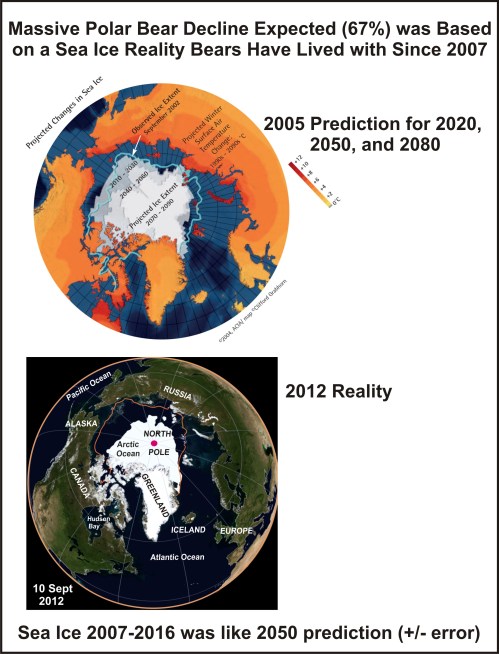
Fig 3 Sea ice prediction vs reality 2012

Predicted sea ice changes (based on 2004 data) at 2020, 2050, and 2080 that were used in 2007 to predict a 66% decline in global polar bear numbers vs. an example of the sea ice extent reality experienced since 2007 (shown is 2012). See Crockford 2017 for details.

Read a short summary of the paper that Harvey et al. don’t want you to know about here:

Crockford, S.J. and Geist, V. 2018. Conservation Fiasco. Range Magazine, Winter 2017/2018, pg. 26-27. Pdf here.

The paper they don’t want you to read is here:

Crockford, S.J. 2017. Testing the hypothesis that routine sea ice coverage of 3-5 mkm2 results in a greater than 30% decline in population size of polar bears (Ursus maritimus). PeerJ Preprints 2 March 2017. Doi: 10.7287/peerj.preprints.2737v3 Open access. https://doi.org/10.7287/peerj.preprints.2737v3

The paper being criticized (Harvey et al. 2017, in press: “Internet blogs, polar bears, and climate-change denial by proxy”, Bioscience, open access) is available here.  There is a supplementary data file available here and the data for the principal component analysis is available here  and (h/t to R. Tol), the R code is available here

More on this after Christmas but for now a list of previous blog posts of mine and others is provided below. Continue reading
Bioscience editor tells journalist he won’t retract Harvey paper

I shouldn’t be surprised that a journal editor who would publish — and then staunchly defend — a paper that deliberately trashes the reputation of a respected scientist would tell the media before anyone else of his decision regarding a retraction request.

Churchill_Polar_Bear_2004-11-15 Wikipedia

From a story at this morning’s Climatewire (From threats to tears — polar bears polarize both sides” 15 December 2017), my bold:

Continue reading

Bioscience paper and starving polar bear follow-up

Between the two stories (the attack by my colleagues and the starving polar bear hype), views at my blog have gone through the roof and one Arctic biologist speaks out on what SeaLegacy folks should have done when they saw a starving polar bear on Baffin Island this summer.

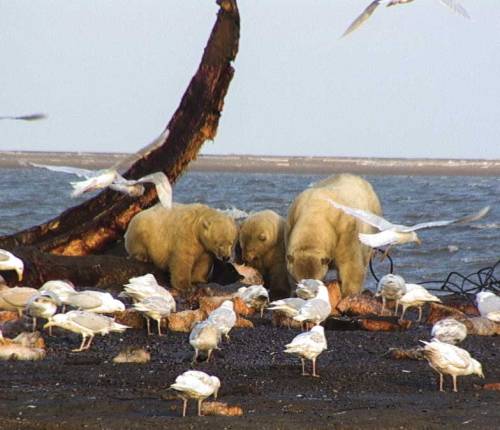
polar_bear_sow_two_cubs_feeding_with_gulls_Kaktovik_USGS

For the two weeks prior to the release of the Harvey paper (rounding to the nearest 100) the number of page views was 11,400 while for the two weeks since the Harvey et al. paper was released views were at 72,300 (with 14,900 views yesterday, 23,300 views the day before, and 12,500 the day before that). Prior to the Harvey et al. incident, my highest-ever one day blog view tally was 10,400 (a walrus haulout post!).

Several blogs were discussing the Harvey et al. paper and its implications from the first day (29 November) and a few have contacted me to say their blog views are way up as well. Terry Corcoran at the National Post wrote a supportive column, here.

So much for shutting down non-conforming opinion and criticism, especially mine. Now folks know exactly where to go for an unbiased take on polar bear issues.

One reader contacted me via my ‘contact me’ page and insisted he wanted to make a cash donation to support my blogging efforts:

“First, I apologize for adding to your (probably) overflowing inbox, but wanted to let you know that I have followed recent developments and applaud your response to these ignorant accusers.

I would be happy to assist you with monetary support in order to help defray any expenses you have incurred recently, or anticipate soon. If there is a method to do that, please let me know.

The stress and time away from your regular work is precisely what prompted me to contact you. To me this attack on your work is similar to a person that has had a fire in their home. Everything is put on hold while they tend to all of the mitigation, insurance response, etc. It takes time, energy and money.”

I wish I could have said “it’s not necessary” but he’s absolutely right. I’ve had to take time off work to deal with the issue, and it’s not over yet. Christmas is fast approaching. I don’t have a donate button here at PolarBearScience but we figured out a way to make it happen. His generous contribution is much appreciated. I’ve had dozens of emails of support, from known colleagues to people I’ve never heard from before.

Comments on the starving polar bear below.

UPDATE 11 December 2017: shortly after posting, I came across James Delingpole’s just-published column on the starving polar bear issue, read it here.

UPDATE 11 December 2017: I forgot to say that I have yet to hear back from the editors of Bioscience regarding my retraction request, except they did respond to my second email on Friday asking for confirmation that they received the letter sent three days earlier. I shouldn’t have had to prompt them: confirming receipt of such document is common courtesy and good business practice.  (h/t Anthony Watts)

UPDATE 11 December 2017 7:00 PM PST: Finally, after the damage has been done, polar bear specialists have spoken out (sort of) on the SeaLegacy “starving polar bear as victim of climate change story.” An article in the National Post was published in the early evening and features an interview with Andrew Derocher, with comments from Ian Stirling and Inuit representative Terry Audla (“What everybody got wrong about that video of a starving polar bear“). CBC covered a similar change of tune here. Too little, too late, I say. And over at the Globe and Mail, Margaret Wente has a hard-hitting piece today on why this kind of exaggeration is bad for everyone.
Continue reading

One starving bear is not evidence of climate change, despite gruesome photos

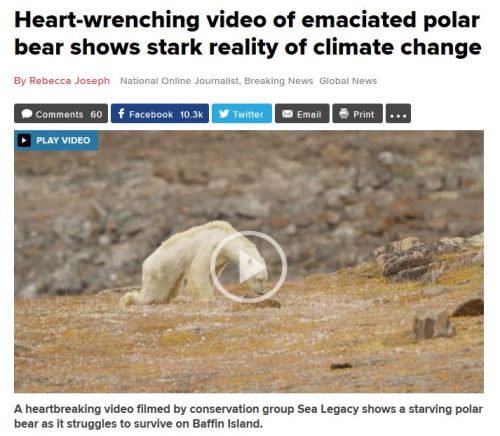
We finally have this year’s example of the new fad of claiming every polar bear that died of starvation (or on its way to starving to death) — and caught on film — is a victim of climate change: a young bear on Somerset Island near Baffin Island, Nunavut filmed in August during its last agonizing hours by members of an activist conservation organization called SeaLegacy.

‘I filmed with tears rolling down my cheeks’: Heart-breaking footage shows a starving polar bear on its deathbed struggling to walk on iceless land.” [actual title of article in the DailyMail Online, 8 December 2017]. CBC Radio (8 December 2017) jumped on it as well, as have others. National Geographic ran a similar story, like others, that compliantly emphasized the future man-made global warming threat the photographers were touting.

Baffin Island starving pb headline_GlobalNews_8 Dec 2017

This is no different from Ian Stirling’s “bear that died of climate change” back in 2013, or several others since then: here, here, and here (one of these incidents also involved the same photographer as this incident, Paul Nicklen). I’ve called this practice of filming dead or dying bears and splashing the photos across the pages of newspapers and the internet “tragedy porn” — a kind of voyeurism that leaves people open to emotional manipulation. The internet laps it up.

UPDATE 9 December 2017: a quote from another source shows photographer Paul Nicklen’s “expertise” in polar bear biology, see below.

UPDATE 11 December 2017: an Arctic seal specialist, Jeff Higdon, has weighed in via twitter about the possible cause of death of this bear and also what the SeaLegacy team should have done when they found the bear in this condition. See below

UPDATE 12 December 2017: See my update to this post here.

Continue reading

Retraction request to Bioscience: FOIA emails document another harsh criticism of Amstrup’s 2007 polar bear model

Today I sent a letter to the editors of the journal Bioscience requesting retraction of the shoddy and malicious paper by Harvey et al. (Internet blogs, polar bears, and climate-change denial by proxy) published online last week.

The letter reveals information about the workings of the polar bear expert inner circle not known before now, so grab your popcorn.

Harvey et al. 2018 in press climate denial by proxy using polar bears_Title

I have copied the letter below, which contains emails obtained via FOIA requests to the US Geological Survey and the US Fish and Wildlife Service by the Energy and Environment Legal Institute, E&E Legal, and the Free Market Environmental Law Clinic (USFWS request; USGS request) and sent to me by lawyer Chris Horner in 2014, unsolicited. I reveal some of them now, with his permission (most of the emails are boring, involving mostly technical topics not relevant to anything, as might be expected).

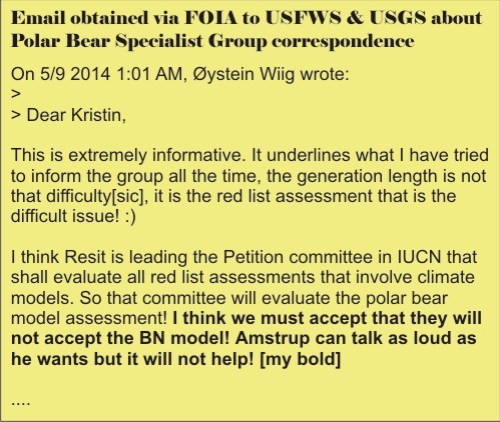
The emails in question, sent in 2014, pertain to preparations by three members of the Polar Bear Specialist Group for the IUCN Red List assessment due in 2015 (Kristin Laidre, University of Washington, Eric Regehr, US Fish and Wildlife Service, and Østein Wiig, Museum of Natural History, University of Olso), and Steven Amstrup (formerly head of the polar bear research at the US Geological Survey, now “head scientist” for conservation organization Polar Bears International.

They include frank discussions about a harsh critique of Amstrup et al.’s 2007 report and 2008 paper used to support listing polar bears as ‘threatened’ on the US Endangered Species List. The criticisms come from modeling expert and chair of the IUCN Red List Standards and Petitions Subcommittee (which develops guidelines for threatened and endangered species assessments, and evaluates petitions against the red-listing of these species), H. Resit Akçakaya. The IUCN is the world’s leading conservation organization, of which the PBSG is a part.

These records are a damning indictment that the “best available science” was not used to assess conservation status of polar bears under the ESA in 2008 and 2014 and show that I am not the only scientist who thinks Amstrup’s model is fatally flawed. The letter is copied in full below, the emails are copied at the end. A file of all of the entire pertinent email thread is available as a pdf below. Here’s a sample:

Wiig to Laidre_9 May 2014 follow up to Lunches with Resit_first part_redacted highlighted

Continue reading

Bioscience article is academic rape: an assertion of power and intimidation

Characterizing a professional, respected scientist as an unqualified vengeful opinion writer is the same kind of power attack as rape. It’s meant to humiliate and intimidate.

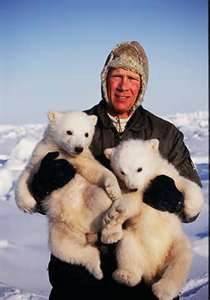
Amstup

I said this as part of a response to a comment at WUWT late yesterday (copied in full below). The picture above shows Steven Amstrup holding polar bear cubs against their will — not for any scientific purpose, just for a photo that shows he can.

Also yesterday, Tom Fuller at ClimateScepticism wrote a hard-hitting critique of the Bioscience article that similarly noted the sexist nature of this harassment and the fact that this is the way Michael Mann and his colleagues behave toward female scientists who cross them or their supporters. He concludes:

“The purpose of these papers is not to communicate.

It is to excommunicate.”

As I said when this paper first came out, this response is all about my reasoned and fully referenced criticisms of Steve Amstrup’s work in particular (although I have taken issue with some of Stirling’s recent work as well).

The evidence that Steve Amstrup is willing to lie in order to publicly degrade me and my work in retribution for not taking everything he says as the gospel truth comes from an article at Motherboard yesterday. In it, Amstrup was quoted as saying:

 “You don’t have to read far in her material to see that it is full of unsubstantiated statements and personal attacks on scientists, using names like eco-terrorists, fraudsters, green terrorists and scammers,” Amstrup said.

I wrote Motherboard and asked for clarification that this was indeed what Amstrup said because I know it to be a lie. Check for yourself using the search function on my blog, it’s easy to do. I have never used any of those terms to refer to anyone, let alone a fellow scientist.

Late in the day, I got this response from the writer of the piece:

“Thank you for your note. A clarification has been added to the article. (my emphasis)

“You don’t have to read far in her material to see that it is full of unsubstantiated statements and personal attacks on scientists, using names like eco-terrorists, fraudsters, green terrorists and scammers,” Amstrup said. In a follow-up email on Friday, Amstrup clarified that these statements to Motherboard were meant to reflect the climate denier community as a whole, rather than Crockford in particular.

Except Amstrup specificially referred to my work. I insisted further clarification was necessary but rather than noting that I had, in fact, never used those terms on my blog, the author added this statement:

“In an email to Motherboard, Crockford denied using those terms on her blog.”

So, the author of the Motherboard piece was willing to take Amstrup’s word for an egregious accusation and when Amstrup was caught in a lie, was unwilling to make that clear. And the media wonder why they have lost the public’s trust.

However, this is all a day late and a dollar short. The cat’s out of the bag regarding Amstrup’s failed predictions. My critique (Crockford 2017) is a thorough scientific exposé of his unsuccessful model (which used assumptions based on Amstrup’s expert opinion) and people in power are taking it seriously. The Bioscience paper says more about its authors than it says about me.

References

Crockford, S.J. 2017. Testing the hypothesis that routine sea ice coverage of 3-5 mkm2 results in a greater than 30% decline in population size of polar bears (Ursus maritimus). PeerJ Preprints 2 March 2017. Doi: 10.7287/peerj.preprints.2737v3 Open access. https://doi.org/10.7287/peerj.preprints.2737v3

Continue reading

Polar bears refused to die as predicted and this is how the propheseers respond

The polar bear experts who predicted tens of thousands of polar bears would be dead by now (given the ice conditions since 2007) have found my well-documented criticisms of their failed prophesies have caused them to lose face and credibility with the public.

Fig 3 Sea ice prediction vs reality 2012

Predicted sea ice changes (based on 2004 data) at 2020, 2050, and 2080 that were used in 2007 to predict a 67% decline in global polar bear numbers vs. an example of the sea ice extent reality experienced since 2007 (shown is 2012). See Crockford 2017 for details.

Although the gullible media still pretends to believe the doomsday stories offered by these researchers, the polar bear has fallen as a useful icon for those trying to sell a looming global warming catastrophe to the public.

Here’s what happened: I published my professional criticisms on the failed predictions of the polar bear conservation community in a professional online scientific preprint journal to which any colleague can make a comment, write a review, or ask a question (Crockford 2017). Since its publication in February 2017, not one of the people whose work is referred to in my paper bothered to counter my arguments or write a review.

They ignored me, perhaps hoping the veracity of my arguments would not have to be addressed. But it has not turned out that way. Now, too late, they have chosen a personal attack in the journal BioScience (Harvey et al. 2018 in press).

UPDATE 30 November 2017: See a detailed criticism of this nasty paper here and a shorter one below.

Continue reading

W Hudson Bay freeze-up one of earliest since 1979, not “closer to average”

Tundra Buggy Cam_10 Nov 2017_bear headed offshore pmWestern Hudson Bay polar bears have been leaving shore for the rapidly thickening sea ice since at least 8 November (bear above was heading out 10 Nov.). However, Polar Bears International chose not to mention the unusually early freeze-up until the week-long (5-11 November) doomsday bombardment they call “Polar Bear Week” was almost over.
It’s worse than that: two days earlier, PBI’s activist spokesperson Steven Amstrup apparently told the Sierra Club (“People Show Up for Polar Bear Week, But the Ice Hasn’t Yet”; 8 November 2017) that “the bears are still waiting on shore for that ice to freeze” even though ice development had been well on its way for days at that point. As if freeze-up on 10 November came as a big surprise to him, with no warning whatsoever.

Apparently, they didn’t want their naive and gullible supporters to know at the beginning of Polar Bear Week that the sea ice loss of which PBI spokespeople rant about constantly (Save Our Sea Ice) was a total non-issue this year: breakup was not earlier than usual and new ice began developing off Churchill at about the same time it did in the 1980s (last week of October).

As I discussed last year regarding newly-published studies (Obbard et al. 2015, 2016) on the status of Southern Hudson Bay (SHB) bears:

“…SHB polar bears left the ice (or returned to it) when the average ice cover near the coast was about 5%. This finding is yet more evidence that the meteorological definition of “breakup” (date of 50% ice cover) used by many researchers (see discussion here) is not appropriate for describing the seasonal movements of polar bears on and off shore.”

That post (with its list of references) is worth another look for its discussion of the following points: the definition of freeze-up; the relationship of official freeze-up and breakup dates to the dates that bears depart; the overall health and survival of Western and Southern Hudson Bay polar bears.

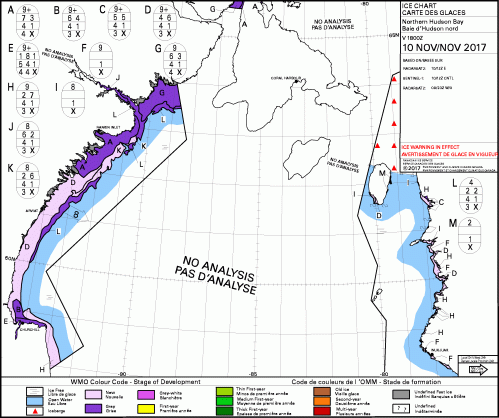
Hudson Bay North daily ice stage of development 2017_Nov 10

Below I dissect the misinformation that PBI calls “science communication” in their attempt to minimize the damage caused by this early freeze-up to their message of looming catastrophe for polar bears.

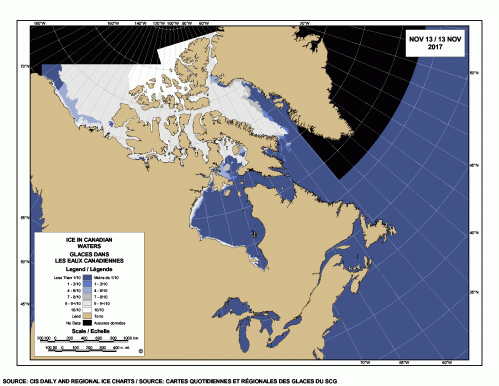
Bottom line: Not only was freeze-up early this year, 2017 will go down as one of the earliest WHB freeze-up years since 1979 and for Southern Hudson Bay bears as well, since as of 13 November there is concentrated ice all the way into James Bay.

Sea ice Canada 2017 Nov 13

UPDATE 14 November 2017: CBC Radio broadcasted an interview yesterday with a recent visitor to Churchill who was remarkably candid about what he saw regarding polar bears, sea ice, and what he heard from locals about freeze-up (“the earliest since 1991”). It corroborates what I’ve reported here. Worth a listen (about 8 minutes):

“Brian Keating: Polar bears in Churchill, Manitoba” (The Homestretch, November 13, 2017, Season 2017, Episode 300312418)

The closest Doug Dirks has come to seeing a live polar bear was at the Calgary Zoo many moons ago. But naturalist Brian Keating has just returned from another trip to Churchill, Manitoba. He joined Doug Dirks with the details of that frosty adventure.

http://www.cbc.ca/player/play/1095183939998

Continue reading

Experts talk of their bleak future, W Hudson Bay polar bears get earliest freezeup in decades

It seems that Churchill residents and visitors woke up this morning to find most local polar bears had left to go hunting — on the sea ice that supposedly doesn’t exist. Right in the middle of the Polar Bear Week campaign devised by Polar Bears International to drum up donation dollars and public sympathy for polar bear conservation!

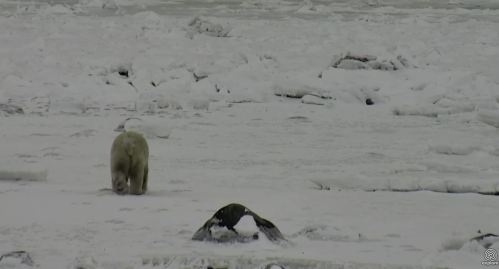
Polar bear on the sea ice_Churchill_8 Nov 2017_Explore dot org cam my photo 2Frigid temperatures and north winds last night helped the process along, but this early freeze-up has been in the works for almost a week. From what I can ascertain, it appeared the only bears around onshore today were a mother with her young cub moving out towards the ice (females with cubs are usually the last to move offshore, probably to reduce the risk of encounters with adult males who might kill the cubs).

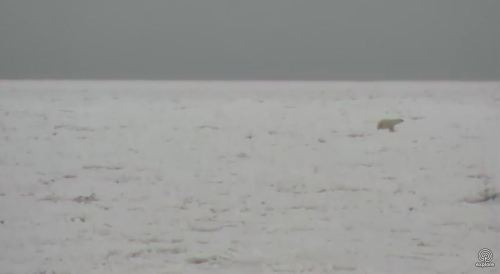
Tundra Buggy cams at Explore.org have been showing markedly fewer bears today and those that have been seen were on the ice (see above and below) or heading out to it.

The chart below is for yesterday (7 November), before the cold and north winds hit the region. It shows the concentration of ice that’s >15 cm thick.

Hudson Bay North 2017 concentration Nov 7

The chart for 8 November is below, after the storm.

Hudson Bay North daily ice concentration 2017_Nov 8

This is ice thick and extensive enough for polar bears to go hunting. Some bears almost certainly left shore yesterday, with the rest following quickly on their heals today. There are sure to be some stragglers left ashore that will leave over the next few days but the fact remains: there is sea ice to be had for those polar bear willing to start hunting.

Watch polar bear on the WHB sea ice below (screen caps below – and one above – were taken the afternoon of 8 November, from the Tundra Buggy Cam live feed near Churchill).

Polar bear on the sea ice_Churchill_8 Nov 2017_Explore dot org cam my photo 3

Keep in mind that in the 1980s, bears left for the ice on 8 November, on average. That means we’re back to a 1980s freeze-up scenario, at least for this year.

Funny how no one bothered to mention the potential for an early freeze-up to the media last week, when scientist were so eager to talk about the imminent demise of WHB bears. And funny that Polar Bears International hasn’t tweeted a word today about the famous Churchill bears having enough sea ice to go hunting, smack in the middle of Polar Bear Week.

Yes, the “Save Our Sea Ice” PBI rallying cry sounds a bit hollow with sea ice as far as the eye can see off Churchill today. But will anyone in the mainstream media point out the irony?

See charts below for years back to 2004, on this date (2005 missing for some reason), to compare to the above 8 November image (2004 is as far back as the archive goes).

Continue reading

Scientists and media continue to spread misinformation about polar bears & walrus

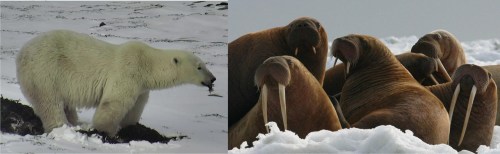
“Lies” might be a better word to characterize the misinformation that scientists and the media have been busy spreading to the public over the last few weeks. The information is either known to be false (by scientists whose job it is to relay facts honestly) or is easily shown to be false (by journalists whose job it is to fact-check their stories).

Churchill polar bear and walrus 2017

Continue reading