Category Archives: Advocacy

Allow children to learn about the Arctic without terrifying them with fantasies of climate catastrophe

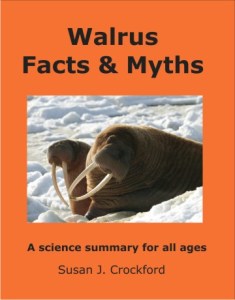
This is a reminder that I have written three Arctic animal picture books, a polar bear ecology reference book, an Arctic ecology teaching guide (free) & a polar bear attack thriller suitable for teens, all of which let kids be kids.
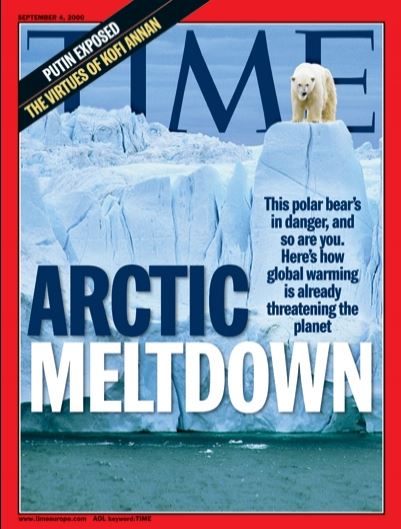
In contrast to a book reviewer at the New York Times (30 October 2020), see image above:

Two new picture books and a novel for young readers place children at the center of climate calamity. Fittingly, they are stories of homes under threat; home, after all, is the thing climate change stalks, be it a house, a community or a livable planet. Each book offers its own lessons on how to cope with life under the monster we’ve created. The novel even shows how kids can help slay it.

No child needs this. Children need to be allowed to learn without being used as pawns in an adult political battle. Activist authors suggesting that climate change is a predator waiting to ‘stalk’ children’s homes and communities through floods and wildfires is reprehensible, not only because it isn’t true. Kids don’t need a ‘mini-primer on climate change’. Adults should fight their own battles and leave the kids alone. List of my books and links below and in the sidebar.

Continue reading
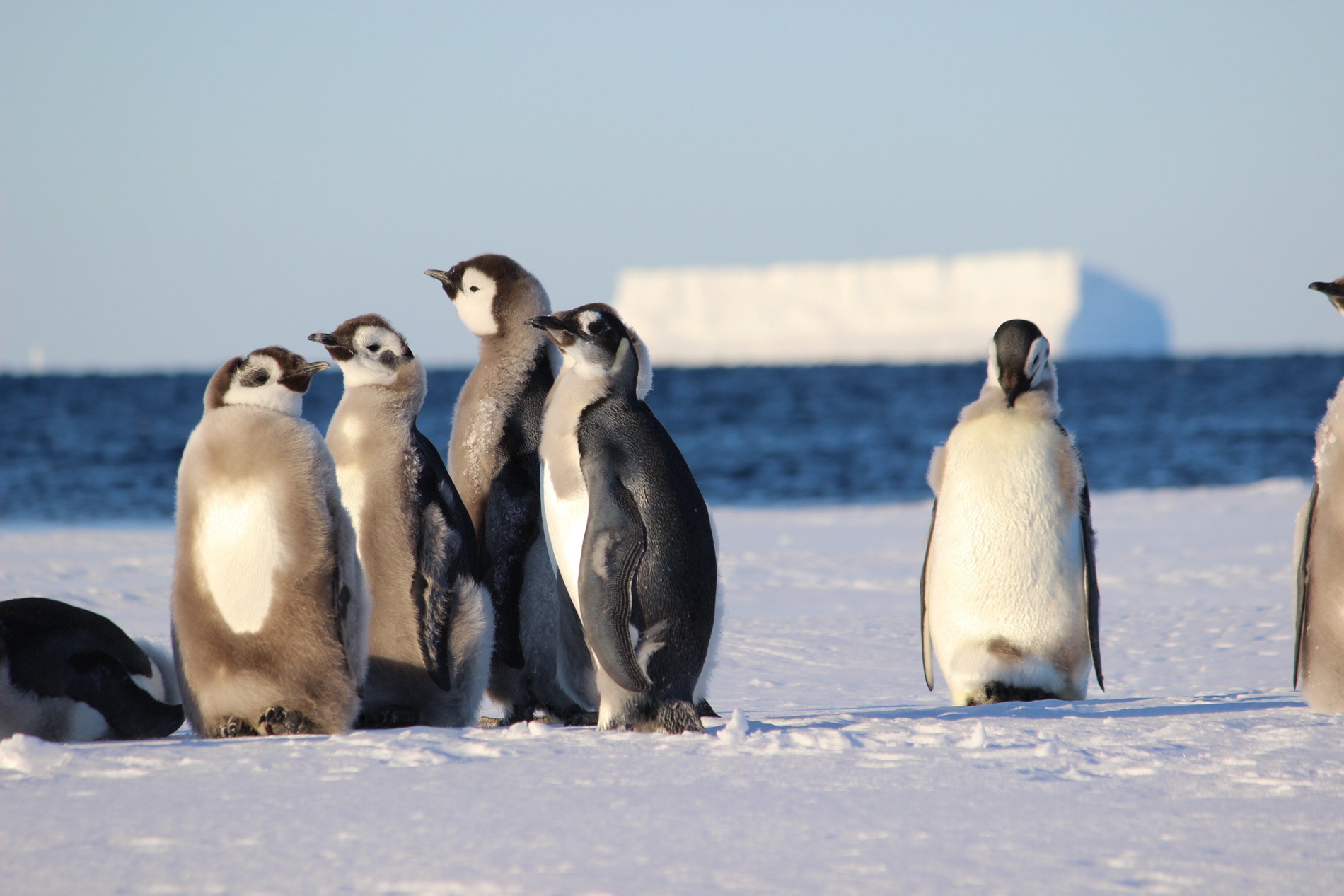
Emperor penguins join polar bears on ESA list of threatened species based on flawed climate models

Yesterday, the US Fish and Wildlife Service announced it will classify the Emperor penguin as ‘threatened’ with extinction under its Endangered Species Act (ESA) based on what are known to be flawed climate models, to take effect next month. This is despite the fact that Emperor penguin numbers increased between 2009 and 2019, an IUCN Red List reassessment in 2019 did not reverse its 2018 decision (still listing it as ‘near-threatened’, not ‘vulnerable’), and member-nations refused earlier this year to enact an Antarctic Treaty to protect the birds. Conservation activists of all stripes are filled with glee at this bettter-than-nothing decision for a species nowhere near extinction because it means more money for them.

Bottom line: An article by the US National Public Radio (25 October 2022) admits the real reason for this listing:

Though emperor penguins are not found naturally in the U.S., the endangered species protections will help increase funding for conservation efforts. U.S. agencies will also now be required to evaluate how fisheries and greenhouse gas-emitting projects will affect the population…

Continue reading

Polar bear no closer to extinction than it was 18 years ago as Arctic sea ice resists ‘tipping point’

All predictions of disaster aside, in fact the polar bear is no closer to extinction than it was in 2005 as Arctic sea ice again steadfastly resists slipping past a catastrophic ‘tipping point’ — or the ‘death spiral’, as some chicken-littles continue to call it.

In fact, the summer sea ice trend has been pretty much flat since 2007, with ice covering about 42% less area than it had done in 1979, yet polar bears in many regions are doing better now than they were in 2005, especially in Davis Strait, the Barents and Chukchi Seas and the Canadian Arctic Archipelago.

Continue reading

Frozen Planet II repeats Attenborough’s climate change scaremongering that began in 2015

A new Sir David Attenborough-narrated BBC six-part documentary, Frozen Planet II, has just hit TV audiences in the UK with a fresh litany of sob stories about Arctic and Antarctic animals designed to amplify the ‘save the planet’ rhetoric that Attenborough has been pushing for years, which I described in detail my book published earlier this year, Fallen Icon: Sir David Attenborough and the Falling Walrus Deception. h/t Toby Young.

Filming of Frozen Planet II series began in 2018, which suggests it was part of Attenborough’s relentless ‘climate change’ and ‘tipping point’ messaging agenda that started in 2015 with the inception of the WWF/Netflix ‘Our Planet‘ blockbuster series and the infamous Russian ‘falling walrus’. I’m sure it’s no coincidence that the second episode of this new series (Frozen Ocean) is set to air next week, around the time that Arctic sea ice will reach its lowest extent for the year.

Frozen Planet II: Sunday [11 September], 8pm, BBC One

Penguins! Gerbils! Seals! The fluffiest (and grumpiest) cats in the world! David Attenborough returns with another epic exploration of the world’s frozen regions. One minute you’re screaming at a grizzly bear chasing a muskox calf that’s lost its parents, the next you’re weirdly sad that a polar bear can’t hunt seals because of the melting ice – and this image nails the urgent message in this incredible six-episode series. The frozen wilderness is disappearing at a faster rate than ever before, with the Arctic predicted to see ice-free summers by 2035. Each closeup shot of these amazing animals is a reminder of what the world will lose without taking immediate action. [my bold] Hollie Richardson, The Guardian, 11 September 2022

Continue reading

Fact check: Polar bears breaking through thin ice is not evidence of climate change, it’s a drone chase

This morning, self-professed ‘climate campaigner’ Mike Hudema posted a short video of two polar bears seemingly struggling to survive as they repeatedly break through newly-formed ice, with the message “Polar bears are up against a huge problem. They are losing their habitat. As the Arctic becomes increasingly warm & sea ice disappears its harder to find a mate & food.

This was clearly designed to elicit an emotional response from viewers but it’s every bit as manipulative and false as the video of the emaciated polar bear shamelessly promoted by National Geographic as ‘what climate change looks like’, which I describe in detail in my new book, Fallen Icon (Crockford 2022a).

Continue reading

Polar bears became global warming icons because biologists promoted a narrative of doom since 1999: it didn’t happen ‘by accident’

The polar bear became an ‘accidental icon’ of climate change“, claims a recent CBC Radio interview with ardent global warming promoter and polar bear catastrophist Andrew Derocher. Derocher’s insistence that the polar bear became a climate change icon “by accident” is historical revisionism. While such a statement may be attractive now that polar bears are not dying in droves as he and his colleagues predicted in 2007, that doesn’t make it true.

In the summer of 1999, polar bear biologist Ian Stirling helped produce a short doomsday film spectacular for the biggest news outlet in Canada at the time, in which he hyped his ‘climate warming’ fears about Hudson Bay polar bears, yet we are expected to believe Derocher that on September 4, 2000, Time Magazine put polar bears on its “Arctic Meltdown” cover because they ‘just happened’ to hear about an academic paper Stirling had written the year before.

Continue reading

Last WH polar bears ashore even later than 2009 as Hudson Bay finally becomes ice-free

According to Andrew Derocher this morning, the last of his teams’ tagged polar bears have come ashore in Western Hudson Bay, in the last week of August. That makes two years out of the last three when the tagged WH bears came ashore as late, or later than, they had done in 2009 (a very cold year when they were onshore by about 20/21 August), something Derocher failed to mention during a CBC Radio interview also published today.

Don’t forget: this is the subpopulation that polar bear specialists use to model the future of all bears, everywhere in the Arctic but only use stale data from the 2000s because including more recent information would give a much more optimistic picture.

Meanwhile, no further reports from Churchill about problem bears: the last one issued was for the first week in August. Time will tell at freeze-up whether this will be yet another very good year for Western Hudson Bay bears.

Continue reading

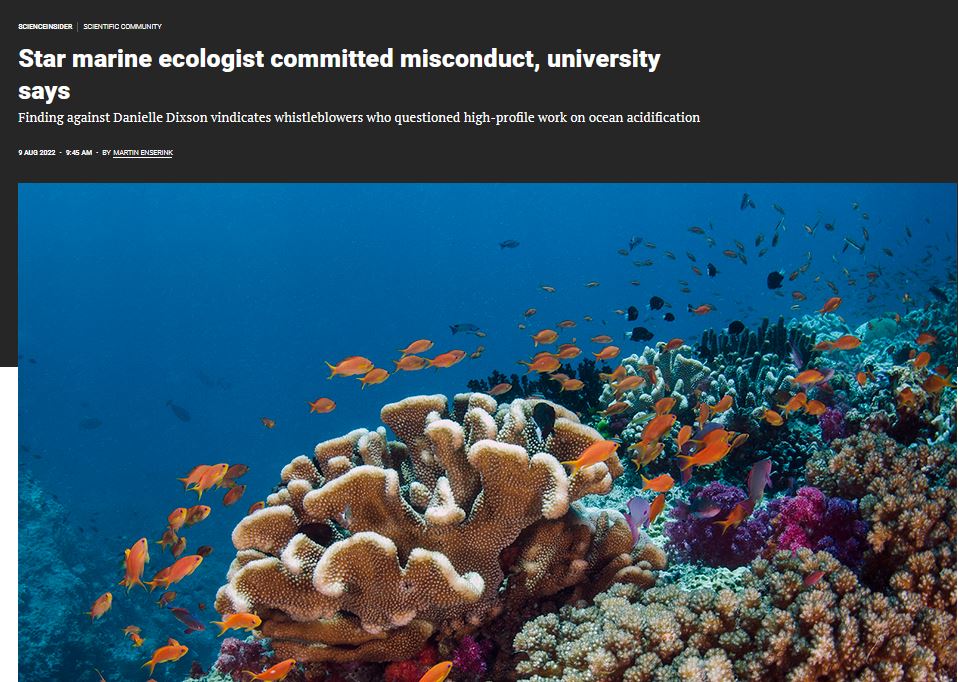
Research misconduct in fish ecology and what it means for those who dare to challenge experts

This has nothing to do with polar bears but everything to do with the scientific shenanigans that blight virtually all the fields that purport to support the human-caused climate change rhetoric, including polar bear research. The parallels of this example (published in Science Magazine yesterday) with my experience challenging the polar bear cabal is obvious, as it is with Dr. Peter Ridd’s battles with colleagues over the state of Great Barrier Reef corals, recently shown to be in spectacularly good condition.

Dr. Roger Pielke Jr., who’s had more than his fair share of trouble challenging climate change rhetoric, tweeted about this development yesterday but today he’s published a comprehensive essay explaining the whole sordid story, called ‘Fish and Foul: Three lessons from a massive research misconduct case in marine science‘. It’s well worth a read all the way through but I’ve provided a few excerpts below.

Continue reading

Most Hudson Bay polar bears are still offshore, excellent ice conditions for late July

With only a few days until the end of July, most Western Hudson Bay polar bears are still on a thick band of thick first year ice that remains close to shore. The few bears that have come off the ice appear to be nice and fat, indicating they had good spring feeding conditions.

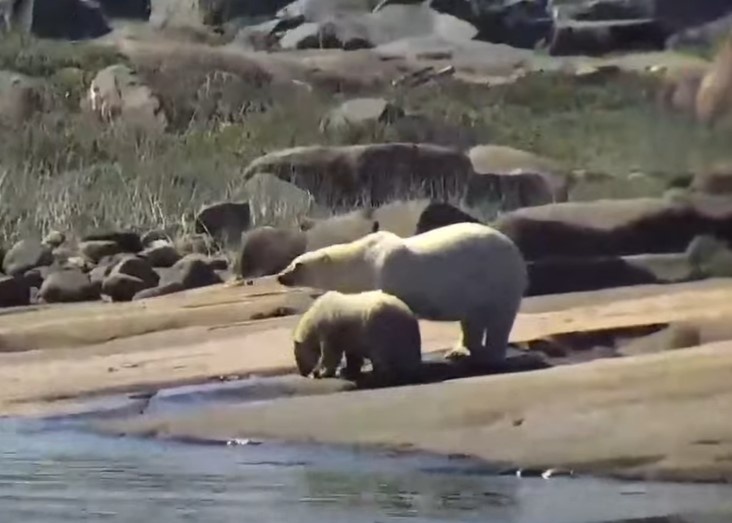
Untagged bear with cub, near Churchill River, 18 July 2022

We’ll have to wait a few more weeks to see if this year shapes up as it did in 2020, when the last of bears didn’t come ashore until the third week of August, despite there being very little visible ice. Last year, most of the bears were ashore by the end of July.

Continue reading

New paper polar bears attracted to garbage dumps blames lack of sea ice without any evidence

A paper published yesterday discusses polar bears that get into human garbage and cause other problems due to community attractants. Most of the incidents recounted and the issues they’ve raised have been reported by the media and are ones I’ve discussed here over the last few years in detail, including here and here, as well as in my recent book (Crockford 2019).

Churchill dump 2003. Dan Guravich photo, Polar Bears International handout.

All you need to know about the motivation behind the paper comes from the authors’ acknowledgement:

This paper developed from a meeting in Churchill, Manitoba, in autumn 2019 where the issue of dump use by polar bears arose. We thank Dan Cox [a photographer for PBI] for suggesting exploration of this issue and Polar Bears International for arranging this meeting.

So, six months or so after my book came out in March 2019, in which these issues were discussed in detail, polar bear experts decided it was time to write a paper on the topic. The open access paper, by Tom Smith and colleagues (Smith et al. 2022), is accompanied by an online essay published the same day by the lead author and picked up at least one cheer-leading media outlet via Reuters. See what you think.

Continue reading