Category Archives: Life History

Cannibalism update and insight on the timing of media hype

In my last post, I went over some of the spin and misrepresentation of fact contained in the claim by leading polar bear biologists Steven Amstrup, Ian Stirling and Andrew Derocher (Amstrup et al. 2006; Stirling and Derocher 2012) that cannibalism is on the increase because of the effects of global warming on Arctic sea ice.

I’ve had an opportunity to follow up on three points that puzzled me. Three relate to the Amstrup et al. paper that described three cases of cannibalism in the southeastern Beaufort Sea in 2004 and one to the incidents in western Hudson Bay in 2009. In the process, I found at least three more misrepresentations of fact and gained some insight on why these incidents of cannibalism were hyped so enthusiastically when they were. Continue reading

Cannibalism in polar bears: spin and misrepresentation of fact galore

In my next to last post, I discussed some of the anecdotal reports of den collapses included in the peer-reviewed summary of facts presented by biologists Ian Stirling and Andrew Derocher (2012) that supposedly support the premise that global warming is already having an impact on polar bear populations (discussed previously here, here, and here), prophesied to be even greater in the future. While they admit that such reports are not based on scientific studies, they nevertheless include them in their published list of global warming impacts, and not surprisingly, that is how others have interpreted them.

The same is true for their treatment of the phenomenon of cannibalism in polar bears. In that same paper, Stirling and Derocher (2012:2701) have a section called “Anecdotal observations consistent with predictions of the effects of climate warming.” This section begins with a discussion of cannibalism:

“There have been several well-publicized observations that are consistent with predictions of the effects of climate warming on polar bears, but cannot be statistically linked. For example, intraspecific aggression and cannibalism were predicted to increase in polar bears with climate warming (Derocher et al. 2004, Table 1). Observations of infanticide and cannibalism by thin adult males on land during the open water period have been documented (e.g., Lunn & Stenhouse, 1985; Derocher & Wiig, 1999; Amstrup et al., 2006; Stone & Derocher 2007). Such events have been known to occur for many years and, although their significance is unclear, there is some evidence suggesting the frequency of occurrence is increasing in areas where bears fast on land for extended periods. ” [my bold]

And this is the evidence for the supposed increase in occurrence:

“For example, in late summer and autumn 2010 [sic], there were eight observations of cannibalism on the western coast of Hudson Bay compared to one or two in the previous 5 years (I. Stirling, unpublished data).” [my bold; 2010 should be 2009 – more on this later.]

Were these observations of cannibalism made by polar bear researchers or someone else? Were there as many observers in the area in each of the five years prior to the year they occurred, as there were when these incidents were observed? We don’t know, because it’s unpublished data.

Stirling and Derocher have again included critical information in their list of facts that has not been published. I guess I’ll have to add “evidence for cannibalism” to my previous list of “Critical evidence on polar bears in W. Hudson Bay is unpublished” (see also “Stirling and Derocher’s sea ice trick) [there is more information available, but it’s not from peer-reviewed sources – more on this below]

In this post, I take a look at some of the evidence that is published, some of the media interviews and reports that followed, and the information that came from a press release issued by an advocate group. I’ve made a table summarizing the details of all recent papers and reported incidents, and some of them are described in more detail. In a footnote, I have a brief summary of why polar bears kill and eat each other.

These details reveal some rather shocking evidence of scientists misrepresenting evidence – in their peer-reviewed papers and in interviews with the media – and bathing their global warming prophesies in the blood-lust of cannibalism. It’s past time to shine a big bright light on the cannibal issue, so pardon the length of this post.

[See followup post April 19 here]

Continue reading

The two faces of polar bear biologists – Zac Unger interviews Amstrup and Stirling

Former firefighter Zac Unger has been in the news quite a lot over the last few months, promoting his new book, “Never Look a Polar Bear in the Eye” (see Zac’s website here, where you’ll find a list of some of the articles he’s written; the Canadian Geographic one is very good (“The truth about polar bears”) and was the one that originally caught my attention in early December 2012. One article that I’ve read is missing from that list, “Are Polar Bears Really Disappearing?” (Wall Street Journal, Feb. 8, 2013). There is a book review in the Winnipeg Free Press here (Feb. 2, 2013) and on climate scientist Judith Curry’s blog (Dec. 21, 2012), and an interview with Globe and Mail columnist Margaret Wente here from Feb. 23, 2013).

I’ve mentioned bits from some of these articles previously: Featured Quote #32 (Feb. 23, 2013) and in my Dec. 16, 2012 post, ‘Species-threatening’ population declines vs. polar bear declines.

In my last post, I promised a follow-up discussion on cannibalism in polar bears, as it has been promoted by polar bear biologists. I recalled a discussion of this by Unger, which I think makes a nice lead-in for my own essay, which I should have up in a few days.

Here is the money quote from Unger (with a link to the NBC interview with Amstrup and Stirling he is talking about). A lengthy excerpt from the article is below, for the context – it’s well worth a read:

[In 2008, after watching polar bear biologist Dr. Steve Amstrup give an interview on NBC News explaining “the evidence behind the decision to list the polar bear as threatened. Evidence like cannibalism.”] “Wait a second. Hadn’t Amstrup just finished telling me that the cannibalism thing was getting too much play by a bloodthirsty media?” Zac Unger, PS Magazine, Dec. 17, 2012 [2:40 min. NBC News video here]

Continue reading

Collapse of polar bear snow dens – Stirling and Derocher’s anecdotal evidence

In their summary of facts supposedly supporting the premise that global warming is already having an impact on polar bear populations (discussed previously here, here, and here), biologists Ian Stirling and Andrew Derocher (2012:2700) include a list of incidents of warm winter weather and/or “rain on snow events” that have led to the collapse of polar bear maternity dens and ringed seal birthing lairs.

Stirling and Derocher state that both polar bears and ringed seals (their primary prey) have a demonstrated

high vulnerability …to increased mortatily resulting from warm temperatures and rain. Such rain on snow events are predicted to increase as the climate warms in the Arctic (Hansen et al. 2011).”[my bold]

However, their so-called evidence for polar bears and ringed seals having a proven vulnerability to these events comes not from scientific studies but what they admit outright are anecdotal reports.

They describe four incidents, including one case of a maternity den collapse (involving a 6 yr old, probably first-time mother and two, 3-4 week old cubs) in the southern Beaufort in 1989, apparently caused by a bit of warm weather followed by heavy snow in late January (a picture of the dead bear is included, see below, just so we don’t forget that a bear died).

Continue reading

Polar bear distribution shows they are limited by winter ice extent

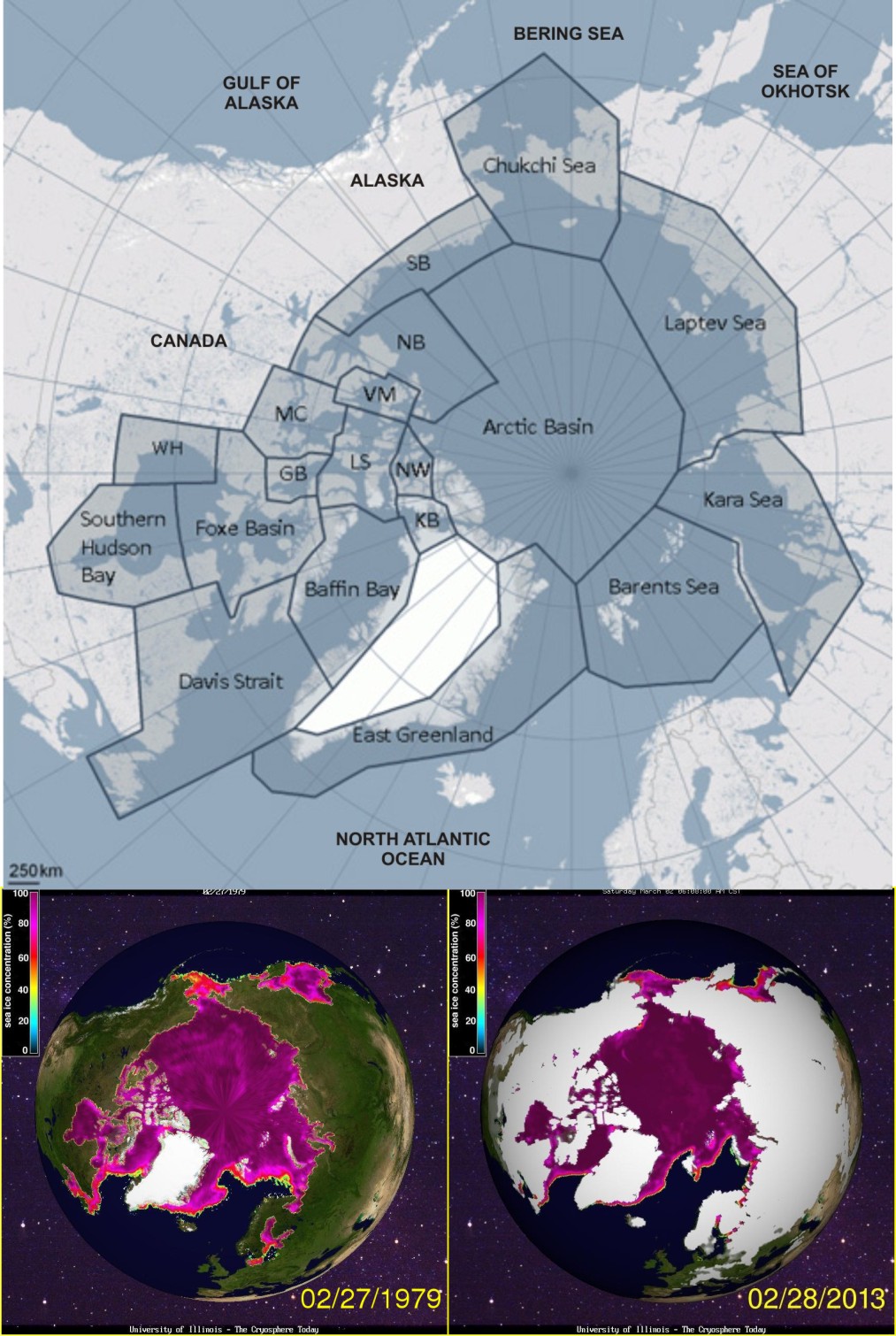
I’ve said it before but it’s worth saying again now that the sea ice in the Arctic is approaching its seasonal maximum extent and thickness: polar bears are limited by winter sea ice extent (Fig.1), not by the minimum extent of ice in the summer. Otherwise, their distribution would resemble the summer sea ice minimum (Fig. 2), not the winter maximum.

Despite the hue and cry about “declining sea ice,” polar bears are still as well distributed throughout their available winter habitat as they were in 1979, when detailed sea ice records began – see the map below. See further details on polar bear distribution here.

Figure 1. Polar bear distribution map (adapted from the one provided by the PBSG) compared to sea ice concentration at Feb 28 (at or near the seasonal maximum extent) 1979 and 2013. I can’t see a difference – can you see a difference? The only place there is consistently sea ice in winter but not polar bears is the Sea of Okhotsk, but there is no evidence that polar bears have ever lived there despite the presence of seals. Click to enlarge

Figure 1. Polar bear distribution map (adapted from the one provided by the PBSG) compared to sea ice concentration at Feb 28 (at or near the seasonal maximum extent) 1979 and 2013. I can’t see a difference – can you see a difference? The only place there is consistently sea ice in winter but not polar bears is the Sea of Okhotsk, but there is no evidence that polar bears have ever lived there despite the presence of seals. Click to enlarge

Continue reading

New Chukchi Sea polar bear survey – exciting preliminary results

Back in October, I wrote about US Fish & Wildlife biologist Eric Regehr comments about a recent survey of Chukchi Sea polar bears, the results of which are still not published. Since then, I’ve been able to track down a bit of information.

This project appears to have run for five years, from 2008 to 2011. The work was confined to the eastern (US) portion of the Chukchi, see maps below (Polar Bear News 2010; Rode and Regehr 2010). Researchers were doing mark-recapture work with helicopters, putting radio collars on some females and radio ear tags on a few males. They worked primarily in March and April (mating season for polar bears), operating entirely on the offshore sea ice – working, I might add, on bears that technically speaking do not exist, since the official population estimate for this region is “zero” (they are not included in the global estimate of 20,000-25,000, see pdf here,, discussed here).

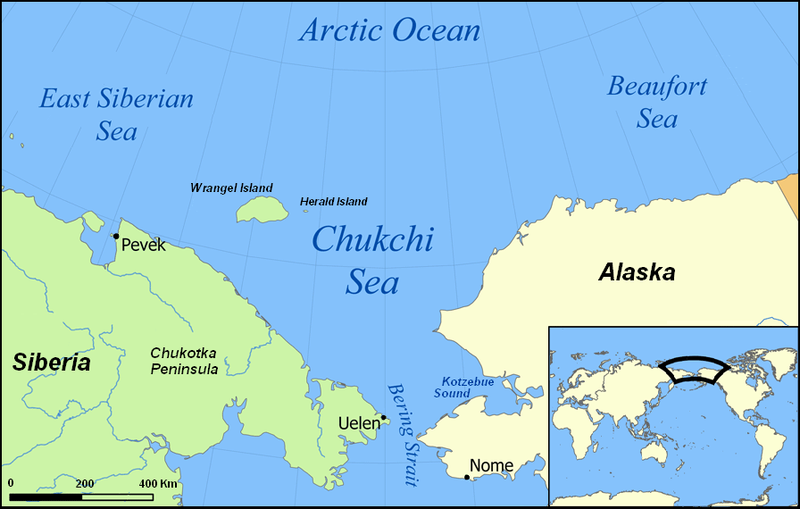
Figure 1. Chukchi Sea – getting you oriented. Note the location of Kotzebue Sound, northeast of the Bering Strait. Map from Wikipedia.

Figure 1. Chukchi Sea – getting you oriented. Note the location of Kotzebue Sound, northeast of the Bering Strait. Map from Wikipedia.

In 2012, US Fish & Wildlife biologist Eric Regehr told reporter Jill Burke at Alaska Dispatch that they found the bears were “reproducing well and maintaining good body condition.” I’ve finally found some details regarding what he meant by that statement (although no final reports or peer-reviewed papers are out, see footnote below).

Continue reading

Belugas as food for hungry polar bears

Here’s a refreshing change from the litany of cries to “save the killer whales” we heard last month when a few killer whales got temporarily trapped in the ice of Hudson Bay, which I commented about at the time. A story with an entirely different tone emerged last week, with updates today, about beluga whales trapped in the ice on Hudson Bay (see maps and photos below) that came without emotional pleading. It’s a story of life in the Arctic. Continue reading

New study says Western Hudson Bay polar bears could spend 2 to 4 months longer on shore than they do now

This a follow-up to my post from last week [“Extirpated polar bears of St. Matthew Island spent five months on land during the summer”]. UPDATED July 24, 2013 [see below]

A new study just published (Robbins et al. 2012, abstract below) suggests that non-pregnant polar bears that lived in Western Hudson Bay during the 1980s and 1990s had enough fat to spend at least 6-8 months on land, making the five months that St. Matthew Island bears spent fasting on shore a less than impressive feat.

Using data on polar bears that fasted around Western Hudson Bay (WHB) in the 1980s and 1990s, Charles Robbins and his colleagues created a model that predicted how long polar bears should be able to fast, given a measured amount of fat.

They concluded from their model results (pg. 1501) that polar bears sampled in Western Hudson Bay in the 80s and 90s had enough fat reserves to survive a fast that varied by sex, as follows:

Pregnant females: 7.7-12.3 months (mean 10.0) [vs. ~8 actual, including den time]
Lactating females with yearling cubs: 2.3-6.1 months (mean 4.2) [vs. ~4 actual]
Males: 5.4-10.6 months (mean 8.0) [vs. ~4 actual]

Note that a pregnant female could not really spend 12 months on shore fasting because she wouldn’t have any time to put on fat for the next year. The point is, however, that an eight month fast was leaving most pregnant WHB females with a good amount of fat left – they weren’t using up all they had (see photo in Featured Quote #7 here).

Lactating females had the lowest reserves of all but many had enough fat reserves to have lasted them through a 5-6 month fast (as the bears on St. Matthew were doing – females with yearling cubs as well as males were present).

This brings to mind one of the stories from my previous post on William Barents’ crew on Novaya Zemyla – that on Feb. 12, 1597, they killed a bear that gave them “at least one hundred pounds of fat.” That’s a lot of fat left on a bear that couldn’t have been eating very much over the previous 3-4 months (the depth of winter at that latitude).

In other words, both this study and the experience of Barents’ men more than 400 years ago suggests that most polar bears have an incredible ability to store fat and that this allows them to fast far longer than is usually assumed possible. Most is not all, however, and of course it is those individuals whose fat storage ability falls short that we hear about.

The authors of this new study, predictably (see abstract below), emphasized that some pregnant and lactating females were at the lower limit of survival (i.e. in the ranges given above, those pregnant females with only enough fat to endure a 7.7 month fast or a lactating female with the reserves to last only 2.3 months, when currently they would routinely spend 8 months and 4 months fasting, respectively, see previous post here).

However, this is hardly surprising. It is to be expected that some females, in any year and in any population, will be less-than-the-best hunters or turn out to have a fat-storage physiology that is not quite adequate. This is called individual variation – an entirely natural feature of any species. And the fact that some animals die because they do not have quite what it takes to survive natural fluctuations in habitat conditions (see previous posts here and here is why population fluctuations in wild animals are quite natural.

For polar bears, longer-than-average summer/fall fasts during longer-than-average ice-free periods mean that individual bears who are less-than-the-best hunters or who don’t have adequate fat storage physiology will die, fail to get pregnant or fail to raise their cubs. The animals that do survive and reproduce successfully, however, will be able to handle subsequent longer-than-average-summers with relative ease.

Longer-than-average ice-free periods also mean that for a short time, the population size will decline. But within a few years or so, the surviving animals – those who can reproduce as successfully as ever – will build the population numbers back up. Just as the bears of Western Hudson Bay appear to have done (see previous post here and Featured Quote #27 here).

This new study by Robbins and colleagues suggests that if the model results have real-world validity, most of the polar bears in Western Hudson Bay (including pregnant and lactating females) could survive an ice-free season that is 6 months long and that they could handle a 5 month fast with relative ease. However, a 5 month ice-free period is something we haven’t seen yet in Western Hudson Bay, despite the hue-and-cry we hear from some biologists (see previous posts here and here).

UPDATE July 24, 2013

I’ve added this because it seems to me that a few people may not have fully understood the above summary, so I’ve added a bit more detail from the study and my interpretation of it.

In this study (based on models, remember), the mean predicted survival time for all bears was 4.2 months.

As a result, the model results generated by these authors suggested that many (but not all) bears had enough fat reserves to last them through the current 4 month fast but some had enough to endure a 5-6 month fast.

For males in particular, their model results suggested that all males not only had enough fat reserves to survive a 4 month fast (as they currently do) but could have survived a fast of more than 5 months.

While the emphasis on this paper is the ‘catastrophe’ that not all bears would survive a 6 month fast, I should point out that this is their “worst case” scenario – an event that has not even come close to being realized.

While it is true that a few times over the last 40 years, Western Hudson Bay bears have had to endure a fast of 4 months plus three weeks, this length of fasting period has never occurred for more than one year at a time (Stirling et al. 2004; Cherry et al. 2013, see post here. In other words, polar bears have not even begun to approach a sustained 5 month long fasting period.

The authors of this study emphasize only that some pregnant and lactating females would not survive if the length of time onshore during the ice-free period in summer extended to 5 months (from the usual 4 months) and, should that time extend to 6 months, some males would not survive. They stated:

“…some pregnant or lactating females with lower levels of body fat content were already approaching or beyond the constraint of being able to produce cubs and survive the required 8 months of fasting if producing new offspring or 4 months if accompanied by older offspring

“…we estimate that as many as 16% of the adult males would die if fasting lasted for 5.4 months”. [my bold]

They suggest this is in general agreement with a prediction by Molnar et al. (2010) that 28% of adult male bears would die if global warming leads to a 6-month fast.

All of this fails to acknowledge that their results actually predict that most animals (72% of males) would survive the worst conditions they imagined (a 6 month fast), while if a 5-month-plus-2-week fast came to pass, most males (84%) would likely have enough fat reserves to survive. They imply  this would be a catastrophe – I call it remarkable survivability.

They do not provide similar quantification for their prediction of mortality among pregnant or lactating females (only adult male numbers were given). They nevertheless say that “pregnant or lactating females and particularly their dependent offspring have the most tenuous future as global warming occurs.”

What they mean is, some percentage (more or less than 84%) of pregnant or lactating females and their dependent young might not survive a 5 month fast and some percentage (more or less than 72%) might not survive a 6 month fast. Again, I wouldn’t call this a catastrophe – I say this is an example of remarkable resilience.

References
Cherry, S.G., Derocher, A.E., Thiemann, G.W., Lunn, N.J. 2013. Migration phenology and seasonal fidelity of an Arctic marine predator in relation to sea ice dynamics. Journal of Animal Ecology 82:912-921. [added July 24 2013]

Robbins, C.T., Lopez-Alfaro, C., Rode, K.D., Tøien, Ø., and Nelson, O.L. 2012. Hibernation and seasonal fasting in bears: the energetic costs and consequences for polar bears. Journal of Mammalogy 93(6):1493-1503. http://www.asmjournals.org/doi/abs/10.1644/11-MAMM-A-406.1

Stirling, I., Lunn, N.J., Iacozza, J., Elliott, C., and Obbard, M. 2004. Polar bear distribution and abundance on the southwestern Hudson Bay coast during open water season, in relation to population trends and annual ice patterns. Arctic 57:15-26. http://arctic.synergiesprairies.ca/arctic/index.php/arctic/article/view/479/509 . [added July 24 2013]

Abstract
Global warming has the potential to reduce arctic sea ice and thereby increase the length of summer–fall fasting when polar bears (Ursus maritimus) lose access to most marine mammals. To evaluate the consequences of such changes, we compared the cost of fasting by polar bears with hibernation by brown bears (U. arctos), American black bears (U. americanus), and polar bears and made projections about tissue reserves polar bears will need to survive and reproduce as fasts become longer. Hibernating polar bears expend energy at the same rate per unit mass as do brown bears and black bears. However, daily mass losses, energy expenditures, and the losses of lean mass are much higher in fasting, active polar bears than in hibernating bears. The average pregnant polar bear living around Hudson Bay during the 1980s and 1990s could fast for 10.0 ± 2.3 months (X̄ ± SD), and the average lactating female with cubs born during the preceding winter could fast for 4.2 ± 1.9 months. Thus, some pregnant or lactating females with lower levels of body fat content were already approaching or beyond the constraint of being able to produce cubs and survive the required 8 months of fasting if producing new offspring or 4 months if accompanied by older offspring. Pregnant or lactating females and their dependent offspring have the most tenuous future as global warming occurs. Thus, we predict a significant reduction in productivity with even modest increases in global warming for polar bears living in the very southern part of their range and are concerned about more northern populations depending on their ability to accumulate increasing amounts of fat.

Extirpated polar bears of St. Matthew Island spent five months on land during the summer

Did you know there used to be resident polar bears on two small islands in the Bering Sea? Given how much we don’t know about the polar bears of the Bering Sea, the bears that used to den and spend their summers on the St. Matthew Islands are a bright spot. These islands lay at the southern-most limit of the modern “Chukchi Sea” subpopulation (see Fig. 1) and were uninhabited by people when they were discovered in the 1760s – but they were a haven for polar bears.

We have details of the polar bears that gave birth and summered there because a US government biologist (Henry Wood Elliott) and a US navy Lieutenant (Washburn Maynard) surveyed the islands in 1874. Elliott wrote both an official report and a popular magazine article (for Harper’s Weekly Journal of Civilization) in 1875 describing the polar bears they saw; Maynard wrote a separate report in 1876. By 1899, there were none left, victims of the relentless slaughter of polar bears everywhere in the Arctic in that era (see previous discussion here).

Figure 1. St. Matthew Island is in the Bering Sea off the west coast of Alaska: north of the Pribilofs and south of St. Lawrence Island, at about 60°N latitude. Compare this to the southern end of James Bay, Canada – which has a stable population of polar bears – at about 53 0N and Churchill, Manitoba – the “polar bear capital of the world” – at 58 046’N. Maps from Wikipedia.

Figure 1. St. Matthew Island is in the Bering Sea off the west coast of Alaska at about 60°N latitude. Compare this to the southern end of James Bay, Canada (which has a stable population of polar bears) at about 53 0N and Churchill, Manitoba (the so-called “polar bear capital of the world) at 58 046’N. Maps from Wikipedia.

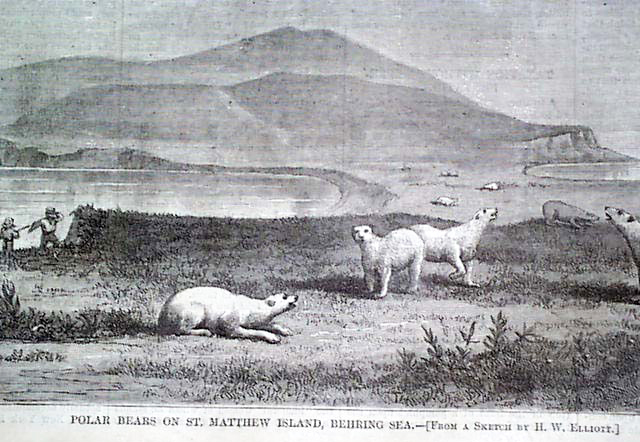
Figure 2. A drawing of polar bears on St. Matthew Island that accompanied the May 1, 1875 Harper’s Weekly Journal of Civilization article written by Henry Elliot. See here.

Figure 2. A drawing of polar bears on St. Matthew Island that accompanied the May 1, 1875 Harper’s Weekly Journal of Civilization article written by Henry Elliot. See here.

[UPDATE: Jan. 27, 2013: a follow-up to this post is here.]

Continue reading

Polar bears in winter: insights from modern research and Inuit hunters

In a previous post (“Polar bears in winter: insights from Behouden Huys, 1596-1597”) I discussed the chronicle of Gerrit De Veer, who documented polar bear activity during the winter that William Barents’ crew spent on northern Novaya Zemlya more than 400 years ago. De Veer noted that the crew did not see or hear polar bears during the time that the sun was below the horizon, a period that did not correlate with the period of most intense storms and cold (De Veer 1609). However, the bears were active (and often causing trouble!) before and after that time.

De Veer’s account suggests the possibility that polar bears spend the darkest part of the winter curled up in a sheltered spot regardless of whether this is the coldest or stormiest period or not.

However, the experience of Barents and his men occurred over a single season and may not be representative of polar bear winter activity in general. As promised, in this post I’ll discuss the evidence collected by polar bear biologists and Inuit hunters relevant to the question of what polar bears do during the cold and dark of an Arctic winter.

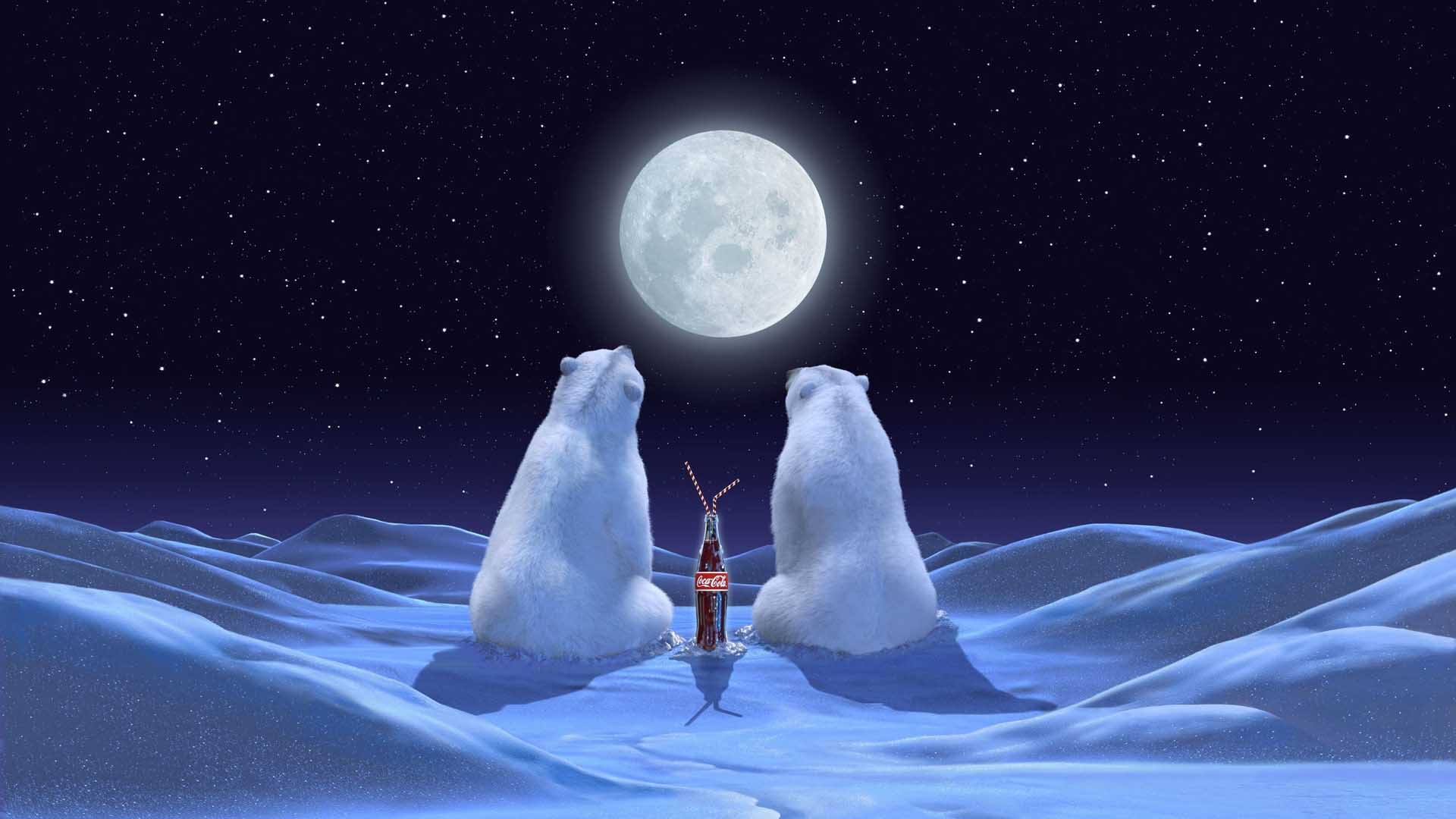
 Figure 1. Effective advertising and amusing though it may be, one thing about this image is actually true – during the winter, while the sun does not rise above the horizon, the moon is visible on its usual cycle. Moonlight and northern lights (aurora borealis) are the only sources of natural light except for a few hours of dusk at mid-day. See other images here, here and here.


Figure 1. Effective advertising and amusing though it may be, this image also depicts a true Arctic phenomenon – during the winter above the Arctic Circle, when the sun does not rise above the horizon, the moon is visible on its usual cycle. Moonlight and northern lights (aurora borealis) – plus a few hours of dusk at mid-day – provide relief from total darkness. See other images of an Arctic moon and northern lights here, here and here.

Continue reading