Category Archives: Sea ice habitat

Polar bear attempted to break down front door of house in Newfoundland with people inside

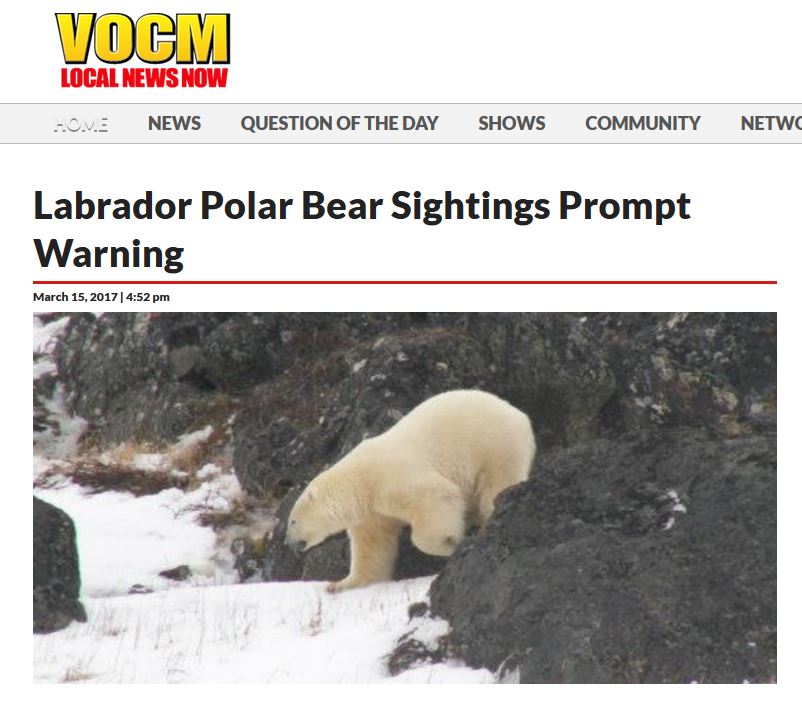
A frightening incident just after midnight on Sunday left a woman and her daughter on the Northern Peninsula of Newfoundland shaken when a polar bear tried to break down their front door. Luckily for them, the bear was not starving and therefore not persistent: it soon stopped without doing much damage and neighbours were able to drive it away from the house. Again, the premise of my polar bear attack thriller, EATEN, is that the bear could have gotten into the house if it had really been motivated by hunger to do so. And what if that had happened and there were no neighbours to call for help?

There is still abundant ice around the northern Peninsula (see below), and gov’t officials are warning residents to be wary of other bears reported in the region. A CBC story on the incident quotes local wildlife officials as saying they “generally receive between 30 and 60 calls about polar bears annually. There have been 10 this year so far.” However, as I’ve pointed out previously, it appears this has only been true since 2012 or so: lots of bears visiting Newfoundland and Labrador in the spring is a relatively new phenomenon.

Continue reading
Newfoundland polar bear sighting two days ago: why my novel was set on Fogo Island in March

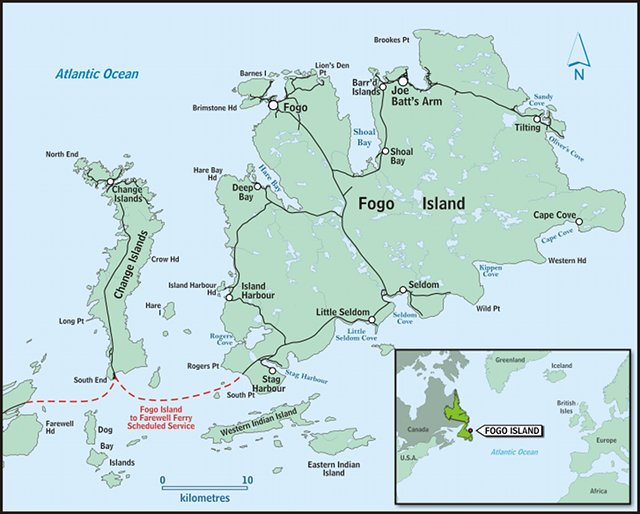
On 29 March, there was a sighting of a polar bear on Fogo Island near the community of Tilting that prompted an official warning to residents. Although this bear caused no problems so far, that hasn’t always been the case and it’s a useful reminder that this is why I set my polar bear attack thriller EATEN in this location, at this time of year. If you haven’t read it, or given it as a gift, now might be the perfect time! In Canada here and the UK here.

From a review of EATEN by polar bear-human interaction specialist Doug Clark (June 2016):

Susan Crockford has not only written a fun novel that gets readers thinking, she has probably done polar bear conservation a real service. Because of how politicized polar bears have become as symbols of climate change, fiction is the only arena where one can really present this kind of scenario right now.

Sea ice conditions off Newfoundland on 28 March:

Arctic sea ice maximum extent was present for at least two weeks at about 14.9 million km2

US National Snow and Ice Data Center says the Arctic maximum extent for this winter peaked at 14.88 mkm2 on 25 February, but in fact this amount of ice coverage lasted for at least two weeks (22 February – 8 March), with very slight variation. Just a little something they all left out of their announcements, for some reason.

Continue reading

Good news for polar bears and seals: new study finds multiyear Arctic sea ice is getting thinner

The fact that multiyear sea ice got thinner between 2018 and 2021 as documented by a new study, is ultimately good news for polar bears: less multiyear ice compared to first year ice is better for all marine mammals in the Arctic. Polar bears and seals, for example, are dependent on the seasonal ice that forms every winter (Atwood et al. 2016; Durner et al. 2009). Multiyear ice is simply too thick for any purpose except as a summer refuge for polar bears (for which land will do just as well) and a platform for maternity dens over the winter, for which thick first year ice will often do just as well (Anderson et al. 2012; Rode et al. 2018).

Continue reading

State of the Polar Bear 2021: polar bears continued to thrive

The current health and abundance of polar bears continues to be at odds with predictions that the species is suffering serious negative impacts from reduced summer sea ice blamed on human-caused climate change.

Continue reading

Mid-winter polar bear sea ice habitat is abundant & within range of long-term average

Ahead of International Polar Bear Day (27 February) this year, polar bear habitat is as abundant as it has been for decades. This is a tough time for polar bears, many of which will be finding it hard to find seals to eat, as newborn seals won’t be an available food resource for about a month in most areas. Thin and hungry bears are dangerous.

Sea ice charts below for the Arctic as a whole and by region.

Continue reading

Open response to a polar bear researcher who objected to me ‘attacking’ their colleagues

Last week, I got an email from a polar bear scientist I have interacted with a few times. Not one of the big names but aside from that, I’ll leave their identity private. The email was polite and I tried to respond in kind. I have copied it here because others may have had similar concerns.

Continue reading

Fact checkers defend activist scientists because they agree with them not because they are right

The so-called fact-checkers are out again trying to insist one side of a scientific debate is wrong and another is right because they happen to agree with one side. That’s advocacy, not science.

Here are some facts (check the links provided for additional references):

Continue reading

Davis Strait polar bears in Eastern Canada are thriving according to new survey

Pack ice is barreling down the Labrador coast, almost certainly bringing Davis Strait polar bears with it. And according to new survey results, those bears are doing just fine: numbers are stable, bears are fatter than they were in 2007, and cubs are surviving well – thanks largely to abundant harp seals.

Continue reading

Polar bears at Kolyuchin Island weather station provide a rare photographer’s treat

Russian wildlife photographer Dmitry Kokh took some photos and video last year of polar bears hunkered down at an abandoned weather station on the Chukchi Sea coast and he apparently won a prize for one of them, shown below. The shots are very cool, so I’ve provided some context for the story and posted the video here.

‘Summer Season’ by Dmitry Kokh
Continue reading