Category Archives: Sea ice habitat

Early sea ice breakup in W Hudson Bay caused by “record breaking” warmth in 2023 but not 2015?

According to Polar Bears International, the “3rd-earliest” breakup date for Western Hudson Bay was caused by a “record breaking” heat wave in May. Western Hudson Bay sea ice hit the 30% coverage threshold used by PBI to define “breakup” on 17 June this year, prompting speculation about potential future impacts on polar bear survival should breakup come even earlier.
This year’s break-up date of June 17 is the 3rd earliest in the 45 years of satellite-based sea ice data from Western Hudson Bay, after 2015 and 2003.” [Flavio Lehner, PBI]

17 June 2023 is day 168 on the Julian calendar used to graph the data in the image included in the PBI essay (see copy below). However, the data point for 2003 is about three days earlier, on day 166 (14 June) and the point for 2015 is on day 152 (1 June).
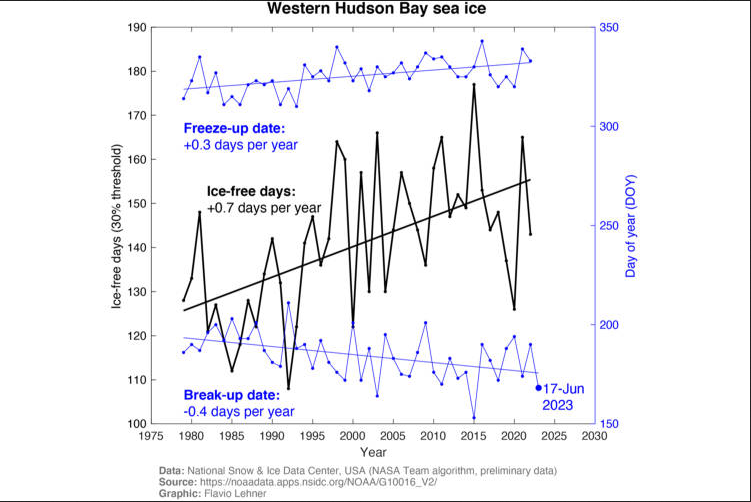
If “record-breaking” heat caused this year’s early ice retreat, what caused the ice to retreat more than two weeks earlier in 2015? May was warm that year along the west coast as well but obviously not “record-breaking” warmth, because the records were broken this year. In fact, whatever warmth that occurred only affected ice melt in the western sector, while very thick ice over the rest of the bay resisted melt and allowed bears to stay out many weeks later than usual.

Continue reading

No evidence polar bears survived Eemian warmth because they were not yet fully ice-dependent

Is evolution primarily fast or slow? Does it take hundreds of thousands of years or a few generations to produce a new species? Ignoring vast evidence to the contrary, most geneticists insist that evolutionary change is imperceptibly slow and one of them is using this misconception to support the human-caused climate change narrative.

For polar bears, the question is this: could brown bears (aka grizzlies) have survived for hundreds of thousands of years living in a completely different habitat–the perpetually-frozen world of Arctic sea ice–before significant biological changes took place? I contend the answer is no. Moreover, if I am correct that polar bears arose ca. 140,000 thousand years ago (140kya) during the height of an extreme glacial period, the fossil evidence concurs. Analysis of fossil remains show that by about 115-130kya at the latest (after perhaps 10k years), polar bears were primarily eating seals as their modern counterparts do and their bones had lost the distinctive features of their grizzly ancestors.

But that’s the maximum time frame: research on other animals indicate that such critical changes almost certainly took place long before that, within the first few generations of life on the sea ice. If coordinated changes had not taken place very quickly, within ecological time, brown bears would simply not have survived the harsh life on Arctic sea ice.

Continue reading

New evidence that polar bears survived 1,600 years of ice-free summers in the early Holocene

New evidence indicates that Arctic areas with the thickest ice today probably melted out every year during the summer for about 1,600 years during the early Holocene (ca. 11.3-9.7k years ago), making the Arctic virtually ice-free. As I argue in my new book, this means that polar bears and other Arctic species are capable of surviving extended periods with ice-free summers: otherwise, they would not be alive today.

Money quote: Here we show marine proxy evidence for the disappearance of perennial sea-ice in the southern Lincoln Sea during the Early Holocene, which suggests a widespread transition to seasonal sea-ice in the Arctic Ocean. [Detlef et al. 2023: Abstract]

Continue reading

Polar bear sea ice habitat near the end of Arctic spring 2023

Arctic sea ice is beginning to melt and the end of spring is drawing near. Mating season is over for polar bears as is the gorging on young seals in most regions as weaned pups head into open water to feed for themselves. Only predator-savvy adult and subadult seals remain on the ice while they moult a new hair coat, so successful hunts by most polar bears will become more and more uncommon (e.g. Obbard et al. 2016).

Continue reading

How is widespread use of helicopters to study polar bears defensible in a warming world?

If all of us should be doing “everything possible” to stop climate change, why is it still OK–15 years after polar bears were declared threatened with extinction because of predicted climate change effects–for researchers across the Arctic to use helicopters to study polar bears? Aircraft that consume massive amounts of aviation fuel and engine oils, otherwise known as ‘fossil fuels.’

Money quote: “…the lifeblood of most polar bear research is jet fuel needed by helicopters.” (Derocher 2012:107).

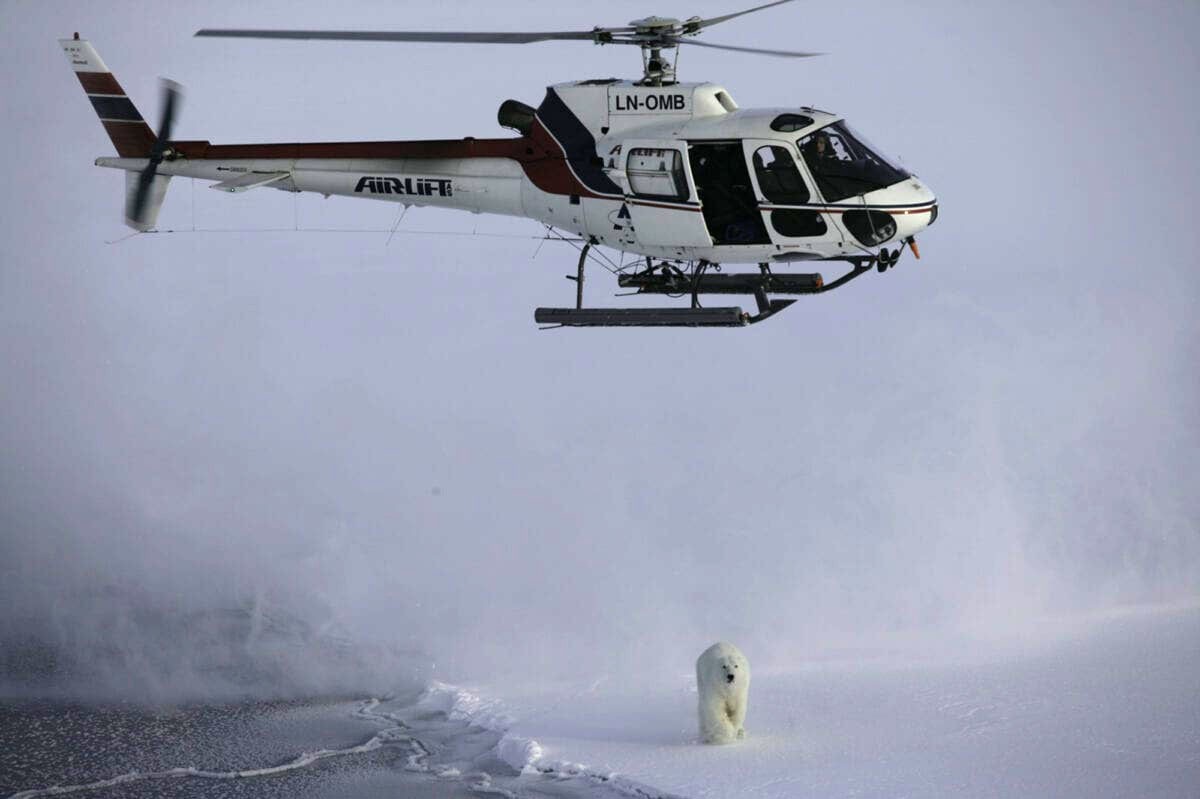
From Hudson Bay and the High Arctic in Canada, the Beaufort Sea off Alaska, to Svalbard in Norway (above, from 2015), polar bear research is impossible without helicopters powered by fossil fuels. This has been true since the 1980s (e.g. Ramsy and Stirling 1988). And this doesn’t even take into account the fossil fuel-powered fixed wing aircraft needed in some locations, commercial airline flights that transport personnel and equipment to distant locations, or the Tundra buggies used in Churchill (Western Hudson Bay) to get up close to bears and educate indoctrinate the tourists.

Continue reading

17th century documents & 1970s ice maps show sea ice habitat in Svalbard has always varied greatly

Historical records show that sea ice extent along the west coast of Svalbard, Norway varied greatly in the 1600s and that there is currently more ice than was usually present at this time of year in the 17th century.

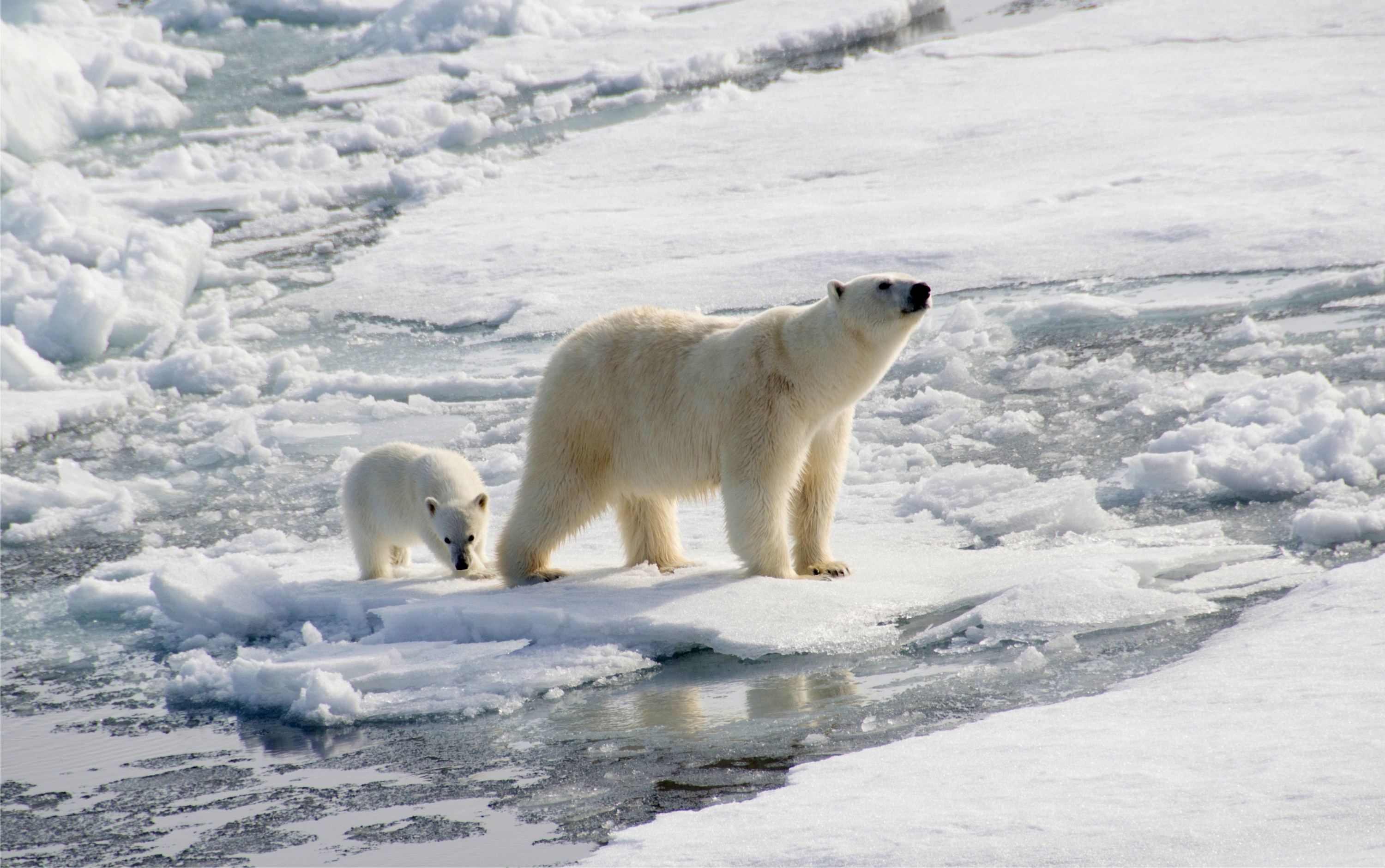
April through early June is when polar bears need sea ice the most–for feeding on newborn seals and for finding mates–and so far this spring, bears in the Western European Arctic around Svalbard, Norway have had an abundance of ice. In fact, there is only a little less ice than was normal for the late 1970s and apparently, quite a bit more than was often present in the 1600s.

Continue reading

Netflix polar bear star dies in Svalbard days after being tranquilized; her orphaned cub is shot

Early in the morning on Good Friday (7 April), a mature polar bear sow with a cub at heal was chased with snowmobiles away from a recreation area used by locals on the west coast but drowned after she escaped into the water. Her cub, likely a yearling male, attacked authorities trying to retrieve her body and was shot.

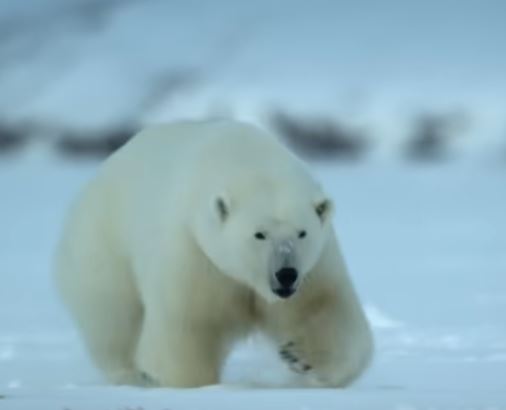
It turns out this 17 year old female was well known to locals and is considered Svalbard’s most famous polar bear. They call her ‘Frost.’ She featured in the 2019 Attenborough-narrated Netflix documentary Our Planet, in the sequence showing the stalk of a newborn ringed seal pup (see screencap above), which was likely filmed in early 2018 after the cliff-falling walrus scenes in Russia that were filmed in October 2017. h/t Sheila.

Continue reading

Earth Day sea ice habitat during critical spring season for Arctic seals, polar bears, and walrus

This is the most important time of year for Arctic marine mammals that spend time above the ice: birthing, breeding, and feeding. And there is plenty of the right kind of ice available for those activities this year, as there was two years ago at the same time.

Continue reading

‘Less ice means more conflicts with polar bears’ narrative not supported by scientific evidence

In another failed prediction, a new study on the number of polar bears killed in self-defense in Svalbard, Norway did not find the expected correlation with lack of sea ice or more tourists (Vongraven et al. 2023). Contrary to expectations, fewer bears were actually killed in self-defence as sea ice declined between 1987 and 2019.

Money Quote from the abstract:

   “…ice cover had no significant impact on the odds for a [polar bear] kill.”

It seems the warning from polar bear specialist Andrew Derocher a few months ago was just plain wrong:

“Poor ice conditions for polar bears at Svalbard this year. Low ice will make tough hunting conditions this coming spring. Time to plan for more human-bear conflicts unless conditions change.” [13 Feb 2023 tweet, my bold]

Continue reading

Russian walrus and polar bears continue to thrive US researchers tell the Washington Post

Interviews with US researchers for a piece in the Washington Post earlier today contain revelations that walrus and polar bear populations in the Russian Far East continue to thrive, despite insisting that polar bears face a dire future without human interference.

This article on collateral damage of Russia’s war with Ukraine comes with this stunning sub-headline:

The invasion [of Ukraine] is first and foremost a human tragedy, but it is also dire for wildlife, stalling scientific work on polar bears and other wildlife threatened with extinction.

The article prominently features a researcher working on Chukchi sea polar bears, which are currently thriving but still tagged with a status of “threatened” based entirely on computer models that predict a dire outcome 30 years from now. The writer also interviewed a scientist working on Pacific walrus, which likely number more than 200,000 animals and are not considered “threatened,” a point oddly not mentioned by the author or the researcher interviewed (Crockford 2023; MacCracken et al. 2017; Fischbach et al. 2022; USFWS 2017a,b).

Continue reading