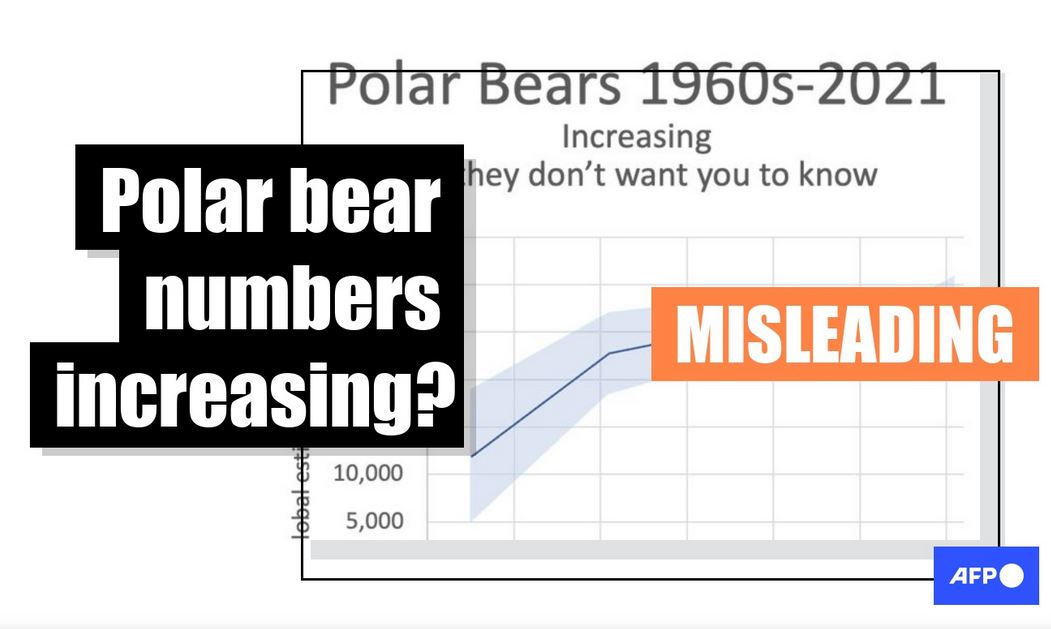
Canadian zoologist Dr. Susan Crockford warns that some polar bear specialists are attempting to cast a smoke-screen over the growth of global polar bear numbers.
Posted onJanuary 12, 2023|Comments Off on Recent paper on W. Hudson Bay polar bears includes new official sea ice freeze-up data
Even though it’s in graph form only, we finally have an update on sea ice freeze-up dates for Western Hudson Bay for 2016-2020 (but not breakup dates).
This graphed data published by Miller et al. 2022 extends by five years that published in 2017 by Castro de la Guardia and colleagues, which contained graphed data for breakup and freeze-up dates from 1979-2015 (with exact dates for 2005-2008 only).
It confirms a statement I made last month, that between 2016 and 2021 “there has been only one ‘late’ freeze-up year (2016)–but five very early ones.” Of course, 2021 was not included in this new dataset, so that would be “four very early ones” up to 2020.
Posted onJanuary 4, 2023|Comments Off on Inuit in Arctic Canada now observing higher numbers of polar bears, says government report
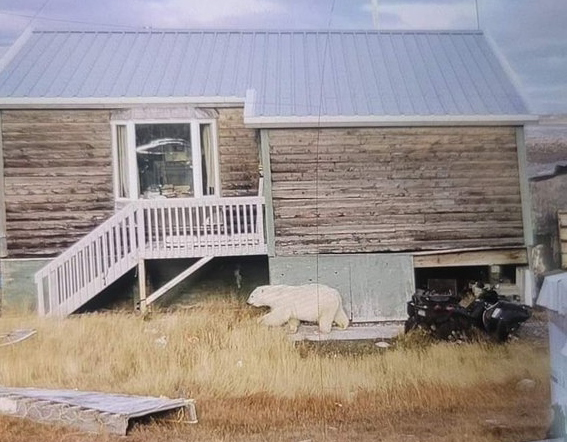
A 2021 publication by the government of Canada released last month called Species at Riskin Nunavut says the region is “now observing higher numbers of polar bears“, and that management goals are “more focused on maintaining or reducing numbers in communities and in sensitive areas (i.e. bird colonies)“. Local Inuit are said to be “concerned about the increasing number of encounters and property damages” caused by polar bears.
Polar bear in Arviat, Nunavut, 3 October 2022. Chris Mikijuniak photo.
Polar bears in Canada are considered a species of ‘special concern’ (COSEWIC 2018), not threatened as they are in the USA. See the map of Nunavut below.
Posted onJanuary 3, 2023|Comments Off on Where were the starving W. Hudson Bay polar bears in 2020 if the population had declined by 2021?
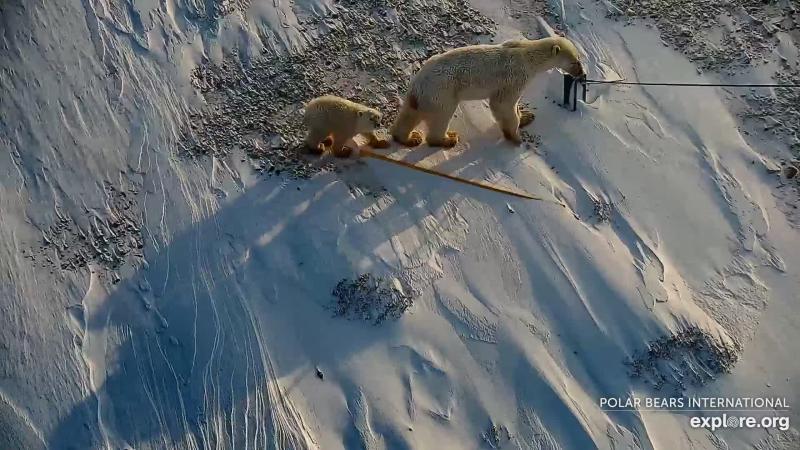
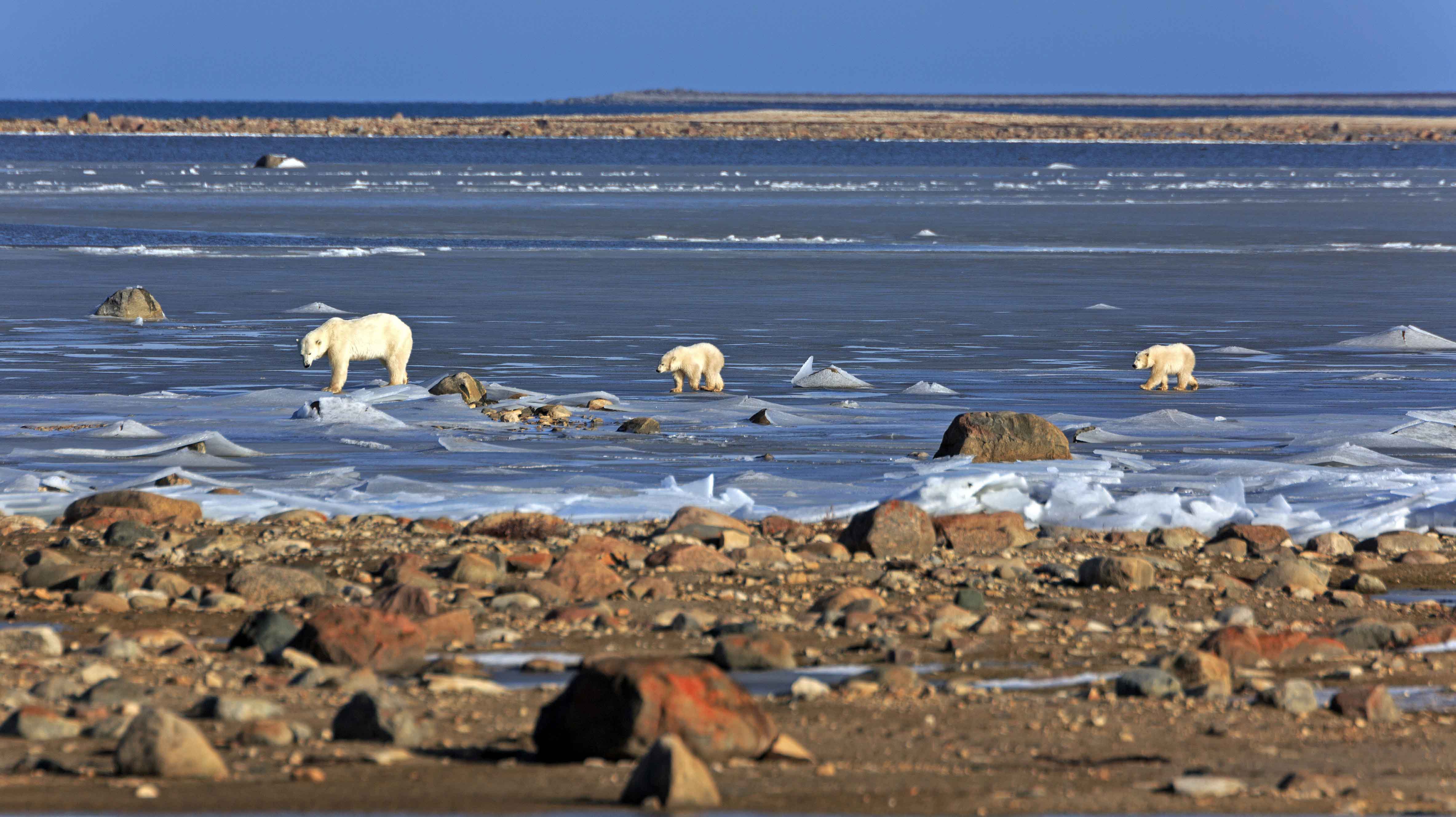
Polar bears are supposed to starve before they die, the experts said. They said only a few years ago that dead or emaciated individuals onshore were evidence that many polar bears would soon be dying of starvation out on the sea ice. So, if the Western Hudson Bay (WH) subpopulation had indeed dropped by 27% by late summer 2021 as researchers claimed, where are all the photos of starving bears in the fall of 2020, the year before the count? The photo below of a thin female and cub was taken in late fall of 2021 (the year of the count) by a stationary web cam. In other words, some bears came off the ice without an optimal amount of fat because of poor hunting conditions over the winter but they were still alive. We know that 2020 had the shortest ice-free season in at least 20 years (and no similar images were captured), so bears went into the winter of 2020/2021 in good condition. Ditto for 2017-2019. In contrast to 2021, in 2016 (the year of the previous survey that also indicated a declining population size), bears reportedly came off the ice in good condition.
All I’ve seen are photos of fat bears and fat cubs, even a triplet litter in fall 2020. The shore of WH near Churchill should have been abounding with starving bears in 2020 (and in 2015), if the experts were right about starving bears preceding a population decline. More importantly, where are the studies on food-deprived bears onshore, as were done in the 1980s when WH bears were emaciated and cub survival poor (e.g. Ramsay et al. 1988)? WH bears are being used exclusively to model an implausibly pessimistic future for polar bears across the entire Arctic (Molnar et al. 2010; 2020), which means lack of good science for WH polar bears has big consequences. Covid restrictions in two of those ten years don’t excuse lack of study on this phenomenon.
Posted onDecember 28, 2022|Comments Off on W. Hudson Bay polar bear population decline stories are unethical and ignore critical caveats
Canadian government scientists created headline news worldwide last week when they told the media that Western Hudson Bay polar bear numbers appeared to have declined by 27% between 2017 and 2021, based on a survey report that has not been made public. This is called ‘science by press release’. Its practice is rightfully considered unethical, as it is usually associated with “people promoting scientific ‘findings’ of questionable scientific merit who turn to the media for attention when they are unlikely to win the approval of the professional scientific community.”
A Reuters story (dated 23 December 2022) admits this is the case and included another critical caveat that only one news outlet I saw bothered to mention, which happened to be BBC News:
Scientists cautioned a direct link between the population decline and sea ice loss in Hudson Bay wasn’t yet clear, as four of the past five years have seen moderately good ice conditions. Instead, they said, climate-caused changes in the local seal population might be driving bear numbers down.
Posted onDecember 21, 2022|Comments Off on Happy Solstice – it’s all uphill from here!
On the longest night of the year, I wish you all a Merry Christmas and a New Year filled with hope and good cheer. The sun will return and the struggle for good science will continue.
Warmest wishes to all my readers and supporters around the world.
Susan
Comments Off on Happy Solstice – it’s all uphill from here!
Posted onDecember 20, 2022|Comments Off on Polar bears of SE Greenland get shorefast ice necessary to hunt seals: not so unique after all
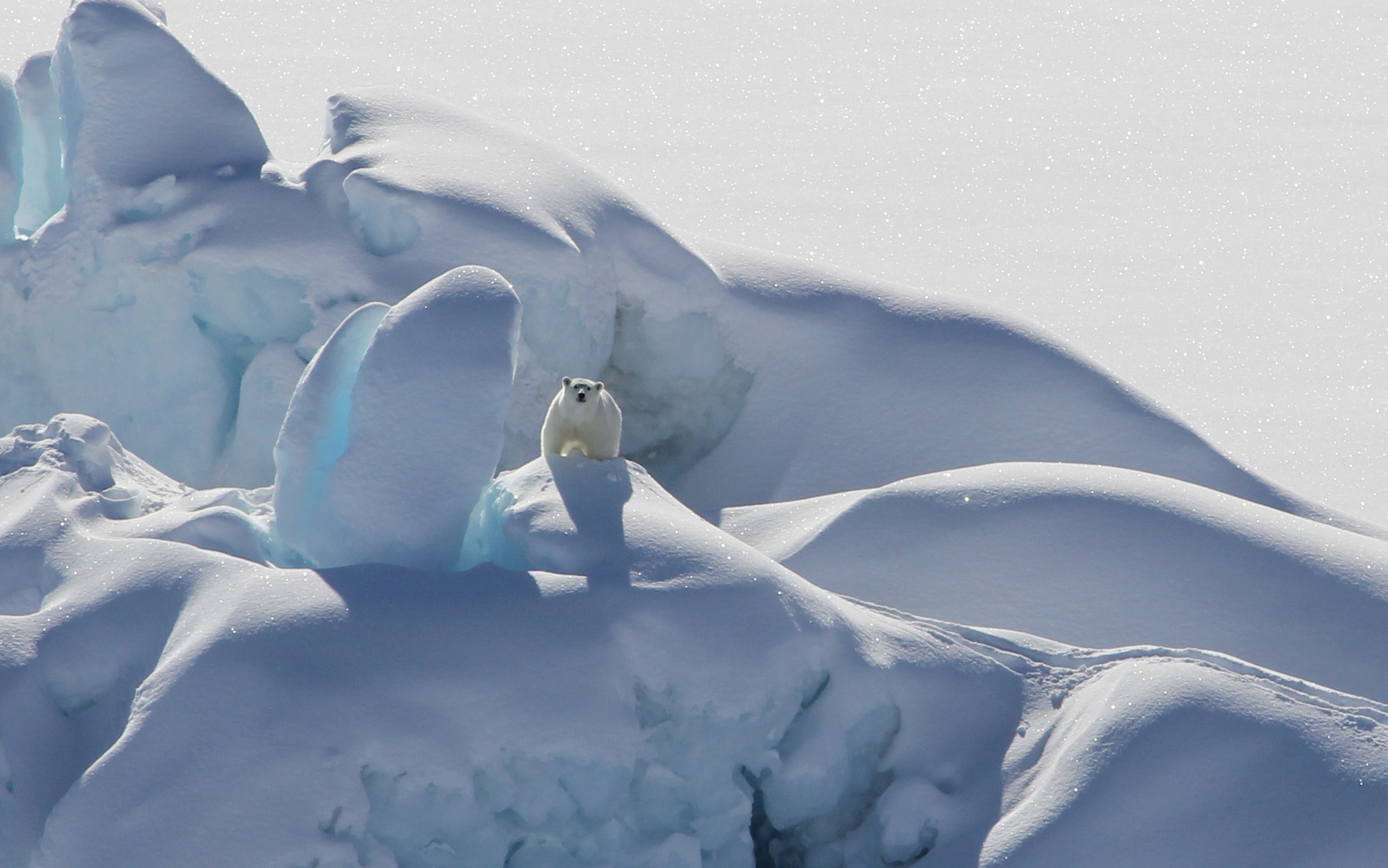
The 234 or so polar bears inhabiting the SE tip of Greenland, said to be genetically and ecologically unique because they are “surviving without ice“, have been experiencing sea ice formation along the shoreline this month just like other bears across the Arctic. Recall that shorefast ice formation attracts seals in the fall, which polar bears hunt successfully, and the following spring (April/May) provide a platform for ringed seals to give birth to their pups, which polar bears eat with gay abandon.
The photo above was taken by Kristin Laidre in March 2016: a bear this fat at the end of winter (i.e. before ringed seals are born in the spring) is living in productive habitat.
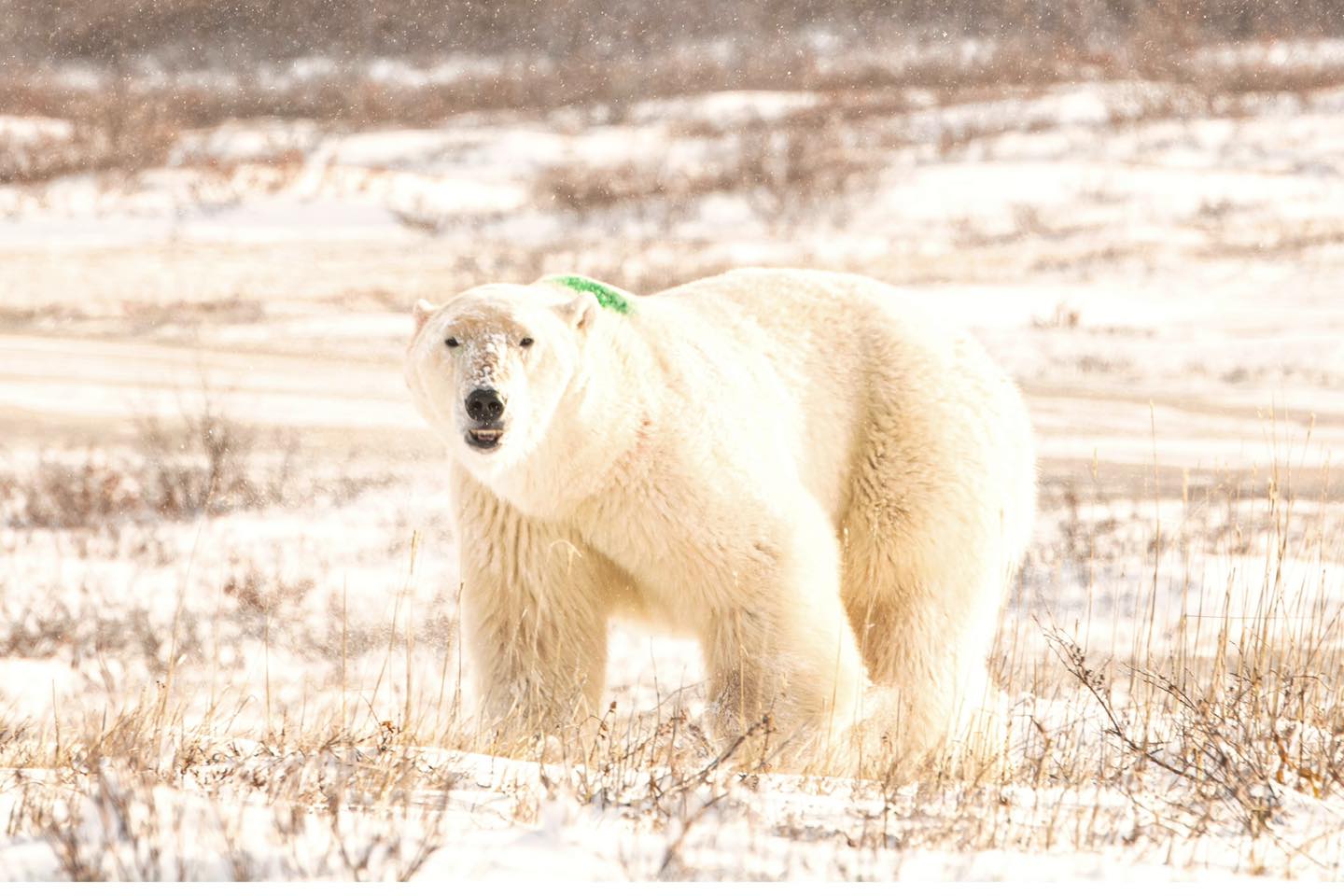
The photo above of a ‘green dot’ bear was taken 10 November 2022 by a Churchill resident. Bears released from the ‘polar bear jail’ when there is enough sea ice for them to resume hunting are marked with a green dot.
Posted onDecember 14, 2022|Comments Off on Arctic Report: primary productivity still high & sea ice flatline continues despite warmer temperatures
NOAAs annual Arctic Report Card is, for the most part, a valiant effort to turn good and ambiguous news into harbingers of climate change disaster. Primary productivity is up across most of the region (good news for wildlife) and despite Arctic temperatures being “twice as high” as the rest of the world in recent years, the summer sea ice ‘death spiral’ has failed to materialize.
Oddly, there is no bad news about polar bears (last mention was 2014). However, the media were told that the few hundred sea birds that died this year in the enormous Bering/Chukchi Sea region over the four months of summer in 2022 is a portend of climate change catastrophe–even though the authors of the NOAA report admit they have no conclusive evidence to explain the phenomenon. However, here are also some honest figures that are quite illuminating.
Watch polar bear habitat reform in the Canadian Arctic: “last 10 days” Canadian Ice Service animation (works anytime) HERE.
See Quote archive for details.






 polarbearscience
You must be logged in to post a comment.