Posted onSeptember 5, 2024|Comments Off on 12 years of Polar Bear Science winding down as I transition to writing Biology Bites on Substack
While I’m not done with polar bears completely, it seems I’ve been so successful at informing the public and defanging the rabid activists that fewer examples of nonsense seem to pop up. And it turns out I have other things I’d like to write about.
I’ve spent my entire career as an unconventional scientist and I’m betting that many of the stories I’ve amassed along the way will be of interest to a wider audience. So, after 12 years of blogging here at PolarBearScience, I’m branching out with a new writing forum called “Biology Bites,” hosted on Substack.
Posted onAugust 13, 2024|Comments Off on Western Hudson Bay sea ice breakup for polar bears like the 1980s for 3 of the last 5 yrs
The 1980s and early 1990s are said to have been the “good old days” for sea ice conditions and polar bears in Western Hudson Bay, with all tagged bears usually ashore by mid-to-late August. Then an abrupt step-change in sea ice breakup dates brought polar bears to shore an average of two weeks earlier in the late 1990s. From then until 2019, the only significant outlier to all tagged bears being ashore by about late July was 2009, which was such an unusually cold year that the last bears came ashore about August 20.
That pattern changed in 2020, when the last bears came off the ice as late as they had in 2009, on August 21. Something similar happened in 2022, when the last bears came off a small remnant of ice even later, about August 26. And this year, the bears may be moving ashore even later: there is even more ice remaining off WH and much of it is thick compacted ice that hasn’t melted much over the last few weeks, which means bears have been as late onshore as the 1980s for three out of the last five years.
Posted onAugust 13, 2024|Comments Off on Fatal polar bear attack in Davis Strait last week: important details being withheld
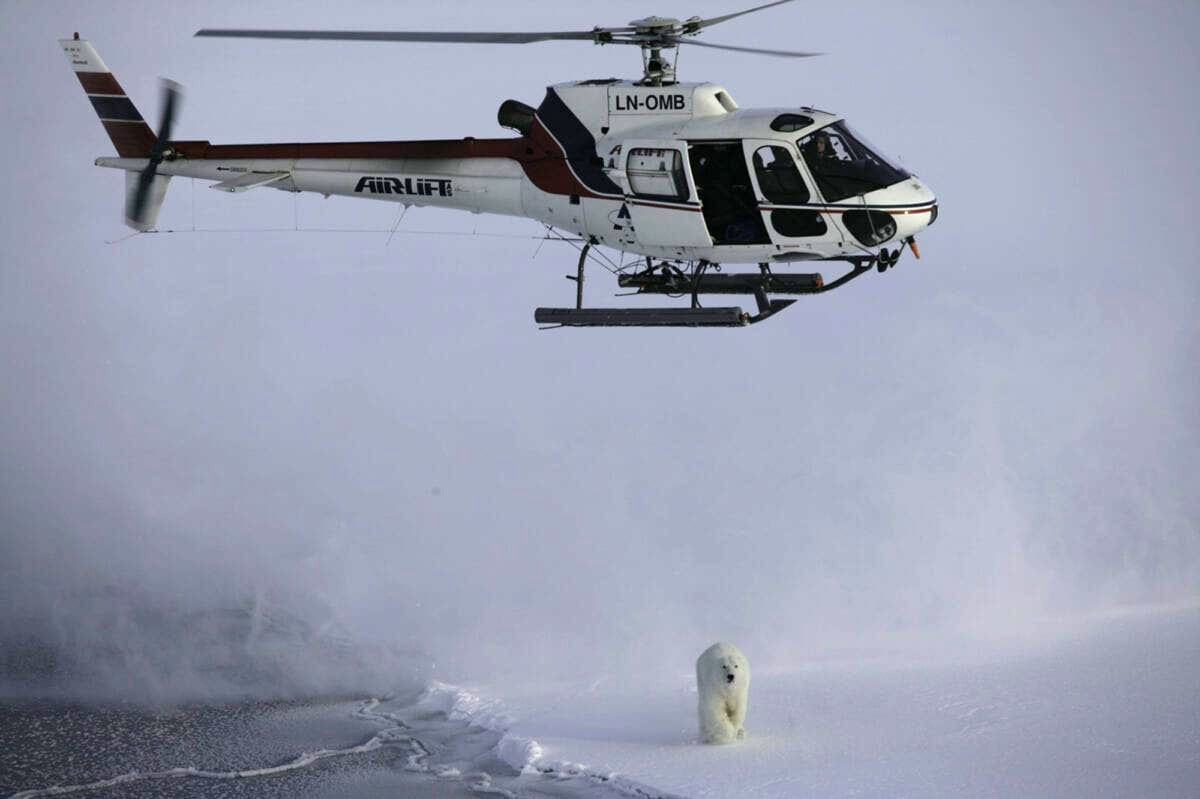
A man was killed last week (August 8) by two polar bears on a small island off the east coast of Baffin Island in Nunavut, multiple reports have confirmed — although precious few details have been provided, other than that one of the bears was killed immediately afterward. The name of the victim (an employee of a government radar site) has not been released, and no information on the condition of the bears or the circumstances of the attack have been provided. Major news outlets have had to pad their stories with details from previous attacks and other filler.
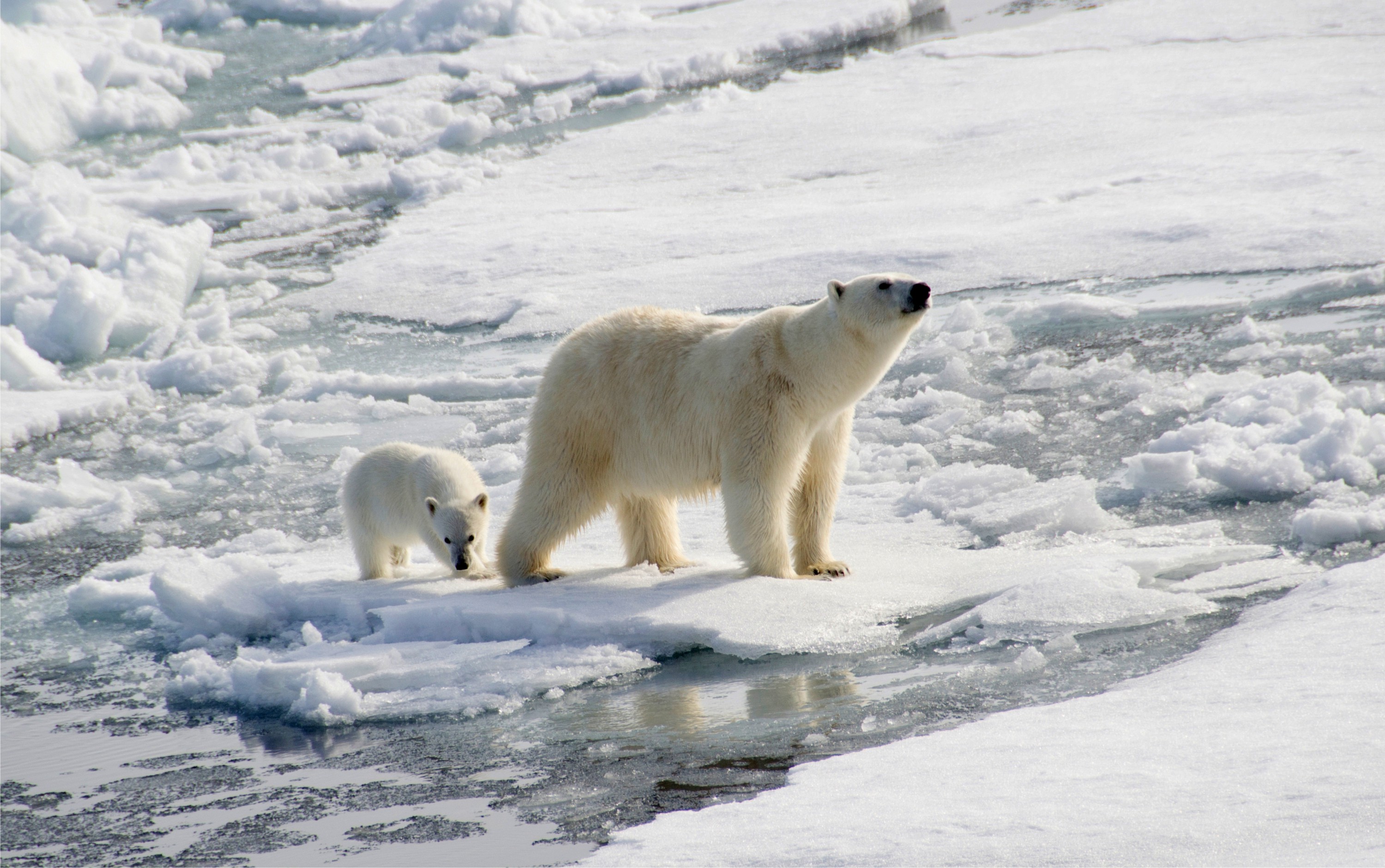
A Svalbard sow and half-grown male cub that’s as big as she is.
However, an attack by two bears sounds suspiciously like the sow and half-grown cub involved in another fatal attack in 2018 in Foxe Basin, even though adult females with cubs are one of the least common perpetrators of serious attacks on people.
Posted onAugust 1, 2024|Comments Off on Polar bear “boom” reported in East & Southwest Greenland comes with the usual problems
Reports over the last week of an unexpected abundance of polar bears onshore in East and Southwest Greenland have locals and tourists concerned. The former Prime Minister of Greenland claims the unusual number of bear sightings and problems with bears near communities (including an attack involving serious injury to a German researcher) are due to abundant sea ice offshore. This explanation is contrary to what polar bear specialists predict: i.e., that problems with bears occur when there is less ice than usual. None of the bears sighted have been described as thin or starving.
The Polar Bear Specialist Group has previously estimated that there are only about 650 bears in East Greenland, while a recent study estimated that an additional 234 bears lived in SE Greenland.
Polar bears don’t often show up in Southern or Western Greenland any more, but this year has been an exception. Only yesterday, two appeared near Nuuk, Greenland’s capital. And according to Aleqa Hammond, Greenland’s former Prime Minister, that’s just been the tip of the, well, iceberg.
“There are bears everywhere in West Greenland this year,” she told ExplorersWeb. “Quite a few have been way too close to towns in South Greenland this summer, too. Several polar bears have been shot in Qaqortoq, as the bears were literally in town.”
Another polar bear has been observed – and shot as an emergency – in Ittoqqortoormiit on Thursday morning. This is confirmed by the head of duty at the Greenland Police, Jørgen Madsen, to Sermitsiaq.
It is the second time a polar bear has been shot in emergency situations in Ittoqqortoormiit this week. On Tuesday evening around 19:30, the police received a report about a polar bear that had been shot in an emergency.
Here, the police could say that the polar bear came close to a dog crate, and then headed directly for a soccer field where children are playing.
Last week, a polar bear attacked a German researcher in East Greenland. The researcher, part of a team on Traill Island, encountered the bear on Friday morning.
Posted onJuly 18, 2024|Comments Off on W. Hudson Bay sea ice not going away anytime soon as polar bears sit tight offshore
A broad band of sea ice is jammed up against the western shore of Hudson Bay, hanging on despite warm mid-July temperatures. Its unusual thickness suggests it won’t be gone anytime soon, which means most Western Hudson Bay polar bears will likely remain offshore for at least a few more weeks.
The dark blue in the “departure from normal” chart below shows just how unusual this phenomenon is for the northern reaches of Hudson Bay:
Posted onJuly 11, 2024|Comments Off on Last month of Arctic spring fails to bring sea ice to its knees, even in Southern Hudson Bay
Polar bear habitat for June — the last month of spring in the Arctic — is still within 2 standard deviations of the long-term average despite sea ice experts’ predictions that catastrophic declines can be expected any year now.
The Arctic sea ice cover in June 2024 retreated at a below average pace, leading to a larger total sea ice extent for the month than in recent years. NSIDC, 3 July 2024
Oddly, the National Snow and Ice Data Center (NSIDC) employees who wrote up the sea ice summary for June felt it appropriate to bring up a recently-published prediction of impending doom for Southern Hudson Bay polar bears based on a sea ice prediction (Stroeve et al. 2024), which I covered here. The inclusion of this topic is a naked promotion of the Stroeve sea ice modelling paper which not only doesn’t fit the reality of this year’s sea ice conditions but their discussion doesn’t include a single piece of evidence that Southern Hudson Bay polar bears came off the ice earlier than usual.
Posted onJune 25, 2024|Comments Off on Arctic sea ice at the summer solstice: more polar bear habitat than 2022 after hottest year on record
We are just into the 2024 sea ice melt season in the Arctic with no signs of any big, dramatic changes despite claims that 2023 was the warmest year on record (since 1850). There is still abundant sea ice habitat for polar bears ahead of the summer months (July-September) when Arctic ice melts back considerably.
Polar bears in Western Hudson Bay are still on the ice despite vast open water levels normally signaling “breakup” has happened: the wind-driven ice is packed tight against the western shore and the bears are still on it.
The fact that recently-deceased Ian Stirling was a prominent co-author should come as no surprise: his irrational promotion of the idea that future “climate warming” could doom polar bears to near-extinction – even after recording and publishing evidence to the contrary – will go down in history as an appalling violation of scientific principles.
Adding to the dubious validity of the paper: lead author Julienne Stroeve’s 2007 paper predicting summer sea ice decline by 2050 was proven wrong by actual data by the time it was published (Stroeve et al. 2007, 2014) and a more recent update failed to foresee the recent 17-year stall in decline. And co-author Steve Ferguson, a seal biologists, rashly stated in 2016 that Hudson Bay could be ice-free in winter as early as 2021 [which, needless to say, never came close to fruition].
I’d say if Southern Hudson Bay polar bears might be extirpated as soon as 2030, as the paper’s co-author Alex Crawford suggests, the global temperature and ice melt had better get a move on: a survey showed the SH population was thriving in 2021 and Hudson Bay sea ice hasn’t hit any kind of death spiral in the three years since.
Posted onJune 9, 2024|Comments Off on Huge area of open water on Hudson Bay created by wind, not ice melt, NSIDC experts confirm
Sea ice experts at the US National Snow and Ice Data Center just confirmed my suspicion that the huge area of open water in eastern Hudson Bay during May this year was caused by winds, not ice melt. In other words, it’s a rare occurrence but not a sign of extra-early sea ice melt caused by global warming.
Money quote: “Unusual strong and persistent winds from the east caused the low extent.”
Posted onJune 4, 2024|Comments Off on New data show Svalbard polar bears are fatter than they were in 1993 despite continued low sea ice
Researchers at the Norwegian Polar Institute have finally updated their spring data, which show male polar bears in 2024 were even fatter than they were in 1993 and litter sizes of new cubs were just as high, despite continued low sea ice in the region over the summer months especially.
Watch polar bear habitat reform in the Canadian Arctic: “last 10 days” Canadian Ice Service animation (works anytime) HERE.
See Quote archive for details.










 polarbearscience
You must be logged in to post a comment.