Constant dire predictions have been an attempt to counter effective criticism of polar bears as AGW icon says outgoing PGSG chair

In an unexpected statement, Dag Vongraven (the out-going Chairman of the Polar Bear Specialist Group) suggests that much of the incessant dire warnings of doom about the future of polar bears from PBSG members has been a counter-measure to offset the effective efforts by myself and others to expose the flawed rhetoric this group promotes.

You may remember Vongraven, who in 2014 famously sent me an email alerting me to a PBSG statement that later came back to bite them (in part because it was included in a CBC documentary called The Politics of Polar Bears later that year, see below):

It is important to realize that this range [i.e. their polar bear population estimate] never has been an estimate of total abundance in a scientific sense, but simply a qualified guess given to satisfy public demand.

Will this be another? You be the judge.

Continue reading

Barents Sea polar bears thriving despite huge summer ice loss: spring research results are in

After being locked out last year, fieldwork monitoring polar bears in the Svalbard region of the Barents Sea resumed this spring. The results show that despite having to deal with the most extreme loss of summer sea ice in the entire Arctic, polar bears in this region continue to thrive. These facts show no hint of that impending catastrophic decline in population size we keep hearing is just around the corner. No tipping point here.

Continue reading

Op-ed sneak preview of my new book & sign-up to receive an email with the release date

My new book is almost ready to launch! In 6 weeks or so it should be ready for orders. But when Terry Corcoran asked for a sneak preview for Junk Science week at the National Post /Financial Post, I couldn’t resist. 

Read the preview at the FP here and sign up below to be informed of the book release date.

The title is Fallen Icon: David Attenborough and the Walrus Deception and you’ll find it full of surprises.

In 2019, Attenborough created a scandal when he falsely insisted that hundreds of walrus that fell to their deaths off a cliff on the coast of Siberia did so because of climate change. My investigation into the deceptions involved reveals the full extent of Attenborough’s journey to noble cause corruption, which started with the falling walrus and ended (so far) with him promoting ridiculous prophesies for COP26:

Use this new sign-up form and I will let you know, via a personal email, exactly when the book will go on sale:

Processing…
Success! You're on the list.

But that’s not all!

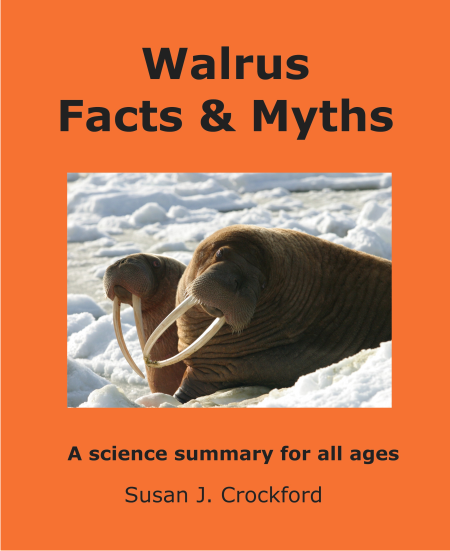
I will also have a walrus science book for kids called Walrus Facts & Myths ready to launch at the same time. It’s a companion to Polar Bear Facts & Myths and I’m sure kids aged 7 and up will enjoy it just as much. Stay tuned.

Polar bears of western Hudson Bay still on the ice at third week June

According to the tracker map provided by Andrew Derocher (University of Alberta), all of the western Hudson Bay polar bear females that still have operational satellite collars (deployed in 2019) are still out on the ice of Hudson Bay. The Explore.org live video cam that sits on the shore of Wapusk National Park just south of Churchill has been capturing images of caribou and birds but so far, no polar bears. Last year, the first bear seen onshore by the cameras (shown in the video) was on 13 July.

It wasn’t until a month later that more bears were seen: the fat mother and cub in the screencap below were spotted on 18 July 2020 and the last of the collared bears didn’t come ashore until late August:

This year at 21 June, only 6 collars still operating but only one of them is anywhere close to shore yet (courtesy Andrew Derocher via twitter, below):

That ice in the middle of the bay is still primarily very thick first year ice, as the chart for this third week of June shows (below):

Continue reading

Polar bear habitat update and the progress of breakup on Hudson Bay

At mid-month, there is still an abundance of thick first year ice over much of Hudson Bay, suggesting that – yet again – this will not be an early breakup year for Western Hudson Bay polar bears. The early breakup years in the past (like 2010) that generated all kinds of panic amongst polar bear specialists have not developed into ever-continuing declining trend (Lunn et al. 2016) or another abrupt step-change like there was in 1998/99 (Castro de la Guardia et al. 2017).

In the last few years conditions have been more like they were in the 1980s than the prophesied catastrophe we were promised. I don’t see a ‘tipping point’ for Hudson Bay; do you see a tipping point?

The more light green areas of thinner ice present, as there was in 2010 (below), the earlier breakup is apt to be:

Continue reading

Polar bear habitat in Canada at the first week of June sees widening of critical polynyas

Winds primarily cause the apparent sea ice ‘breakup’ in late spring through the widening of persistent polynyas and shore leads. This year the development of critical open water areas in Canada (which are important feeding areas for polar bears) is on track with previous years in most areas, although there is a lot of year-to-year variability.

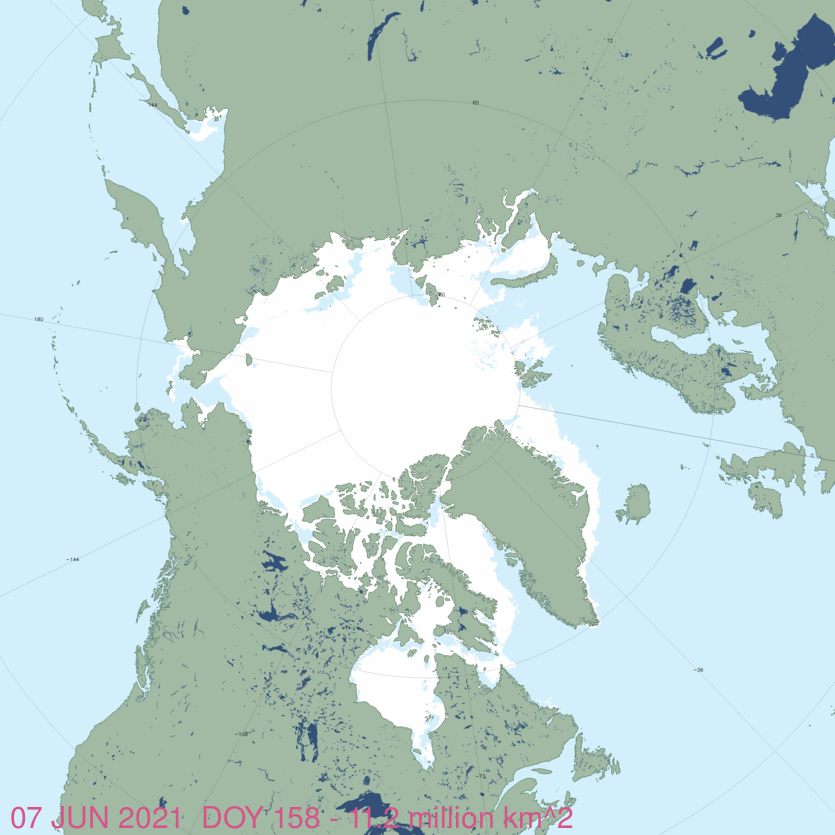
Several prominent polynas also opened up along the Russian coast and Northeast Greenland: see the entire Arctic condition at 7 June 2021 below, courtesy NSIDC:

Continue reading

New survey estimates 10x as many polar bears in Russian section of Chukchi Sea as in USA portion

A joint US/Russian aerial survey has estimated that a minimum of 3,435 polar bears (but possibly as many as 5,444) likely inhabited the Chukchi Sea in 2016, quite a bit more than a previous study that estimated a population size of 2,937 the same year (which used data from one small US area extrapolated to the entire region).

Continue reading

Activist heads explode as USFWS says oil activities pose minimal risk to polar bears in AK

Apparently, the US Fish and Wildlife Service (USFWS) under Joe Biden agrees with my conclusion that oil company activities in Alaska pose minimal risk to polar bears (Crockford 2019, 2020, 2021). Although this ruling is not yet final, they have proposed that oil exploration and extraction activities on the North Slope of Alaska can proceed over the next five years.

After noting that no major offshore oil spills have ever taken place in the Alaskan portion of the Beaufort Sea (see map below) and that all spills to date have been on land with no impact on polar bears, the proposed rule in the 200+ page assessment states:

Continue reading

Surprising sea ice thickness across the Arctic is good news for polar bears

This year near the end of May the distribution of thickest sea ice (3.5-5m/11.5-16.4 ft – or more) is a bit surprising, given that the WMO has suggested we may be only five years away from a “dangerous tipping point” in global temperatures. There is the usual and expected band of thick ice in the Arctic Ocean across northern Greenland and Canada’s most northern islands but there are also some patches in the peripheral seas (especially north of Svalbard, southeast Greenland, Foxe Basin, Hudson Strait, Chukchi Sea, Laptev Sea). This is plenty of sea ice for polar bear hunting at this time of year (mating season is pretty much over) and that thick ice will provide summer habitat for bears that choose to stay on the ice during the low-ice season: not even close to an emergency for polar bears.

Continue reading

Spring polynyas in the Arctic then and now as feeding areas for hungry polar bears

Patches of open water in the Arctic that develop in the spring, including polynyas and widening shore leads, are largely due to the actions of wind and currents on mobile pack ice rather than ice melt. Contrary to concerns expressed about possible negative implications of these early patches of open water, these areas have always been critical congregation areas for Arctic seals and are therefore important feeding areas for polar bears in late spring.

Continue reading