Tag Archives: attacks

Polar bears are not bloodthirsty killers, says biologist [just don’t forget your gun]

According to records compiled by James Wilder, a US Forest Service biologist, there were only 20 fatal polar bear attacks (out of 73 total attacks) between 1870 and 2014.

That’s what the 14 June 2016 account in the Anchorage Daily News says (“Sea ice has been keeping polar bears and humans apart — until now”). But I think it’s kind of delusional to suggest that a list of recorded attacks, spanning 145 years throughout the Arctic (including Russia), have captured more than a fraction of all actual polar bear attacks – given that many Arctic communities didn’t have reliable communications in the 1970s (let alone the 1870s). How about all the Inuit and Siberian hunters over the years who failed to return home because they were killed and eaten by a polar bear – unbeknownst to anyone?
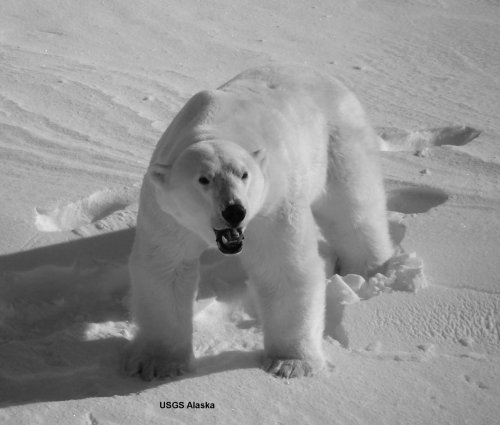
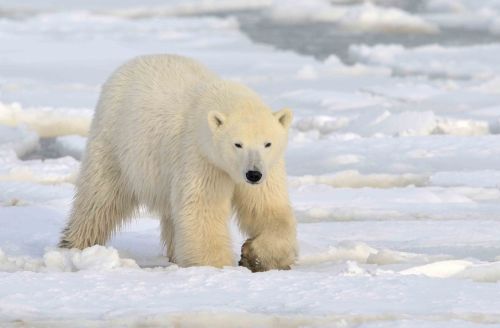
Alaska PB USGS_marked

Wilder presents these numbers as a basis for saying how concerned he is that a longer open-water season in the Arctic could increase the number of attacks by polar bears – and he’s right, that’s a valid concern now that the global population of bears is so high. Many polar bears plus people in a confined area is never a comfortable situation, as the people of Churchill, Manitoba have learned.

But declining sea ice is not the only scenario that could lead to an onslaught of hungry bears and a slew of fatal attacks, as my new science-based novel EATEN highlights. The truth is that if polar bears don’t get enough food in the spring – for any reason – the ice off the beaches of Arctic communities gives polar bears easy access to human prey. If that happens, people had better be prepared – because doors and windows won’t necessarily stop a determined polar bear.
EATEN ebook sale 2016 susancrockford_dot_com

Continue reading

Tracking polar bears in the Beaufort Sea and the issue of open water in May

A map posted by USGS shows that the 13 polar bears with tags or collars tracked during April 2016 in the Beaufort Sea were down to 9 in May (7 females with collars, 2 subadult or adult males with tags). As two rather large patches of open water formed last month in the Beaufort – mostly due to winds and currents, rather than melt (see animation below, original post here) – a reasonable question is this: how have polar bears dealt with this somewhat unusual condition?

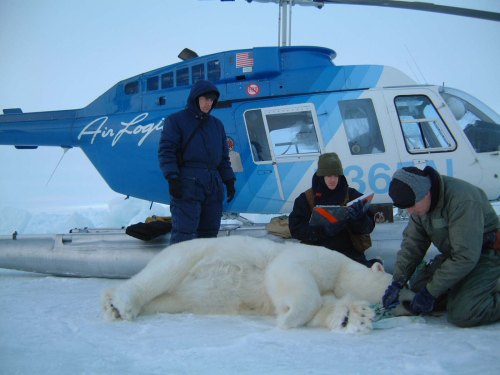
Polar_Bear_Biologist_USFWS_working_with_a_Bear_Oct 24 2001 Amstrup photo

Beaufort Sea breakup in April due to the effects of the Beaufort Gyre (NASA video):

There is also fairly extensive open water in Hudson Bay, so the same question can be asked for that region as well – but fortunately, we have data on tagged bears from both regions to give us a clue as to how the bears are faring.
Continue reading

More politics of polar bears courtesy WWF: impaled polar bear sculpture

The offensively tasteless “art” produced by Danish sculptor Jens Galschiøt, in collaboration with the World Wildlife Fund, for the specific purpose of influencing politics has reappeared.

‘Unbearable’ is a portable exhibit originally designed for the Paris COP21 climate talks in December 2015 but here it is again in Copenhagen. [h/t Tom Nelson]

It’s simply the Politics of Polar Bears on a global scale that has no basis in science: polar bear numbers have not declined as CO2 has risen. Jens Galschiøt’s tasteless and costly message funded by WWF is not much better than Plane Stupid’s 2009 ad of polar bears falling from the sky (see below). It’s just about as asinine and not supported by science. Continue reading

Polar bear visits Newfoundland community of Goose Cove

Goose Cove on the Great Northern Peninsula, western Newfoundland, had a polar bear visitor onshore yesterday. That’s typical for this region at the this time of year. The bear wasn’t seen, reported the Northern Pen (8 April 2016), but resident Jim Rice, who spotted the bear tracks in the snow, had this to say:

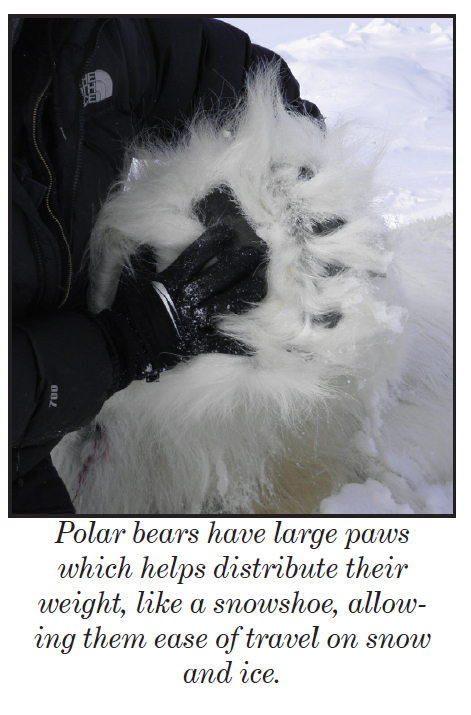
“I put my boot into one of the tracks, and I wear a size 12 boot, and it was the whole way around my boot,” said Rice. “So I didn’t stick around too long after that because I didn’t know if it was still in the area.”

Polar bear foot_USFWS_PolarBearNews2013

Goose Cove is featured in my polar bear attack thriller, EATEN in which polar bears come ashore much earlier than usual because their food source has failed – and terrorized the northern coast. A scarier story than well-fed bears ashore in April, after feeding for a month or so on harp seal pups.

Map below, from my novel, as well as sea ice conditions at the time.
Continue reading

Polar bears onshore in winter – will more bears mean more deadly attacks?

Incidents of polar bears causing problems onshore this winter (January & February) – including one that killed a horse in Greenland and another that threatened a resident in western Hudson Bay (only weeks after several incidents in southern Labrador) may be the tip of a very scary iceberg. I’ve taken a look at what records exist of this phenomenon, which in the past often involved deadly attacks. The large number of reports this winter appears to be a real increase, which is a rather terrifying prospect indeed.

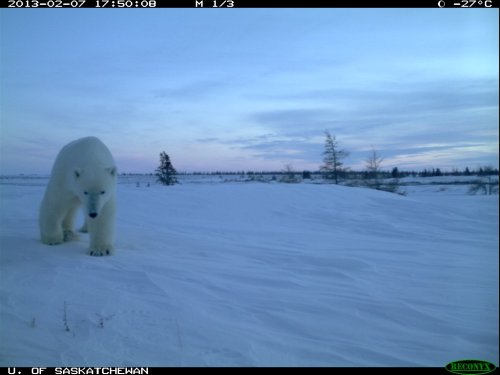
Doug Clark photo polar bears onshore in Feb 2013 Wapusk NP

In winter, all polar bears except females in dens nursing newborn cubs are presumed by biologists to be on the sea ice hunting but it turns out that is not quite true. Although relatively rare over the last twenty years or so, it appears that in some areas, bears are now coming ashore in winter.

The photo above shows a polar bear photographed by a remote camera installed at Broad River Camp, Wapusk National Park, western Hudson Bay on 7 February 2013. It was visible to the camera for 40 minutes but apparently caused no trouble (camera installed and maintained by associate professor Doug Clark from the University of Saskatchewan and colleagues).

Given the fact that there are now many more polar bears than there were in the 1970s as well as more people living in many coastal Arctic communities, problems with bears in winter are likely to increase, as this winter’s events show. More bears out on the ice in winter (January-March) will almost certainly create more competition for the little bit of food that’s available (seals are hard to catch in winter), which means some bears might increasingly be looking for alternate sources of food onshore.

Continue reading

More Churchill polar bear captures due to increased vigilance not global warming

Polar bear specialists just don’t get it: virtually no one except the ever-gullible media believes their exaggerated stories of doom. Yet they keep trying and with every lie and misrepresentation of fact, they erode the confidence of the public. Unfortunately, it’s not just trust in polar bear specialists that’s being eaten away, it’s trust in science generally.

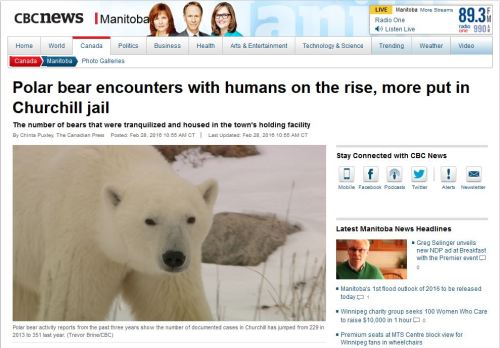
Churchill polar bear encounters up in 2015_CBC headline Feb 28 2016

This time, it’s a head-line grabbing piece about the number of problem polar bears in Churchill, Manitoba (written by Chinta Puxley) that made the usual media rounds yesterday (CBC News, CTV News, Global News, Huffington Post, Winnipeg Sun, The Globe and Mail). The main culprits are Daryll Hedman, regional wildlife manager for Manitoba Conservation, and polar bear biologist Andrew Derocher.

However, it’s hard not to see that the increased number of bears captured by Manitoba Conservation officers around Churchill can be best explained as a natural reaction by officials to a particularly frightening polar bear attack in 2013. Continue reading

Horse killed by a polar bear in southern Greenland this week

“Until Wednesday, Malik Frederiksen owned nine horses at his property in southern Greenland. After an attack by a polar bear, he now owns eight.”

Nanortalik Greenland_in context Google maps

So begins an article published in The Arctic Journal yesterday (18 February) about more problem bears onshore in mid-winter. But this time, the location is the south-west tip of Greenland and this time, the polar bear killed something before it was shot. It could just as easily have been a person.

In addition, according to this report, this is the second time in two days that a polar bear has been shot onshore in Greenland because it got too close for comfort.

It’s also the second report in as many weeks of multiple polar bears onshore causing problems in the middle of winter – the other reports were from southern Labrador in late January/early February.  This is a new pattern: it’s different and it means something. Continue reading

Polar bears rarely come ashore in January but one did on Tuesday

Polar Bear stock image gg66298544_sm

In a life-mimics-fiction moment, this report appeared Tuesday morning (26 January) in The Telegram newspaper in Newfoundland:

“The RCMP is warning the public after reports were received of a polar bear in Tilting. Fresh bear tracks were seen in the Fogo Island community Tuesday.”

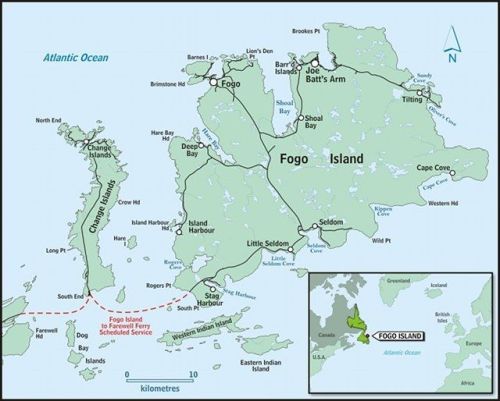
Tilting is a small town on the eastern shore of Fogo Island (see map below): Fogo Island sits off the northeast shore of Newfoundland (and is featured prominently in my new polar bear attack novel). Fogo Island lays at about the same latitude as London, England. The CBC, Canada’s national news outlet, also ran the story.

Fogo_on Fogo Island Newfoundland details

A government public advisory issued yesterday stated:

“Residents are cautioned following reported sightings of polar bears tracks near the community of Titling, on the eastern end of Fogo Island. Conservation officers confirmed the tracks to be within one kilometre of the community and believe the polar bear has since returned to saltwater. [my bold]

Polar bears are not usually seen onshore in Newfoundland until late March or April (previous stories here and here), after the ice has been close to shore for week and bears have feed extensively on newborn harp and hooded seal pups. Bears that come ashore in January – well before seal pups are born in spring (late February/mid-March) – can potentially be very dangerous because they are likely very hungry. None of the reports of this sighting gave any indication of the probable age of this bear. However, it must be kept in mind that young bears (3-5 years old) are more apt to be in a desperate state at this time of year.

Or, perhaps the bear caught interesting smells coming from shore and decided to take a short swim to check it out. The sea ice was still offshore at the time (see maps in yesterday’s post) but clearly, not too far off for the bear to swim. There may have been icebergs frozen into the pack ice that broke away (too small to show up on ice maps), that brought the bear further south than it would have ventured on its own.

It is a rare event for a polar bear to come ashore at Newfoundland in January, but it has happened before. Apparently, another bear came ashore, also on Fogo Island – in 1935 – and attacked someone. See the story below.
Continue reading

Nunavut survivor describes what a polar bear attack is like

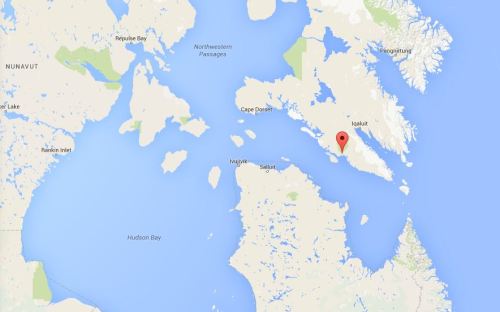
From NunatsiaqOnline yesterday, a detailed description of a polar bear attack that took place along Hudson Strait, within the Davis Strait polar bear subpopulation.

Kimmirut Nunavut_Google maps

Kootoo Shaw was wearing nothing but long johns and a T-shirt when a 400-pound polar bear dragged him by his toes along the tundra towards the ocean outside Kimmirut in September 2003.

Shaw, 46, was working as a guide on a sport-hunting trip when the attack occurred in the early morning. Continue reading

Hungry polar bear attacks: why my novel “Eaten” is set in early March

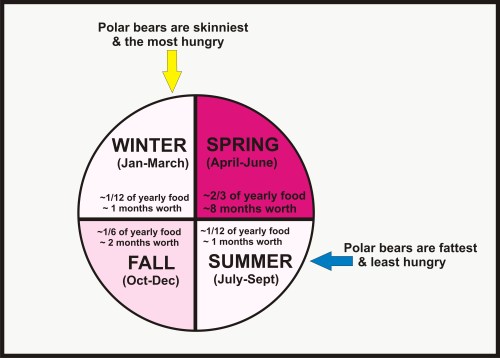
As I’ve pointed out previously, polar bears are leanest – and thus, hungriest and potentially the most dangerous to humans – at the end of winter (i.e. March).

Polar bear feeding by season simple_Nov 29 2015

That is why the unexpected prospect of hundreds of lean and hungry polar bears coming ashore in early March hunting available human prey would be a truly terrifying and daunting experience. Such a speculative scenario stands in marked contrast to an actual incident in July that involved a single well-fed bear that attacked a man asleep in a tent because he and his companions had chosen to dismiss the known risk.

Any predatory attack by a polar bear is terrifying but which is potentially the more deadly? One you can reasonably expect (and thus prepare for) or one that comes out of the blue and catches everyone unprepared?
Continue reading