Tag Archives: global temperature

New Hudson Bay sea ice modelling paper is more utterly useless fearmongering about polar bears

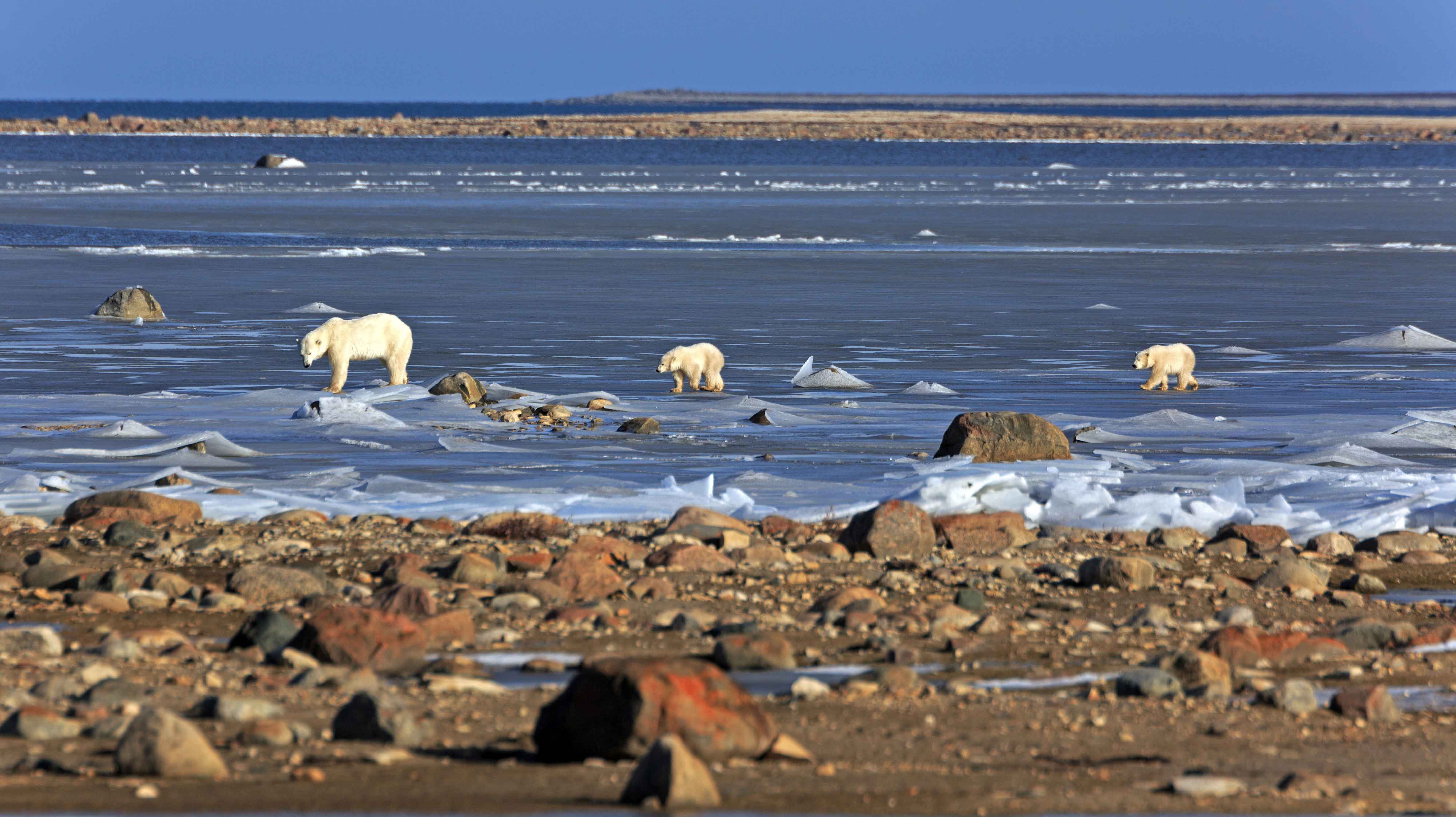
A new collaboration by sea ice and polar bear specialists that predicts a catastrophic future for polar bears in Hudson Bay (Stroeve et al. 2024) can be dismissed as yet another bit of utterly useless fearmongering for two reasons: 1) it’s a model projection that uses widely discredited SSP5-8.5 “business as usual” climate scenarios for its predictions; and 2) it’s based on the false premise that Western and Southern Hudson Bay polar bears have already suffered harm from reduced sea ice blamed on fossil fuel-caused global warming.
The fact that recently-deceased Ian Stirling was a prominent co-author should come as no surprise: his irrational promotion of the idea that future “climate warming” could doom polar bears to near-extinction – even after recording and publishing evidence to the contrary – will go down in history as an appalling violation of scientific principles.

Adding to the dubious validity of the paper: lead author Julienne Stroeve’s 2007 paper predicting summer sea ice decline by 2050 was proven wrong by actual data by the time it was published (Stroeve et al. 2007, 2014) and a more recent update failed to foresee the recent 17-year stall in decline. And co-author Steve Ferguson, a seal biologists, rashly stated in 2016 that Hudson Bay could be ice-free in winter as early as 2021 [which, needless to say, never came close to fruition].

I’d say if Southern Hudson Bay polar bears might be extirpated as soon as 2030, as the paper’s co-author Alex Crawford suggests, the global temperature and ice melt had better get a move on: a survey showed the SH population was thriving in 2021 and Hudson Bay sea ice hasn’t hit any kind of death spiral in the three years since.

Continue reading

17 years of near-zero trend in September sea ice demolishes claim that more CO2 means less sea ice

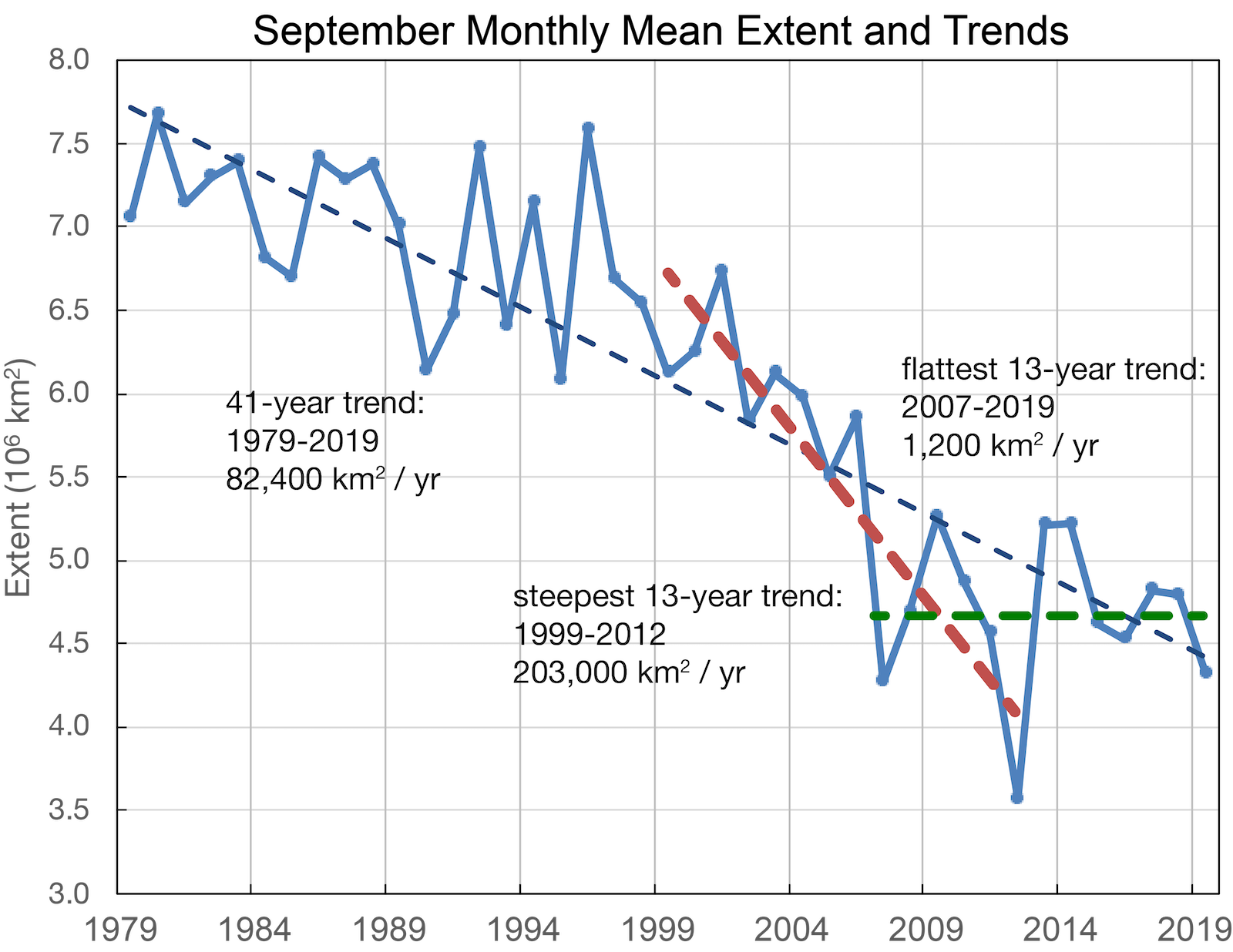
If the hottest year ever can’t precipitate ‘ice-free’ conditions in September, what’s it going to take? Arctic sea ice failed to nose-dive again this year, undoubtedly disappointing expects who have been anticipating a ‘death-spiral’ decline for ages. Arctic sea ice hit its seasonal low sometime around mid-September this year and although the precise value hasn’t been published, the average September ice coverage will likely be about 4.2 mkm2 once it gets announced in early October.

This means we have now had 17 years of a near-zero trend for September sea ice, extending the nearly-flat trend NSIDC sea ice experts acknowledged four years ago. This surely busts a huge hole in the prevailing concept that more atmospheric CO2 causes less summer sea ice. Note that CO2 levels measured in August 2023 were 419.7 parts per million (ppm), compared to 382.2 in August 2007, a rise of 37.5ppm with no corresponding decline in summer sea ice (and vs. 314.2 ppm in 1960). Measured in metric tons, CO2 emissions due to fossil fuels rose from 31.1 billion in 2007 to 37.1 billion in 2021 (last year of data), again with no corresponding decline in summer sea ice.

Continue reading

Stirling and Derocher’s sea ice trick – omitting facts to make polar bears appear endangered

Polar bear biologists Ian Stirling and Andrew Derocher continue to insist that western Hudson Bay (WHB) polar bears are already showing negative effects of reduced sea ice due to global warming. In their 2012 summary paper (Stirling and Derocher 2012), they updated someone else’s graph of global sea ice (to 2011) but used a graph for Hudson Bay (HB) ice breakup dates that ended in 2007. However, we know from other evidence that at least one of those years (2009) would have required extending the scale of the breakup date graph upwards and flattened the slope of the trend line. Updating the HB breakup date graph would not have supported Stirling and Derocher’s premise that polar bears in WHB are starving due to increasingly earlier sea ice breakup, so they simply left the data out (see Fig. 1).

In other fields, this is called fraud.

Is it fraud here? You decide.

I’ve expressed my outrage about this before (here and here), because we know from news reports that in 2009, breakup of Hudson Bay sea ice was unusually late: the Port of Churchill (in WHB) did not open for ship traffic until Aug. 12, a full three weeks later than average (July 21) – and the latest opening of the Port since records began in 1974.

I try not to keep thinking of Stirling and Derocher’s unscientific behaviour but was reminded of it again on Monday (March 4) when I attended a lecture at the University of Victoria given by paleoclimatologist Michael Mann. To my disbelief, Mann tried to argue that global temperatures predicted by NASA scientist James Hansen in 1988 have “closely resembled” actual temperatures since then – by presenting a graph of actual temperatures (observations) that ended in 2005, despite the fact that recent temperatures have not risen at the rate depicted in his graph (see previous post, #8). He did say, as an aside, that “you could argue that if the data were extended out to the present, the line might more closely resemble scenario C [a flat line]” but then continued with his story that observations were matching the ever-rising-temperatures of Hansen’s scenario B (see Figure 2 below).

For both parties – Stirling/Derocher and Mann – the recent data points left off their graphs did not fit their narrative: sea ice in Hudson Bay is not on a steady, precipitous decline and global temperatures have not continued to rise as predicted by Hansen in 1988. The graphs look like science, but they are not.

Continue reading