Tag Archives: Russia

Feeding time for Russian polar bears as shorefast ice returns to Laptev Sea, ice-generator of the Arctic

Fall is the second-most important feeding season for polar bears after spring but it comes at different times for different subpopulations. Sea ice formation along shorelines attracts fish and seals and that means polar bears which spent the summer onshore will soon eat again after their summer fast. As usual, the earliest ice formation this year is along the coast of the Laptev Sea, which is one of the primary ‘ice-generators’ of Arctic sea ice. Western and Southern Hudson Bay bears will have longer to wait but the ice will eventually come to them too.

Three adult male polar bears share a seal kill on the newly-formed ice off Wapusk National Park, Western Hudson Bay. 5 November 2020. Buggy cam, Explore.org

WH photo

Continue reading

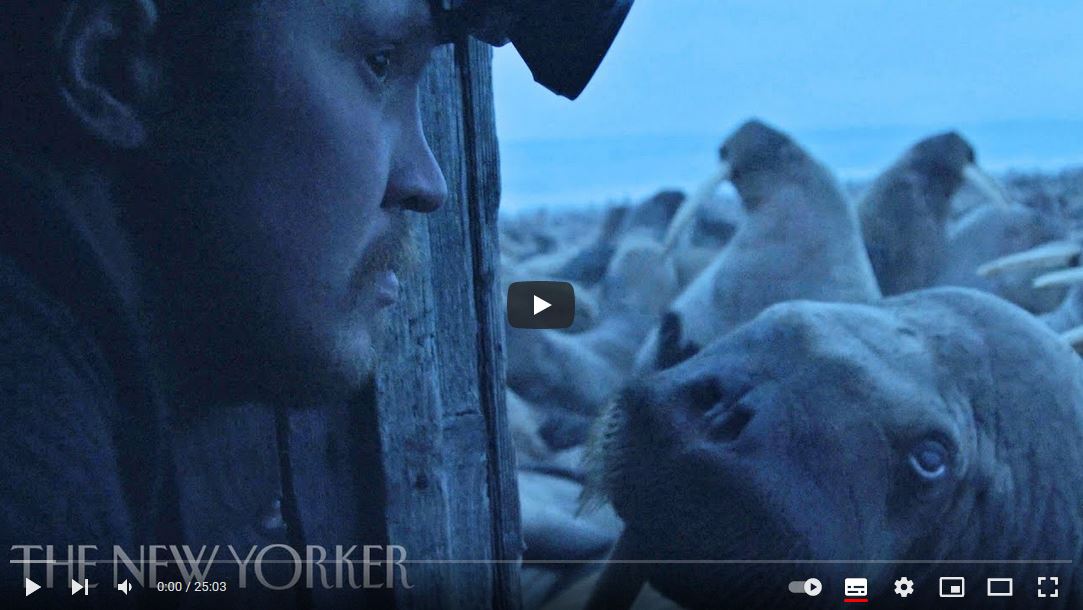
Activists try to reboot Pacific walrus as climate change icons just as numbers reach a new high

Activists have again resorted to using documentary film to promote Pacific walrus haulout deaths as contrived “proof” of gruesome climate change impacts even as evidence emerges that walrus numbers are higher than at any other time since the late 1970s. Oops! Busted by facts yet again!

Continue reading

Russian walrus and polar bears continue to thrive US researchers tell the Washington Post

Interviews with US researchers for a piece in the Washington Post earlier today contain revelations that walrus and polar bear populations in the Russian Far East continue to thrive, despite insisting that polar bears face a dire future without human interference.

This article on collateral damage of Russia’s war with Ukraine comes with this stunning sub-headline:

The invasion [of Ukraine] is first and foremost a human tragedy, but it is also dire for wildlife, stalling scientific work on polar bears and other wildlife threatened with extinction.

The article prominently features a researcher working on Chukchi sea polar bears, which are currently thriving but still tagged with a status of “threatened” based entirely on computer models that predict a dire outcome 30 years from now. The writer also interviewed a scientist working on Pacific walrus, which likely number more than 200,000 animals and are not considered “threatened,” a point oddly not mentioned by the author or the researcher interviewed (Crockford 2023; MacCracken et al. 2017; Fischbach et al. 2022; USFWS 2017a,b).

Continue reading

New survey estimates 10x as many polar bears in Russian section of Chukchi Sea as in USA portion

A joint US/Russian aerial survey has estimated that a minimum of 3,435 polar bears (but possibly as many as 5,444) likely inhabited the Chukchi Sea in 2016, quite a bit more than a previous study that estimated a population size of 2,937 the same year (which used data from one small US area extrapolated to the entire region).

Continue reading

Ten fat polar bears filmed raiding a stalled Russian garbage truck

From the Siberian Times today (20 October) is a story with few facts but a fabulous video of six fat adults and four fat cubs as they set siege to a stalled open garbage truck in the Russian Arctic. It may have been filmed on Novaya Zemlya but that has not been confirmed.

Of course, Novaya Zemlya has had previous problems with bears habituated to garbage, most famously an extended incident in 2019 that was perversely blamed on climate change.

Continue reading

Claims polar bear cannibalism on the rise in Russian Arctic not supported by facts

The Guardian today expanded on a story published in the Moscow Times that quotes a Russian scientist claiming cannibalism among polar bears is on the rise in the Russian Arctic. However, the scientist offered no numbers to support this claim and there is no suggestion he had done a study on this phenomenon.

Cannibalism video 2015 Nat Geo_off Baffin Island

As I’ve said before, incidents of cannibalism cannot be said to be increasing because there is no scientific baseline for which recent occurrences can be compared. Scattered anecdotal reports of any behaviour cannot be touted as evidence for a trend even though they may be of interest and worth recording.

Continue reading

Polar bear cubs play on the thin ice that supposedly threatens them with extinction

This video tweet deserves a post of its own: two relatively inexperienced cubs-of-the-year in Russia deliberately break through thin ice, fall into the icy water and crawl back out – over and over again, for fun, as their mother watches in the background. Play is one way animals learn important survival lessons and for polar bears, this is one of them:

Thin ice was a natural component of the Arctic long before polar bears evolved to live there: it is nothing new but dealing with it requires a strategy that cubs must learn.

UPDATE 1 August 2020: here is the same video, better quality, on Youtube:

Continue reading

No joke: Russian scientists marked problem Kara Sea polar bear with T-34

The media are so gullible. So eager are they for a sympathetic polar bear victim that news outlets everywhere carried a story earlier this week about a Russian polar bear that had ‘T-34’ spray-painted on its side. They took the word of Russian polar bear/walrus consultant to WWF and Netflix, Anatoly Kochnev, that this was some kind of cruel joke that meant an untimely death for the bear. Turns out it was nothing of the kind.

T-34 polar bear

Continue reading

Ryrkaypiy ‘over-run’ by >50 polar bears is probably due to more Chukchi Sea bears

A scary-sounding headline from the BBC today screams “Ryrkaypiy: Far-north Russian village overrun by polar bears“. A little research would have shown (as I do below) that this sort of event is not unusual for this village, there is adequate sea ice off the coast to allow polar bears to hunt for seals if they choose to do so, and the photos provided do not support the claim that almost all of the polar bears “appeared to be thin” (see photo below and others). Similar incidents happened in 2013 and 2006. Increasing numbers of Chukchi Sea polar bears is the most plausible explanation for the recent abundance of bears at this village.

BBC Russian village Chukotka over run by polar bears BBC 5 Dec 2019 headline

BBC headline, 5 December 2019. Does that look like garbage these fat bears are feeding on or the frozen remains of dead walruses at the base of the Cape Schmidt cliff?

UPDATE 8 December 2019: A Daily Mail version of the same story (6 Dec) confirms the photo above is of bears feeding on walrus remains (not garbage) and has many more photos (plus a video) of a large number of bears, not a single one of which that I saw was ‘skinny’ (see quotes from the story below). See also the Siberian Times version (6 Dec) with the same pictures. My source for the story was an article published by the BBC, which ran the day before (5 Dec).

UPDATE 9 DECEMBER 2019: Now it’s apparently 63 polar bears threatening the village of Ryrkaypiy on the Chukotka coast, according to the Siberian Times yesterday and repeated by the Daily Mail (with more pictures and video). Russian media getting lots of mileage out of this one. The story now says the bears are feeding on “seals”, not walrus (to deflect attention over their long history of walrus/polar bear problems? Or just a bad translation?). Both stories repeat the claim that most of the bears are “skinny” despite the photos showing just the opposite: lots of fat, healthy bears.

Also, uniquely (and rather bizarrely), the Daily Mail piece claims the bears are being deprived of the “fish” they should be consuming:

Instead of hunting for fish in deeper waters , the bears are eating seal carcasses left in autumn.

Last year army servicemen cleared the village’s shore of remains of dead seals on which the bears are feeding.

Obviously written by someone who knows absolutely nothing about polar bears, who rarely, if ever, eat fish and certainly would not be eating fish at this time of year. Sea ice map below for 8 December 2019 from the Alaska Sea Ice Program for 8 December shows, as noted below, that there is enough ice offshore for the bears to hunt seals if they chose to do so (since eating long-dead walrus is much easier than going hunting):
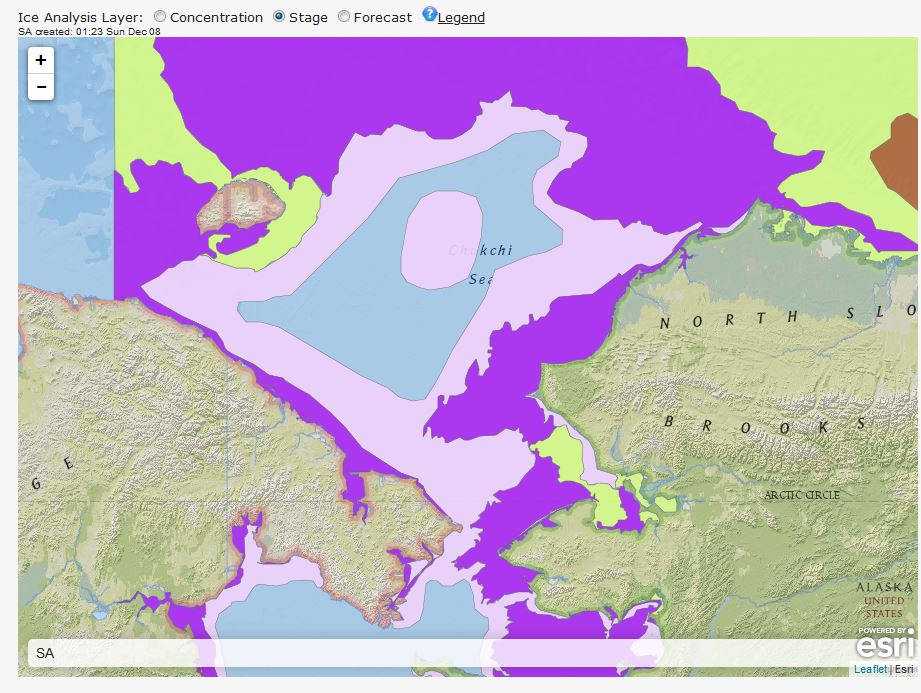
Chukchi Sea ice stage of development 8 Dec 2019 Alaska Sea Ice program

UPDATE 14 December 2019: Apparently, the number of invading bears is now 72 (number gets higher every time someone asks, even though they are still talking about “about a week ago”: who exactly is doing the counting?), according to a story today in The Times (UK). Residents say they move walrus carcasses “away” from the village to a “feeding point” for the bears but it’s apparent the distance is insufficient to prevent problems with bears coming into town. While a local cleaner working for the polar bear patrol (well indoctrinated by the WWF who sponsor the program), proclaims the problem is “definitely” due to climate change, there is finally the admission in this article that the bears coming into town are young bears driven away from the walrus carcasses by larger, older animals (i.e. intra-specific competition). This piece also has a few new photos, including one (below) of fat bears getting into garbage (still no photos of the so-called “skinny” bears said to dominate this “invasion”) and also is the first I’ve seen that doesn’t state that there is no sea ice (only that the ice extent is lower than usual). Some progress, but balanced by the hype promoted earlier this week (at “Treehugger” – what a surprise) by former WWF activist Geoff York (now at Polar Bears International), who is still blaming this incident on lack of ice.
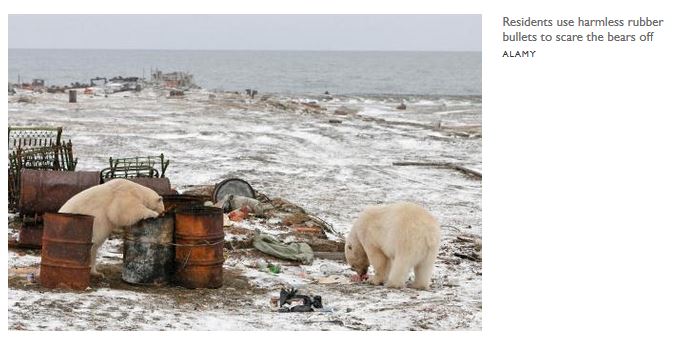
Ryrkaypiy bears in local garbage_The Times UK 14 Dec 2019

Continue reading

Polar bear at a walrus haulout with cliffs in Russia: Netflix scenario all over again?

In the news this morning is a report out of Russia that a team from WWF and a Russian documentary film crew were approached from the top of the cliff by a polar bear – at what looks suspiciously like the steepest part of the same Chukotka cliff that the infamous Netflix ‘Our Planet’ walrus video was filmed in 2017. The Netflix crew insisted that no polar bears were around when the walrus deaths occurred, despite strong evidence to the contrary (including a polar bear shown in the final seconds of the film!)

WWF and RT journalist fend off polar bear as they film walrus in Russia_13 Sept 2019 headline

Is the cliff above the same one we saw last year as walrus fell to a gruesome death on the rocks below, falsely blamed on lack of sea ice? It is mid-September, the same time of year as the 2017 walrus footage was filmed by the joint Netflix/WWF crew – and surprise, surprise, it looks like WWF are taking other filmmakers back for more of the same.

Or have they found another location with the same features?

Here is the original WWF Behind the Scenes video from the Netflix incident:

Continue reading