Tag Archives: sightings

Polar bear “boom” reported in East & Southwest Greenland comes with the usual problems

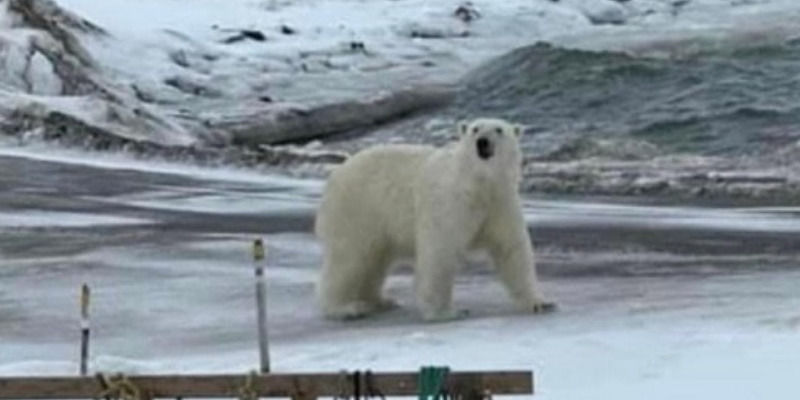
Reports over the last week of an unexpected abundance of polar bears onshore in East and Southwest Greenland have locals and tourists concerned. The former Prime Minister of Greenland claims the unusual number of bear sightings and problems with bears near communities (including an attack involving serious injury to a German researcher) are due to abundant sea ice offshore. This explanation is contrary to what polar bear specialists predict: i.e., that problems with bears occur when there is less ice than usual. None of the bears sighted have been described as thin or starving.

The Polar Bear Specialist Group has previously estimated that there are only about 650 bears in East Greenland, while a recent study estimated that an additional 234 bears lived in SE Greenland.

Polar Bear Boom May Threaten Greenland Adventurers” (25 July 2024)

Polar bears don’t often show up in Southern or Western Greenland any more, but this year has been an exception. Only yesterday, two appeared near Nuuk, Greenland’s capital. And according to Aleqa Hammond, Greenland’s former Prime Minister, that’s just been the tip of the, well, iceberg.

“There are bears everywhere in West Greenland this year,” she told ExplorersWeb. “Quite a few have been way too close to towns in South Greenland this summer, too. Several polar bears have been shot in Qaqortoq, as the bears were literally in town.”

Another polar bear shot in Ittoqqortoormiit” (25 July 2024)

Another polar bear has been observed – and shot as an emergency – in Ittoqqortoormiit on Thursday morning. This is confirmed by the head of duty at the Greenland Police, Jørgen Madsen, to Sermitsiaq.

It is the second time a polar bear has been shot in emergency situations in Ittoqqortoormiit this week. On Tuesday evening around 19:30, the police received a report about a polar bear that had been shot in an emergency.

Here, the police could say that the polar bear came close to a dog crate, and then headed directly for a soccer field where children are playing. 

Man Survives Polar Bear Attack in Greenland” (30 July 2024)

Last week, a polar bear attacked a German researcher in East Greenland. The researcher, part of a team on Traill Island, encountered the bear on Friday morning.

Continue reading
A good year for Svalbard polar bears due to abundant sea ice coverage

A sow and a pair of half-grown cubs recently paid a visit to the Polish Research Station in southwestern Svalbard without causing any more trouble than racing heart-rates, according to a report in The Guardian today.

Money quote from the leader of the expedition [my bold]:

This year the team had seen more polar bears than usual, he added. Usually there were around 20 bear sightings a year, but this year there had been close to 40 sightings since June and they expected to see more in their final three months.

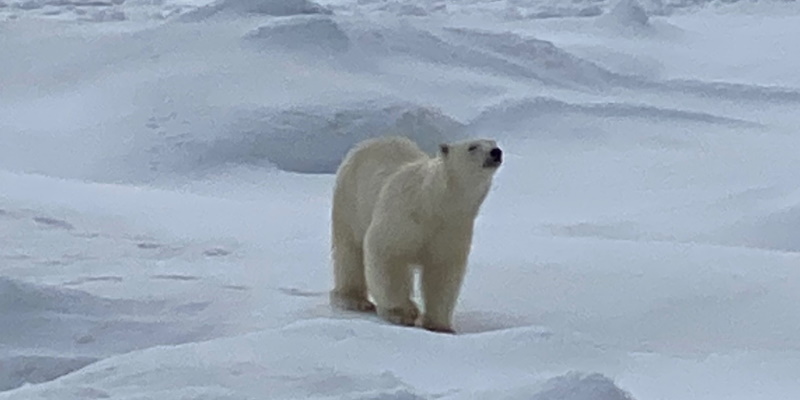
So far, we have not observed any clearly emaciated individuals. This year is probably a good year for Svalbard’s polar bears because there is a lot of sea ice here compared to recent years,” he said [The Guardian, 2 April 2024, see photo above].

Continue reading

Southern Labrador coastal landscape dominated by fat polar bears in March

Recent reports out of southern Labrador highlight how common it is to find polar bears onshore at this time of year. The small coastal community of Black Tickle seems to take the prize for the highest number of incidents and sightings but Happy Valley-Goose Bay is the somewhat surprising contender. [see correction below] Photo below is from Black Tickle.

Since early March, polar bear sightings in Newfoundland and Labrador have been common. The bears, of course, have come south on the Labrador Sea pack ice looking for fat newborn harp seals, which are now so abundant in the region that nearly a year’s worth of food could probably be consumed in a week or so. It appears that already well-fed bears may look around for what else could be added to their menu or just need a break to digest between meals. Photos of some of the bears sighted are all in good or excellent condition, and few of the animals seem to be intent on causing real trouble for locals–a far cry from the bear that wandered off the ice into Wales, Alaska earlier this year and killed a young mother and her infant son.

Continue reading

Polar bear sightings and sea ice conditions in Newfoundland & Labrador 2023 vs. 2017

Conservation officials issued an alert to residents of coastal communities to be aware of polar bears coming ashore over the last week in northern Newfoundland and southern Labrador, after a woman photographed a bear outside her home on Tuesday morning (7 March 2023). Since no bears in this subpopulation are tracked with satellite radio collars, we have no idea if there are a few dozen bears — or a few hundred of them — hunting on the ice and available to come ashore when the opportunity arises.

Recall that in April 2017, after more than a dozen bears had been spotted onshore in the region since early March, polar bear specialist Andrew Derocher told CBC Radio that this was bad news for the bears.

Continue reading

Here comes the pack ice for the Canadian East Coast

Davis Strait pack ice is now descending on the Labrador coast. Only slightly later than usual but it looks like there’s plenty of it.

This is the ice that brings polar bears to Newfoundland and southern Labrador (photo above from April 2022). Be careful what you ask for…

Continue reading

Fat polar bear killed on the south shore of the Gulf of St. Lawrence on the Gaspé Peninsula

A fat polar bear was killed early this morning (Sunday 1 May 2022) near a small town on the north shore of the Gaspé Peninsula, the portion of Quebec that New Brunswick in the Gulf of St. Lawrence after being tracked by wildlife conservation officers since yesterday. Two other sightings were reported in the Gulf earlier in April on the opposite shore, which could possibly have been the same bear.

This is why there are polar bears in my recent sea ice tsunami novel set in Cape Breton, Nova Scotia in March 2026. Davis Strait polar bears are thriving, having increased in number dramatically since the 1970s, due to hunting bans and abundant harp seals. Until the last few years, Davis Strait polar bears haven’t been spotted this far south in the spring since 1849 (with a few other historical reports even further south in the 1500s). The last time a polar bear was spotted onshore in the Gulf area (and got this much attention) was in late March 2017.

These recent polar bear sightings in the Gulf of St. Lawrence likely reflect a population that’s at its peak size or still increasing. The photo above shows the bear was in excellent condition after feeding heavily on harp seal pups. Unfortunately, from where it ended up, it likely wouldn’t have made it back to the receding pack ice off Labrador in time to return to Davis Strait for the summer.

Excerpt below from the CBC story (‘Polar bear spotted on Gaspé peninsula killed by wildlife officers‘; 30 April 2022), but first you’ll need the map of the area. Charts for sea ice conditions at the time follow.

Continue reading

Newfoundland polar bear sighting updates and video

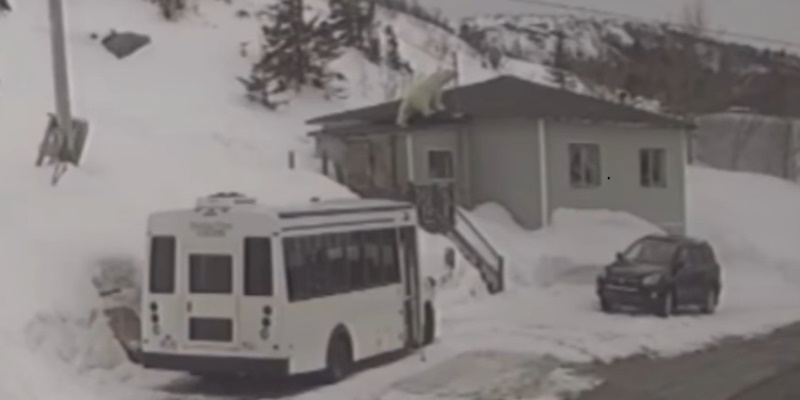
Here is a Youtube video of the incident I wrote about on Tuesday, of the bear that climbed up on an elderly woman’s house in St. Anthony last Sunday and then confronted her when she opened the door.

Statements from local officials included with a follow-up news report of the incident confirms that there were indeed no polar bear sightings along the Labrador coast in 2020 and 2021 and few (if any) along the Newfoundland coast: it wasn’t just a case of reports not making the news. In addition, it also appears that sea ice conditions this year brought an abundance of harp seal pups to the waters off southern Labrador and Newfoundland, which may mean that pregnant harp seals were giving birth further north for the past two years and the Davis Strait bears were simply staying with them.

Continue reading

East Coast sea ice so far similar to last year

Davis Strait ice pack is slowly moving south this year just as shorefast ice is developing in-place along the Labrador shoreline, similar to last year. East Coast harp seals that give birth in the region in March depend on this ice and so do many Davis Strait polar bears that feed on those newborn seals. In contrast, in 2017 the ice off Labrador was broader by mid-January (even more so by mid-February) and that seems to have made a huge difference by April, when ice north of Newfoundland was thick and extensive.

Compared to last year at this time, there was somewhat less ice along the Labrador coast but the difference is really negligible. By April, ice extent was well below average, especially in the Gulf of St. Lawrence, and there were few sightings of polar bears along the Labrador and Newfoundland coasts.

Back in 2017 at the same time (below), the band of ice along the southern Labrador coast was much broader, indicating more movement of Davis Strait ice from the north. This resulted in so many polar bear sightings in Newfoundland and Labrador by March and April that I could hardly keep up reporting them (Crockford 2019:32):

East coast conditions could change significantly over the next few weeks however, especially if weather conditions bring more north winds.

References

Crockford, S.J. 2019. State of the Polar Bear Report 2018. Global Warming Policy Foundation Report 32, London. PDF here.

Less than usual ice conditions off Labrador have meant very few polar bear sightings

I’ve been wondering ever since last year why reports of polar bears onshore in Labrador especially and also the north coast of Newfoundland, have been virtually non-existent. This year there has been little ice off Newfoundland except for the Northern Peninsula but relatively abundant ice off the south coast of Labrador.

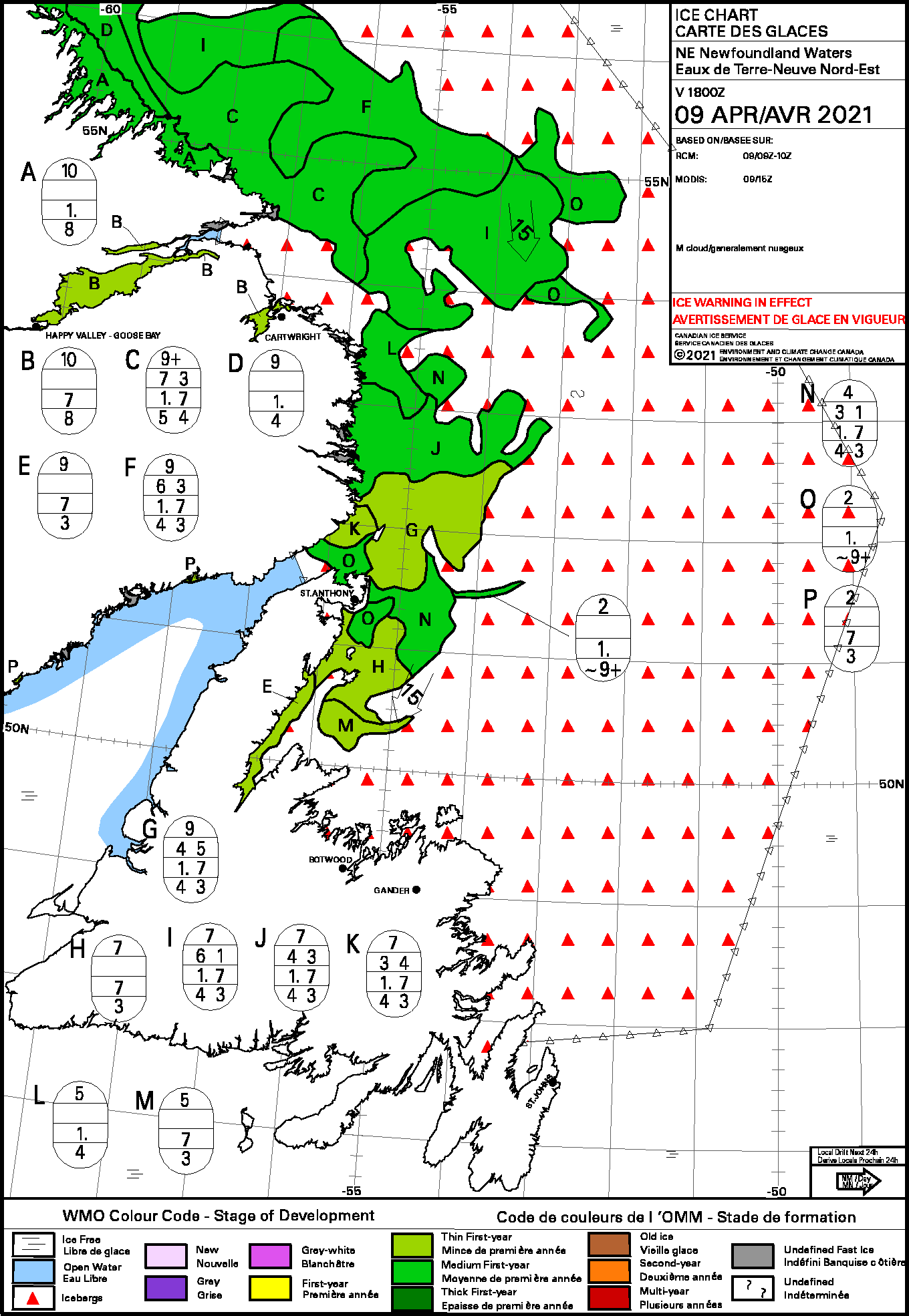
Yesterday, Canadian Ranger and polar bear guard Jefferey Keefe of Black Tickle (which is on an island off the Labrador coast) said on a CBC radio interview (13 April 2021) that while in 2019 they had 72 sightings around the community over the season, last year they had 7 and so far this year they have had only 2 sets of tracks – but no actual sightings of bears. He estimated the average number of sightings per year is about 20, and that he had talked to his colleagues in Makkovik (north of Rigolet on the map below) and their experience is similar. It appears that numbers are down throughout southern Labrador, although one bear was seen in Charlottetown last week (south of Black Tickle).

Keefe said that the sea has been very rough around the island this year, effectively breaking up the young sea ice almost as soon as it forms. They have no ice in their harbour right now, which is unusual. He thinks this lack of nearshore ice is keeping the bears further out on the pack ice: the bears are still out there but just taking different routes this year. Given the current ice conditions locally, he’s not really expecting any more visits this season.

Below is a detailed ice chart of the region from this year: Black Tickle is south of Cartwright, which is marked on the chart.

In 2019, I kept track of published polar bear sightings in Labrador, not all of which were in Black Tickle. I’m pretty sure I didn’t miss any (Crockford 2020), but there was nowhere near 72 reports overall, let alone 72 just in Black Tickle. See here (mid-Feb); here (late Feb); here (mid-April); here (late May).

However, I was also pretty sure that every single sighting wasn’t making the news, which this information confirms. A total of 72 sightings in 2019 in Black Tickle alone is impressive! In Newfoundland, there were an impressive number of sightings in 2017.

The ice came early to Labrador in 2019 and continued to be be relatively heavy throughout the spring. There was lighter ice in 2020 but not as late and light as this year. From the comments of Sgt. Keefe, it seems the wind and sea conditions very close to shore have had more of an impact on potential polar bear visits in southern Labrador than the ice conditions well offshore. Although a population collapse would also explain the dramatic decline in sightings, there is no evidence I’ve heard about that Davis Strait numbers are way down, as some have predicted.

Listen to the whole thing at 13:30-18:00 on the tape.

Crockford, S.J. 2020. State of the Polar Bear Report 2019. Global Warming Policy Foundation Report 39, London. PDF here.

Polar bears prowling Newfoundland come on top of coronavirus fears

On Tuesday 17 March 2020, several polar bears were reported in and around the community of St. Anthony on the Northern Peninsula of Newfoundland, adding another threat on top of coronavirus concerns in the province. The photo below is from a 2018 Newfoundland sighting from the same region: none are available for the current report.

NP-PolarBearSighting 2018-6_large

There have been no reports of trouble but locals will have to stay vigilant to remain safe, which since 2008 has been a common concern from late winter to early spring. In 2012 in this area, a bear was shot after it destroyed homes and attacked livestock; another bear was shot the next week in the same area. And in 2016 and 2017, a bear had to be shot to protect residents. Bears at this time of year are in hunting mode, which is why my polar bear attack thriller novel, EATEN, is set in March.

Newfoundland Great Northern Peninsula map

Current sea ice conditions below.

UPDATE 22 March 2020: “Just after 1 p.m. on March 21, the RCMP St. Anthony advised they blocked off Goose Cove Road, St. Anthony, as a polar bear has been sighted in the area. Wildlife is en route to assess the situation. In the interest of public safety residents are asked to stay away from this area.” From Saltwire here. Another report on the same sighting here.

Continue reading