Posted onFebruary 3, 2026|Comments Off on Biologists allowed David Attenborough to tell BBC viewers that Barents Sea bears were dying of starvation in his 2011 Frozen Planet episode when they knew it wasn’t true
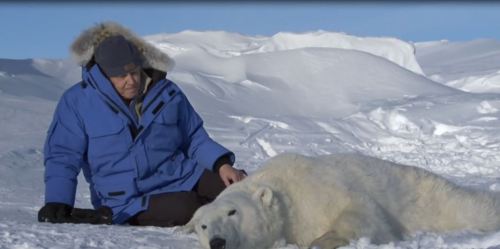
In the climate change episode of his 2011 BBC Frozen Planet series ‘On Thin Ice’, Sir David Attenborough told viewers that polar bear mothers and cubs across the Arctic were starving because climate change was melting the sea ice, even as he sat beside a fat, healthy Barents Sea female (below).
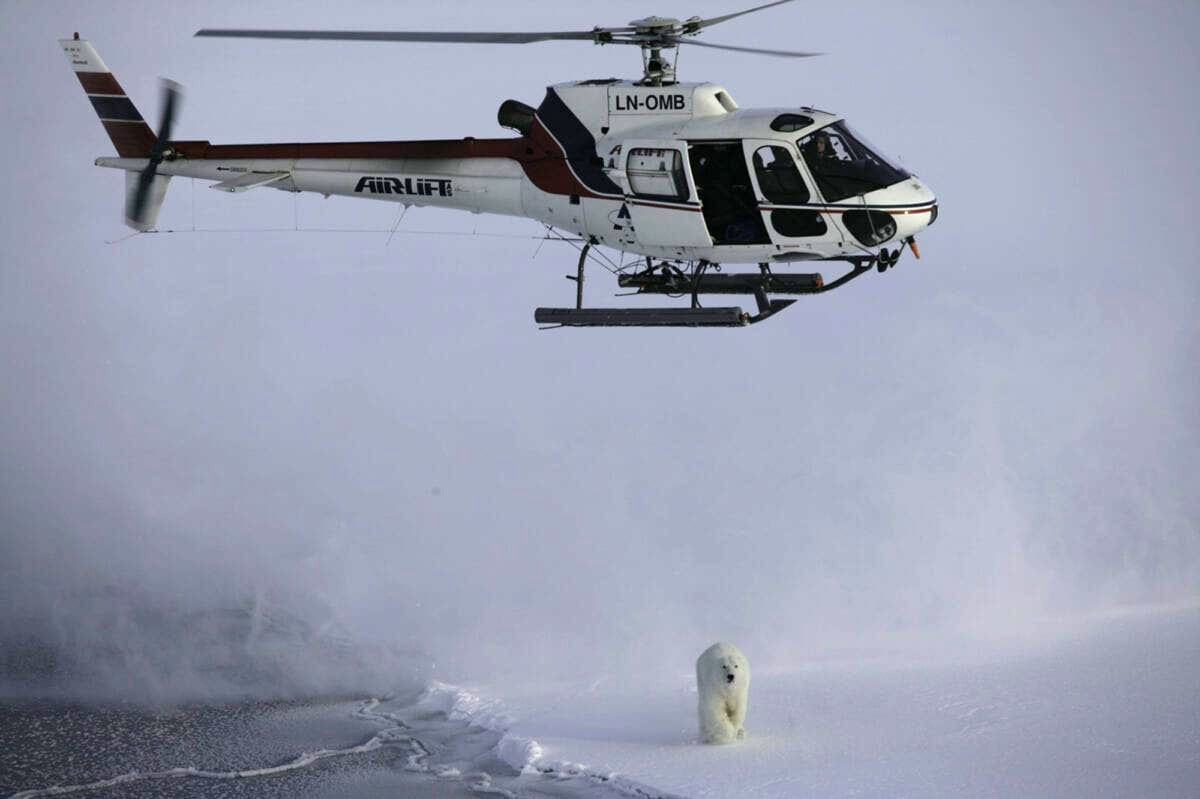
I wonder how Sir David Attenborough feels now? Has anyone bothered to tell him that Norwegian biologists have finally admitted that Barents Sea polar bears were actually fat and healthy in 2010 when they assisted in the filming of his BBC documentary? Or, did Attenborough know even then that this population of polar bears was thriving despite the large loss of sea ice – but let his viewers think otherwise?
Comments Off on Biologists allowed David Attenborough to tell BBC viewers that Barents Sea bears were dying of starvation in his 2011 Frozen Planet episode when they knew it wasn’t true
Posted onJune 4, 2024|Comments Off on New data show Svalbard polar bears are fatter than they were in 1993 despite continued low sea ice
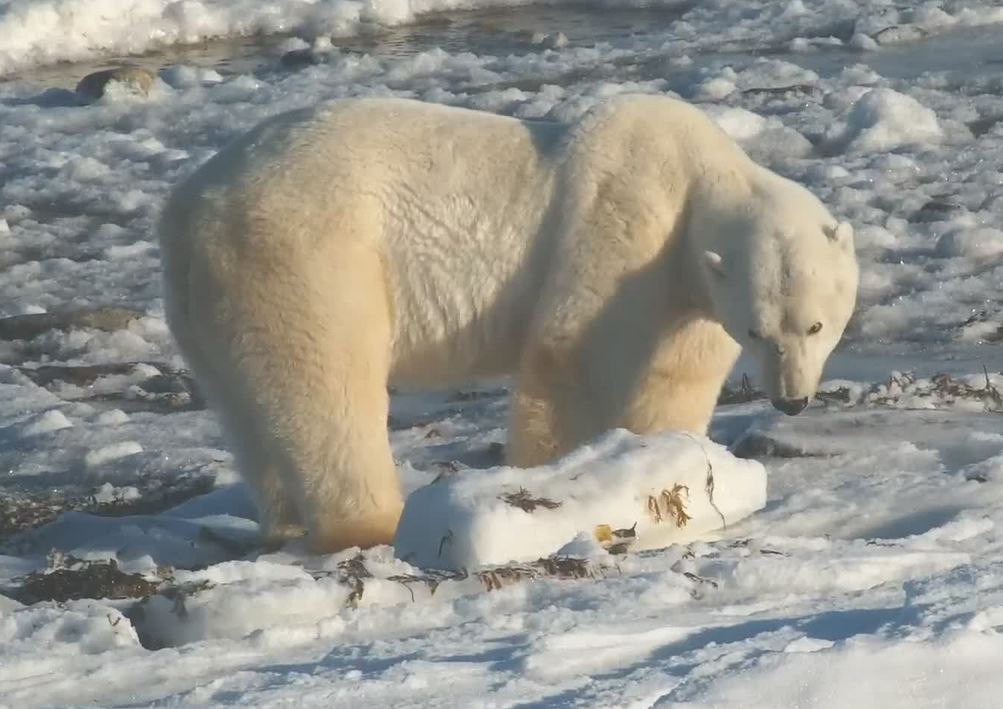
Researchers at the Norwegian Polar Institute have finally updated their spring data, which show male polar bears in 2024 were even fatter than they were in 1993 and litter sizes of new cubs were just as high, despite continued low sea ice in the region over the summer months especially.
Posted onApril 2, 2024|Comments Off on A good year for Svalbard polar bears due to abundant sea ice coverage
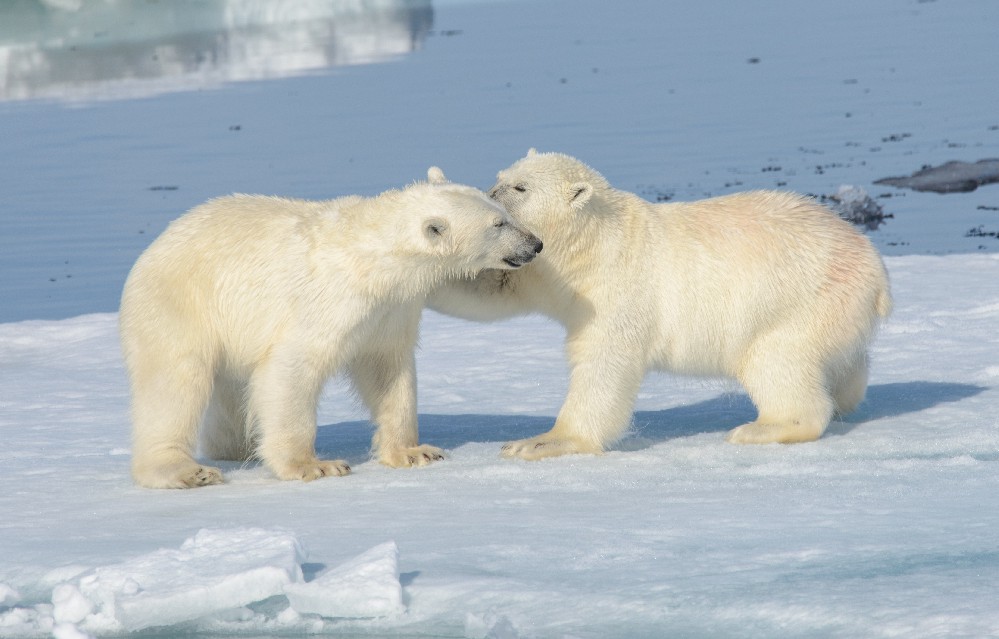
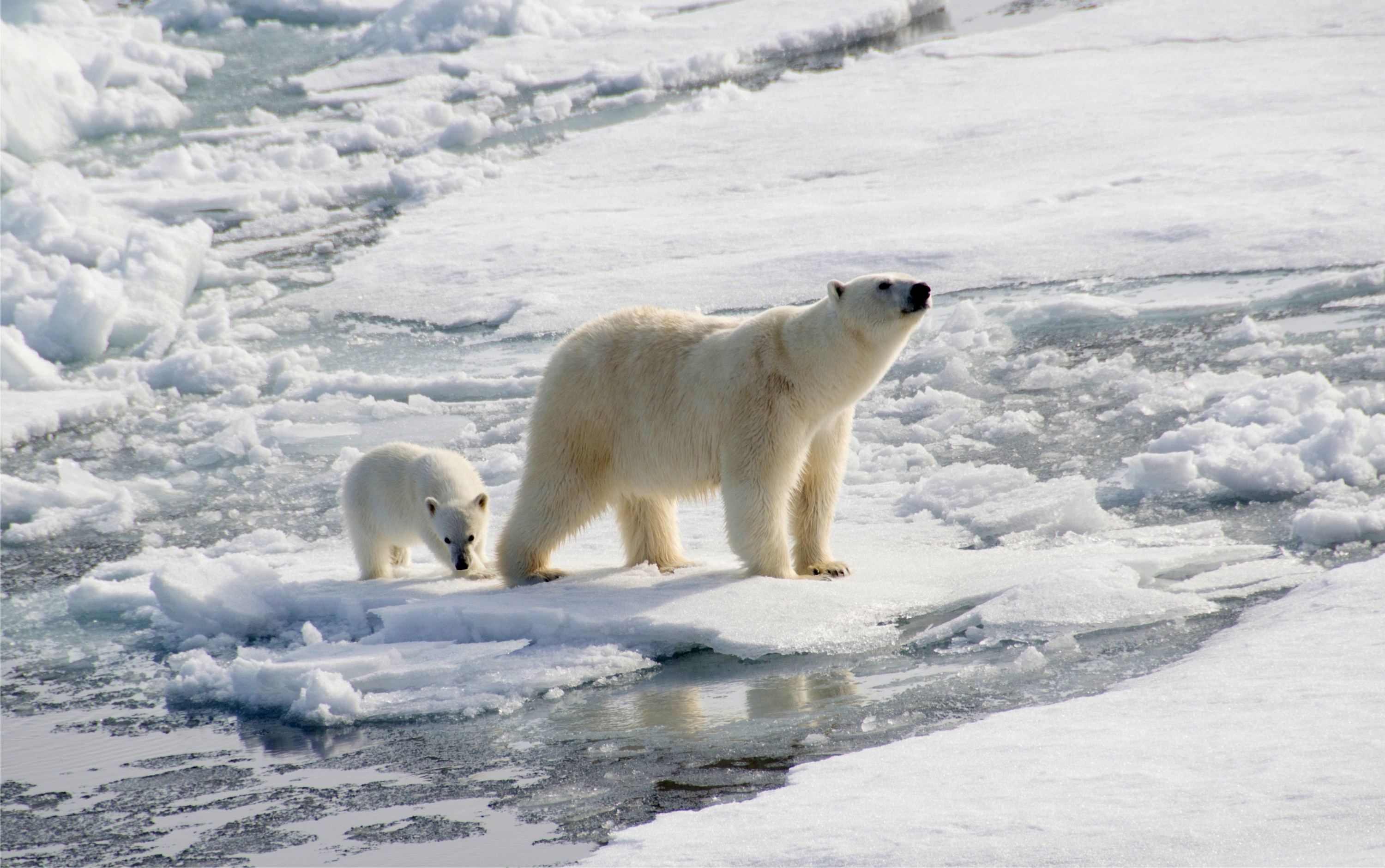
A sow and a pair of half-grown cubs recently paid a visit to the Polish Research Station in southwestern Svalbard without causing any more trouble than racing heart-rates, according to a report in The Guardian today.
Money quotefrom the leader of the expedition [my bold]:
This year the team had seen more polar bears than usual, he added. Usually there were around 20 bear sightings a year, but this year there had been close to 40 sightings since June and they expected to see more in their final three months.
“So far, we have not observed any clearly emaciated individuals. This year is probably a good year for Svalbard’s polar bears because there is a lot of sea ice here compared to recent years,” he said [The Guardian, 2 April 2024, see photo above].
Except for the lying and obfuscation that most of us have come to expect, I’ve mostly been left to reiterate that polar bears are not “canaries in the coal mine” indicators of climate change and to point out that Arctic sea ice extent and polar bear survival are not inextricably tied. For example, in some specific areas of interest, like Western Hudson Bay, there has not been a consistent decline in sea ice over the last few decades and bears are not attacking people at increased rates because they are desperately hungry. In other areas, like the Svalbard area of the western Barents Sea, sea ice has declined dramatically in recent years yet polar bears have not been attacking people more than usual.
Contradictions and failed predictions abound.
All in all, a rather boring year for the anticipated implosion of polar bear health and survival, despite my constant tracking of publicly-available information. That said, I would like to take this opportunity to thank you all again for your continued support, and especially those who have donated hard-earned cash over the last few months: your support makes it possible for me to continue my work keeping polar bear science honest. Together, we have made a difference and I know it’s worth the fight. Because if we let evidence-based science die without challenge, we lose our ability to make sense of the world.
Posted onJuly 17, 2023|Comments Off on More Barents Sea polar bear habitat at mid-July 2023 than in 2012 despite more atmospheric CO2
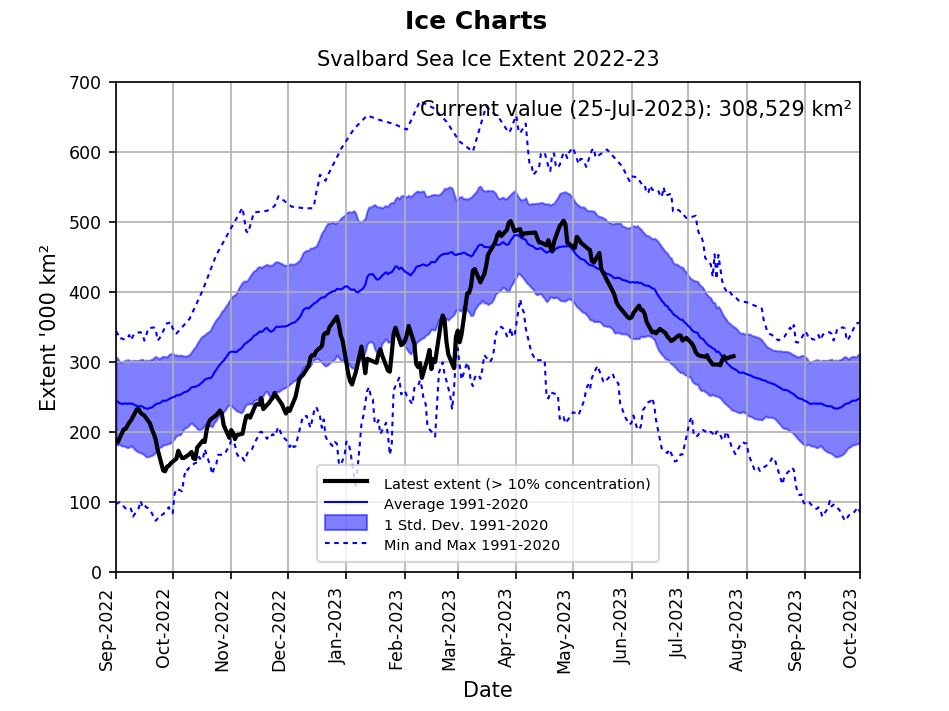
Despite more CO2 in the atmosphere (424 vs. 392, for June), there was more sea ice cover in the Barents Sea at mid-July this year than there was in 2012.
Yet contrary to predictions, which insisted that protracted poor ice conditions in summer would inevitably result in catastrophic rates of starvation and death (Amstrup et al. 2007; Crockford 2017, 2019), polar bears in the Svalbard region have so far not had any documented any harm to their health or population size. In fact, field data show bears in Svalbard are in better condition than they were in the late 1990s (Lippold et al. 2019), almost certainly due to the documented increase in primary productivity that has resulted from longer ice-free summers since 2003 (Frey et al. 2022; Crockford 2023).
Posted onMay 3, 2023|Comments Off on 17th century documents & 1970s ice maps show sea ice habitat in Svalbard has always varied greatly
Historical records show that sea ice extent along the west coast of Svalbard, Norway varied greatly in the 1600s and that there is currently more ice than was usually present at this time of year in the 17th century.
April through early June is when polar bears need sea ice the most–for feeding on newborn seals and for finding mates–and so far this spring, bears in the Western European Arctic around Svalbard, Norway have had an abundance of ice. In fact, there is only a little less ice than was normal for the late 1970s and apparently, quite a bit more than was often present in the 1600s.
Posted onApril 23, 2023|Comments Off on Netflix polar bear star dies in Svalbard days after being tranquilized; her orphaned cub is shot
Early in the morning on Good Friday (7 April), a mature polar bear sow with a cub at heal was chased with snowmobiles away from a recreation area used by locals on the west coast but drowned after she escaped into the water. Her cub, likely a yearling male, attacked authorities trying to retrieve her body and was shot.
It turns out this 17 year old female was well known to locals and is considered Svalbard’s most famous polar bear. They call her ‘Frost.’ She featured in the 2019 Attenborough-narrated Netflix documentary Our Planet, in the sequence showing the stalk of a newborn ringed seal pup (see screencap above), which was likely filmed in early 2018 after the cliff-falling walrus scenes in Russia that were filmed in October 2017. h/t Sheila.
Posted onApril 22, 2023|Comments Off on Earth Day sea ice habitat during critical spring season for Arctic seals, polar bears, and walrus
This is the most important time of year for Arctic marine mammals that spend time above the ice: birthing, breeding, and feeding. And there is plenty of the right kind of ice available for those activities this year, as there was two years ago at the same time.
Posted onApril 19, 2023|Comments Off on ‘Less ice means more conflicts with polar bears’ narrative not supported by scientific evidence
In another failed prediction, a new study on the number of polar bears killed in self-defense in Svalbard, Norway did not find the expected correlation with lack of sea ice or more tourists (Vongraven et al. 2023). Contrary to expectations, fewer bears were actually killed in self-defence as sea ice declined between 1987 and 2019.
Money Quote from the abstract:
“…ice cover had no significant impact on the odds for a [polar bear] kill.”
“Poor ice conditions for polar bears at Svalbard this year. Low ice will make tough hunting conditions this coming spring. Time to plan for more human-bear conflicts unless conditions change.” [13 Feb 2023 tweet, my bold]
Watch polar bear habitat reform in the Canadian Arctic: “last 10 days” Canadian Ice Service animation (works anytime) HERE.
See Quote archive for details.







 polarbearscience
You must be logged in to post a comment.