Category Archives: Advocacy

Many otherwise intelligent people believe only a few hundred polar bears remain

The other day, I got a call from an international journalist who admitted he’d done no research into the polar bear issue but believed, based on media reports he’d heard, that there must only be about 100-200 bears remaining in the Arctic. I know he’s not alone.

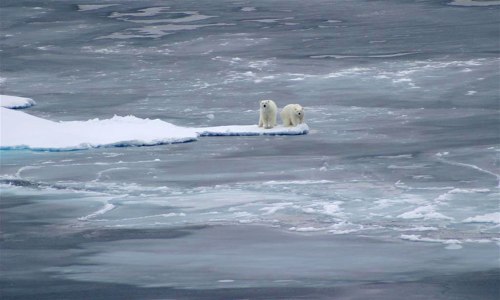
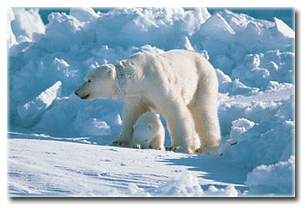
polar-bears-3-large_USGS

This journalist was utterly astonished to learn that the IUCN Red List assessment in 2015 put the polar bear population total at 22,000-31,000 bears and demanded proof that this was true.

Here is a summary of the Red List report, with references and links to the report:

The 2015 IUCN Red List assessment update for polar bears (published 18 November 2015) states that the global polar bear population is 22,000 – 31,000 (26,000), that the current trend is ‘unknown’ and that there is only a 70% chance that polar bear numbers will decline by 30% in 35 years (with virtually zero chance that the numbers will decline by 80% or more by 2050) – in other words, zero chance of extinction. [Detailed in a document called 22823 Ursus maritimus]. It classifies the polar bear as ‘vulnerable’ to extinction based on predictions of future sea ice decline due to global warming [similar to ‘threatened’ by other organizations] Pdf here.

Below is a list of what truly worrying species declines look like: that is, animals whose numbers have actually declined, no prophesies involved (Adler 2008).
Continue reading

Human sees cute – polar bear sees dinner

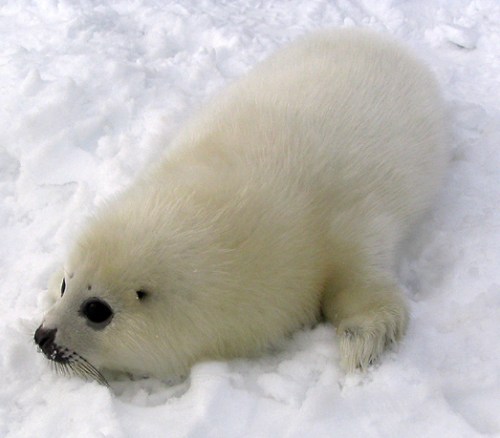
Newborn harp seals are food for Davis Strait, East Greenland and Kara Sea polar bears but wildlife photographers see only cute furry babies with big eyes and trusting natures.

Harp sea newborn_wikipedia

See these photos taken some unknown spring (early March) in the Gulf of St. Lawrence, Canada (published 29 December 2015 by Mailonline): the pups are kind of skinny when first born but fatten up quickly on fat-rich milk from their attentive mothers. Ask yourself: does this photographer know that the fattest of these baby seals he oh’s and ah’s over in his commentary are just what polar bears depend on for their existence – and that the bears will eat as many of them as they can catch, peeling them like bananas so that they can eat the skin and fat first?

The title of the piece is: “Eye-eye! Cheeky seal cubs just a few days old wink and pose for the camera as they wait for their mother to feed them:

  • The young Harp seal pups had never seen humans before the pictures were taken
  • They were photographed in their habitat of Madeleine Island in Quebec, Canada
  • Harp seals are solitary animals except during breeding season, when they congregate in their thousands

“These seal-ebrities from Canada are pictured striking hilarious poses that even Cara Delevingne would be proud of.

The three Harp seal pups – just days old – were passing time while they waited for their mother to return from hunting.

One pup looked straight to the camera with a cheeky wink, while another lay on its back looking longingly at the lens.

The impressive poses were captured by photographer Gunther Riehle, who was lucky enough to get just feet away from the baby seals on Madeleine Island in Quebec.”

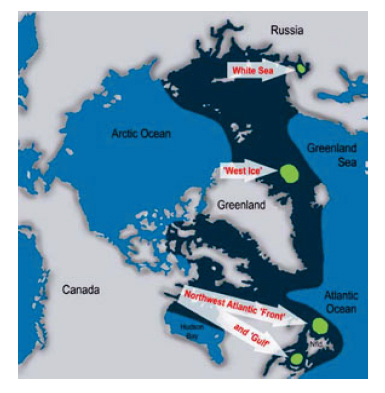
See the photos here. Harp seal and hooded seal distribution and breeding areas in the Eastern Arctic (from DFO Canada).

Harp and hooded seal pupping areas and distribution_Stenson 2014 fig 1

More polar bear seal prey info here. See potential consequences of lots of polar bears depending on abundant harp seals north of Newfoundland in my novel, EATEN.

The old ‘website revision’ excuse for not updating polar bear status changes

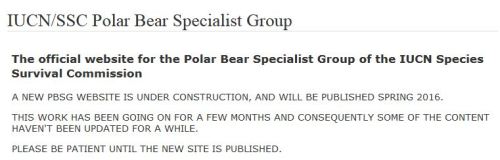
Apparently, the IUCN Polar Bear Specialist Group (PBSG) thinks that it’s OK to mislead the public on the conservation status of polar bears for half a year because its website is being revamped. This conservation organization is of the opinion that people landing on their website while searching for official polar bear status information don’t need to know right away that a new IUCN Red List document was published in November 2015. We know this because the message below appeared on the PBSG homepage 14 January 2016 (text in bold was there previously: the new message is in CAPS), screencap of entire page at 16 Jan 2016 pdf here:

PBSG website notice_2016 Jan 14 update

It appears that the PBSG feels that the public can wait to be told about 2015 Red List decision until the PBSG are ready for them to be told, which could be anywhere from March to the end of June 2016, depending on what definition of “spring” they use. Anyone (like moi) suggesting this tactic is paramount to withholding unpleasant information is just being “impatient.”

Decide for yourself but to me, this PBSG message speaks volumes: it says the 2015 IUCN Red List assessment is bad news for polar bear predictions of gloom and doom. Polar bear specialists don’t want to talk about it because it is a slap-down of all previous attempts at predicting a grim future for the bears (see the summary at the end of this post).
Continue reading

Organizations fail to acknowledge 2015 Red List polar bear assessment info

You have to know that the 2015 IUCN Red List assessment for polar bears contains good news because no one is talking about it – and none of the online information sources I’ve checked have updated their polar bear profiles to reflect it.

For all its flaws (including the deceptive focus on summer sea ice), this Red List update is the most statistically robust, in-depth study of the conservation status of polar bears – why is it being ignored, especially by the conservation organizations people turn to for information online?

UPDATE: see 18 January 2016 post here.

Continue reading

Ian Stirling uses lifetime award to repeat flawed predictions for polar bears

It has been less than a month since the 2015 IUCN Red List assessment for polar bears was announced, which emphasized that the population trend for polar bears is unknown and that there is only a 70% chance that polar bear numbers could decline by 30% over the next 35 years.

ian-stirling_full

Yet, in a press release announcing the Weston Family Prize for lifetime achievement in northern research (along with $50,000) to Ian Stirling for his work on polar bears (Newswire, December 9, 2015), Stirling is quoted repeating an out-of-date prediction:

“Dr. Stirling estimates that about half of the polar bear population around the circumpolar Arctic could disappear by 2050 to 2060, if climate warming continues as is currently projected…”

I’d have thought that if Stirling did not agree with the IUCN assessment prepared by his colleagues, he would have said so last month when the report was released to international fanfare. Instead, he seems to be deliberately ignoring the 2015 IUCN Red List assessment and pretending that the flawed predictions he had a hand in making are still plausible.  Continue reading

Paris climate change deal will not stop polar bears dying due to thick ice in spring

Thick spring ice due to natural causes is currently the single biggest threat to polar bears. Not declining summer sea ice – thick spring ice. That could change in the future but right now, the evidence supports that statement.

polar_bear with collar_USGS

Polar bear deaths due to cyclical changes in Arctic sea ice thickness in the spring have continued despite rising CO2 emissions and declining summer sea ice extent (last major incident, 2004-2006): there is no reason to expect this will not continue. Unwarranted attention on summer ice extent has deflected attention from this major cause of local polar bear population decline.

Sea ice models do not address past or future changes in spring ice thickness and predictive models of polar bear survival blame all population declines on summer sea ice declines despite strong evidence to the contrary (Crockford 2015: The Arctic Fallacy). Continue reading

IUCN Red Book officials forced scientific standards on polar bear predictive models

As I reported Thursday, the IUCN announcement of a new Red List assessment for polar bear got the usual overwrought attention from international media outlets. However, not one of these contained a quote from a polar bear biologist.

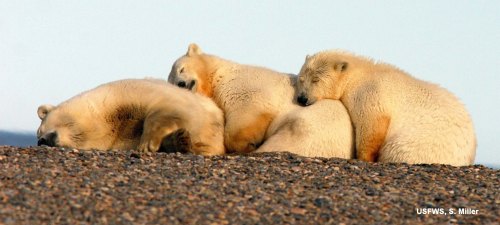
polarbears-arcticnatlwildliferefuge-suzannemiller-usfws_labeled_sm

Steven Amstrup, science spokesperson for activist conservation organization Polar Bears International, has so far had nothing to say to the media. Yet, Amstrup was a co-author of the IUCN Red List report. Not until late in the day following the release of the report did his his organization’s website post a short, bland news report (“Climate Change Still Primary Threat to Polar Bears”).

Similarly, Ian Stirling, Andrew Derocher, Nicholas Lunn (also a co-author of the IUCN Red List report), and former WWF employee Geoff York – who are usual go-to guys for polar-bears-are-all-going-to-die media frenzies – have so far been silent and invisible on this issue.

In addition, while the IUCN press release [backup here: 2015 IUCN Red List press release_Nov 19 2015] included a quote from IUCN Polar Bear Specialist Group (PBSG) chairman Dag Vongraven, as of this morning (21 November, PST), the website of the PBSG contains no mention of this decision – no item in the “News” category  and, more importantly, no update of the status table  or global estimates to reflect the changes contained in the report  (even though they obviously knew it was coming months ago: the report was submitted to the IUCN Red List 27 August 2015).

In my opinion, this silence says it all: polar bear specialists know this assessment is a severe de facto critique of their 2008 assessment (as well as Amstrup’s predictive models) and it’s a big step backwards for their conservation activism. I expect they are silent because they are royally pissed off.

However, this assessment is good news because finally, some standards of scientific rigor have been applied to polar bear predictive models – even though the PBSG were still been allowed to pretend that summer sea ice coverage is critical to polar bear health and survival (Crockford 2015).  Continue reading

Only a 70% chance that polar bear numbers will decline by 30% by 2050

Despite the stupendously unwarranted hype being generated out of the recent release of the 2015 update to the IUCN Red List status assessment for polar bears, in fact the prognosis is better than it has been for years.

That’s because polar bear experts have been forced by the IUCN standards committee to acknowledge the great deal of uncertainty in their predictive models. They now admit there is only a 70% chance that number will decline by 30% over the next 35 years: only slightly higher than a 50:50 chance.

That means there is a 30% chance that the numbers WILL NOT decline by 30% over the next 35 years. See my detailed analysis, where you will find copies of the report and links to the online IUCN Red List assessment.

That has not stopped all major news outlets from treating this report as a new pronouncement of gloom:

CBC, Canada: (“Polar bear numbers to fall as Arctic ice shrinks: study
Population will decline by more than 30% over next 35 to 40 years, experts say”). Except the first sentence admits this is merely “likely”, not “will”:

“Polar bear populations are likely to fall by more than 30 per cent by around mid-century as global warming thaws Arctic sea ice, experts said on Thursday in the most detailed review of the predators to date.”

Mirror UK: “Polar bears facing extinction as numbers ‘to fall by a third over next 40 years’: There is now a high probability numbers of the species will decline by more than 30%, experts claim”

Express UK: “Nearly 8,000 polar bears to ‘DIE OUT’ as vulnerable giants hurtle towards ‘obliteration’: POLAR bears face a “decimation” in the next couple of decades with more than 30 per cent in population set for complete wipe-out in the most terrifying warning yet.”

The Guardian UK: ” Climate change is ‘single biggest threat’ to polar bear survival: ‘High probability’ of a 30% decline in polar bear numbers by 2050 due to retreating sea ice, IUCN study finds”

[Except, as I noted in my previous post, the IUCN report did not evaluate extinction risk].


IUCN Red List says global polar bear population is 22,000 – 31,000 (26,000)

The long-awaited 2015 IUCN Red List assessment for polar bears was released today (Wiig et al. 2015) and it includes some rather astonishing details − including the fact that the population trend is unknown.

polar_bear_usfws_no date_sm

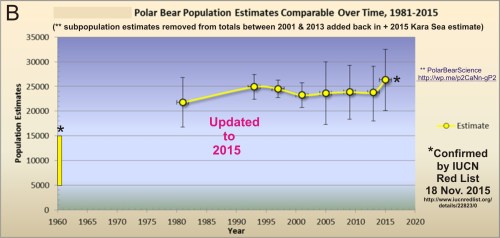
1) It confirms the global population size I published in May 2015 (20,129-32,558; average 26,344). See the graph below, now amended to reflect this point. If global numbers do decline over the next 35 years, it will be from a high point not previously acknowledged by the IUCN Polar Bear Specialist Group (PBSG).

Crockford OFFICIAL polar bear numbers to 2015_IUCN concurrs Nov 18

2) The current population trend is listed as: ? Unknown. [NOT declining – if anyone claims it is, send them here: IUCN Red List U. maritimus]

3) It puts the generation time for polar bears at 11.5 years (range 9.8-13.6), a huge drop from the 15 years used in previous predictive models. This change makes a big difference to the model results: three generations (the minimum period needed to show a trend) are now 35 years rather than 45 years.

4) It states there is a 70% chance of a 30% decline in polar bear numbers by 2050 and a 7% probability of a reduction > 50% if sea ice declines as predicted, but noted the large amount of uncertainty in these projections. That means there is a greater chance that numbers will not decline by 30% in the next 35 years (a 30% chance) than that the numbers will decline by 50% or more by 2050. That sounds like good news to me.

5) It will continue to list polar bears as Vulnerable. PBSG biologists managed to prevent polar bears from being listed as Least Concern or perhaps Near Threatened. But they had to give up a lot to get it.

6) The report supplement (Wiig et al. 2015 supppl.) explained why they did not calculate extinction probabilities and extinction is not mentioned at all on the IUCN Red List polar bear assessment page. This assessment only considers the probabilities of a decline in population size by 2050.

Yet, a spokesperson for the IUCN apparently stated (The Guardian, Climate change is ‘single biggest threat’ to polar bear survival; 19 November 2015 ) that:

“There is a high risk of extinction and the threat is serious,” said Dena Cator of the IUCN’s species survival commission. “You could consider polar bears to be a canary in the coal mine. They are an iconic and beautiful species that is extremely important to indigenous communities. But changes to their sea ice habitat are already being seen as a result of climate change.”

Apparently Dena Cator does not expect that people will read the report or find the assessment page on the IUCN Red List website – or she’s giving her personal opinion rather than explaining the report results. More on the points above and links to the report supplement pdf below, with quotes.
Continue reading

Discovery News spreads old misinformation about W. Hudson Bay polar bears

In a just-released Discovery News piece, Kieran Mulvaney (4 November 2015, “In the polar bear capital, an uncertain future) repeated three misleading statements about Western Hudson Bay polar bears that keep making the rounds, despite the fact they have been laid to rest by the latest scientific reports on  (Lunn et al. 2013, 2014; Stapleton et al. 2014). I reviewed these just a few weeks ago.
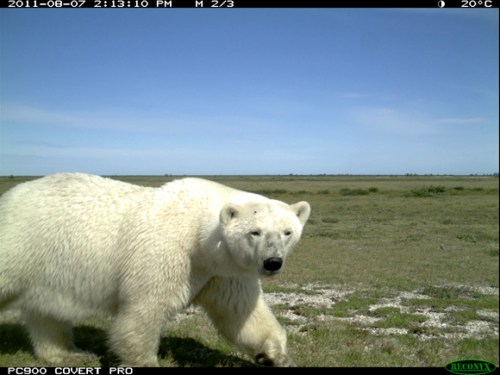
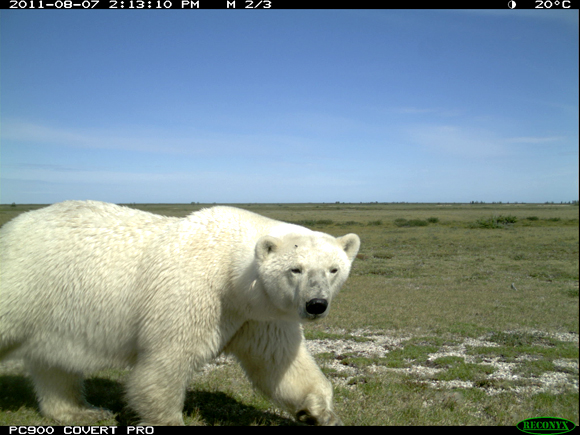
Western Hudson Bay bear, Wakusp National Park, August 2011.

Western Hudson Bay bear, Wakusp National Park, August 2011.

1) “Climate change is causing the bay’s ice to melt earlier and freeze later, causing bears to spend longer a shore.”

Not true. Lunn and colleagues stated explicitly that there has been no trend in either break up or freeze-up of WHB sea ice since 2001. Although there has been large variability in dates, that lack of trend that has continued to this year.

2 & 3) “As a consequence, Churchill’s polar bears are decreasing in number (from approximately 1,350 three decades ago to roughly 900-1,000 now) and in physical condition.”

This deliberately misleading statement avoids the fact that the latest surveys found roughly the same number of bears in 2011 as in 2004 (the estimate used by the IUCN Polar Bear Specialist Group for WHB is 1030) when different counting methods were taken into account. The ~900 bear estimate came from the mark-recapture survey, which left out a portion of the range that the aerial survey covered, hence the official estimate of 1030.

In addition, there has been no scientific assessment of body condition or cub survival since before the last population estimate in 2004 – polar bear “experts” keep telling journalists there are declines but have yet to produce any data to support those claims. The latest surveys did not collect data on body condition or cub survival.

Mulvaney’s misinformation is almost certainly the result of spending time in Churchill with activist Polar Bears International spokesperson Steve Amstrup and activist climate scientist Katherine Hayhoe doing webcasts (e.g. “Challenges of communicating climate change”).  

Mulvaney is clearly not a journalist or a science writer: if he was, he would do some research of his own and stop believing as gospel every word that activist scientists feed him. They are using him as a mouth-piece and sadly, Discovery News is buying it all and presenting it as science.

[Hayhoe, by the way, blocked me on twitter earlier this morning for making one observational comment, my first-ever to her account, in response to a conversation about polar bear population numbers. This is what I said that Hayhoe does not want her followers to know:

“Stop wanton slaughter, #’s go up, works for all species. S Beaufort #polarbear #s dipped due to thick spring #seaice”

Both statements are true and supported by scientific literature. But Hayhoe is all about “climate communication” which appears not to allow science to intrude.]

References
Lunn, N.J., Regehr, E.V., Servanty, S., Converse, S., Richardson, E. and Stirling, I. 2013. Demography and population assessment of polar bears in Western Hudson Bay, Canada. Environment Canada Research Report. 26 November 2013. PDF HERE

Lunn, N.J., Servanty, S., Regehr, E.V., Converse, S.J., Richardson, E. and Stirling, I. 2014. Demography and population assessment of polar bears in Western Hudson Bay, Canada. Environment Canada Research Report. July 2014. PDF HERE [This appears to be the version submitted for publication]

Stapleton S., Atkinson, S., Hedman, D., and Garshelis, D. 2014. Revisiting Western Hudson Bay: using aerial surveys to update polar bear abundance in a sentinel population. Biological Conservation 170:38-47. http://www.sciencedirect.com/science/article/pii/S0006320713004618#