Posted onJanuary 29, 2026|Comments Off on Barents Sea polar bears thriving despite massive loss of sea ice, study confirms
A recently published study lead by Norwegian polar bear specialist Jon Aars found that both male and female polar bears were fatter and healthier after 1995 despite the greatest loss of sea ice of any Arctic region. However, no evidence was provided that a greater consumption of walrus and reindeer explain these results.
This new paper (Aars et al. 2026) updates and expands to 2019 data for a study I’ve repeatedly cited (e.g. here and here) that reported female bears in better condition between 2005-2017 than during the 1990s, despite dramatic sea ice loss in summer and winter in the 2000s (Lippold et al. 2019). Continue reading →
Comments Off on Barents Sea polar bears thriving despite massive loss of sea ice, study confirms
Posted onDecember 17, 2025|Comments Off on Sea ice conditions continued to favour Arctic marine life in 2025
Increased primary productivity in the Arctic generated by reduced summer sea ice has continued into 2025, according to NOAA’s annual Arctic Report Card published yesterday, which means Arctic seals and whales, walrus, and polar bears will continue to flourish.
September sea ice extent has continued to stall, rather than plummet as predicted (Table 1: eleventh lowest average September extent since 1979; 4.75 mkm2), although they don’t come out and say so. NSIDC has stopped producing monthly sea ice reports due to budget cuts in late September 2025.
From the Report Card highlights [my bold]:
From 2003 to 2025, phytoplankton productivity spiked by 80% in the Eurasian Arctic, 34% in the Barents Sea, and 27% in Hudson Bay.
Plankton productivity in 2025 was higher than the 2003-22 average in eight of nine regions assessed across the Arctic.
And from the report on primary productivity itself:
All regions, except for the Amerasian Arctic (the combined Chukchi Sea, Beaufort Sea, and Canadian Archipelago), continue to exhibit positive trends in ocean primary productivity during 2003-25, with the largest percent changes in the Eurasian Arctic (+80.2%), Barents Sea (+33.8%), and Hudson Bay (+27.1%).
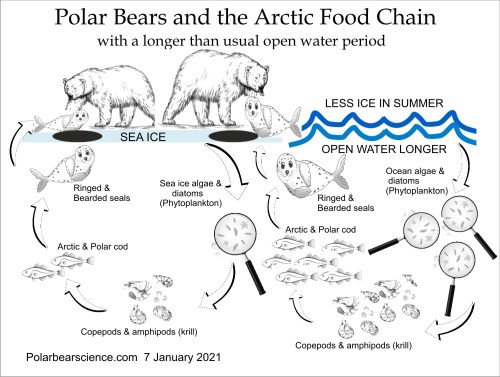
I’ve explained previously how and why this works: less summer ice = more plankton, which means more food for all marine life.
This explains why the catastrophic decline in polar bear numbers predicted in 2007 never happened.
PS. If you haven’t already, check out my new wolf attack thriller, DON’T RUN. There’s probably still time to order and get a before-Christmas delivery.
Comments Off on Sea ice conditions continued to favour Arctic marine life in 2025
Posted onFebruary 26, 2025|Comments Off on No News is Good News on Polar Bear Day: Celebrate With 35% Off Polar Bear Evolution
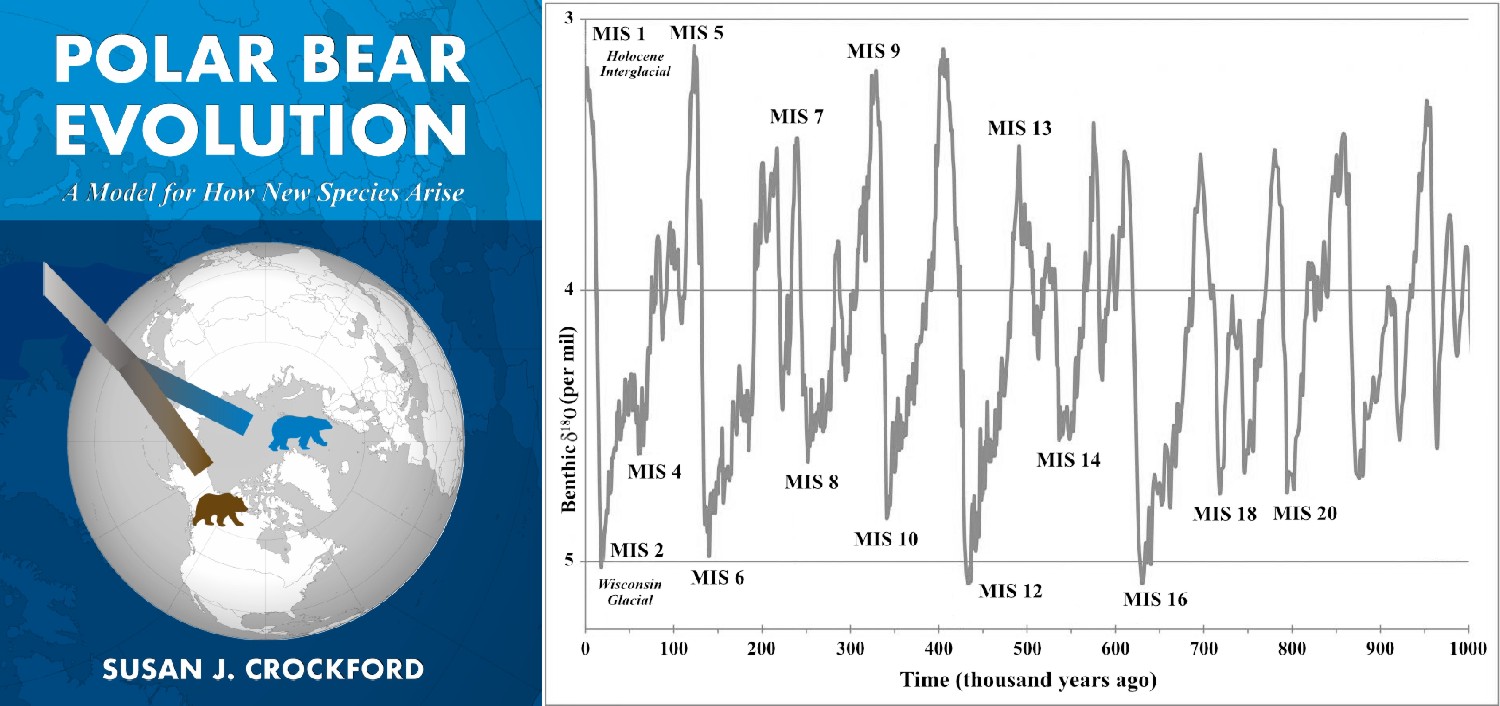
In honour of International Polar Bear Day coming up on Thursday February 27, I’ve discounted the price of my Polar Bear Evolution book by 40% for the next month in order to encourage evolutionary thinking about polar bears (in all markets: see links at the end of this post). UPDATE: Sale extended until June.
Instead of asking whether polar bears will survive a bit of warming over the next few decades, ask yourself how they survived more than 100,000 years of unimaginable changes in Arctic climate (both much warmer and colder) before now?
Posted onAugust 1, 2024|Comments Off on Polar bear “boom” reported in East & Southwest Greenland comes with the usual problems
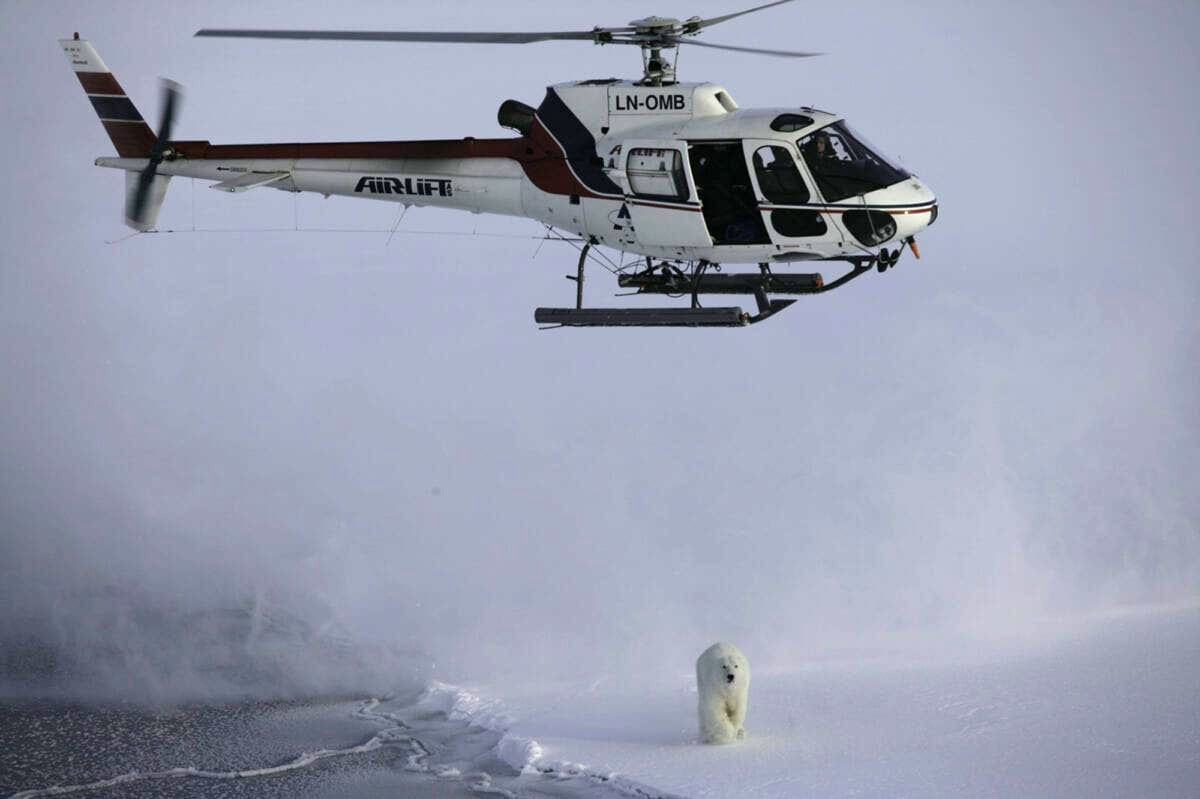
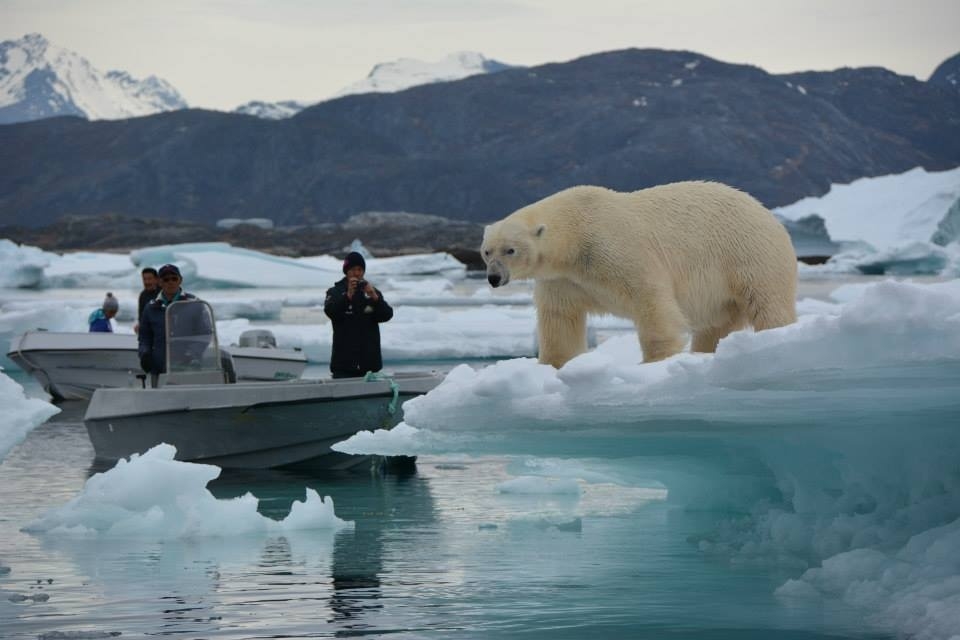
Reports over the last week of an unexpected abundance of polar bears onshore in East and Southwest Greenland have locals and tourists concerned. The former Prime Minister of Greenland claims the unusual number of bear sightings and problems with bears near communities (including an attack involving serious injury to a German researcher) are due to abundant sea ice offshore. This explanation is contrary to what polar bear specialists predict: i.e., that problems with bears occur when there is less ice than usual. None of the bears sighted have been described as thin or starving.
The Polar Bear Specialist Group has previously estimated that there are only about 650 bears in East Greenland, while a recent study estimated that an additional 234 bears lived in SE Greenland.
Polar bears don’t often show up in Southern or Western Greenland any more, but this year has been an exception. Only yesterday, two appeared near Nuuk, Greenland’s capital. And according to Aleqa Hammond, Greenland’s former Prime Minister, that’s just been the tip of the, well, iceberg.
“There are bears everywhere in West Greenland this year,” she told ExplorersWeb. “Quite a few have been way too close to towns in South Greenland this summer, too. Several polar bears have been shot in Qaqortoq, as the bears were literally in town.”
Another polar bear has been observed – and shot as an emergency – in Ittoqqortoormiit on Thursday morning. This is confirmed by the head of duty at the Greenland Police, Jørgen Madsen, to Sermitsiaq.
It is the second time a polar bear has been shot in emergency situations in Ittoqqortoormiit this week. On Tuesday evening around 19:30, the police received a report about a polar bear that had been shot in an emergency.
Here, the police could say that the polar bear came close to a dog crate, and then headed directly for a soccer field where children are playing.
Last week, a polar bear attacked a German researcher in East Greenland. The researcher, part of a team on Traill Island, encountered the bear on Friday morning.
Posted onJune 4, 2024|Comments Off on New data show Svalbard polar bears are fatter than they were in 1993 despite continued low sea ice
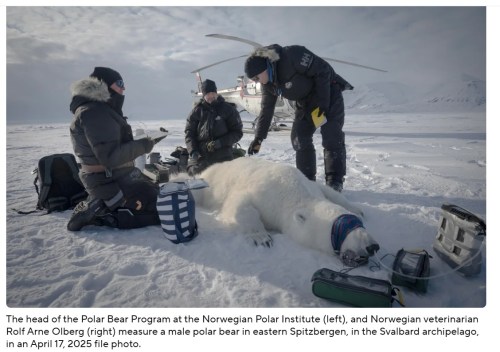
Researchers at the Norwegian Polar Institute have finally updated their spring data, which show male polar bears in 2024 were even fatter than they were in 1993 and litter sizes of new cubs were just as high, despite continued low sea ice in the region over the summer months especially.
Posted onApril 28, 2024|Comments Off on Polar bears are going extinct? Actually, they’re not! A new video worth watching and sharing
Great Barrier Reef specialist Peter Ridd has just published an excellent video about my work and the way I’ve been treated by the scientific community just for pointing out that polar bear populations have failed to respond as predicted to the recent decline in Arctic sea ice.
The report Peter refers to in the video is this one, which was published in February 2024:
Crockford, S.J. 2024. State of the Polar Bear 2023. Briefing Paper 67. Global Warming Policy Foundation, London. Download pdf here.
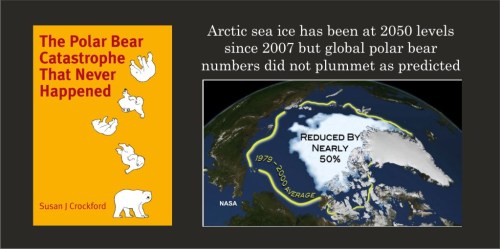
In other words, the polar bear catastrophe we were promised never happened. In case you missed it, I wrote a book about that. Polar bears across the Arctic are thriving: not just because their numbers have increased overall but because the field data collected from bears in regions that have had the most dramatic declines in summer sea ice, including the Barents Sea and the Chukchi Sea, show the bears are healthy and reproducing well.
Comments Off on Polar bears are going extinct? Actually, they’re not! A new video worth watching and sharing
Posted onMarch 9, 2024|Comments Off on Hudson Bay polar bears now considered most likely to survive future sea ice loss
Over the last 10 years, Hudson Bay polar bears have morphed from being the “most at risk” across the Arctic to the “least at risk.” Who would have thought?
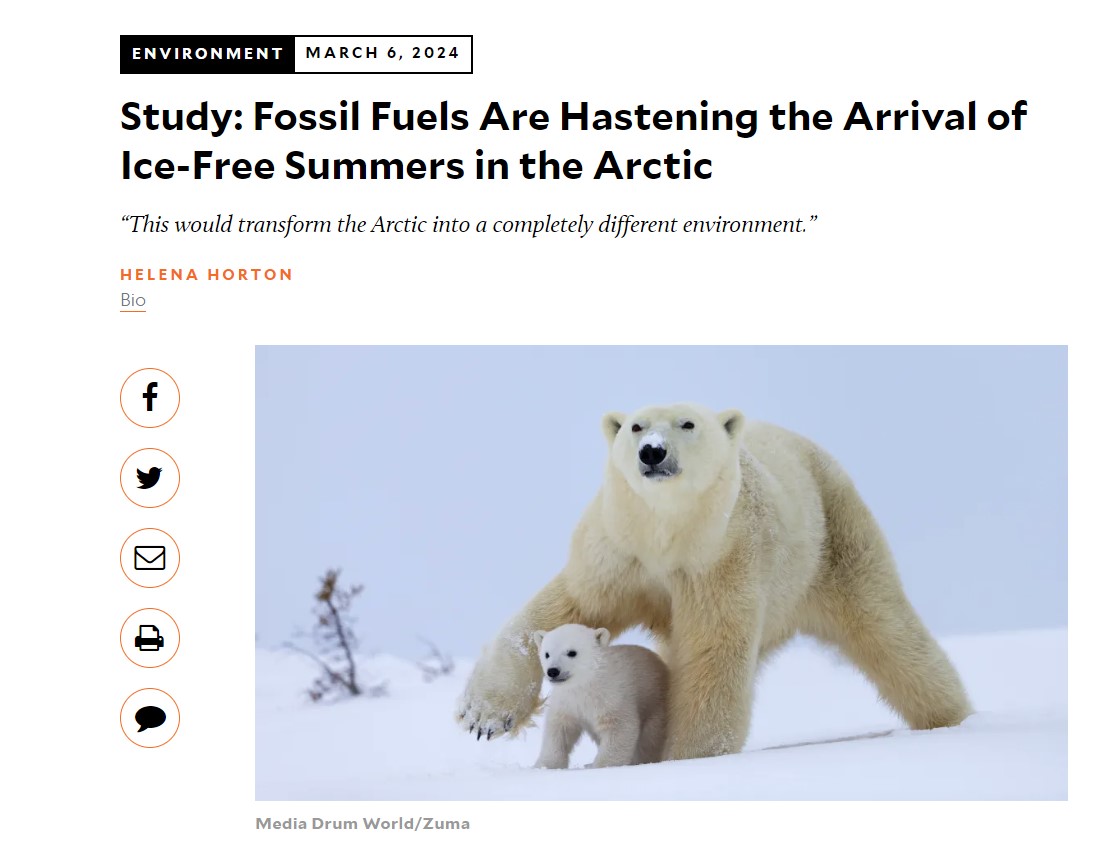
That’s probably because the experts now have to admit that polar bear numbers have not declined since 2004 and bears have been in good body condition since at least 2016. Southern Hudson Bay bears have apparently increased in number since 2016. How ironic is it that the photo above, taken in Hudson Bay — the only Arctic region where trees grow — was used to illustrate a recent Mother Jonesarticle promoting a new prediction of future Arctic summer sea ice loss that’s said to pose a threat to polar bear survival.
Posted onFebruary 27, 2024|Comments Off on State of the Polar Bear 2023: W. Hudson Bay polar bear numbers have not declined since 2004
In my State of the Polar Bear 2023 report for the Global Warming Policy Foundation, I discuss recent news relevant to polar bear conservation and science issues. The most startling of these is the revelation that Western Hudson Bay polar bear numbers have not declined since 2004.
Posted onJanuary 18, 2024|Comments Off on Tom Nelson interview with me about the failed polar bear narrative and rapid evolution
You can watch my interview with Tom Nelson about the latest issues in polar bear conservation and highlights of my latest book, Polar Bear Evolution.
On Youtube:
Tom tells me, “It’s also up on other video sites such as Rumble and BitChute, and will soon be available on other podcast apps such as Apple Podcasts (most, but not all, of those are audio-only). It should also be on Spotify, Google Podcasts, Pocket Casts, Podvine, Overcast, Amazon Music podcasts, Audible podcasts, Castbox, RadioPublic, Twitter, etc.”
Summary: Susan Crockford, a zoologist, discusses the challenges in accurately estimating polar bear populations and the ongoing debate between Inuit communities and polar bear specialists regarding population sizes. She also shares her theory on the role of thyroid hormones in polar bear evolution and the quick adaptation of species to new environments using the example of the Russian foxes.
A list of topics covered, by time-stamp in the interview, is listed below.
Posted onNovember 14, 2023|Comments Off on Walrus and polar bear population size changes in the N. Atlantic over the last 20k years
This is a lesson in how to assess the potential worth of scientific papers. One of two similar Arctic evolution studies got media attention, at least in Canada — about the polar bears, of course — but in my opinion the walrus research conclusions are much better supported, less biased by climate change rhetoric, and lack the hubris present in the polar bear paper.
Both studies use similar sample sizes for the regions they had in common (North Atlantic) and used computer models to determine genetic diversity and population size changes since the LGM. However, the tone of the walrus paper was less emotionally-charged and the caveats of the work were appropriately stated. In my opinion, papers like the polar bear example contribute to eroding the public’s trust in science.
The last Ice Age peaked between about 27,000 and 19,000 years ago. At this time the Arctic was buried under kilometers of glacial ice sheets, and so marine mammals were pushed southwards to areas of ice floes and more open water. Walrus survived in some areas of the Atlantic located further to the south, and as soon as climates warmed again, the ice edge retreated and walrus populations pushed quickly northwards again. This combination of warming and climate-driven dispersal led to local walrus populations becoming more genetically differentiated. Walrus study, Lund University press release 27 September 2023
Watch polar bear habitat reform in the Canadian Arctic: “last 10 days” Canadian Ice Service animation (works anytime) HERE.
See Quote archive for details.







 polarbearscience
You must be logged in to post a comment.