Posted onApril 11, 2020|Comments Off on Useful relevant science: the bats behind the Covid-19 pandemic
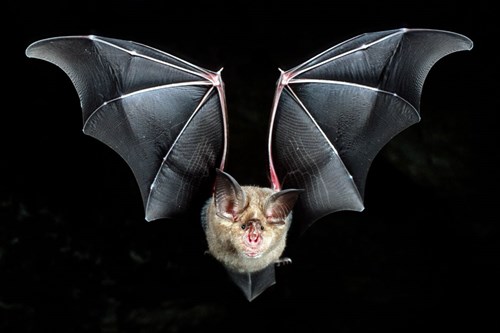
This bit of mammalian science is worth a read, from biologist Matt Ridley’s blog, first published in the Wall Street Journal. And yes, a very few bat species do live above the Arctic Circle in North America and Eurasia but their distributions only overlap with polar bears in the most southern areas of the bear’s range (and none of the bats are the horseshoe variety that carry coronaviruses): along the coasts of southern Labrador and Hudson Bay, the north coast of Newfoundland, and in NW Alaskaalong the Bering Sea.
The Bats Behind the Pandemic (published 9 April 2020): From Ebola to Covid-19, many of the deadliest viruses to emerge in recent years have the same animal source.
Posted onMarch 29, 2020|Comments Off on Svalbard finds tranquilizing & removing problem polar bears comes with risks to bears
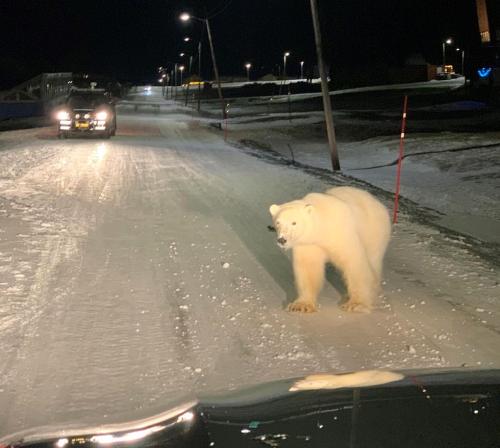
In Svalbard, Norway, it is routine practice to chase polar bears away from settlements with snow machines and helicopters, then tranquilize and relocate them if necessary but in late January this approach led to the death of a young male bear.
Necropsy results released 26 March 2020 revealed that the two year old bear, who had wandered into and around Longyearbyen multiple times in late January, was captured after a prolonged helicopter chase but died enroute as it was flown north to Nordaustlandet (see map below) from circulatory failure due to administering anesthesia after the prolonged stress of being chased.
In the wee hours of New Years Day 2020 a fat Svalbard polar bear was shot because of persistent visits to downtown Longyearbyen and the public was outraged. A few weeks later a bear attacked a dogsled loaded with tourists. The death of the young bear in late January in the course of removing it(rather than shooting it) is a reminder that tranquilizing a polar bear, especially after a prolonged chase, can be as lethal as shooting it.
Posted onJanuary 27, 2020|Comments Off on Attenborough’s Arctic Betrayal: New video reveals that terrorizing young children about climate began with polar bears
My newest video released today summarizes the strong polar bear component to the terrorization of the world’s children about climate change, which began for many youngsters in 2006 with the BBC and Sir David Attenborough’s commentaries about the dire future of polar bears – and continues to this day. Kids get their climate change information from watching Attenborough documentaries at home and in school because they are trusted sources of information, but on the topic of Arctic victims of climate change, that trust has been betrayed.
Many children and young adults worldwide, including 16 year old Swedish climate campaigner Greta Thunburg, have been presented with such emotionally-charged and deceptive information about the Arctic through Attenborough’s productions that many have lost hope for the future. These despondent kids, as well as their parents and teachers, need reminding that while summer sea ice has indeed declined over the last few decades, polar bears, walrus, and other Arctic species are thriving (Aars 2018; Boveng 2016; Crockford 2017, 2018, 2019a, b; Kovacs 2016; Lowry 2015; MacCracken et al. 2017; Obbard et al. 2016; Rode et al. 2014, 2018).
Here is the video (13 minutes):
The press release issued by the Global Warming Policy Forum states:
It is the responsibility of teachers and parents to reassure these worried youngsters that polar bears and walrus are not suffering because of sea ice loss blamed on climate change. Children need to be told the truth: that whatever scary stories some biologists come up with about what might happen in the future, Arctic species have demonstrated that they are much more resilient to changes in sea ice than Attenborough’s films suggest.
The GWPF is sending copies of this video to all head teachers of UK schools together with a letter, telling them that they are responsible for the mental health of their pupils and that they have a responsibility to provide their pupils with accurate information about the state of wildlife in the Arctic.
The letter sent to head teachers will include a list of verifiable facts, with references, listed here.
Below is my timeline, with references, and below the references is a list of previous videos on this topic.
Posted onSeptember 23, 2019|Comments Off on No climate emergency for polar bears or walrus means no climate emergency period
We are told the Arctic is warming twice as fast as anywhere else in the world, yet as the internet reverberates with shrill, almost-the-lowest-ice-extent-ever stories, polar bears, Pacific walrus, and the most common ice seal species (ringed and bearded seals, as well as harp seals), are all thriving. Two new videos published by the GWPF on polar bears and walrus confront this conundrum and the conclusion is clear: if there is no climate emergency for polar bears, there is no climate emergency anywhere.
Posted onJuly 12, 2019|Comments Off on 10 fallacies about Arctic sea ice & polar bear survival: teachers & parents take note
Summer sea ice loss is finally ramping up: first year is disappearing, as it has done every year since ice came to the Arctic millions of years ago. But critical misconceptions, fallacies, and disinformation abound regarding Arctic sea ice and polar bear survival. Ahead of Arctic Sea Ice Day (15 July), here are 10 fallacies that teachers and parents especially need to know about.
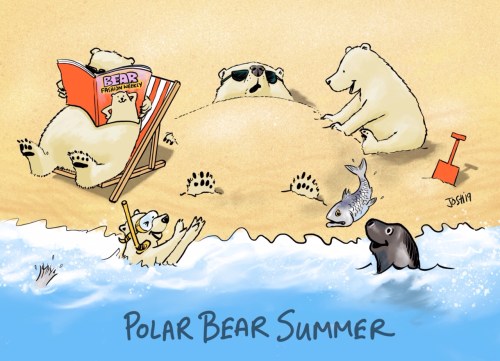
The cartoon above was done by Josh: you can drop off the price of a beer (or more) for his efforts here.
As always, please contact me if you would like to examine any of the references included in this post. These references are what make my efforts different from the activist organization Polar Bears International. PBI virtually never provide references within the content it provides, including material it presents as ‘educational’. Links to previous posts of mine that provide expanded explanations, images, and additional references are provided.
Posted onMay 17, 2019|Comments Off on Video exposé of the groundless Netflix bid to elevate walrus to climate change icon
Last month, Netflix and WWF released a collaborative nature documentary that contained an egregiously: that Pacific walrus are being forced ashore by global warming where they suffer staggering population losses. But this is a story the film producers and WWF concocted for their own purposes, not a statement supported by scientific fact.
Over the last month, pointed questions have been asked about what really happened in Siberia while the film crew was there – and what didn’t. Scientific documents support the conclusion that Pacific walrus are currently thriving, have not been harmed by recent sea ice losses, and are not expected to be harmed in the foreseeable future, see here, here, here, and here. This new video explains it all.
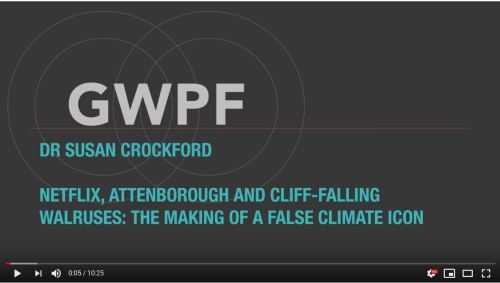
Netflix, Attenborough and cliff-falling walruses: The making of a false climate icon
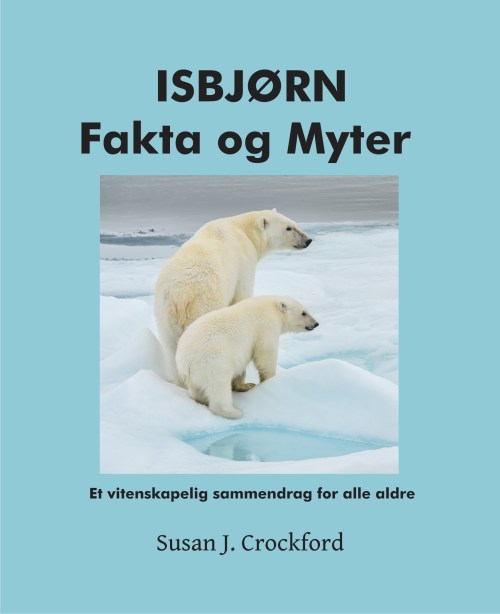
The same day as a glowing review of the Dutch translation of my popular children’s science book appeared in de Telegraaf (front page and all of page 5, 19 November 2018, pdf here), I am thrilled to announce that this important book is now available in Norwegian via Amazon worldwide, including European outlets.
The translation was done by native Norwegian speakers Arve Tunstad and Morten Jødal. In Norwegian the book is called ISBJØRN Fakta og Myter.
Please pass along to your friends, relatives, and colleagues in North America and abroad (calling all Sons of Norway). The English version is still available in paperback and ebook formats. Other translations in French and German are already available: five languages in all, including Dutch.
Posted onJuly 14, 2018|Comments Off on Sea ice is critical habitat for polar bears from late fall through late spring only
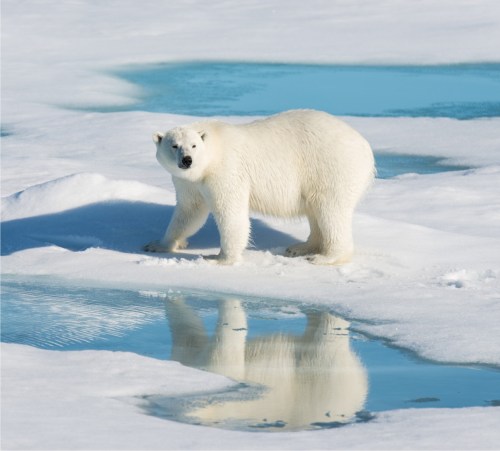
Sea ice is said to be “an essential habitat for polar bears” but that’s an overly simplistic advocacy meme as ridiculous as the “no sea ice, no polar bears” message with which the public is constantly bombarded. Polar bears require sea ice from late fall to late spring only: from early summer to mid-fall, sea ice is optional. Historical evidence of polar bears that spent 5 months on land during the summer of 1874 proves an extended stay ashore is a natural response of polar bears to natural summer ice retreat, not a consequence of recent human-caused global warming. Sea ice is a seasonal requirement for polar bears: it’s not necessary year round.
[This PBI newsletter from 2011 repeats this meme and Andrew Derocher’s recent tweet conveys a similar message (“Sea ice loss = habitat loss for polar bears”)]
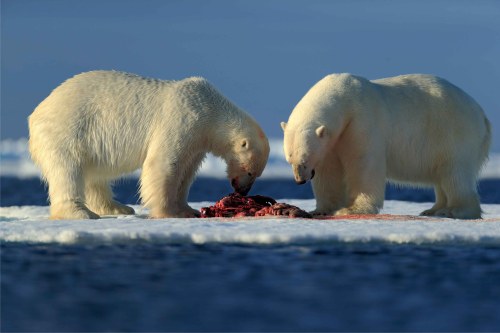
As long as sea ice is available from late fall through late spring (December to early June) and accompanied by abundant seal prey (sometimes it isn’t, see Derocher and Stirling 1995; Stirling 2002; Stirling et al. 1981, 1982, 1984), polar bears can survive a complete or nearly complete fast from June to late November (and pregnant females from June to early April the following year). That’s the beauty of their Arctic adaptation: fat deposited in early spring allows polar bears to survive an extraordinary fast whether they spend the time on land or sea ice.
Young and very old bears, as well as sick and injured ones, are the exception: these bears often come ashore in poor condition and end up dying of starvation — as a much-publicized bear on Baffin Island who likely had a form of cancer did last summer (Crockford 2018). Competition with bigger, stronger bears means these bears can’t keep what they are able to kill and they are most often the bears who cause problems. Starvation is the leading natural cause of death for polar bears because if they cannot put on the fat they need in spring, they will not survive the low food months of summer and winter, whether they are on land or out on the sea ice (Amstrup 2003). Continue reading
Comments Off on Sea ice is critical habitat for polar bears from late fall through late spring only
Watch polar bear habitat reform in the Canadian Arctic: “last 10 days” Canadian Ice Service animation (works anytime) HERE.
See Quote archive for details.






 polarbearscience
You must be logged in to post a comment.