Tag Archives: climate change

“Meltdown: Terror at the Top of the World” — new book exploits polar bear attack to sell fear of sea ice decline

The polar bear attack that was all over the news last summer is now an ebook about global warming. The Maine lawyer who was mauled by a bear while on a hiking trip to Labrador (and lived to tell the tale) has allowed his story to be co-opted by an activist journalist to promote fears of sea ice decline, polar bear extinction, and man-made global warming.

Melt-down_Terror at the Top of the World_Nov 12 2014 press release book cover

The press release issued yesterday by the news group that published the book and employs author Sabrina Shankman (InsideClimateNews), described it this way:

“A riveting new e-book about the battle between man, beast and Nature in a warming world. Called Meltdown: Terror at the Top of the World, the e-book tells the story of the hikers’ harrowing encounter with a polar bear; of the plight of the polar bear in general, facing starvation and extinction as the sea ice melts and its habitat disappears; and of the Arctic meltdown, the leading edge of man-made climate change.”

I have little doubt the man mauled by the bear was indeed terrified and that his companions were as well. However, that horror is exploited shamelessly in this book as a means to promote anxiety over the future survival of polar bears and instill panic over a prophesied Arctic “meltdown.”
Continue reading
Polar bear listed as a migratory species by UNEP to restrict oil exploration & extraction

In a press release this afternoon, the Convention on the Conservation of Migratory Species of Wild Animals (CMS) announced it had added polar bears to their list of Appendix II migratory species. [CMS is a pseudo-arm of the UN Environment Programme, the UNEP1]

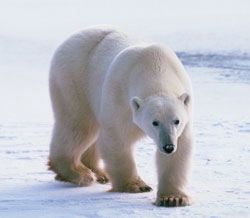
polarbear_new_USGS
The Polar Bear, the largest apex predator on Earth is affected by climate change that has led to the loss of 2 million m2 of sea ice. The Appendix II listing introduces the global perspective of existing threats to Arctic species stemming from shipping and oil exploration, making it a case for all CMS Parties.

But why formally list the polar bear as a migratory species when it is protected under several other national and international programs?

UPDATED 10 November 2014, see additions below
Continue reading

BBC provides a forum for desperate biologists: “Will polar bears become extinct?”

Yesterday, the BBC published a story that gave the two most alarmist polar bear researchers on the planet a forum to market their ‘polar bears are doomed’ message. This time the desperation shows: watch how these biologists move the goal-posts, make claims so misleading they border on lies, and pretend they don’t have big, big trouble with their predictive models.

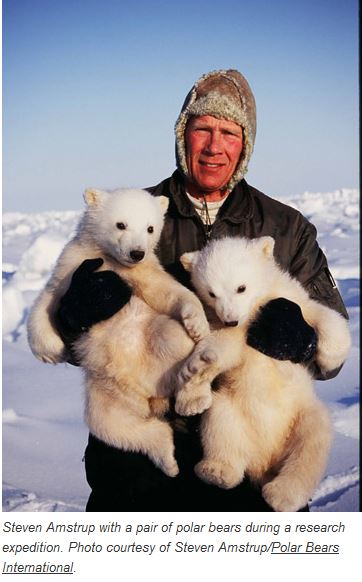
Amstrup_only solution_with 2 cubs_Oct 8 2014

Amstrup photo that accompanied an interview last month.

Continue reading

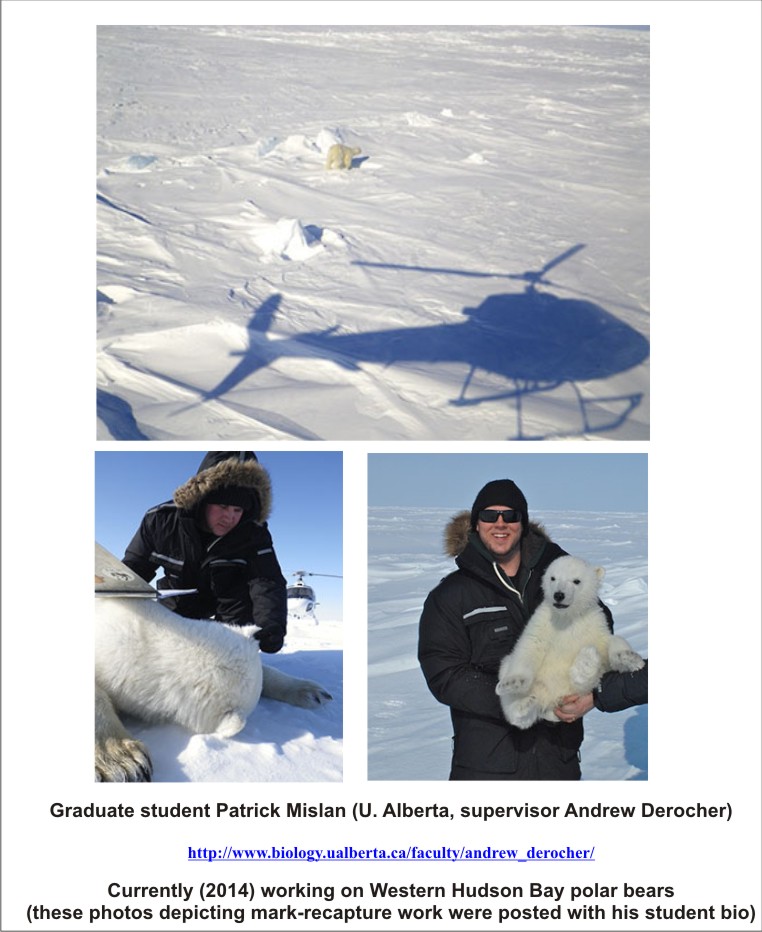
Polar bear biologists doing mark-recapture work in Hudson Bay may have misled the world

What exactly are Western Hudson Bay (WHB) polar bear researchers hiding? Since 2004, research on the body condition and cub production of Western Hudson Bay (WHB) polar bears has been carried out but none of the results of these mark-recapture studies have been made public.

U Alberta student Mislan bio photos_PolarBearScience

The researchers all claim that WHB polar bears are struggling to survive because of recent sea ice changes but won’t release the 10 years worth of updated information they possess on the bears or the sea ice.

Continue reading

Walrus mass haulout hype refuted, the video

Produced by the Global Warming Policy Foundation, there is now a short video summary of my recently-released GWPF briefing paper, which I wrote and narrated.

Walrus fuss_GWPF video Crockford

Watch it below:

Available also at GWPF TV“The Walrus Fuss – Walrus haulouts are nothing new.”

The briefing paper is here.

Save

Declining polar bear weights and early breakup dates in WHB, Part I: What’s a starving bear?

The oft-repeated claim that polar bears are starving in Western Hudson Bay (e.g., here, here, here, and here) comes primarily from a 10 year old study that documented a declining trend in polar bear body condition (a biology euphemism for relative fatness) between 1980 and 2004, which appeared to correlate with earlier and earlier breakup dates for Hudson Bay.

Figure 1. Polar bear female with cub, 2009, Churchill, Western Hudson Bay. Wikipedia.

Figure 1. Polar bear female with cub, 2009, Churchill, Western Hudson Bay. Wikipedia.

The authors of that study (polar bear specialist Ian Stirling and NASA sea ice researcher Claire Parkinson) reported the body weights of lone female bears captured in Western Hudson Bay between 1980 and 2004. The trend over time in those bear weights was then correlated with the overall change in dates of sea ice breakup on Hudson Bay for that period.

However, it turns out that while the trend of body condition and the trend in breakup dates indeed correlated over time, the actual year to year data did not. The question is, what does that mean for the claim that polar bears in WHB are starving?
Continue reading

Mass haulouts of female Pacific walrus as a sign of population health

Mass haulouts of female Pacific walrus and their calves in fall don’t happen all the time but they do occur. I recently pointed out (here and here) two instances of such incidents from the 1970s.

I said this provided evidence that the September 2014 incident reported in the media was not “a new phenomenon” for this region, as WWF spokepersons and Alaskan biologists have claimed (reiterated in this PBS interview).

Figure 1. Walrus females and calves hauled out on a beach in Svalbard, photo accompanying an October 6, 2014 news report in “Eye on the Arctic” of the rapidly increasing Atlantic walrus population there. (Photo: Thomas Nilsen/Barents Observer).

Figure 1. Walrus females and calves hauled out on a beach in Svalbard, photo accompanying an October 6, 2014 news report in “Eye on the Arctic” of the rapidly increasing Atlantic walrus population there. (Photo: Thomas Nilsen, Barents Observer).

One aspect of the recent occurrence of a large herd on an Alaskan beach that apparently needs reiterating is that the population of walruses declined rather markedly after a 1970s peak and has rebounded since. This suggests that huge herds of females and calves hauling out on beaches in the fall to feed might only be seen when the population is very large.
Continue reading

High walrus numbers may explain why females and calves are hauling out in droves

Are the recent mass gatherings of females and calves on the beaches of western Alaska and the Russian Far East a sign that population are again close to the limit the habitat can support, as they were in the 1970s?

At the risk of belabouring the point that lack of sea ice does not seem to be a reasonable explanation for this phenomenon (see my last two posts, here and here, and Andrew Montford’s excellent additions here), I think this is a possibility that needs to be considered.

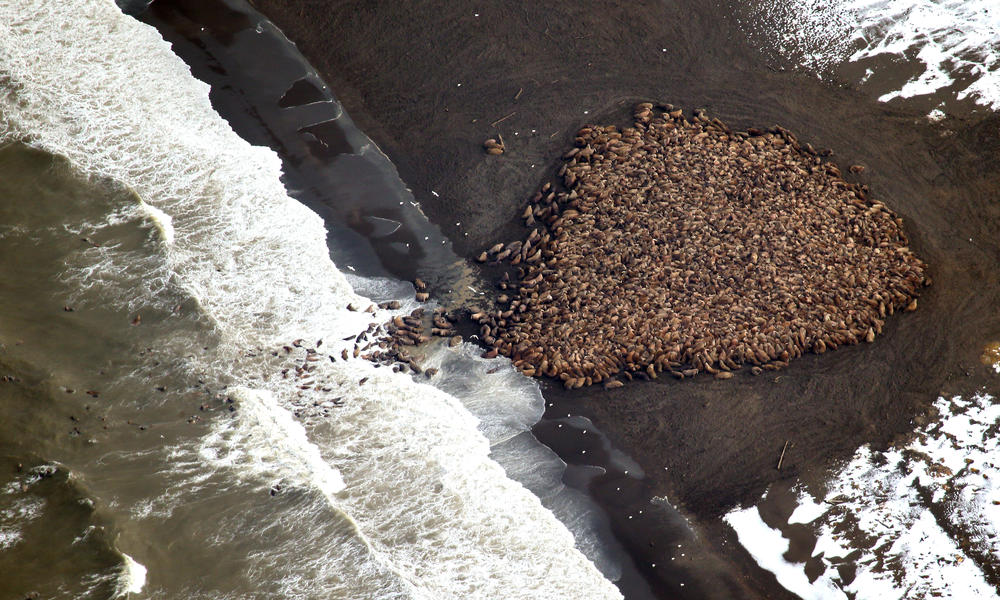
Walruses at Point Lay Sept 27 2014 NOAA CMDA0007_sm

2014 Point Lay, NOAA photo

Walrus are well protected in the US and Russia, and population numbers have risen again since the 1990s, after significant declines in the early 1900s and again in the 1980s.

A paper from the late 1980s suggests that a return to high population numbers may be a more plausible cause for mass gatherings of females and calves that lead to stampede deaths than does reduced sea ice due to global warming.

Have a look and see what you think. It may not be the only reason but it may be a major contributing factor.

Continue reading

Mass gatherings of walrus follow-up – sea ice maps for 1978 and 1972

Walruses as polar bear prey and sea ice were on my mind last night and I remembered that we DO have detailed sea ice information for 1978 and 1972 – from the sea ice atlas put together by University of Alaska Fairbanks (UAF), which has ice concentration maps for Alaska going back to 1850 — and for every year up to 2013 (reported previously here).

Chukchi Sea walrus, June 2014. US Fish and Wildlife Service.

Chukchi Sea walrus, June 2014. US Fish and Wildlife Service.

I’ve copied some of the ice maps below.

It is clear that ice was available close to Wrangel Island in 1972 when walruses chose to haul out on the island in huge numbers. And in 1978, there was ice present to the north of the walrus herd, but they had moved away from the ice to get to St. Lawrence Island, where they hauled out in large numbers.

This means it is more likely that food resources were the issue, not sea ice.
UPDATE OCTOBER 3 2014:

See another interesting follow-up elsewhere: Walrus inconsistencies
Continue reading

Mass haulouts of Pacific walrus and stampede deaths are not new, not due to low ice cover

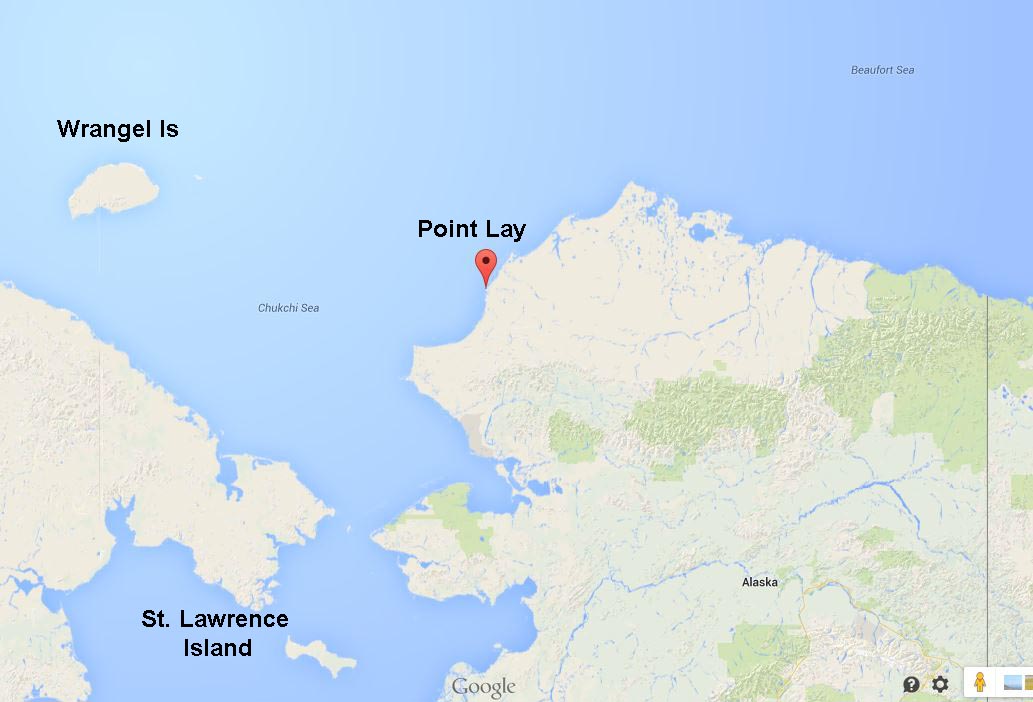
Large haulouts of walruses — such as the one making news at Point Lay, Alaska on the Chukchi Sea (and which happened before back in 2009) — are not a new phenomenon for this region over the last 45 years and thus cannot be due to low sea ice levels. Nor are deaths by stampede within these herds (composed primarily of females and their young) unusual, as a brief search of the literature reveals.

Pt Lay map Google marked

The attempts by WWF and others to link this event to global warming is self-serving nonsense that has nothing to do with science.

UPDATE October 3, 2014: See below. Also, do see follow-up posts here, here, and especially, here.

UPDATE October 23, 2014: A briefing paper summary is here and a video version of that paper (“The Walrus Fuss” — 3 1/2 minutes long) here.

There is also a follow-up post on the situation here.

Continue reading