Tag Archives: polar bear

Two polar bears onshore in coastal Labrador, one relocated for public safety

Just in (VOCM, 1 February 2019) from a community called Makkovik on the coast of Labrador: one of two bears sighted prowling the local dump has been relocated for public safety. The community is still on high alert until the other bear can be located.

Black Tickle polar-bear-7 March 2017 Kim Penney photo shared CBC

Polar bear spotted near Black Tickle Labrador on 7 March 2017.

Polar bears are extraordinarily dangerous at this time of year because they are usually at their leanest weight and can be desperate for food of any kind. See the most recent example here, others here and here (with references).

See below for a map showing the location of Makkovik, population about 360.
Continue reading

Abundant polar bear habitat across the Arctic at the start of winter

January is the first month of the Arctic winter, the season when most polar bears really struggle to find enough to eat.

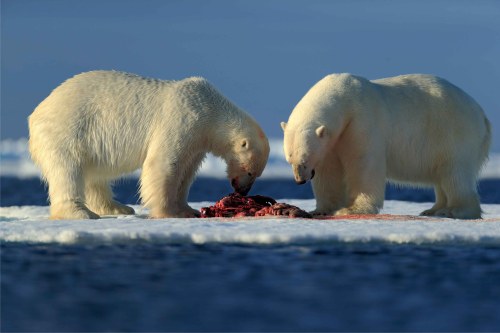
Polar bears feeding_Shutterstock_sm

Here is what the sea ice looked like around the Arctic at the end of this month.

masie_all_zoom_4km 2019 Jan 31

Compare to last year:

Continue reading

Southern Beaufort polar bear attack far from the Alaskan coast: another winter example

A man from Arctic Village (Alaska), out checking his trap-line, killed a polar bear at his cabin when it came after him: only odd things were it was the first week of January and the cabin was more than 100 miles south of the Beaufort Sea coast.

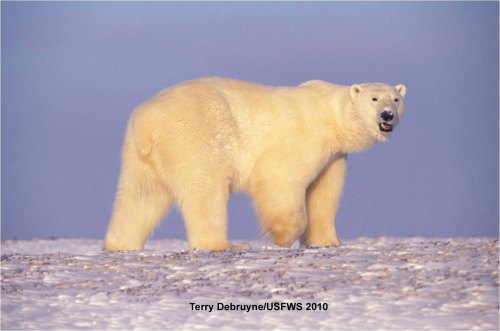
polar_bear_in fall terry debruyne_usfws nov 10 2010_w label_sm

Winter is hard for polar bears, as I’ve mentioned before: it’s cold, dark, and hard to find seals. Most bears are at their lightest weight at the end of winter (March). Looking for food in the dead of winter, the bears can be very destructive as well as dangerous. See previous posts here, here, here, and here.

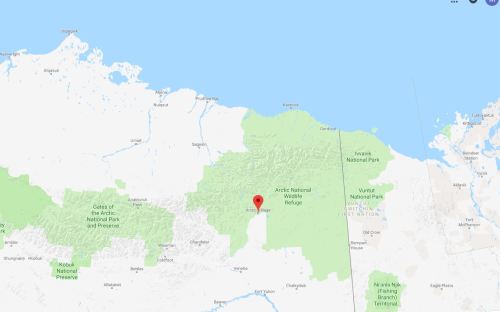
The map below shows how far south Arctic Village is from the Beaufort coast. This hunter is lucky he had his wits about him and his gun handy, because he came awfully close to being a polar bear’s dinner.

arctic village ak map google

Here’s an excerpt of the story (my bold): “Polar bear encounter reported in Arctic Village, many miles south of normal range” (KTOO, Ravenna Koenig, 15 January 2019):

Continue reading

Polar bear voted newsmaker of the year in Nunavut: A climate change emblem becomes a symbol of bitter conflict

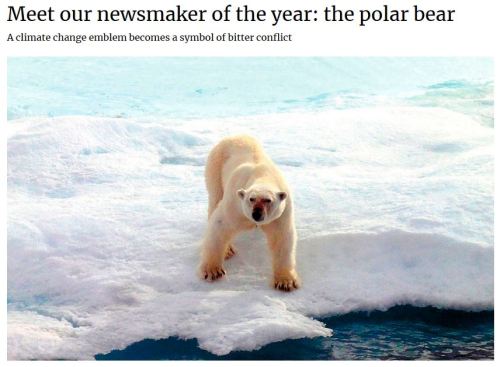
This Nunatsiaq News editorial is worth a read (2 January 2019): Meet our newsmaker of the year: the polar bear.

Polar bear newsmake of the year_2 Jan 2019 Nunatsiaq News

“But for this year, we’re not choosing a person. For 2018, our newsmaker of the year designation goes to an entire species: the polar bear.

To earn that, the humble polar bear didn’t have to do much of anything. All they had to do was what polar bears have always done: hunt, eat, mate and protect their young.

In doing so, they caused two heart-rending Nunavut tragedies: the death of an Arviat man in July, followed by the death of a Naujaat man in August. These events have aggravated a bitter regional controversy that’s unlikely to be resolved anytime soon, especially in the Kivalliq region.”

It continues (my bold):

“But in Nunavut, the damage that environmentalists have inflicted on their cause will likely last for generations. Growing numbers of people in Nunavut not only believe polar bears are a threat to public safety. Growing numbers also believe that scientists and government wildlife managers are their enemy.

On that last point, the condescending attitudes of some researchers and government officials has been rather less than helpful.

For example, the federal Department of Environment and Climate Change said last fall, in a submission to the wildlife management board, that the Inuit position is “inconsistent with the federal listing of the polar bear as a species of special concern in Canada.”

That tone-deaf response simply reinforces the Inuit belief that governments value the lives of polar bears more than they value the lives of human beings.”

Read the whole thing here.

Heads up Newfoundland & Labrador: polar bear season has begun

There is now enough sea ice off southern Labrador and the northern tip of Newfoundland for Davis Strait polar bears to come ashore looking for food. Baby seals won’t be available for months yet. And since winter is the lean season for these bears, some may seek food sources onshore. The bears come down from the area of Hudson Strait and southern Baffin Island: as the sea ice expands south, so do the bears.

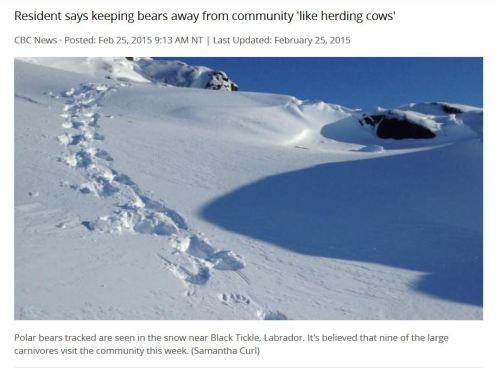
Polar bear tracks_25 Feb Labrador 2015 CBC

Continue reading

May a polar bear not be something you are faced with in 2019

A polar bear can be too close: fat or thin, it can be deadly.

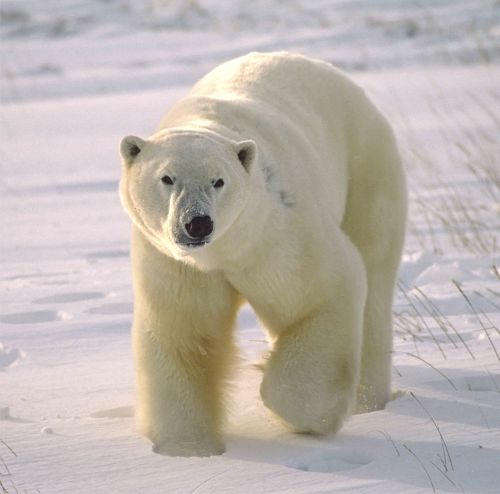
Walking bear_129029633_web size

Happy New Year.

And condolences to those whose lives were torn apart by a polar bear encounter in 2018.

Derocher admits Western Hudson Bay polar bear population may not be declining

Earlier this year, I challenged a journalist to ask to see the data used by Andrew Derocher and his colleagues to support their repeated claims that Western Hudson Bay polar bears are having trouble surviving. It almost happened.
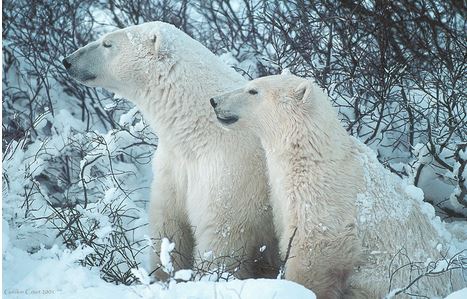
Polar bears_Gordon Court_Committee on the status of endangered wildlife in Canada Dec 2018

David Rose, writing for The Mail on Sunday, has produced an excellent feature on the conflict between Nunavut Inuit and biologists about polar bear management, got Andrew Derocher to tell the truth about current polar bear health and survival.

Or, to be more precise, to waffle a bit on his standard message of doom:

“Even Prof Derocher, who is convinced the bears’ long-term future is bleak, accepts that ‘the wheels are not coming off yet’, while ‘some bear populations are doing fine’. In West Hudson Bay, there has been ‘a recent period of stability’, he says, and though ‘we were seeing starving bears, starving cubs on land, that seems to have slowed down’. Then again, the computer models ‘are not great on the 5 – 10 year time-frame’, and it was possible that although the Arviat bears might look healthy now, they may be about to ‘fall off a cliff’.” [my bold]

This concession by Derocher suggests that Western Hudson Bay bears indeed are thriving, because he’s the guy who holds all the data. But he couldn’t help adding that disaster might be just around the corner.

But did he actually produce the data that show what’s been happening with cub survival or the body condition of females since 2004? Apparently not — but his admission that conditions are not as bleak as he continually portrays them suggests he is covering for data that says the same: polar bears in Western Hudson Bay are doing just fine and Inuit are right to be worried.

This may be as good as it gets unless the people of Nunavut can force Derocher to show his data.

Read the whole story here: “Why all you’ve been told about these polar bears could be WRONG: Animals driven to the edge of their natural habitat by shrinking ice have become one of the defining images of climate change, but Inuits who know the predators have a very different story.” (The Mail on Sunday, David Rose, 30 December 2018).

Continue reading

Biologists escalate conflict over Inuit management of polar bear populations

Yesterday, two polar bear specialists and an inept freelance journalist poured gasoline on the already-volatile issue of polar bear management in Nunavut.

Quote of the day: “I think there’s a reasonable chance that the last polar bear in Canada will be shot by an Inuk hunter.” [Andrew Derocher, University of Alberta]

Polar bear Aug 2017 near area where June 19 2018 bear was spotted Gordy Kidlapik

You have to read it to believe how bad the Yale Environment 360 article by Gloria Dickie (19 December 2018) really is: “As polar bear attacks increase in the Arctic, a search for solutions.” [reprinted 26 December at PBS] The title suggests a balanced treatment of the issue but the reality is far from that: gross inaccuracies in the descriptions of the two fatal attacks that took place this summer that can only be explained by sloppy research and what struck me as unbelievably nasty and racist commentary by polar bear specialist Andrew Derocher. But decide for yourself.

Continue reading

CBC hypes “bleak” Churchill polar bear fate with unsupported claims & falsehoods

Over the weekend in Canada, the CBC ran a polar bear news feature that is now available online (“Polar bears in peril: the bleak future of Churchill bears,” The National, CBC, 3 December 2018). It gave polar bear biologist Nick Lunn of Environment Canada free rein to spread unsubstantiated claims and outright falsehoods about the status of Western Hudson Bay polar bears and sea ice. Apparently, he and the CBC learned nothing from National Geographic‘s fiasco over their starving’ polar bear video last year: they still think the public will be swayed to “act” on human-caused global warming if a persuasive expert tells them that polar bears are on their way to extinction. I expect many were convinced otherwise, since the facts are available for all to see.

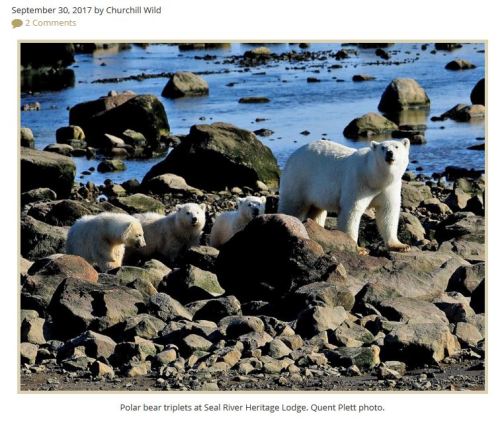
No triplet litters born since 1996? Nonsense, as the photo below (from 2017) shows.

Triplet litter at Seal River Lodge 2017 Quent Plett photo

The CBC video is described this way:

“They are a majestic icon of Canada’s North, but polar bears have also come to symbolize climate change. And scientists say the future for one particular population of polar bears in northern Manitoba is dire.

Continue reading

Unfounded concern for polar bears from onshore oil exploration in Alaska

Canadian biologist Andrew Derocher was called upon to promote his particularly pessimistic viewpoint on polar bear survival in a story published in the New York Times yesterday (2 December 2018: “Drilling in the Arctic: Questions for a Polar Bear Expert”). However, decades of evidence suggests that onshore oil exploration in the Arctic National Wildlife Refuge is unlikely to harm the few female bears that come ashore in Alaska to make maternity dens.

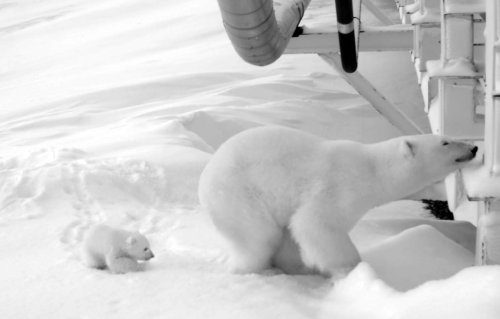
polar bear investigates an oil platform_USFWS photo used Dec 2018

Here is my rebuttal to Derocher’s claims, all of which I’ve dealt with previously.

Continue reading