Posted onJune 4, 2024|Comments Off on New data show Svalbard polar bears are fatter than they were in 1993 despite continued low sea ice
Researchers at the Norwegian Polar Institute have finally updated their spring data, which show male polar bears in 2024 were even fatter than they were in 1993 and litter sizes of new cubs were just as high, despite continued low sea ice in the region over the summer months especially.
Posted onJanuary 31, 2022|Comments Off on Davis Strait polar bears in Eastern Canada are thriving according to new survey
Pack ice is barreling down the Labrador coast, almost certainly bringing Davis Strait polar bears with it. And according to new survey results, those bears are doing just fine: numbers are stable, bears are fatter than they were in 2007, and cubs are surviving well – thanks largely to abundant harp seals.
Posted onSeptember 21, 2021|Comments Off on Wrangel Island research team counted a record number of Chukchi Sea polar bears in 2020
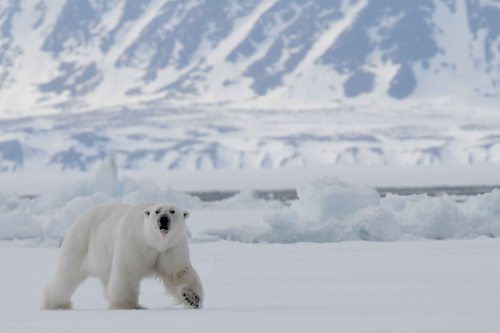
Many Chukchi Sea polar bears spend the summer on Wrangel Island and a survey there conducted by Russian researchers in 2020 reportedly collected data on a record 747 bears, well up from the 589 reportedly counted in 2017 by the same team (photo below is from 2015).
Note the latest survey of the Chukchi Sea estimated about 3,000 bears inhabit the region (AC SWG 2018; Regehr et al. 2018), at least 1,000 more that the figure of 2,000 used in recent IUCN assessments and survival predictions (Amstrup et al. 2007; Regehr et al. 2016; Wiig et al. 2015). Wrangel Island is the primary terrestrial denning area in the Chukchi Sea (Garner et al. 1984; Rode et al. 2014) and a recently published study showed that the body condition (i.e. fatness) and litter size of Chukchi Sea polar bears has not been negatively affected by low summer sea ice (Rode et al. 2021).
Posted onJuly 18, 2021|Comments Off on As much Beaufort Sea polar bear habitat at mid-July 2021 as there was in 1982
Beaufort Sea ice coverage is about average for this time of year, again failing to decline in lock-step with other Arctic regions. Will there be lots of fat bears onshore like there was in 2019? Only time will tell.
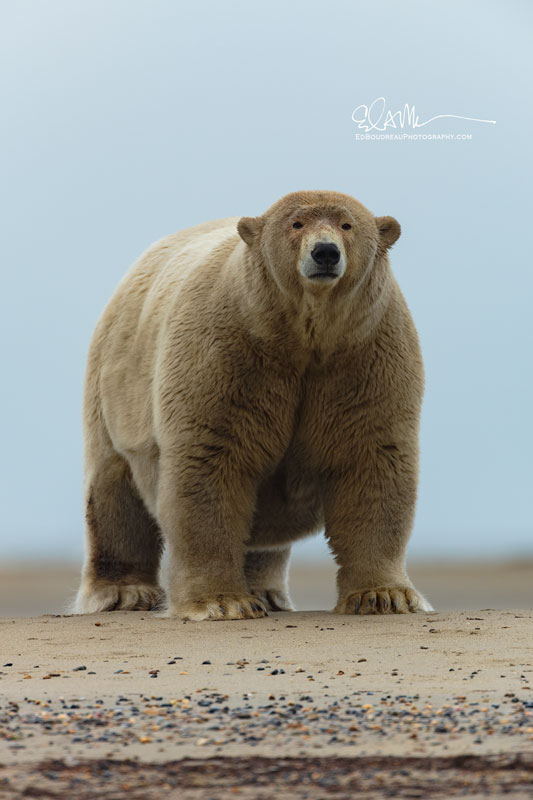
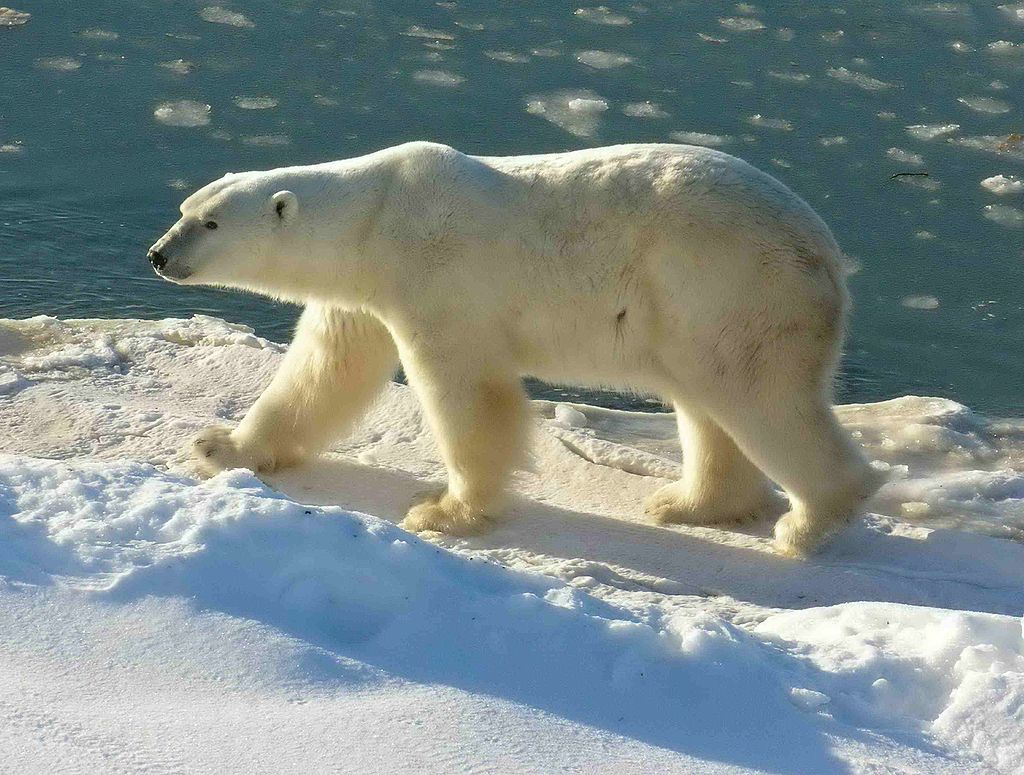
Healthy polar bear male at Kaktovik, Alaska on the Southern Beaufort Sea, September 2019, Ed Boudreau photo, with permission.
From the initial CBC News report on Monday 26 April:
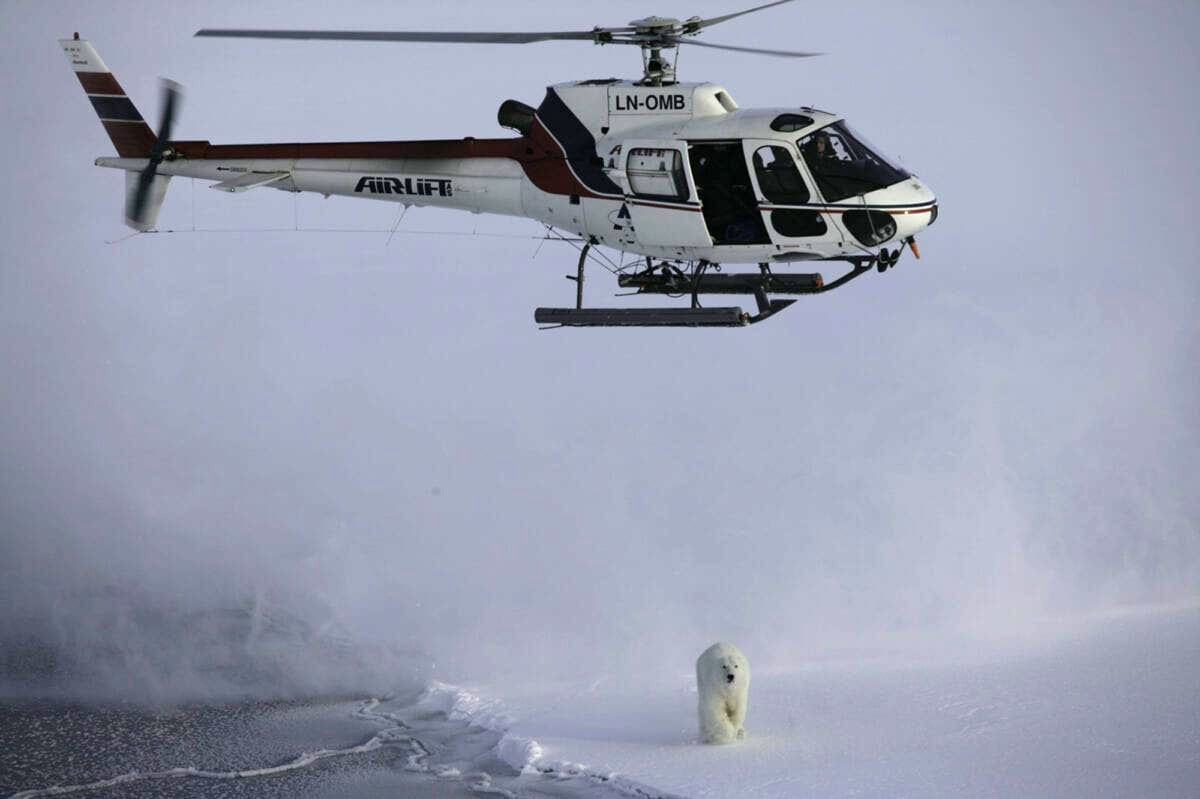
Three people are dead after a helicopter crash near Resolute Bay, Nunavut, during a trip to survey the Lancaster Sound polar bear population, the premier says.
It happened near Griffith Island and involved a Great Slave Helicopters AS350-B2.
A news release on Monday morning from Yellowknife-based Great Slave Helicopters said there were two flight crew and one wildlife biologist on board. No one survived, the company says.
Crash site of helicopter was near Griffith Island, near Resolute in the Central Canadian Arctic.
The wildlife biologist was identified on Wednesday as Igloolik resident Markus Dyck, CBC News reported yesterday:
Dyck was surveying bear populations in Lancaster Sound for the Nunavut government on the day the helicopter crashed. Two other air crew also died.
Lemelin said Dyck was outspoken in his advocacy for community-based polar bear management.
“Markus was one of those individuals that fell in love with the bears and highly respected them and dedicated his life to them,” he said.
Lemelin said Dyck told him two weeks ago that he was heading out for field work.
“He was working for Nunavut and working with incorporating traditional knowledge and scientific knowledge and examining all types of research and doing those very important sample counts that are necessary.”
The Igloolik-based scientist challenged environmental groups that said the bears were disappearing. He also championed including traditional knowledge in research, Lemelin said.
“What he was concerned with is the ability of Inuit people and Cree people to live with the polar bears to continue traditional harvesting practices and to manage polar bears sustainably and respectfully, in the long-term,” Lemelin said.
As a current member of the international Polar Bear Specialist Group, which looks at polar bear population management worldwide, Dyck remained an “outspoken” force for community-based polar bear management in the highly political world of polar bear research, Lemelin said.
Dyck, who held a master’s degree from the University of Manitoba, was certified wildlife biologist with the Wildlife Society, according to his LinkedIn profile.
Before working at the GN, he was senior instructor with the Environmental Technology Program at Nunavut Arctic College in Iqaluit.
Polar bear surveys — and the sometimes dangerous conditions that come with them — were nothing new to Dyck.
In 2014, he told Nunatsiaq News that the M’Clintock polar bear survey’s first year was plagued by fog in an area thick with heavy ice.
“Blizzards, we had fog — we had to sleep in the helicopter, on the sea ice one night, because we couldn’t fly anywhere,” Dyck said.
Mark Mallory, a seabird biologist who knew Dyck well, said working in helicopters in the High Arctic is “dangerous stuff.”
“Working in helicopters in this time of year when things are changing, and you’re starting to get moisture in the air, and the wind is picking up, and you’re out in that interchange between the land … that’s a terrible time to be working there,” Mallory said.
Posted onNovember 17, 2020|Comments Off on Good news: Gulf of Boothia and M’Clintock Channel polar bear survey results
Final reports for two Canadian subpopulations reveal the number of polar bears in M’Clintock Channel has more than doubled since 2000 while Gulf of Boothia as remained about the same despite moderate declines in summer sea ice cover. All of the survey results were published online yesterday (16 November 2020) and I was alerted to the posting this morning via email by a Nunavut employee.
Posted onOctober 4, 2020|Comments Off on S. Beaufort polar bear population stable since 2010 not declining new report reveals
A just-released report on the latest count for the Alaska portion of the Southern Beaufort subpopulation reveals that numbers have been stable since 2010 despite claims the population has continued to decline. However, the study also has a very odd feature: 2012 had the highest population estimate over the decade of 2006-2015 yet also had the lowest survival of all age classes since 2001.
Healthy polar bear male at Kaktovik, Alaska on the Southern Beaufort Sea, September 2019, Ed Boudreau photo, with permission.
However, what is essentially good news about polar bear health and survival in the Southern Beaufort has so far been glossed over by the media because the report prominently includes estimates of polar bear dens on land in areas of potential oil exploration, a highly politicized topic. Accordingly, the Washington Post (picked up by other outlets) focused a statement in the paper that “long-term persistence of polar bears (Ursus maritimus) is threatened by sea-ice loss due to climate change” and on the denning issue rather than the new population count. As far as I am aware, no other population estimate report has included such distracting information.
Recent claim of a polar bear expert [my bold]:
In 2015…the polar bear population in the Beaufort Sea had declined by 40% over the previous decade. “We can only anticipate that those declines have continued.” Steven Amstrup, 29 September 2019.
Posted onJanuary 12, 2020|Comments Off on 2019 Alaska aerial survey found the most polar bears since 2012 – dozens of fat healthy bears
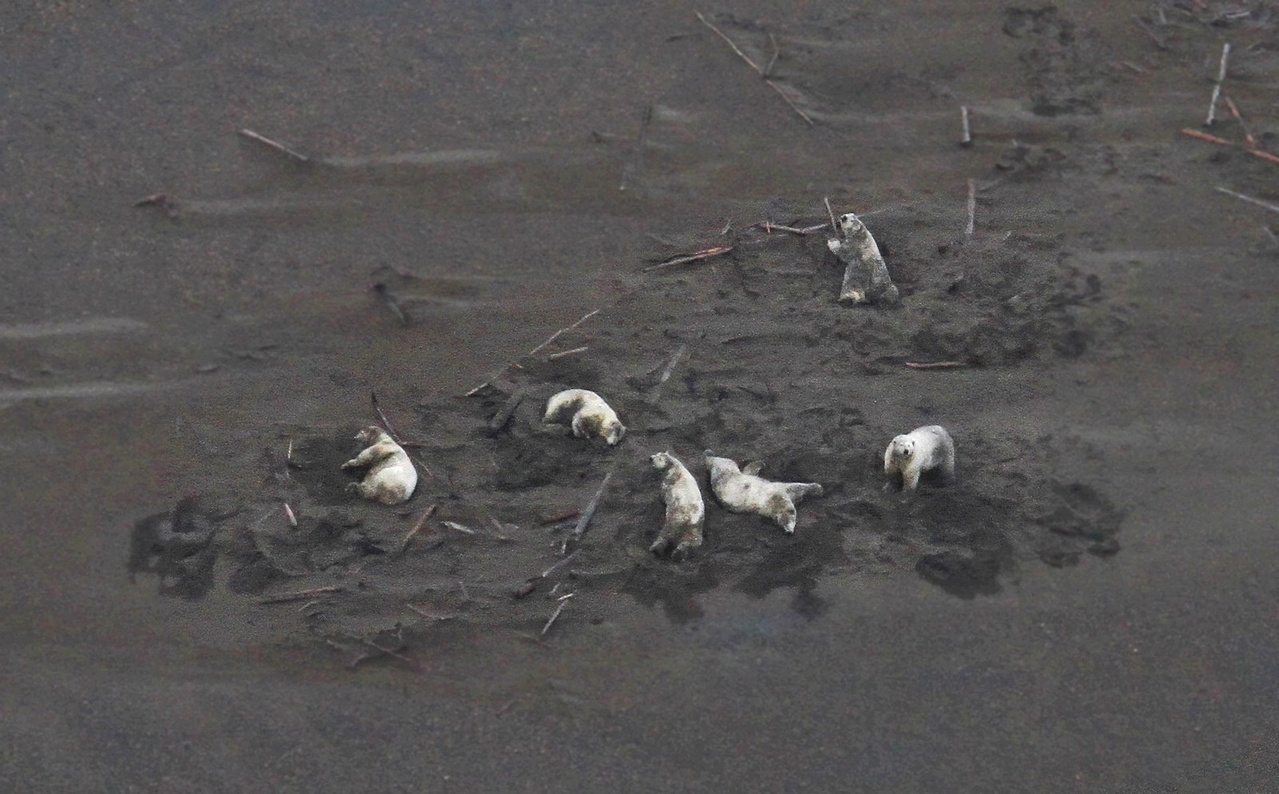
This aerial shot of six fat polar bears lolling around on a sand beach on the coast of the Southern Beaufort Sea, Alaska, was taken by NOAA employees in July 2019. It exemplifies the reality that bears in this subpopulation are currently abundant and healthy, negating the suggestion that numbers have continued to drop since 2006 because bears are starving.
The above picture of polar bear health is not an exception but the rule for all 31 bears recorded onshore last July, as the photos below from other locations testify. Those who would blame this abundance of bears on lack of sea ice in 2019 should note that ice retreated as early and as extensively in 2017 yet only 3 bears were spotted onshore. Results of a recent (2017-2018) population survey, which have not yet been made public, will of course not reflect conditions seen in 2019.
Posted onSeptember 19, 2017|Comments Off on Breaking: 2016 W. Hudson Bay polar bear survey shows the population is still stable
A just-released report on the most recent (2016) survey shows Western Hudson Bay polar bear numbers were still stable despite predictions that this subpopulation would be wiped out completely (reduced to zero) due to low Arctic sea ice.
The authors of the report on the August 2016 aerial survey of the Western Hudson Bay polar bear subpopulation (Dyck et al. 2017) state clearly that the only trendsthey could find were that the number of adult males increased somewhat over 2011 estimates and the number of females either declined or remained stable. The overall population estimate was a bit lower (11% less) compared to the 2011 survey but the difference is not statistically significant. Therefore, the population status must be stable.
[cf. Foxe Basin [stable], from 2009-2010 survey (Stapleton et al. 2016) litter size was 1.54]
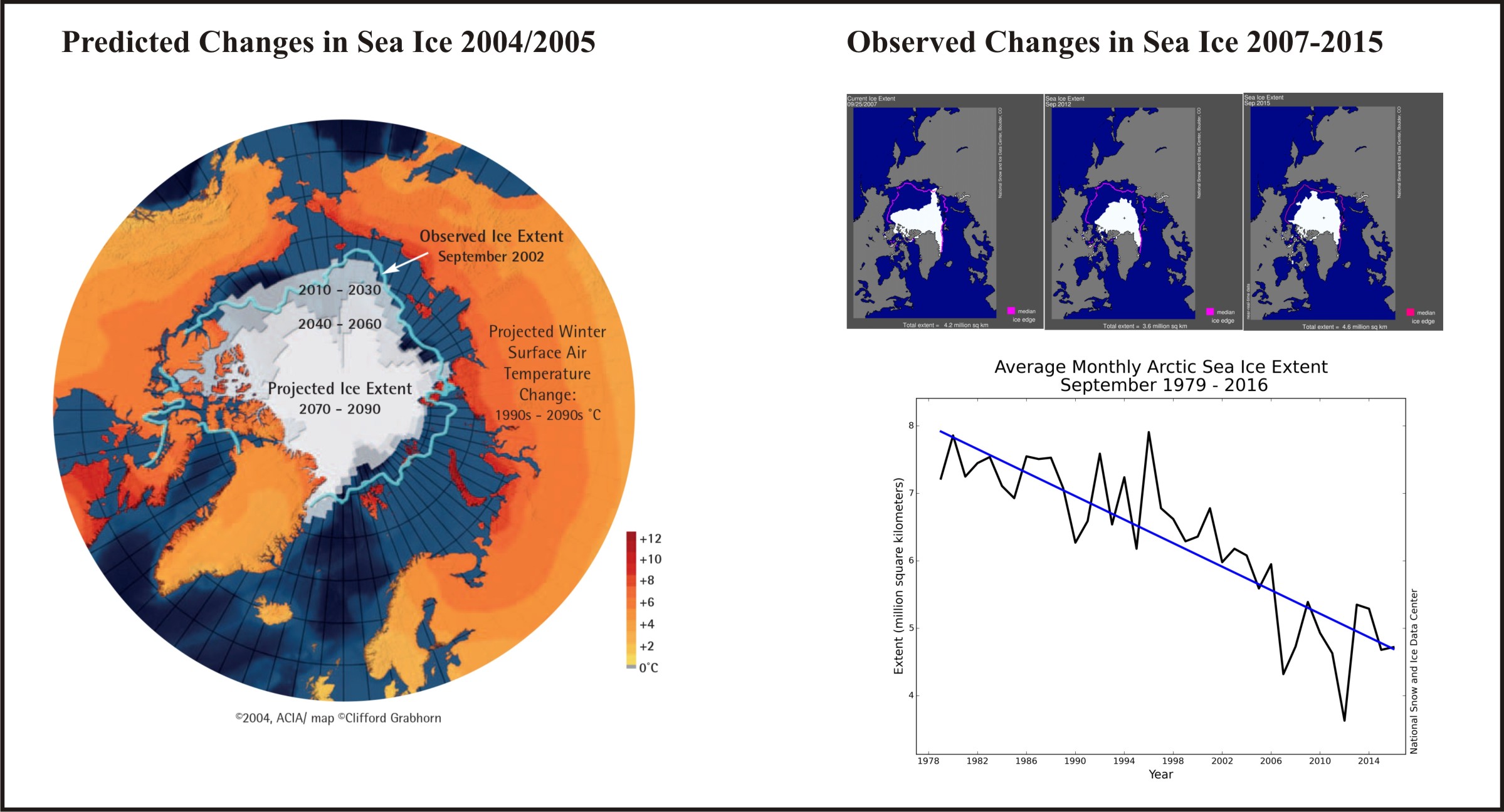
An 11% decline in WH numbers since 2011 is most definitely NOT the decline to ZERO (extirpation) we were told to expect with Arctic sea ice as low as it has been since 2007 (Crockford 2017, see list of annual minimum extents 2007-2017 here).
Note: The percentage decline from 2011 to 2016 for Western Hudson Bay polar bears is 11%, NOT 18% asclaimed recently by Andrew Derocheron twitter: it is not appropriate to compare the official 2011 estimate of 1030 (Stapleton 2014) to the 2016 estimate of 842 because the methods used to generate the estimates were different (Dyck et al. 2017). The authors of the report state that the estimate for 2011 that’s comparable to 2016 is 949.
An 11% decline from 1030 would be 917 bears, a statistically insignificant decline that is also biologically insignificant and therefore, so slight as to indicate a stable population.
Posted onMay 1, 2017|Comments Off on IUCN PBSG insists the 2015 Barents Sea polar bear count was not an increase
Similar to the spin on the 2013 Baffin Bay/Kane Basin polar bear population survey, the IUCN Polar Bear Specialist Group now insists the latest count of the Barents Sea subpopulation is not evidence of an increase in numbers since 2004, as the leader of the study announced in 2015.
This is Part 2 of the big surprises in the latest version of the polar bear status table published by the IUCN Polar Bear Specialist Group (PBSG) on 30 March 2017. See last post here regarding the PBSG population size estimates that no longer concur with the 2015 Red List assessment, including the global total — even though PBSG members wrote the report (Wiig et al. 2015, and its Supplement).
Here I want to focus on the results of subpopulation surveys that were made public after the 2015 Red List assessment was published, particularly the Barents Sea estimate.
While the 2013 Baffin Bayand Kane Basin estimates (SWG 2016) have been added to the new PBSG table, any suggestion that these might indicate population increases are strong discounted. Similarly, contrary to initial reports by the principal investigators of the survey, the PBSG insist that the Barents Sea population has not actually increased since 2004, which you may or many not find convincing.
Watch polar bear habitat reform in the Canadian Arctic: “last 10 days” Canadian Ice Service animation (works anytime) HERE.
See Quote archive for details.









 polarbearscience
You must be logged in to post a comment.