Monthly Archives: August 2015

Pacific walrus sob stories begin again

Now we have poor hunting conditions in the Bering Strait touted as evidence that “walrus migration patterns have changed” with the implication that this is because “…the past eight years have had the eight lowest amounts of summer sea ice on record” due to man-made global warming.

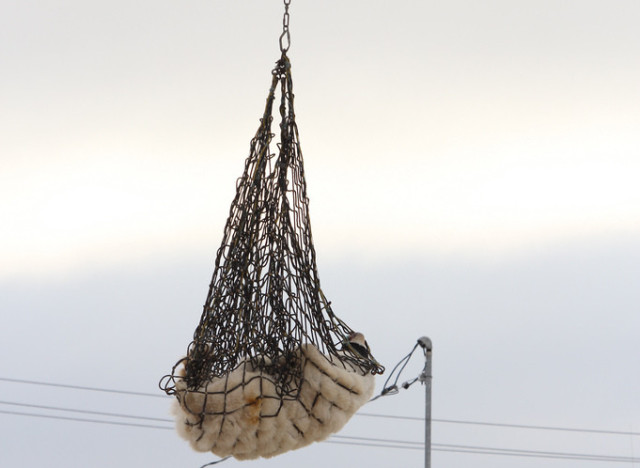
Walrus 2012 July USGS

A subsistence lifestyle is hard, particularly so if it depends on a highly mobile, migratory herd animal. Think Barren-ground Inuit caribou hunters, who often starved because herd sizes declined for a few years or moved unpredictably.

Many factors – seasonal weather, last year’s winter conditions, size of the herd, food supply – all affect where and when a migratory herd will move and the likelihood it will be positioned for optimal harvesting by hunters. Add another highly variable factor into that – Bering Sea ice – and you have a highly unpredictable food supply, especially if you sit in one spot (like on St. Lawrence Island) and expect that migratory herd animal to come within reach.

Hunting walrus from St. Lawrence Island depends on just the right combination of ice and winds. Too much ice is not good, too much open water is not good, and too much wind is not good.

Alaska Dispatch, courtesy the Associated Press, reports St. Lawrence natives are again short of walrus meat because of “warm temperatures”: “Warming temps push walrus north, leaving Alaska villages without traditional food source” (Rachel D’Oro, The Associated Press, August 6, 2015). And the caption of the above USGS (A. Sonsthagen) photo predictably implies all current hunting troubles can be blamed on climate channge:

“The walruses in this July 2012 file photo are hauled out in the Eastern Chukchi Sea. Walrus migration patterns have changed as sea ice and other environmental factors have shifted — and that’s spelled trouble for Alaska Native communities who hunt them for subsistence.”

The people of St. Lawrence Island and the Bering Strait that depend on walrus for subsistence have my sympathy, they indeed have a hard life – but this is not a tale of woe about the status of Pacific walrus and changing summer sea ice.

Bering Strait natives hunt walrus in spring, from mid-April to early June (Huntington et al. 2013). All indications are that walrus are moving differently than they used to in summer because the population is now very large.  As far as I know, there is no new population information on walrus that wasn’t available last year, when I covered this topic extensively (Crockford 2014; video below).
Continue reading

Long underwater stalk by polar bear shows how hard it is to catch seals in summer

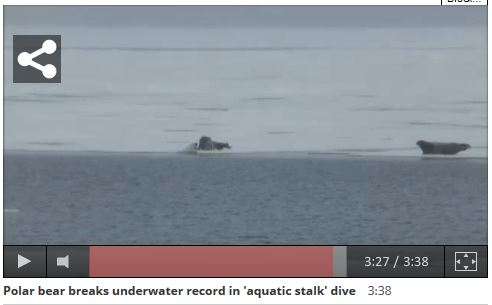
The longest-ever-recorded underwater dive by a polar bear, stalking three bearded seals, shows in striking fashion how truly difficult it is for a polar bear to catch a seal from summer sea ice. After the long dive, the bear (see below screen capture) erupts from the water to try and take the seal resting on the ice but it escapes.

Underwater stalk_01

The paper reporting this dive, by Ian Stirling and photographer and Arctic expedition organizer Rinie van Meurs, has hit the news again in a big way, as it finally appeared in print. I wrote about it in June here, when it came out in press. The video was shot on 19 August 2014, at the height of the Arctic summer (July, August, September).

CBC Radio posted the video and interviewed  van Meurs yesterday (“As It Happens” 4 August), in which he reportedly made this astonishing statement:

“…after 27 years working, I have seen clearly changes in the sea ice. I don’t need to see the NASA records and graphs and all that.”

Indeed, who needs science and all that? You just have to look out the window of your ship! Anecdotal reports are what count as evidence to people who are not scientists. Van Meurs, who is not a scientist, is who the media gets to interview. Where’s co-author Stirling, the scientist?

More stills from the van Meurs video below – too bad, so sad, the bear gets no seal. Why polar bears eat little in the summer even if they are out on the ice hunting, as I discussed here.

Continue reading

July 2015: all 13 collared polar bears in the Southern Beaufort are out on the sea ice

Most of these bears are close enough to shore to hit the beach if that’s where they wanted to be but they’re on the sea ice.

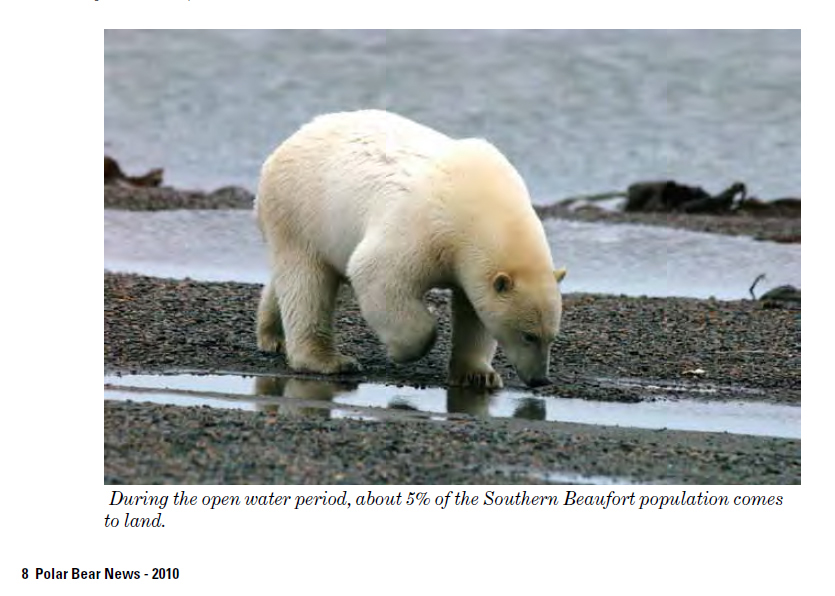
Polar bear S Beaufort_PolarBearNews2010

I’ve been posting these USGS tracking maps for two years.1  The map archive at USGS goes back to December 2009.  Seeing all animals on the ice in July is usual for Southern Beaufort polar bears.

During August, a few of these females usually come ashore (see here and here), probably because they plan to den there later. But most polar bear females stay out on the ice, no matter how far it contracts into the Arctic Basin. Only about 5% of SB bears spend time on land during the summer.

See the July track map below and some sea ice maps and graphs for the region.
Continue reading

Keeping track of problem bears in Churchill

The City of Churchill has recently taken to posting its problem bear reports on its Facebook page. This is something to keep an eye on, so let’s catch up so that future reports can be put into context.

Figure 1. A bear is transported to Churchill’s polar bear holding facility, from a 2011 Huffington Post article “Polar Bear Prison.”

Photo above:  A bear is transported to Churchill’s polar bear holding facility (from a 2011 Huffington Post article, “Polar Bear Prison”).

Continue reading